1192cc
Air-cooled flat-4
The air-cooled flat-four engine that powered a generation. Code M28.
- Power
- 36 HP
- Fuel
- Single carburetor

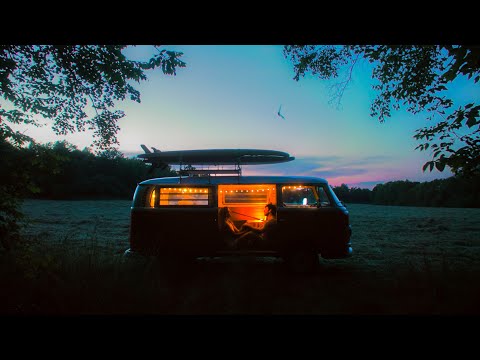
Factory exterior
In 1959, Fidel Castro took Havana, Hawaii became the 50th state, and the Westfalia Camper continued its formula unchanged. Thirty-six horsepower, pop-top, kitchenette, bed. Sometimes the right thing requires no revision. The world provides enough disruption; your camping van shouldn't add to it.
January 1, 1959: Fulgencio Batista fled Havana, Fidel Castro's forces marched in. January 3, 1959: Alaska became the 49th state. August 21, 1959: Hawaii became the 50th. In between, Barbie launched at the New York Toy Fair, Buddy Holly died in a February crash, and the first American troops arrived in Vietnam as advisors. The world was in motion.
The air-cooled flat-four that powered the 1959 T1 Westfalia (Type 2). Simple, reliable, and endlessly modifiable.
1200cc (1.2L) Air-cooled flat-4
36 HP
M28
Pickup
4-speed manual
The Type 2 Bus became shorthand for the counterculture.
All specifications should be verified before publication.
Refer to the specifications section above for the engine code used in the 1959 Bus. The engine code is typically stamped on the engine case above the generator. For verification assistance, use our M-Code decoder tool.
Confidence: medium — This information should be verified with additional sources.
The value of a 1959 Bus varies significantly based on condition, originality, and documentation. Driver-quality examples typically range from lower values, while excellent restored or numbers-matching examples command premiums. Condition, originality, and documentation are the primary value drivers. Always get a professional appraisal for insurance or sale purposes.
Confidence: low — This information requires verification before use.
1959 Bus models were produced at various Volkswagen factories worldwide. Check the production details above for specific factory information. The factory code can often be identified through chassis number analysis.
Confidence: medium — This information should be verified with additional sources.
The 1959 Bus received several updates from the 1958 model. Refer to the specifications and editorial sections above for detailed information about year-to-year changes. Changes may include mechanical updates, safety features, or cosmetic refinements.
Confidence: medium — This information should be verified with additional sources.
Common rust areas on air-cooled Volkswagens include heater channels (under running boards), floor pans (especially front and battery tray area), front beam (suspension mounting point), rear chassis/apron (where bumper mounts), and door bottoms. The heater channels are structural and expensive to repair. Always inspect these areas carefully before purchase.
The 1960 Bus received updates from the 1959 model. Check the specifications section above for details about year-to-year evolution. Common changes across model years include safety updates, mechanical refinements, and regulatory compliance features.
Confidence: medium — This information should be verified with additional sources.
A full rotisserie restoration typically costs $25,000-$50,000+ depending on condition and level of finish. Mechanical refresh (engine, brakes, suspension) runs $5,000-$12,000. Bodywork and paint alone can be $8,000-$15,000 for quality work. DIY restorations save labor but require significant time investment (500-1,000 hours). Parts availability is generally good for classic VWs, which helps control costs.
Confidence: low — This information requires verification before use.
A well-maintained 1959 Bus can serve as a daily driver, but consider the age of the vehicle. Modern traffic, safety features, and reliability expectations differ from the era. Regular maintenance, mechanical knowledge, and realistic expectations are essential. Many owners use classic VWs as weekend drivers or hobby vehicles rather than primary transportation.
Confidence: medium — This information should be verified with additional sources.
Yes, parts availability for classic air-cooled Volkswagens is generally excellent. The large enthusiast community and aftermarket support mean most mechanical and body parts are readily available. Some year-specific trim pieces or rare options may be harder to find, but the core mechanical components are well-supported.
Research current market values for the 1959 T1 Westfalia (Type 2)
Hagerty Valuation Tools
Industry-standard classic car values
Bring a Trailer Results
Recent auction prices
TheSamba Classifieds
Current listings & asking prices
Buying tip: Condition is everything. A rusty "project" can cost more to restore than buying a finished car. Check heater channels, floor pans, and battery tray first.
Original paint options available for the 1959 T1 Westfalia (Type 2).
Looking for a 1959 T1 Westfalia (Type 2) in Black?
Find for SaleExplore the variants available for this model year and find your perfect match.
Want to see a detailed comparison of multiple vehicles?
Compare all variantsNumbers matching verification increases value by 20-40%. Use our tools to verify engine codes, chassis numbers, and M-codes for your 1959 T1 Westfalia (Type 2).
January 1, 1959: Fulgencio Batista fled Havana, Fidel Castro's forces marched in. January 3, 1959: Alaska became the 49th state. August 21, 1959: Hawaii became the 50th. In between, Barbie launched at the New York Toy Fair, Buddy Holly died in a February crash, and the first American troops arrived in Vietnam as advisors. The world was in motion.
The Westfalia Camper was not. The 1959 model carried the same 1192cc engine, the same 36 horsepower, the same SO22 conversion package that had been working since 1954. This was not neglect. It was the confidence of a design that had found its form. The customers who bought Westfalias were not looking for change. They were looking for the Alps, or the Rockies, or a campground on the Oregon coast.
By 1959, the Type 2 was approaching the end of its first generation. The oval rear window had replaced the split configuration on the Beetle, and Type 2 body revisions were accumulating. But the fundamental architecture was stable: air-cooled engine in the rear, front-mounted cab with forward visibility unlike any other vehicle on American roads, sliding side door, and in Westfalia form, the full camping conversion inside.
The SO22 package: fold-out wooden kitchenette with two-burner propane cooker, fresh water container with hand pump, storage cabinet for provisions and gear, a sleeping platform spanning the full rear width using the seat base and a fold-down section from the side wall. Curtains on every window. A pop-top roof that added stand-up space and could accommodate a second sleeping area. Total camping capability in a vehicle that measured under 14 feet long.
By 1959, Westfalia had been building camping conversions for eight years and the accumulated knowledge showed. Small details distinguished this from the earliest versions: the cooker mounting was more secure, the sleeping platform more comfortable, the storage more intelligently organized. The vehicle had been used hard by real campers, and Westfalia paid attention to what broke, what wore, what failed.
The pop-top remained the defining feature—the detail that transformed the van from a place to sleep curled up to a place to sleep stretched out, with headroom to change clothes and sit upright over morning coffee. The canvas top was durable German manufacture, the hinges were steel, the latch was simple and reliable. In campground after campground, the Westfalia pop-top was the neighborhood landmark.
The late 1950s was the high-water mark of American car culture's first era—tailfins, V8s, chrome, status. Buying a Westfalia in 1959 was a studied rejection of that entire aesthetic. The VW Bus was the automotive opposite of a 1959 Chevrolet Impala. Where the Impala was long, low, powerful, and expressive, the Bus was boxy, tall, underpowered, and almost ostentatiously plain. The people who chose the Bus had considered the Impala and found it wanting.
The camping market was growing. KOA Campgrounds would launch their franchise model in 1962. State park systems were expanding. Americans were discovering outdoor recreation as a mainstream leisure activity, not just something poor people did. The Westfalia sat at the premium end of this emerging market—more expensive than a tent and sleeping bag, more capable than a traditional trailer, more independent than any motel. It was camping for people who wanted the experience without the roughness.
By 1959, drivers who had owned a Westfalia for a few years had developed the particular vocabulary of the vehicle: plan your passes, use the engine's compression braking on descents, don't fight the crosswind sensitivity, and accept that 58 miles per hour is a ceiling, not a goal. Long highway stretches were loud—air-cooled engines, no sound insulation to speak of, wind against a flat front face—but the noise had character rather than irritation.
The Westfalia was at its best on secondary roads, where its top speed mattered less and its view mattered more. Two-lane roads through mountain parks, coastal highways with pullouts, forest service roads that hadn't been paved—these were the Westfalia's natural habitat. The forward seating position put the driver in the landscape rather than observing it through a windshield.
The 1959 Westfalia buyer was a mature consumer for a market that had matured. Eight years of American Westfalia ownership had produced a community of advocates who talked to friends, brought their vehicles to gatherings, and convinced others. Word-of-mouth was powerful. Early adopters became evangelists.
The demographic was broadening. Young families remained the core. But the late 1950s was also producing a generation of college-educated Americans who had disposable income and increasingly complicated feelings about the direction of the culture. Some of them were looking for a different kind of vacation—less resort, more discovery. The Westfalia offered discovery at a price they could afford, with a degree of independence that no package tour could match.
The 1959 Westfalia benefits from belonging to the late split-window period, which collectors often prefer for its combination of classic styling and slightly more refined mechanics. Values are comparable to other late-1950s examples: $40,000 to $75,000 for restored or very good original examples, less for drivers needing work.
The 1959 model sits just before VW's significant body revision of 1963, which makes it a design-stable purchase—parts availability from both VW-specialist suppliers and the broad aircooled community. The Westfalia conversion hardware for this period is well-documented and has specialist suppliers. Inspect the pop-top canvas carefully; replacement is possible but expensive. The canvas frames were welded steel and rust treatment is essential.
The 1959 Westfalia Camper is a mature statement of a coherent idea. Nothing about it needed to be different. The year was full of revolutions—political, cultural, technological—and the Westfalia stood apart from all of them, doing what it had always done: enabling people to go somewhere interesting and sleep there.
That's a modest brief. It's also the right one. Not every vehicle needs to represent a moment in history. Some vehicles are good enough at their purpose that the moment finds them. The Westfalia's moment was still coming; 1959 was the warm-up.