1584cc
Air-cooled flat-4 / Type 4
The air-cooled flat-four engine that powered a generation. Code B0, AD.
- Power
- 47 HP
- Fuel
- Carburetor

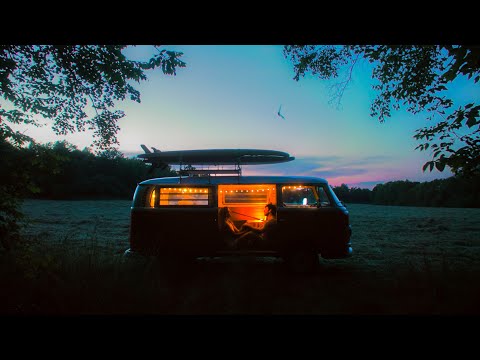
Four doors, two cabs, one flatbed. The Double Cab was the most practical vehicle VW ever built. The most beautiful, too.
1970 was the year America stopped believing in easy answers. Kent State happened in May. The Beatles broke up. The first Earth Day came and went with good intentions. Four students dead on a college campus. The world was working something out, and the conclusions were hard.
The air-cooled flat-four that powered the 1970 T2 Double Cab (Type 2). Simple, reliable, and endlessly modifiable.
1584cc (1.584L) Air-cooled flat-4 / Type 4
47 HP
B0, AD
Pickup
4-speed manual
Earth Day 1970 mobilized 20 million Americans for environmental consciousness.
All specifications should be verified before publication.
Refer to the specifications section above for the engine code used in the 1970 Bus. The engine code is typically stamped on the engine case above the generator. For verification assistance, use our M-Code decoder tool.
Confidence: medium — This information should be verified with additional sources.
The value of a 1970 Bus varies significantly based on condition, originality, and documentation. Driver-quality examples typically range from lower values, while excellent restored or numbers-matching examples command premiums. Condition, originality, and documentation are the primary value drivers. Always get a professional appraisal for insurance or sale purposes.
Confidence: low — This information requires verification before use.
1970 Bus models were produced at various Volkswagen factories worldwide. Check the production details above for specific factory information. The factory code can often be identified through chassis number analysis.
Confidence: medium — This information should be verified with additional sources.
The 1970 Bus received several updates from the 1969 model. Refer to the specifications and editorial sections above for detailed information about year-to-year changes. Changes may include mechanical updates, safety features, or cosmetic refinements.
Confidence: medium — This information should be verified with additional sources.
Common rust areas on air-cooled Volkswagens include heater channels (under running boards), floor pans (especially front and battery tray area), front beam (suspension mounting point), rear chassis/apron (where bumper mounts), and door bottoms. The heater channels are structural and expensive to repair. Always inspect these areas carefully before purchase.
The 1971 Bus received updates from the 1970 model. Check the specifications section above for details about year-to-year evolution. Common changes across model years include safety updates, mechanical refinements, and regulatory compliance features.
Confidence: medium — This information should be verified with additional sources.
A full rotisserie restoration typically costs $25,000-$50,000+ depending on condition and level of finish. Mechanical refresh (engine, brakes, suspension) runs $5,000-$12,000. Bodywork and paint alone can be $8,000-$15,000 for quality work. DIY restorations save labor but require significant time investment (500-1,000 hours). Parts availability is generally good for classic VWs, which helps control costs.
Confidence: low — This information requires verification before use.
A well-maintained 1970 Bus can serve as a daily driver, but consider the age of the vehicle. Modern traffic, safety features, and reliability expectations differ from the era. Regular maintenance, mechanical knowledge, and realistic expectations are essential. Many owners use classic VWs as weekend drivers or hobby vehicles rather than primary transportation.
Confidence: medium — This information should be verified with additional sources.
Yes, parts availability for classic air-cooled Volkswagens is generally excellent. The large enthusiast community and aftermarket support mean most mechanical and body parts are readily available. Some year-specific trim pieces or rare options may be harder to find, but the core mechanical components are well-supported.
Research current market values for the 1970 T2 Double Cab (Type 2)
Hagerty Valuation Tools
Industry-standard classic car values
Bring a Trailer Results
Recent auction prices
TheSamba Classifieds
Current listings & asking prices
Buying tip: Condition is everything. A rusty "project" can cost more to restore than buying a finished car. Check heater channels, floor pans, and battery tray first.
Original paint options available for the 1970 T2 Double Cab (Type 2).
Looking for a 1970 T2 Double Cab (Type 2) in Mint Green?
Find for SaleExplore the variants available for this model year and find your perfect match.
Want to see a detailed comparison of multiple vehicles?
Compare all variantsNumbers matching verification increases value by 20-40%. Use our tools to verify engine codes, chassis numbers, and M-codes for your 1970 T2 Double Cab (Type 2).
1970 was the year America stopped believing in easy answers. Kent State happened in May. The Beatles broke up. The first Earth Day came and went with good intentions. Four students dead on a college campus. The world was working something out, and the conclusions were hard.
The Volkswagen Double Cab Pickup arrived in this climate as a different kind of statement: pure utility, beautifully executed. Two cabs — front and rear — separated by a walk-through, giving a four-door layout with a flatbed behind. Six passengers and a payload. The result was architecturally remarkable: four doors, open bed, forward-control layout, and a logic so clean it looked designed by someone who was also a philosopher.
The 1970 Double Cab was a Type 2 platform with an extended cab section. The front cab seated three. Behind it, a second cab section opened via rear-hinged doors, providing bench seating for three more passengers. Behind both cabs, the flatbed bed — shorter than the Single Cab's bed by necessity, but still functional at roughly 48 inches of usable length.
Engine codes B0 and AD for 1970, with the standard 1584cc air-cooled flat-four producing 47 horsepower. Four-speed manual transmission. Payload capacity around 1,500 pounds split between six passengers and cargo. The combination of people-carrying and thing-carrying capability in a package this compact had no American equivalent.
The Double Cab weighed more than the Single Cab and significantly more than the Microbus. The engine knew this. It didn't complain — air-cooled VW engines rarely complained — but it was philosophical about the pace of acceleration.
The Double Cab solved a problem that American truck designers hadn't thought hard enough about: what if you needed to carry both a crew and materials? In 1970, American answers were a full-size crew cab (enormous, expensive) or two vehicles (wasteful). The Double Cab was a third option that American manufacturers weren't building.
The layout was elegant in the strict sense: nothing unnecessary, everything in the right place. The rear cab's rear-hinged doors meant passengers stepped directly from cab to street without climbing over a B-pillar. The bed was immediately accessible from the rear. The whole vehicle could be parked in a compact car space.
And then there was the visual quality. The Double Cab was a beautiful vehicle in a way that working trucks rarely are. The four-door symmetry, the proportional relationship between cab and bed, the forward-control stance — it looked like something that had been thought about. It was the most photogenic truck in any vineyard, farm, or construction site it occupied.
April 22, 1970. The first Earth Day. Twenty million Americans participating, organized by Senator Gaylord Nelson and activist Denis Hayes. The premise: we were using the planet wrong. We were using everything wrong — too much space, too many resources, too much excess.
The Double Cab fit the emerging ethos without trying to. It was efficient. It carried six people and their tools in less space than an American half-ton pickup occupied carrying one person and their lunch. The environmental critique hadn't reached automotive purchasing decisions yet — that would take the oil crisis, three years hence — but the Double Cab was already the answer to questions people were starting to ask.
Kent State was May 4. Four dead in Ohio, as Neil Young would record that summer with shocking speed. The country was fragmenting along lines that 1969's optimism had papered over. The Double Cab drove through all of it, carrying the people who had work to do regardless of what the headlines said.
The Double Cab drove like a loaded Bus, which it was. Fully occupied — six people, reasonable cargo — the 1584cc engine was working for its living. Empty, it was surprisingly nimble: the compact footprint and tight turning radius made urban maneuvering easier than the vehicle's functionality suggested.
The rear passengers experienced a different drive quality than the front three. The rear cab was behind the rear axle, which meant they felt road imperfections more directly. The suspension tuning prioritized load-carrying over ride quality, which was the correct priority for a work vehicle.
The four-speed gearbox was the same as every other T2 — deliberate, mechanical, honest. You knew what gear you were in. You chose it consciously. The Double Cab rewarded smooth, planned driving and discouraged the kind of improvisational technique that American muscle cars had encouraged.
The Double Cab buyer had a specific operational need: crews. Vineyards used them to move workers and equipment simultaneously. Orchards. Construction sites with four-person crews. The Double Cab was a supervisor's vehicle: it carried the boss and the crew in one trip, with room for tools.
European buyers were more numerous than American ones. In Germany, Switzerland, and France, where agricultural operations were smaller and roads were narrower, the Double Cab was standard equipment. American buyers found it in the same niches: small farms, nurseries, specialty contractors.
A small but persistent contingent bought the Double Cab for the same reason people buy beautiful furniture: because it was the most resolved solution to a practical problem, and there's aesthetic pleasure in that. Some things work perfectly and look perfect at the same time. The Double Cab was one of them.
The Double Cab is the rarest and most valuable T2 body style in the collector market, and 1970 examples carry a premium. Exceptional condition examples with original paint, interior, and bed hardware can reach $100,000 to $150,000. This is not hyperbole — the combination of rarity, working heritage, and visual appeal has created serious collector demand.
The structural inspection is identical to other T2 variants, but the Double Cab has additional rust locations: the area around the rear cab doors, the sill between the two cab sections, and the bed corners. The rear cab doors are a specific part-finding challenge — correct originals are rare.
TheSamba.com's Double Cab forum is the most knowledgeable community resource. Expect to spend significant time searching for a good example. When you find one, move quickly — they sell to serious buyers who've been watching for them.
The 1970 Double Cab is the T2 that most completely demonstrates the VW engineering philosophy: take a problem seriously, solve it completely, don't add anything unnecessary. Six people, a bed, a compact footprint, and a price that a working business could justify. That's the problem. That's the solution.
Nothing has replaced it. Half a century later, the Double Cab remains the answer to a question the truck industry keeps avoiding. Some things get it right on the first try.