2000cc
Air-cooled flat-4 Type 4
The air-cooled flat-four engine that powered a generation. Code CU, CV.
- Power
- 67 HP
- Fuel
- Solex 34 PICT-5 carburetor with emissions controls
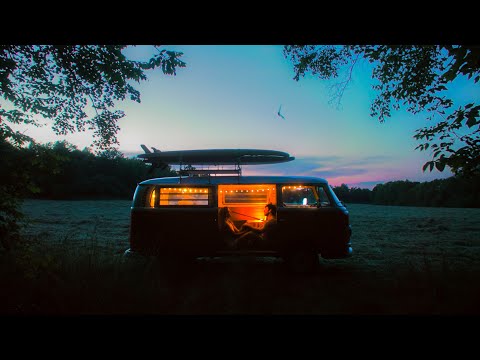
The 1979 Westfalia was the final T2 — the last year of the Bay Window Bus before the T3 Vanagon replaced it in 1980. Sixty-seven horsepower from the Type 4 engine, optional three-speed automatic for the first time, and the accumulated thirty years of Westfalia camping knowledge built into its interior. It closed the chapter that had opened in a Wiedenbrück workshop in 1951.
1979: The Iranian Revolution removed the Shah in January and produced the hostage crisis in November. Three Mile Island failed in March, and the American nuclear industry never recovered its confidence. The Walkman launched in Japan in July, introducing personal audio to a world that had previously shared its music. Carter's 'malaise' speech in July diagnosed American despair with a directness that finished his presidency. Disco was dying; punk and new wave were rising. The decade was ending without resolution.
The air-cooled flat-four that powered the 1979 T2 Westfalia (Type 2). Simple, reliable, and endlessly modifiable.
1600cc (1.6L) Air-cooled flat-4 / Type 4
50 HP
AS, GD, GE
Pickup
4-speed manual / 3-speed automatic
The 1979 Bus was approaching production end (would cease in early 1980s depending on variant).
All specifications should be verified before publication.
Refer to the specifications section above for the engine code used in the 1979 Bus. The engine code is typically stamped on the engine case above the generator. For verification assistance, use our M-Code decoder tool.
Confidence: medium — This information should be verified with additional sources.
The value of a 1979 Bus varies significantly based on condition, originality, and documentation. Driver-quality examples typically range from lower values, while excellent restored or numbers-matching examples command premiums. Condition, originality, and documentation are the primary value drivers. Always get a professional appraisal for insurance or sale purposes.
Confidence: low — This information requires verification before use.
1979 Bus models were produced at various Volkswagen factories worldwide. Check the production details above for specific factory information. The factory code can often be identified through chassis number analysis.
Confidence: medium — This information should be verified with additional sources.
The 1979 Bus received several updates from the 1978 model. Refer to the specifications and editorial sections above for detailed information about year-to-year changes. Changes may include mechanical updates, safety features, or cosmetic refinements.
Confidence: medium — This information should be verified with additional sources.
Common rust areas on air-cooled Volkswagens include heater channels (under running boards), floor pans (especially front and battery tray area), front beam (suspension mounting point), rear chassis/apron (where bumper mounts), and door bottoms. The heater channels are structural and expensive to repair. Always inspect these areas carefully before purchase.
A full rotisserie restoration typically costs $25,000-$50,000+ depending on condition and level of finish. Mechanical refresh (engine, brakes, suspension) runs $5,000-$12,000. Bodywork and paint alone can be $8,000-$15,000 for quality work. DIY restorations save labor but require significant time investment (500-1,000 hours). Parts availability is generally good for classic VWs, which helps control costs.
Confidence: low — This information requires verification before use.
A well-maintained 1979 Bus can serve as a daily driver, but consider the age of the vehicle. Modern traffic, safety features, and reliability expectations differ from the era. Regular maintenance, mechanical knowledge, and realistic expectations are essential. Many owners use classic VWs as weekend drivers or hobby vehicles rather than primary transportation.
Confidence: medium — This information should be verified with additional sources.
Yes, parts availability for classic air-cooled Volkswagens is generally excellent. The large enthusiast community and aftermarket support mean most mechanical and body parts are readily available. Some year-specific trim pieces or rare options may be harder to find, but the core mechanical components are well-supported.
Research current market values for the 1979 T2 Westfalia (Type 2)
Hagerty Valuation Tools
Industry-standard classic car values
Bring a Trailer Results
Recent auction prices
TheSamba Classifieds
Current listings & asking prices
Buying tip: Condition is everything. A rusty "project" can cost more to restore than buying a finished car. Check heater channels, floor pans, and battery tray first.
Original paint options available for the 1979 T2 Westfalia (Type 2).
Looking for a 1979 T2 Westfalia (Type 2) in Moss Green?
Find for SaleExplore the variants available for this model year and find your perfect match.
Want to see a detailed comparison of multiple vehicles?
Compare all variantsNumbers matching verification increases value by 20-40%. Use our tools to verify engine codes, chassis numbers, and M-codes for your 1979 T2 Westfalia (Type 2).
1979: The Iranian Revolution removed the Shah in January and produced the hostage crisis in November. Three Mile Island failed in March, and the American nuclear industry never recovered its confidence. The Walkman launched in Japan in July, introducing personal audio to a world that had previously shared its music. Carter's 'malaise' speech in July diagnosed American despair with a directness that finished his presidency. Disco was dying; punk and new wave were rising. The decade was ending without resolution.
The 1979 Westfalia was, though nobody announced it as such, the last T2 Bus for most markets — the Vanagon T3 would replace it in 1980. Volkswagen had been building the Bus in one form or another since 1950. The T1 split-window had run from 1950 to 1967. The T2 Bay Window had run from 1968 to 1979. Twelve years for the T2; seventeen for the T1. Together they constituted thirty years of a single idea: a forward-control van with an air-cooled rear engine, capable of carrying people or cargo or both, available with a camping conversion that made it into a home.
The 1979 Westfalia was powered by the Type 4 engine — a 2000cc air-cooled flat-four producing 67 horsepower, sourced from the VW 412 sedan and adapted for Bus use. The Type 4 unit was larger, smoother, and more refined than the Type 1 engines that had powered every previous Bus. For the first time, the Westfalia was available with a three-speed automatic transmission — a practical acknowledgment that the camping-vehicle market included buyers who wanted the experience without the gear-shifting.
The Westfalia interior by 1979 was the most complete and capable in the T2 generation's history. The standard pop-top provided standing room when parked. The full galley included a three-burner cooker, fresh-water tank with pump, integrated refrigerator in premium configurations, and extensive storage. The sleeping arrangement could accommodate a family of four. The electrical system — 12-volt with shore power capability — had evolved considerably from the simple system of the 1950s.
The 1979 Westfalia was special for being the culmination. Thirty years of continuous development — Westfalia learning what campers needed, VW learning what engines could do, owners teaching both companies what they'd missed — had produced, in the final T2 year, the most capable version of the original concept. The 67-horsepower Type 4 engine was the most powerful air-cooled Bus engine ever fitted to a production T2. The automatic transmission option made the vehicle accessible to drivers who had never managed a manual gearbox. The interior was the Westfalia's definitive statement of what a camping van could offer.
The T3 Vanagon that replaced it in 1980 was more modern — water-cooled (eventually), more aerodynamic, more comfortable at highway speeds. But it was also, unmistakably, different in kind from what it replaced. The 1979 was the last vehicle that could trace a direct line back to 1950, to the original Bus, to the forward-control design that Westfalia had converted in its Wiedenbrück workshop while Germany was still rebuilding.
1979 was a year of endings. The decade that had begun with Woodstock and the Moon landing was concluding with hostages in Tehran and lines at gas stations. The idealism of the early 1970s had been metabolized into a more cautious pragmatism. The back-to-the-land movement had produced a generation of adults who knew how to grow vegetables and fix engines and were now negotiating between those skills and the economic realities of approaching middle age.
The Bus, as a cultural symbol, had absorbed all of this. It was no longer primarily the vehicle of the counterculture — it was the vehicle of anyone who wanted to travel seriously and sleep cheaply. Families used it. Surfers used it. Bands used it. Nurses traveling between rural clinics used it. The specific association with the 1960s counterculture had faded into a broader identity as the vehicle of purposeful, self-sufficient mobility. In 1979, that identity was still being actively defined — and then the T2 ended, and the Bus became history.
The Type 4 engine transformed the 1979 Westfalia's driving character. Sixty-seven horsepower from 2000cc produced a smoothness that the Type 1 engines, for all their virtues, had never achieved. The Bus could maintain 65 mph on American interstates with the engine in a relaxed state of operation — not working hard, just working. The optional three-speed automatic, while reducing fuel economy, made long-distance camping trips accessible to a driver population that had previously considered the Bus's manual gearbox a barrier.
The T2 chassis had been refined over eleven years of production, and the 1979 version was the best-handling T2 of its generation. The suspension setup — fully independent front, swing-axle rear — remained recognizable from the T1, but the geometry improvements and the better weight distribution of the Type 4 engine produced handling that was, for a high-roof van, genuinely competent. The brakes had been upgraded through the T2 generation and by 1979 provided stopping distances that matched the vehicle's highway capability.
The 1979 Westfalia's buyer was often someone who had been thinking about buying a Westfalia for years. By 1979, the vehicle had a twenty-year reputation in the American market. People knew what it was, what it did, who drove it. The decision to buy a 1979 Westfalia was rarely impulsive — it was the culmination of a relationship with the concept that had been developing since someone's friend had one in 1968.
Buyers in 1979 were also responding to the energy crisis. The Westfalia's fuel economy — modest by sports car standards, excellent by large-family-vehicle standards — was a meaningful consideration in a year when gasoline prices were spiking and the reliability of fuel supply was in question. An air-cooled vehicle with simple mechanics and modest fuel requirements was, in 1979 specifically, a rational choice as well as an aesthetic one.
The 1979 Westfalia occupies premium territory in the T2 Bay Window market — final-year production, most powerful engine, most developed interior. Buyers should verify the Type 4 engine presence: the 2000cc unit is identifiable by its larger case and the specific mounting configuration that differs from Type 1-based engines. Automatic transmission examples are rarer and trade at a slight premium due to scarcity, though the manual gearbox remains the driver's preference.
Pop-top condition is critical: the 1979 canvas and hinge mechanisms are now over forty-five years old and will require inspection and likely replacement. Interior components from the 1979 model year are the most complex Westfalia has ever fitted to a T2, which makes sympathetic restoration achievable but complete originality increasingly rare. Provenance documentation — original title, service records, single-family history — adds substantially to value in a market where 1979 T2 Westfalias are actively sought.
The 1979 Westfalia is the end of thirty years. The T1 split-window from 1950 to 1967. The T2 Bay Window from 1968 to 1979. Two generations, twelve models, one unbroken idea: an air-cooled van with a camping conversion, built in Germany, sold across the world, used by everyone.
The 1979 is the best version of the T2. It has the most power, the most developed interior, and the accumulated engineering knowledge of nearly three decades of Westfalia production. It is also the last of its kind. The T3 Vanagon that followed was water-cooled, more modern, and fundamentally different in character. The 1979 is where the air-cooled Bus story ends. That is not a reason to mourn. It is a reason to drive one.