1285cc
Air-cooled flat-4
Source-recorded engine code: F.
- Power
- N/A
- Fuel
- Unknown
Reference review: source-recorded details; historical accuracy has not been comprehensively verified.
Representative imagery. Depicted year, configuration and image rights remain unverified.

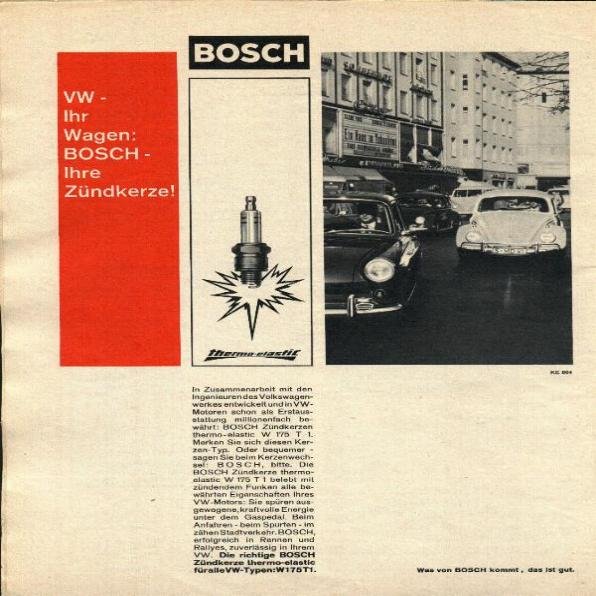
Representative imagery; exact configuration unverified
Explore the 1965 Beetle: Peak evolution of the 1200cc era. Folk music meets German engineering in VW's most refined year. When counterculture found its wheels.
The air-cooled flat-four that powered the 1965 Beetle. Simple, reliable, and endlessly modifiable.
Research current market values for the 1965 Beetle
Hagerty Valuation Tools
Industry-standard classic car values
Bring a Trailer Results
Recent auction prices
TheSamba Classifieds
Current listings & asking prices
Buying tip: Condition is everything. A rusty "project" can cost more to restore than buying a finished car. Check heater channels, floor pans, and battery tray first.
Original paint options available for the 1965 Beetle.
Looking for a 1965 Beetle in Black?
Find for SaleContinue from this 1965 reference to other recorded model years and variants.
Want to see a detailed comparison of multiple vehicles?
Compare all variantsUse retained catalog and code references as a starting point for researching your 1965 Beetle. Applicability remains under review; VWX does not authenticate vehicles.
1965: Bob Dylan plugged in at Newport, folk purists screamed betrayal, and the counterculture discovered electric amplification could coexist with acoustic truth. Meanwhile, in Wolfsburg, VW was navigating similar tensions with the most evolved 1200cc Beetle ever built.
Sixteen years of continuous refinement had created something unprecedented: a car that was simultaneously ancient and perfect. The 40-horsepower engine was a dinosaur by Detroit standards. It was also bulletproof. The styling hadn't changed significantly since 1949. It also hadn't needed to.
VW wasn't chasing trends—they were perfecting truth. Like Dylan's electric guitar, the 1965 Beetle proved evolution doesn't require revolution. Sometimes perfection just needs better amplification.
The 1965 Beetle was VW's greatest hits album performed with better instruments:
Everything was familiar. Everything was better. VW had spent 16 years perfecting a formula that Detroit spent 16 years calling obsolete. The 1965 proved perfection doesn't need annual restyling—it just needs relentless refinement.
The 1965 Beetle wasn't special because it was new—it was special because it was perfect. Sixteen years of evolution had refined every component:
The 1200cc engine was the peak of VW's original formula. Not powerful (40 hp would barely run a modern coffee maker), but bulletproof. The carburetor was perfectly jetted. The cooling was optimized. The bearings were stronger. It was the Honda Civic of its era, if the Civic was German and refused to use water cooling.
The transmission had full synchromesh on all gears—a luxury in 1965. The clutch was progressive. The shifter was precise. Everything felt mechanical in the best way possible. You didn't just drive this car—you conducted a symphony of moving parts.
But what really made the '65 special was timing. It was the last year of pure 1200cc engineering before VW started adding displacement. The final iteration of the original formula. The perfect version of the simple version. Like the last acoustic Dylan album—pure, refined, complete.
1965 was the year America discovered volume control. Dylan went electric at Newport. The Beatles released 'Help!' The Who declared 'My Generation.' The Voting Rights Act passed. Malcolm X was assassinated. Combat troops landed in Vietnam. Everything was getting louder.
Detroit was peak Detroit: Mustangs with V8s, GTOs with tri-power, chrome that could blind satellites. American cars weren't just big—they were philosophical statements about abundance, power, and planned obsolescence.
Into this amplified chaos rolled the Beetle, selling a different philosophy: honesty over hype, durability over disposability, evolution over revolution. The 'Think Small' campaign wasn't just advertising—it was a manifesto for an emerging counterculture.
College students drove Beetles. Civil rights workers drove Beetles. Folk singers drove Beetles (even after going electric). The car was becoming more than transportation—it was becoming a statement. You didn't just buy a '65 Beetle. You joined a movement that valued authenticity over excess, engineering over styling, truth over trends.
The Beetle was becoming what marketers now call a 'lifestyle brand,' except VW never meant it to be one. They just built honest cars. The counterculture recognized that honesty and adopted it as their own.
In 1965, the Beetle drove like mechanical truth: slow but deliberate, quirky but confident, honest about its limitations and proud of its capabilities.
Zero to 60? Eventually. Top speed? Faster than you'd want to go in something with swing axle suspension. But that wasn't the point. The Beetle was about connection—you felt everything happening. The air-cooled engine's chatter, the mechanical shifter's precision, the steering's direct feedback. It was analog driving in the best possible way.
Today, driving a '65 Beetle is time travel. Modern cars isolate you from the experience. The Beetle involves you in it. Every shift is an event. Every corner requires thought. The heater still barely works. It's gloriously, perfectly imperfect.
You'll never win a drag race. You'll win something better: understanding of what driving felt like when cars were honest and mechanics were optional skills.
The 1965 Beetle attracted three distinct tribes:
The Pragmatists: Teachers, professors, engineers—people who understood that 40 horsepower was enough if it lasted forever. They bought Beetles because math doesn't lie and compound interest beats planned obsolescence.
The Progressives: Civil rights workers, folk singers, college students—people questioning American excess. They bought Beetles as rolling protest signs against chrome-plated conformity. The car became their counterculture credentials.
The Purists: Early adopters who'd been driving Beetles since the '50s. They bought the '65 because it was everything they loved about earlier Beetles, just better. Evolution without revolution.
Price? $1,639 base model. Less than half a Cadillac. More than twice as honest.
The 1965 Beetle represented peak evolution of VW's original formula:
1949-1960: The foundation years. Basic engineering proven, refined, improved. 1961-1964: Modernization. Larger windows, better electrics, synchronized transmission. 1965: Perfection. Every component optimized through 16 years of development. 1966: The changes begin. 1300cc and 1500cc engines arrive. Complexity creeps in.
The '65 was the last pure expression of Ferdinand Porsche's original vision: simple, durable, maintainable. After '65, VW started chasing power. Necessary evolution, but something pure was lost.
Think of it as VW's 'Blonde on Blonde'—the perfect acoustic album before going electric. Everything that made the Beetle great, refined to its essence.
Current Market Values (2025):
Show Queen: $25,000-35,000 Excellent: $18,000-25,000 Good Driver: $12,000-18,000 Project Car: $5,000-12,000 Parts Car: $1,500-5,000
Why these numbers? Because the '65 represents peak mechanical evolution before complexity. It's the last year of pure engineering. The perfect version of the simple version.
Investment outlook? Rising. As early Beetles cross $50K, the '65 looks increasingly attractive. It's the sweet spot: evolved enough to drive regularly, simple enough to maintain easily, significant enough to matter historically.
Buy now. Drive it. Watch value appreciate. Or just appreciate driving it. Both work.
Restoring a '65 Beetle? Here's your survival guide:
Common Issues:
Parts Availability:
Restoration Tips:
The 1965 Beetle was VW's perfect acoustic album before going electric. Everything that made the Beetle great, refined through 16 years of evolution, preserved in the last pure year before displacement increases changed the formula.
Buy one if:
Don't buy one if:
The '65 Beetle proves perfection doesn't require change—it requires refinement. Like Dylan before Newport, it's pure, evolved, and complete.