Reference review: source-recorded details; historical accuracy has not been comprehensively verified.
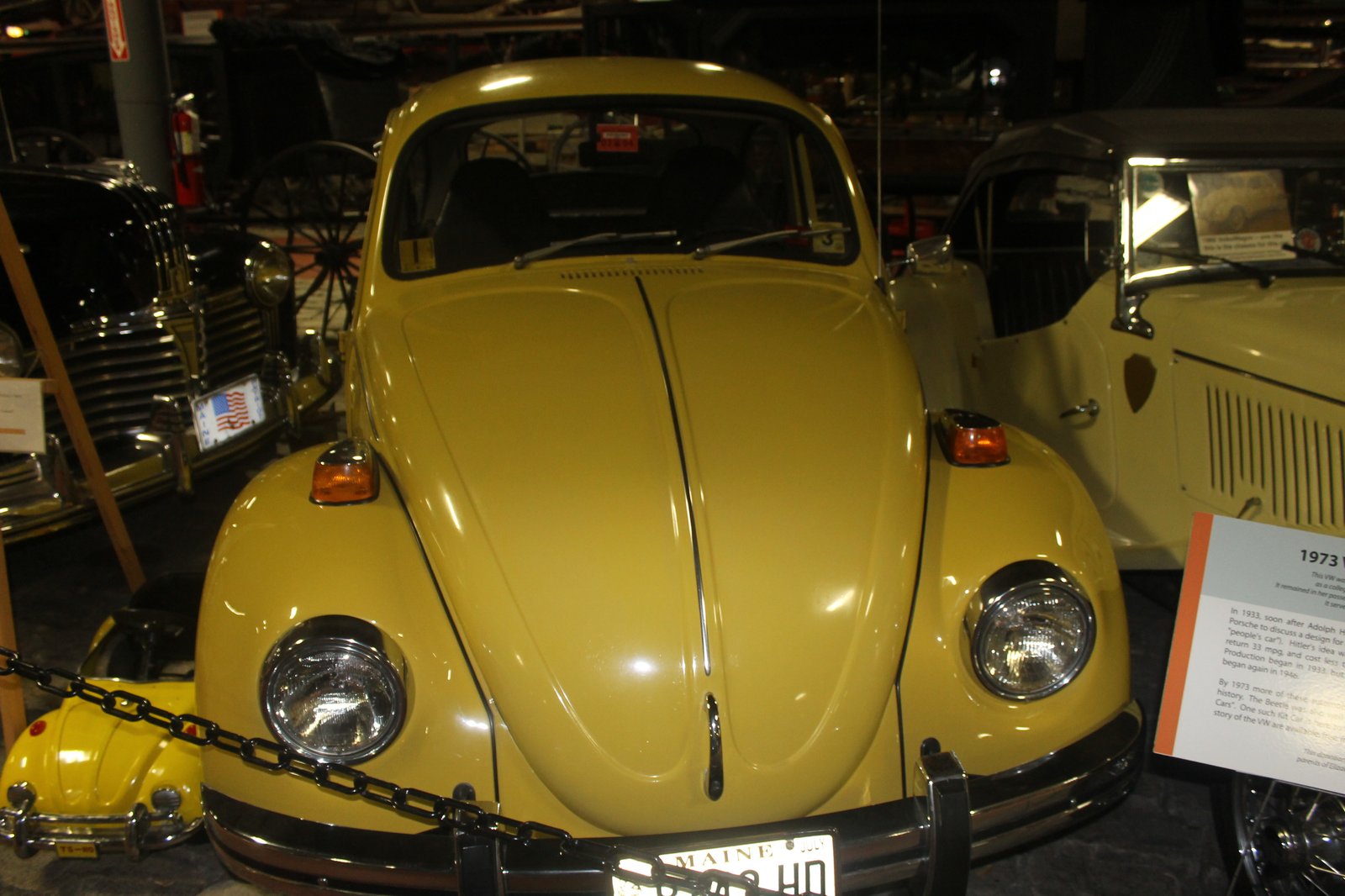
1974 · Beetle
1974 Beetle
Every 1974 Beetle record we hold — 3 Super Convertible entries — is under identity review. VWX does not pick one.
Real Stories
Every 1974 Beetle record we hold — 3 Super Convertible entries — is under identity review. VWX does not pick one.
The records conflict. Rather than choose one and call it history, we leave both visible and say so.
1974 body styles
1974 Super Convertible
Identity under review · story recorded
Factory colours recorded for 1974
Paint codes whose recorded availability covers 1974, from the VWX colour reference. They are not tied to any record on this page; year applicability remains under review.
- Sunbug YellowL10D1974
- Olympic BlueL51P1974
- Delft BlueL55Z1974
- Tropical GreenL60A1974
- Avocado GreenL60F1974
- Bali YellowL62H1974
- Rally YellowL10A1974-1975
- Senegal RedL31A1974-1975
- Cliff GreenL61A1974-1975
- Lofoten GreenL61H1974-1975
- Palma Green MetallicL95K1974-1975
- Ceylon BeigeL13H1973-1974
Identity under review
1974 Super Beetle: Detroit Downsized, Japan Invaded, VW Just Got Weirder
More than one record claims this car, and VWX has not picked one. So the specifications, the colours and the factory data stay off this page. The story does not: it was written from the sources we hold, and hiding it would not make the car any clearer.
Reference review: source-recorded details; historical accuracy has not been comprehensively verified.
Open the Super Convertible recordThe story on file
974: Oil crisis in full swing, Nixon resigning, America's muscle car era dying. Detroit was scrambling to downsize. Japan was flooding the market with efficient newcomers. And VW? VW was building the exact same car they'd been perfecting for 25 years. Just... curvier.
The 1974 Super Beetle was VW's final love letter to American buyers—a car that simultaneously embraced and rejected modernity. Curved windshield? Modern. Air-cooled engine? Ancient. Front disc brakes? Progress. Rear engine? Tradition. It was the Beetle's last full year in America, though nobody knew it yet.
VW had spent decades telling America that small was smart. In 1974, as gas lines wrapped around blocks and muscle cars died, America finally believed them. The timing was perfect. The irony? VW was already planning their water-cooled revolution. Sometimes you win the argument just in time to change sides.
Model Information and History
What It Was
The 1974 Super Beetle was what happened when German engineers were forced to admit that 1938's design needed updating. But only slightly.
Specifications that would make Detroit laugh:
- Engine: 1600cc flat-four, 48 horsepower (yes, that's the real number)
- Transmission: 4-speed manual (because automatics are for quitters)
- Suspension: MacPherson struts front, swing axle rear (physics are negotiable)
- Brakes: Front disc, rear drum (stopping is good)
- Body: Curved windshield sedan (the Beetle's one concession to aerodynamics)
- Weight: 1,850 pounds (lighter than some modern motorcycles)
Standard features included:
- Two doors (because four would be excessive)
- Four seats (optimistically)
- Fresh air heater (eventually)
- AM radio (mono, like Beethoven intended)
VW marketed it as their premium Beetle. In 1974, that meant having a day/night mirror and reversing lights. Premium was relative.
What Made It Special
The 1974 Super Beetle was special because it represented VW's most radical compromise with modernity—which is to say, barely any compromise at all.
The curved windshield (introduced in '73) remained its most visible evolution. It improved visibility by 17%, reduced aerodynamic drag by a percentage VW never specified, and ruined the Beetle's profile in ways that still make purists weep.
The MacPherson strut front suspension was genuine innovation—it transformed the Beetle's handling from 'adventurous' to 'almost modern.' The front trunk grew to 3.9 cubic feet, enough for two medium suitcases or one American grocery bag.
But the real magic? 48 horsepower. In 1974, as America faced its first real energy crisis, VW's decades-old commitment to efficiency wasn't just relevant—it was prophetic. The Super Beetle could cruise at 75mph (eventually), sip gas at 25mpg, and make you feel smug about both.
It was the best-equipped, most refined, least pure Beetle ever sold in America. It was also the last. Sometimes perfection arrives just before obsolescence.
Cultural Context
1974 was the year America's automotive certainties crumbled. The oil crisis had turned gas stations into ghost towns. Speed limits dropped to 55mph nationwide. Detroit's mighty V8s became instant dinosaurs.
The cultural landscape was equally chaotic. Nixon resigned in August. Vietnam was ending badly. Inflation was soaring. The counterculture had gone mainstream, then corporate. America was questioning everything—especially its love affair with big cars.
Into this chaos rolled the Super Beetle, looking almost exactly like it had in 1949. While Detroit scrambled to downsize and Japan offered Civic lessons in efficiency, VW simply pointed to their 25-year-old design and said, 'Told you so.'
The competition was fierce:
- Honda Civic: New, modern, 40mpg
- Toyota Corolla: Reliable, water-cooled, rising
- Datsun B210: Efficient, ugly (but differently ugly)
- Gremlin: AMC's idea of small (still too big)
The Super Beetle was the oldest design by decades. It was also the most expensive economy car in America. In 1974, that made perfect sense—experience costs more than experimentation.
Buyers faced a choice: embrace Japan's vision of the future, support Detroit's rushed downsizing, or choose a German car that had predicted the crisis 25 years ago. Many chose history. They didn't know they were choosing an ending.
How It Drove
In 1974, the Super Beetle drove like a modern car—if your definition of modern stopped at 1965.
The 48 horsepower engine was actually less powerful than earlier Beetles (thanks, emissions controls). Zero-to-60 happened eventually. Top speed was theoretical. But that wasn't the point.
The MacPherson struts made it handle like a real car, not a pendulum experiment. The curved windshield meant you could actually see where you weren't going very quickly. The disc brakes meant you could stop—a novel concept for Beetle owners.
Driving a '74 Super Beetle today is time travel. Everything requires effort—steering, shifting, existing. The heater still doesn't work. The wipers are optimistic. The engine makes noises that would send a modern mechanic into therapy.
But it's pure. No power assists. No electronic anything. Just you, physics, and 48 horsepower of air-cooled defiance. Modern cars are better at everything except making you smile.
Who Bought It
The 1974 Super Beetle attracted three distinct tribes:
- The Pragmatic Prophets They saw the gas crisis coming. They'd been reading about peak oil. They bought Super Beetles not because they loved VWs, but because they feared V8s. They were right.
- The Last-Chance Romantics They knew the Beetle couldn't last forever. They wanted one before it ended. They chose Super because it was 'the best,' even if purists disagreed. They were also right.
- The Anti-Detroit Brigade They'd watched American cars get bigger, thirstier, more baroque. The Super Beetle was their protest vote—European, efficient, defiantly unchanged. Mostly right.
Price: $3,095 base. Expensive for an economy car, cheap for a cultural statement. The Super Beetle wasn't just transportation; it was membership in a fading tribe.
Evolution
The Super Beetle's evolution was more like careful editing:
1971: MacPherson struts debut, world doesn't end 1972: Minor refinements, purists still angry 1973: Curved windshield arrives, purists apoplectic 1974: Peak Super Beetle—best equipped, last full year 1975: Brief appearance, then goodbye America
The 1974 model was the final form—everything VW had learned about modernizing the Beetle without killing its soul. Changes from 1973:
- Improved energy-absorbing bumpers (slightly uglier)
- Enhanced safety padding (slightly safer)
- More emissions controls (slightly slower)
- Better carpet (slightly quieter)
By 1974, the Super Beetle was the most evolved air-cooled VW sedan ever. It was also a dead end. VW was already building its replacement: the Golf/Rabbit. Water-cooled. Front-wheel drive. Modern.
The Super Beetle wasn't just the best Beetle—it was the last Beetle that mattered in America. Evolution complete.
Today
In 2025, the 1974 Super Beetle exists in a strange market space:
Values (USD):
- Show Quality: $22,000-28,000
- Excellent: $15,000-20,000
- Good: $8,000-14,000
- Project: $2,000-7,000
- Parts Car: $500-1,500
The irony? Super Beetles were once considered less desirable than 'real' Beetles. Now? Their better handling, larger trunk, and improved visibility make them more usable classics. The market is catching up to practicality.
Investment outlook: Rising slowly. Not the fastest-appreciating Beetle, but perhaps the smartest buy. They're the best to actually drive, if driving old cars is your thing.
Pro tip: Buy the best one you can find. Restoration costs exceed market value unless you do the work yourself. And you won't do the work yourself. Nobody does.
Restoration
Restoring a '74 Super Beetle requires three things: money you'll never recover, time you'll never get back, and humor about both.
Common issues:
- Rust: Everywhere. Check heater channels, floorpans, strut towers.
- Engine: 1600cc is reliable if maintained, expensive if neglected.
- Struts: They leak. They always leak. Budget accordingly.
- Wiring: 50 years old and German. What could go wrong?
Parts availability:
- Body panels: Readily available, quality varies
- Mechanical: Everything exists if you can pay
- Interior: Reproduction quality ranges from 'perfect' to 'why?'
- Trim: Available but expensive
Special challenges:
- Curved windshield is pricey ($500+)
- Strut towers require expertise to repair
- Emissions parts getting rare
- Your spouse's patience getting rarer
Budget reality:
- Minor restoration: $8,000-15,000
- Full restoration: $20,000-35,000
- Marriage counseling: Priceless
The Bottom Line
The 1974 Super Beetle was the best Beetle America would ever get—the most evolved, most usable, most modern version of an ancient design. It was also the last gasp of air-cooled simplicity before VW embraced water pumps and radiators.
Who should buy one?
- You understand that slow cars driven fast are more fun than fast cars driven slow
- You appreciate German overengineering of simple things
- You want the best-driving classic Beetle
- You enjoy explaining why curved glass matters
Who shouldn't?
- You think horsepower numbers should have two digits
- You believe air conditioning is a right, not a privilege
- You're seeking investment-grade returns
The 1974 Super Beetle is the perfect classic VW for people who want a classic VW that doesn't feel entirely classic. It's the Beetle that proved VW could evolve—right before they decided not to.
Nearby years
Explore the ecosystem
Some of this works today. Some of it is still an idea. The chips say which.