Reference review: source-recorded details; historical accuracy has not been comprehensively verified.
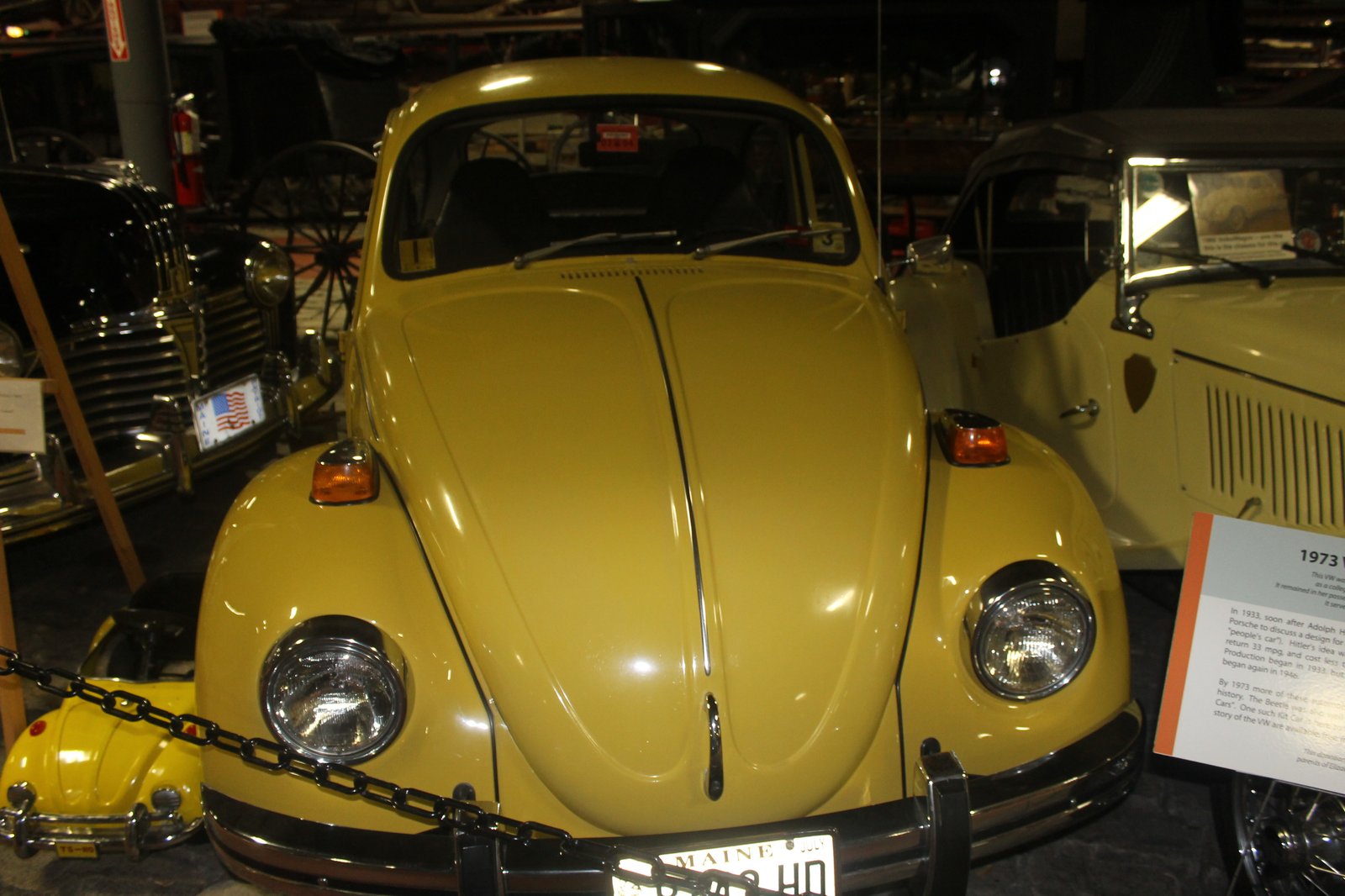
1975 · Beetle
1975 Beetle
Every 1975 Beetle record we hold — 2 Super Convertible entries, 2 Super Sedan entries — is under identity review. VWX does not pick one.
Real Stories

Every 1975 Beetle record we hold — 2 Super Convertible entries, 2 Super Sedan entries — is under identity review. VWX does not pick one.
The records conflict. Rather than choose one and call it history, we leave both visible and say so.
1975 body styles
1975 Super Convertible
Identity under review
1975 Super Sedan
Identity under review · story recorded
Factory colours recorded for 1975
Paint codes whose recorded availability covers 1975, from the VWX colour reference. They are not tied to any record on this page; year applicability remains under review.
- Berber YellowL11D1975
- Nepal OrangeL20C1975
- Malaga RedL30C1975
- Bahia RedL31C1975
- Ibiza RedL31M1975
- Lagoon BlueL50C1975
- MahoganyL2481975-1976
- Inca RedL2581975-1976
- CapriL3351975-1976
- Alpine WhiteL90E1975-1976
- Alaska Blue MetallicL96B1975-1976
- Rally YellowL10A1974-1975
Identity under review
1975 Super Beetle: The Last Honest Car in a Dishonest Time
More than one record claims this car, and VWX has not picked one. So the specifications, the colours and the factory data stay off this page. The story does not: it was written from the sources we hold, and hiding it would not make the car any clearer.
Reference review: source-recorded details; historical accuracy has not been comprehensively verified.
Open the Super Sedan recordThe story on file
975: Watergate aftermath, Vietnam ending, trust in institutions at zero. Detroit was downsizing under pressure, Japanese imports were rising, and American car buyers were learning that everyone lies. Everyone except Volkswagen.
The 1975 Super Beetle arrived as VW's last honest statement—48 honest horsepower, zero pretense, zero chrome dreams. It was the final evolution of the air-cooled Beetle in most markets. The last chapter of a 30-year experiment in automotive truth-telling.
VW wasn't trying to compete with Civic's refinement or Corolla's modernity. They were selling authenticity in an era suddenly obsessed with it. The timing was perfect. The car was perfect. The perfection was accidental. That made it even more perfect.
Model Information and History
What It Was
The 1975 Super Beetle was VW's final form of honest transportation. The specs read like anti-marketing:
- Engine: 1600cc flat-four (Type AJ), 48 horsepower (SAE Net). Yes, really.
- Transmission: 4-speed manual, because automatics lie about involvement
- Body: Super Beetle sedan, curved windshield (still weird to purists)
- Suspension: MacPherson struts (front), swing axle (rear)
- Safety: Dual-circuit brakes, collapsible steering column, seat belts that actually worked
- Features: Fresh air heater (still barely worked), two-speed wipers, rear window defroster
VW positioned it as premium Beetle—$3,150 base price, about $500 more than standard Beetle. Premium meant safety and visibility, not luxury. In 1975, that honesty was revolutionary.
What Made It Special
The 1975 Super Beetle was special because it refused to evolve wrong. While Detroit grafted opera windows onto vinyl roofs, while Japan added plastic wood to economy cars, VW kept the Beetle's soul intact.
The curved windshield (introduced on 1973 1303) was still there—better visibility, better crash safety, still controversial among purists. The MacPherson struts still transformed the handling from 'interesting' to 'actually predictable.' The fuel injection system (pioneered on Type 3) never made it to US Beetles. VW knew when to stop.
But what made the '75 truly special was timing. It arrived as America was discovering institutional lies—Watergate, Vietnam, corporate deception. The Beetle had been telling the truth since 1949. Suddenly truth was trendy.
VW's advertising remained radically honest: '48 horsepower but it's all honest horsepower.' 'Our heater still barely works.' 'The shape is still ugly but the ugly still works.' In 1975, that honesty wasn't just marketing. It was cultural revolution.
Cultural Context
1975 was the year America's hangover hit. Vietnam ended in April. Watergate investigations were still echoing. The muscle car era was dead—killed by insurance rates, emission controls, and the '73 oil crisis. The cultural revolution of the '60s had evolved into something darker, more cynical.
Music split between extremes: Disco's artificial escape vs Punk's raw honesty. Bruce Springsteen released 'Born to Run'—an album about escaping industrial decay. Detroit was laying off thousands. The Japanese were gaining market share monthly.
Car culture fractured too. The era of chrome dreams was over. Buyers wanted economy, reliability, truth. Detroit responded with downsized versions of their old lies—mini-broughams with vinyl roofs and opera windows. Japan offered modern efficiency with American-style features.
The Beetle stood apart. It wasn't trying to be anything but itself. The counter-culture that adopted it in the '60s had grown up, but the Beetle's values—honesty, simplicity, authenticity—aligned perfectly with the post-Watergate zeitgeist. It was the right car for cynical times.
How It Drove
In 1975, the Super Beetle drove like a statement of principles. Slow? Yes. The 48 horsepower was barely adequate for American freeways. But it was honest horsepower. No emission control systems choking a bigger engine. Just clean, simple, efficient design.
The MacPherson struts made it the best-handling Beetle ever. The curved windshield made it the most visible. The dual-circuit brakes actually stopped it. It wasn't sports car handling—it was honest car handling.
Today? It's glacially slow by 2025 standards. 0-60 happens eventually. Highway speeds require planning. The heater still barely works. But it's pure mechanical joy—light steering, playful handling, engine sound straight from 1949. You feel everything. You work for speed. You earn every smile.
Modern cars lie about involvement. The '75 Super Beetle tells the truth about the relationship between driver and machine.
Who Bought It
The 1975 Super Beetle attracted three distinct tribes:
Tribe 1: The True Believers
- Original Beetle owners since the '60s
- Valued VW's honesty as philosophy
- Wanted the best evolution of their trusted friend
- Didn't trust Detroit's downsized promises
Tribe 2: The New Cynics
- Post-Watergate skeptics
- Distrusted institutional promises
- Wanted transportation without theater
- Appreciated VW's anti-marketing honesty
Tribe 3: The Pragmatists
- Needed reliable, efficient transport
- Understood the value of proven engineering
- Didn't care about status or style
- Actually liked the curved windshield
Price positioned at $3,150 (about $17,000 in 2025 dollars). Not cheap, not expensive. Honest.
Evolution
The 1975 Super Beetle represented the final evolution of VW's air-cooled sedan in most markets:
1971: Super Beetle debuts (MacPherson struts, longer nose) 1973: Curved windshield arrives (1303 body style) 1974: Minor refinements, emission controls 1975: Final year in most markets
The standard Beetle continued alongside, still using torsion bars and flat glass. Some markets (Germany) kept building Beetles through 1978. Brazil until 1986. Mexico until 2003.
But 1975 was the end of meaningful evolution. VW was already selling the Golf/Rabbit in Europe—water-cooled, front-wheel drive, modern. The Beetle had taken honest engineering as far as it could go.
The Super Beetle died honest. No final special editions. No commemorative models. Just the last, best version of a car that never lied.
Today
2025 Market Values (USD):
- Concours: $25,000-35,000 (rare, documented, perfect)
- Excellent: $15,000-25,000 (restored, sorted)
- Good: $8,000-15,000 (solid driver, needs cosmetics)
- Fair: $4,000-8,000 (running, needs work)
- Project: $1,500-4,000 (complete but rough)
Investment Outlook: Super Beetles are undervalued compared to earlier models. The curved windshield still bothers purists. Their loss—the '75 is the most usable classic Beetle. Values are rising slowly but steadily.
Buy Now If:
- You want the best-driving classic Beetle
- You appreciate engineering evolution
- You like being contrarian (purists still hate the curved glass)
- You value honesty over hype
Restoration
Restoring a '75 Super Beetle requires honesty with yourself:
Common Issues:
- Rust: Heater channels, floorpans, strut towers
- Electrical: 48-year-old wiring gets creative
- Mechanical: Engine oil leaks (feature, not bug)
- Suspension: Strut towers rust, mounts wear
Parts Availability:
- Mechanical: Excellent (still supported)
- Body: Good (reproduction available)
- Trim: Fair (Super Beetle-specific parts harder)
- Interior: Good (reproduction quality varies)
Restoration Costs:
- Engine rebuild: $3,500-5,000
- Paint/Body: $8,000-15,000
- Interior: $2,000-4,000
- Full restoration: $20,000-35,000
Survival Tips:
- Buy the best you can afford
- Check strut towers first
- Join a club (knowledge > parts)
- Accept oil leaks as personality
The Bottom Line
The 1975 Super Beetle was the last honest car from the last honest decade of air-cooled VW production. It wasn't the fastest, prettiest, or most valuable Beetle. It was the most evolved, most usable, most honest.
In 1975, that honesty aligned perfectly with America's post-Watergate cynicism. Today, it aligns perfectly with our hunger for automotive authenticity.
Buy a '75 Super Beetle if:
- You value truth over theater
- You understand evolution isn't betrayal
- You appreciate curved glass (seriously, the visibility is better)
- You want the best-driving classic Beetle
The Super Beetle died honest. That's why it matters. That's why it endures. That's why it's still teaching us about authenticity, 50 years later.
Nearby years
Explore the ecosystem
Some of this works today. Some of it is still an idea. The chips say which.