1600cc
Displacement
N/A
Power
N/A
Top Speed

Real Stories

1949 VW Split Window Beetle - German Border Patrol
11:49

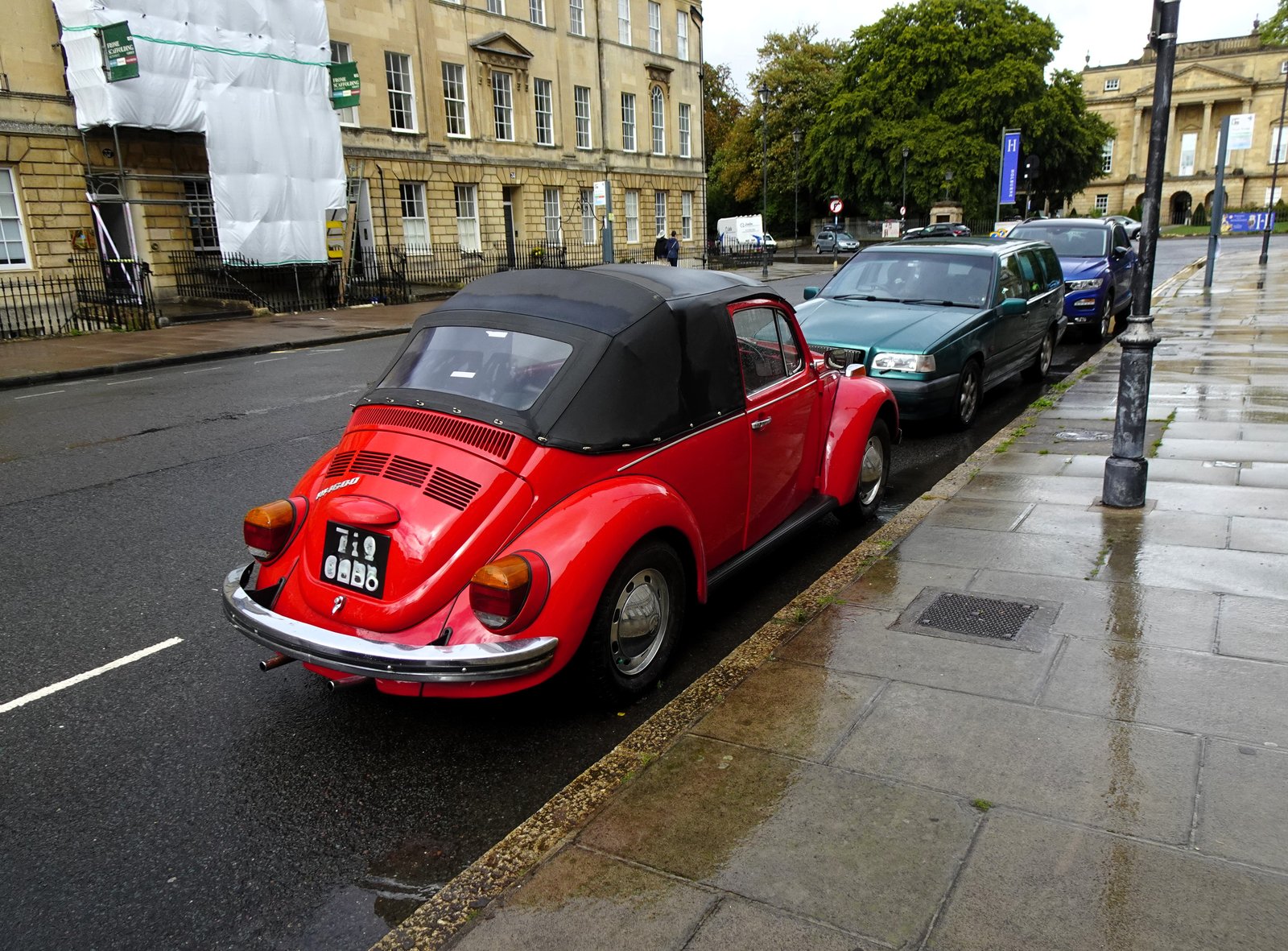
1977 Beetle

1977: Punk exploded. Sex Pistols released "Never Mind the Bollocks." The Clash released debut album. Ramones brought punk to America. The DIY ethos rejected corporate rock's excess, challenged music industry authority, embraced amateurism as authentic. Strip everything to essentials. Reject expertise as gatekeeping. Build from what you have. The Beetle had been embodying punk values for twenty-eight years before punk articulated them. Minimal engineering. Owner-serviceable maintenance. Rejection of planned obsolescence. Anti-authority through anti-consumption. Punk philosophy expressed through three-chord songs. Beetle philosophy expressed through air-cooled simplicity. Same values: authenticity through stripping away excess, accessibility through rejecting expertise, durability through honest construction.

Read the Full Story

Engineering.

The air-cooled flat-four that powered the 1977 Beetle. Simple, reliable, and endlessly modifiable.

1600cc

Air-cooled

The air-cooled flat-four engine that powered a generation. Code .

Power
N/A
Fuel
Carburetor

Highlights.

Feature

Cultural context

counterculture

Feature

Feature 2

The '77 Convertible was special because it was the last of its kind—the final German-built Super Beetle drop-top.

Engine

Engine Size

1600cc (1.6L) Air-cooled flat-4

Engine

Horsepower

48 HP

Quick Facts — 1977 Beetle

  • Engine SizeNeeds Review

    1600cc (1.6L) Air-cooled flat-4

  • HorsepowerNeeds Review

    48 HP

  • Engine CodeNeeds Review

    AJ

  • Body StyleNeeds Review

    2-door convertible

  • TransmissionNeeds Review

    4-speed manual

  • Current Market ValueNeeds Review

    Excellent: $25,000-35,000. Good: $15,000-25,000. Project: $5,000-15,000.

    Values from editorial 'Today' section, market conditions vary

  • Cultural SignificanceNeeds Review

    1977 was the year punk broke.

  • Common Rust AreasNeeds Review

    Check: heater channels, floor pans

All specifications should be verified before publication.

Top Questions — 1977 Beetle

Refer to the specifications section above for the engine code used in the 1977 Beetle. The engine code is typically stamped on the engine case above the generator. For verification assistance, use our M-Code decoder tool.

Confidence: medium — This information should be verified with additional sources.

A 1977 Beetle's value ranges from $5,000-15,000 for project cars, $15,000-25,000 for good drivers, $15,000-25,000 for driver-quality examples, $25,000-35,000 for excellent restored examples, $35,000-45,000 for show-quality examples. Condition, originality, and documentation are the primary value drivers. Always get a professional appraisal for insurance or sale purposes.

Confidence: medium — This information should be verified with additional sources.

Sources

  • VWX Reference: VWX Editorial - 1977 Beetle Today section

1977 Beetle models were produced at various Volkswagen factories worldwide. Check the production details above for specific factory information. The factory code can often be identified through chassis number analysis.

Confidence: medium — This information should be verified with additional sources.

Key changes for the 1977 Beetle: cooled rebellion:. 1974: Peak convertible years. 1976: Gradual refinements. Check the specifications section for complete details about year-to-year evolution.

Confidence: medium — This information should be verified with additional sources.

Common rust areas on a 1977 Beetle include: heater channels, floor pans. The heater channels are structural and expensive to repair. Always inspect these areas carefully before purchase.

The 1978 Beetle received updates from the 1977 model. Check the specifications section above for details about year-to-year evolution. Common changes across model years include safety updates, mechanical refinements, and regulatory compliance features.

Confidence: medium — This information should be verified with additional sources.

A full rotisserie restoration typically costs $25,000-$50,000+ depending on condition and level of finish. Mechanical refresh (engine, brakes, suspension) runs $5,000-$12,000. Bodywork and paint alone can be $8,000-$15,000 for quality work. DIY restorations save labor but require significant time investment (500-1,000 hours). Parts availability is generally good for classic VWs, which helps control costs.

Confidence: low — This information requires verification before use.

Numbers matching (original engine, transmission, and chassis) typically increases value by 20-40% over non-matching examples. However, the premium varies based on overall condition, documentation, and market demand. Use our numbers matching verification tool to check your vehicle.

Confidence: medium — This information should be verified with additional sources.

A well-maintained 1977 Beetle can serve as a daily driver, but consider the age of the vehicle. Modern traffic, safety features, and reliability expectations differ from the era. Regular maintenance, mechanical knowledge, and realistic expectations are essential. Many owners use classic VWs as weekend drivers or hobby vehicles rather than primary transportation.

Confidence: medium — This information should be verified with additional sources.

Yes, parts availability for classic air-cooled Volkswagens is generally excellent. The large enthusiast community and aftermarket support mean most mechanical and body parts are readily available. Some year-specific trim pieces or rare options may be harder to find, but the core mechanical components are well-supported.

Why This Year Matters

Needs Review
  • Cultural context: counterculture
  • The '77 Convertible was special because it was the last of its kind—the final German-built Super Beetle drop-top.
Collector AppealHigh
Restoration ComplexityMedium
Daily Driver SuitabilityMedium

Valuation Resources

Research current market values for the 1977 Beetle

Buying tip: Condition is everything. A rusty "project" can cost more to restore than buying a finished car. Check heater channels, floor pans, and battery tray first.

Which 1977 Beetle fits your style?

Explore the variants available for this model year and find your perfect match.

Want to see a detailed comparison of multiple vehicles?

Compare all variants

Verify Authenticity

Numbers matching verification increases value by 20-40%. Use our tools to verify engine codes, chassis numbers, and M-codes for your 1977 Beetle.

The Full Story

Introduction

1977: Punk exploded. Sex Pistols released "Never Mind the Bollocks." The Clash released debut album. Ramones brought punk to America. The DIY ethos rejected corporate rock's excess, challenged music industry authority, embraced amateurism as authentic. Strip everything to essentials. Reject expertise as gatekeeping. Build from what you have. The Beetle had been embodying punk values for twenty-eight years before punk articulated them. Minimal engineering. Owner-serviceable maintenance. Rejection of planned obsolescence. Anti-authority through anti-consumption. Punk philosophy expressed through three-chord songs. Beetle philosophy expressed through air-cooled simplicity. Same values: authenticity through stripping away excess, accessibility through rejecting expertise, durability through honest construction.

What It Was

The 1977 Beetle looked deliberately unchanged—twenty-eight years of visual continuity that felt increasingly punk. No styling excess. No unnecessary chrome. No planned obsolescence driving annual changes. Just honest form serving function. That restraint aligned perfectly with punk's aesthetic: strip to essentials, reject commercial excess, maintain integrity over decades. The Beetle's design was punk before punk: minimal, honest, anti-commercial, durable.

Paint colors were practical and enduring. The interior featured materials built to last, not impress. Everything communicated anti-excess values that punk was articulating through music. The Beetle had been visually punk for twenty-eight years: same basic design, minimal ornamentation, honest construction, rejection of styling trends that dated quickly. Punk rejected corporate rock's excess. Beetle rejected Detroit's planned obsolescence. Same philosophy: authenticity through restraint, longevity through quality, integrity through honesty.

What Made It Special

The 1977 Beetle's air-cooled engine and simple drivetrain were punk engineering: minimal complexity, owner-serviceable, anti-expertise, built to last. Punk ethos said anyone could play guitar with practice and honesty. Beetle engineering said anyone could maintain car with tools and manual. Both rejected gatekeeping expertise. Both embraced accessible knowledge. Both valued authenticity over sophistication. The Beetle had been punk philosophy before punk existed.

Maintenance remained democratically accessible. Valve adjustments, spark plug changes, oil changes—all achievable with basic tools and determination. No specialty equipment required. No dealer dependency necessary. That accessibility was practical and political. Punk rejected music industry gatekeeping. Beetle rejected automotive industry's expert dependency. Both empowered people to do it themselves. DIY as philosophy expressed through music and engineering.

Cultural Context

1977 was the year Star Wars arrived and reconfigured what Americans thought the future should look like. Jimmy Carter was in the White House, running the heating in sweaters to save energy. The Ramones had a debut album out. VW was pushing the Rabbit hard, and the Beetle sedan was in its final year of US sales. The cultural moment was almost too perfect: America was simultaneously nostalgic and hungry for something new, and the Beetle sat right at that intersection — still showing up, still honest, while everyone around it decided what came next. It was the most recognizable car in American parking lots, and it was almost over.

How It Drove

By 1977 the sedan drove with the confidence of something that had been doing this for a very long time and had no intention of apologizing for it. The 1600cc was the smoothest it had ever been — not fast, but completely predictable. The four-speed was telepathic after a few days of ownership; you stopped thinking about the shifts and started thinking about the road. Ride quality on good surfaces was surprisingly comfortable for a car this small and this old. On bad surfaces, you felt it honestly, which was information. The heater was the car's one genuine weak point: functional, eventually, but not fast. Bring a jacket for the first ten minutes of winter driving.

Who Bought It

The 1977 sedan buyer was late to the party and knew it. With VW openly transitioning to the Rabbit, buying a new Beetle sedan in 1977 required a kind of conscious anachronism — a choice to step outside the direction things were heading. These buyers tended to be either very young (first car, picked up used the following year) or very deliberate: people who'd owned Beetles for a decade and weren't ready to stop. College towns showed disproportionate sales. Artists and academics. People who bought things for reasons other than what they were supposed to buy them for. The last new Beetle sedan buyers were, almost by definition, exactly the people the car had always been for.

Buying Today

The 1977 Beetle was nearing end of German production (would end in 1978 for sedans). Twenty-eight years of manufacturing refinement had perfected every system. The engineering was proven. The reliability was legendary. These final years represented culmination of evolutionary improvement philosophy: start with honest design, refine continuously, never abandon core principles. That's punk and Beetle: maintain authenticity over decades, reject commercial pressure to change, prove durability through endurance. The 1977 represents that endurance approaching its conclusion.

Verdict

Original 1977 buyers chose Beetle for practical reasons: fuel economy during energy uncertainty, reliability during economic malaise, affordability during stagflation. But they were embodying punk values whether they recognized it or not: reject corporate excess, embrace what works, maintain things yourself, build durability into choices. The Beetle had been punk before punk. The car proved punk values worked through twenty-eight years of honest engineering.

Today's restorers value 1977 Beetles because they represent punk philosophy through engineering. Strip to essentials. Reject planned obsolescence. Enable owner maintenance. Build to last. Those are punk values and Beetle values. Both proved that authenticity through restraint was viable alternative to commercial excess. Restoring a 1977 means preserving that DIY spirit: you can understand this, you can fix this, you can maintain this yourself. That accessibility is practical and philosophical. Punk proven through German engineering.