1600cc
Displacement
48HP
Power
81mph
Top Speed

Real Stories

1949 VW Split Window Beetle - German Border Patrol
11:49

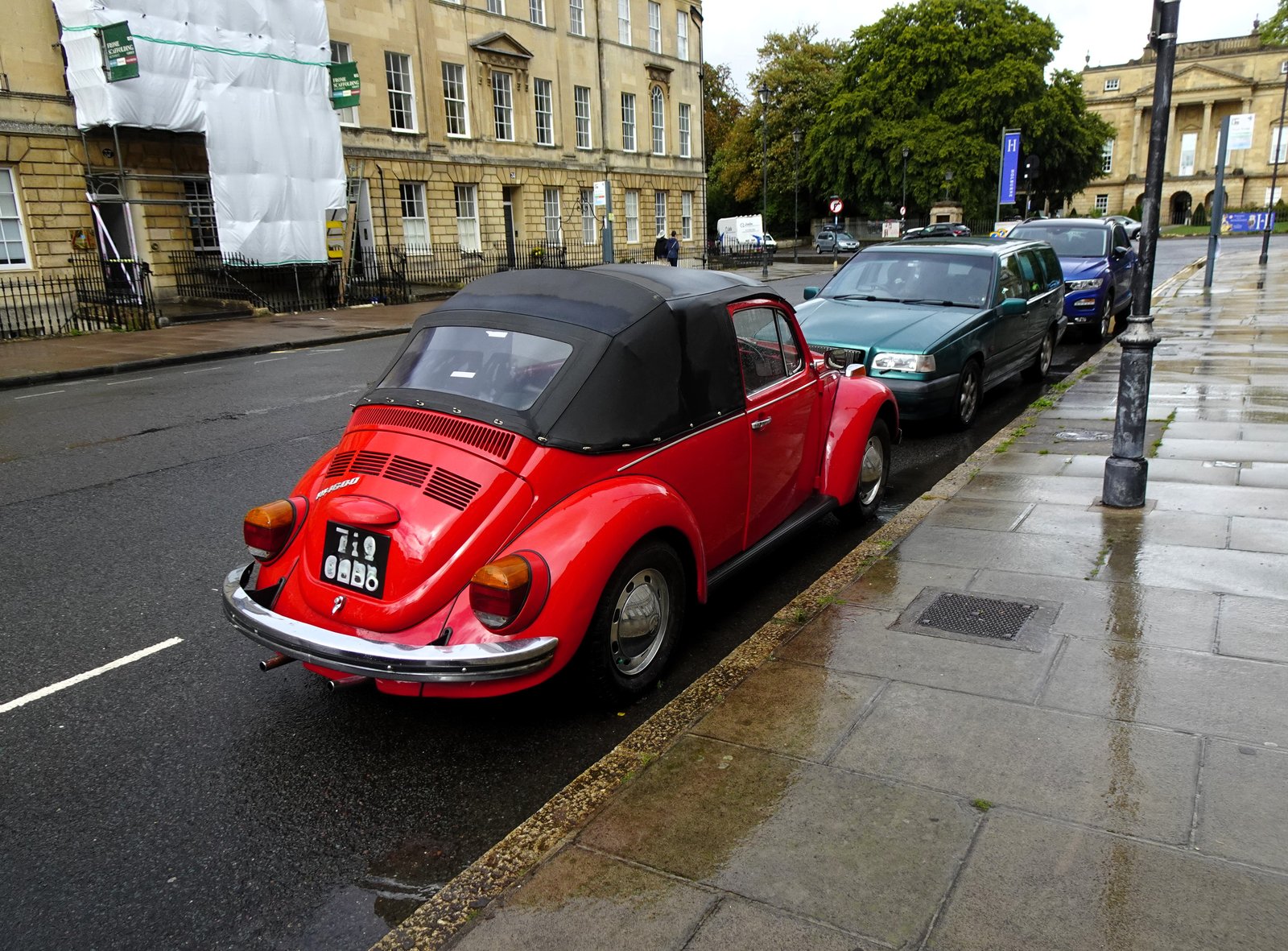
1979 Beetle Convertible: The Last Sunshine-Powered Rebellion

Explore the 1979 VW Beetle Convertible: The last year for America's favorite drop-top Bug. 1600cc air-cooled charm meets late-70s reality. History, values, and survival guide.

1979: The Sony Walkman debuts, Three Mile Island melts down, disco implodes at Comiskey Park. Detroit builds personal luxury barges. Japan floods America with front-wheel-drive efficiency. And Volkswagen? They're still building a convertible designed before World War II.

The '79 Beetle Convertible was automotive anachronism as performance art. Its engine made less power than a modern riding mower. Its technology peaked during the Johnson administration. Its design dated to Hitler. It should have been ridiculous. Instead, it was sublime.

This was the last year for Beetle convertibles in America. VW knew it. Buyers knew it. The car didn't care—it was too busy being exactly what it had always been: simple, honest, immune to trends. The perfect counterpoint to a year when everything else was trying too hard.

Read the Full Story

Engineering.

The air-cooled flat-four that powered the 1979 Beetle. Simple, reliable, and endlessly modifiable.

1600cc

Air-cooled flat-4

The air-cooled flat-four engine that powered a generation. Code AJ.

Power
48 HP
Fuel
Bosch L-Jetronic AFC electronic fuel injection

Highlights.

Feature

Featured

air-cool

Feature

Feature 2

The '79 Convertible wasn't special because it was advanced—it was special because it wasn't.

Engine

Engine Size

1600cc (1.6L) Air-cooled flat-4

Engine

Horsepower

48 HP

Quick Facts — 1979 Beetle

  • Engine SizeNeeds Review

    1600cc (1.6L) Air-cooled flat-4

  • HorsepowerNeeds Review

    48 HP

  • Total ProductionNeeds Review

    ~3,500 units (1979 model year)

  • Engine CodeNeeds Review

    AJ

  • Body StyleNeeds Review

    2-door convertible

  • TransmissionNeeds Review

    4-speed manual

  • Current Market ValueNeeds Review

    Show quality: $25,000-35,000. Excellent: $18,000-25,000. Good: $12,000-18,000. Project: $5,000-12,000.

    Values from editorial 'Today' section, market conditions vary

  • Cultural SignificanceNeeds Review

    1979 was peak malaise era.

  • Common Rust AreasNeeds Review

    Check: heater channels

All specifications should be verified before publication.

Top Questions — 1979 Beetle

Refer to the specifications section above for the engine code used in the 1979 Beetle. The engine code is typically stamped on the engine case above the generator. For verification assistance, use our M-Code decoder tool.

Confidence: medium — This information should be verified with additional sources.

A 1979 Beetle's value ranges from $5,000-12,000 for project cars, $12,000-18,000 for good drivers, $12,000-18,000 for driver-quality examples, $18,000-25,000 for excellent restored examples, $25,000-35,000 for show-quality examples. Condition, originality, and documentation are the primary value drivers. Always get a professional appraisal for insurance or sale purposes.

Confidence: medium — This information should be verified with additional sources.

Sources

  • VWX Reference: VWX Editorial - 1979 Beetle Today section

1979 Beetle models were produced at various Volkswagen factories worldwide. Check the production details above for specific factory information. The factory code can often be identified through chassis number analysis.

Confidence: medium — This information should be verified with additional sources.

Key changes for the 1979 Beetle: 1949: Beetle Convertible debuts. 1969: Major updates (bigger engine, 12. volt electrics). Check the specifications section for complete details about year-to-year evolution.

Confidence: medium — This information should be verified with additional sources.

Common rust areas on a 1979 Beetle include: heater channels, jack points. The heater channels are structural and expensive to repair. Always inspect these areas carefully before purchase.

The 1980 Beetle received updates from the 1979 model. Check the specifications section above for details about year-to-year evolution. Common changes across model years include safety updates, mechanical refinements, and regulatory compliance features.

Confidence: medium — This information should be verified with additional sources.

A full rotisserie restoration typically costs $25,000-$50,000+ depending on condition and level of finish. Mechanical refresh (engine, brakes, suspension) runs $5,000-$12,000. Bodywork and paint alone can be $8,000-$15,000 for quality work. DIY restorations save labor but require significant time investment (500-1,000 hours). Parts availability is generally good for classic VWs, which helps control costs.

Confidence: low — This information requires verification before use.

Numbers matching (original engine, transmission, and chassis) typically increases value by 20-40% over non-matching examples. However, the premium varies based on overall condition, documentation, and market demand. Use our numbers matching verification tool to check your vehicle.

Confidence: medium — This information should be verified with additional sources.

A well-maintained 1979 Beetle can serve as a daily driver, but consider the age of the vehicle. Modern traffic, safety features, and reliability expectations differ from the era. Regular maintenance, mechanical knowledge, and realistic expectations are essential. Many owners use classic VWs as weekend drivers or hobby vehicles rather than primary transportation.

Confidence: medium — This information should be verified with additional sources.

Yes, parts availability for classic air-cooled Volkswagens is generally excellent. The large enthusiast community and aftermarket support mean most mechanical and body parts are readily available. Some year-specific trim pieces or rare options may be harder to find, but the core mechanical components are well-supported.

Why This Year Matters

Needs Review
  • Featured: air-cool
  • The '79 Convertible wasn't special because it was advanced—it was special because it wasn't.
Collector AppealMedium
Restoration ComplexityMedium
Daily Driver SuitabilityMedium

Valuation Resources

Research current market values for the 1979 Beetle

Buying tip: Condition is everything. A rusty "project" can cost more to restore than buying a finished car. Check heater channels, floor pans, and battery tray first.

Alpine White

L90Esolidcommon

Factory Colors

Original paint options available for the 1979 Beetle.

solid Colors

Looking for a 1979 Beetle in Alpine White?

Find for Sale

Which 1979 Beetle fits your style?

Explore the variants available for this model year and find your perfect match.

Want to see a detailed comparison of multiple vehicles?

Compare all variants

Verify Authenticity

Numbers matching verification increases value by 20-40%. Use our tools to verify engine codes, chassis numbers, and M-codes for your 1979 Beetle.

Correct Engine CodeAJ

The Full Story

Introduction

1979: The Sony Walkman debuts, Three Mile Island melts down, disco implodes at Comiskey Park. Detroit builds personal luxury barges. Japan floods America with front-wheel-drive efficiency. And Volkswagen? They're still building a convertible designed before World War II.

The '79 Beetle Convertible was automotive anachronism as performance art. Its engine made less power than a modern riding mower. Its technology peaked during the Johnson administration. Its design dated to Hitler. It should have been ridiculous. Instead, it was sublime.

This was the last year for Beetle convertibles in America. VW knew it. Buyers knew it. The car didn't care—it was too busy being exactly what it had always been: simple, honest, immune to trends. The perfect counterpoint to a year when everything else was trying too hard.

What It Was

The 1979 Beetle Convertible was gloriously, defiantly unchanged. Factory specs read like a time capsule:

  • Engine: 1600cc flat-four (Type AJ), 48 horsepower (yes, really)
  • Transmission: 4-speed manual (because automatics are for quitters)
  • Top: Manual vinyl, three layers, German engineering meets beach vibes
  • Safety features: Seat belts, prayers, the knowledge that you're more alert when slightly terrified
  • Fuel delivery: Single Solex carburetor (because fuel injection was too modern)
  • Heat source: Two warm wishes and a prayer

VW priced it at $6,800—expensive for a Beetle, cheap for a convertible, reasonable for a future classic. Standard equipment included everything you needed (not much) and nothing you didn't (most things).

The trunk was in front, the engine was in back, and logic was optional. Perfect.

What Made It Special

The '79 Convertible wasn't special because it was advanced—it was special because it wasn't. In 1979, cars had become rolling sci-fi sets: digital dashes, power everything, voices that reminded you about your keys. The Beetle had none of that.

What it had was character. The manual top required human interaction—a lost art in 1979. The heater still barely worked. The wipers still ran on engine vacuum (floor it in rain, they slow down. Physics is hilarious). The engine still made conversation impossible above 60 mph.

But it was the last of its kind. The final year for American Beetle convertibles. The end of a 30-year run of topless air-cooled rebellion. Every other convertible was trying to be luxurious. The Beetle was still trying to be a Beetle.

In a year when cars were becoming appliances, the '79 Convertible remained a personality. It didn't just transport you—it made you complicit in the journey. Every trip was an event. Every start was a negotiation. Every top-down drive was a tiny rebellion against progress.

Cultural Context

1979 was peak malaise era. America was grappling with gas lines, inflation, disco's death rattle, and cars that embodied every wrong turn of the decade. Detroit's answer: opera windows, vinyl roofs, fake wood, hidden headlights. Japan's answer: efficient, reliable front-drivers that treated driving like an appliance setting.

The Beetle Convertible was from none of these worlds. It was a holdout from an era when cars had personalities, even if those personalities were sometimes difficult. It required engagement when everything else promised ease. It demanded skill when everything else offered automation.

The cultural landscape was shifting too. Personal luxury was in—Corvette had become a disco cruiser, Mercedes was selling more than ever, BMW was becoming the yuppie chariot of choice. The Beetle was anti-luxury when luxury was everything.

Music told the story: Disco was dying, punk was rising, and mainstream rock had gone corporate. The Beetle was punk before punk—stripped down, honest, refusing to evolve. It was The Ramones of cars: three chords, no pretense, somehow still perfect.

Gas had hit 86 cents a gallon. The Beetle sipped it. Interest rates were climbing toward 20%. The Beetle's price hadn't inflated like everything else. The country was worried about energy independence. The Beetle had been preaching efficiency for 30 years.

How It Drove

In 1979, the Beetle Convertible drove exactly like it had in 1969: slowly, loudly, gloriously. The 48-horsepower engine moved you from 0-60 eventually (about 20 seconds, but who's counting?). Highway speeds were theoretical. Passing required planning, prayer, and possibly a tailwind.

But numbers miss the point. The Beetle converted velocity into joy through a weird alchemy of mechanical feedback and open-air charm. Every control told a story: the steering wheel danced, the shifter clacked through gates with mechanical precision, the pedals played percussion through your feet.

Driving one today is time travel. Modern traffic moves faster. Modern cars are quieter. Modern everything is easier. The '79 Convertible doesn't care—it's still teaching the same lesson about slowing down, looking around, enjoying the journey. The top still goes down with the same mechanical ballet. The engine still makes the same happy noises. Time hasn't changed it. That's the whole point.

Who Bought It

The 1979 Beetle Convertible attracted three distinct tribes:

Tribe 1: The True Believers

  • Had owned Beetles since forever
  • Understood that progress wasn't always progress
  • Bought the last convertible because of course they did

Tribe 2: The Statement Makers

  • Could have bought a Corvette
  • Chose the Beetle to be different
  • Probably also owned a Mercedes for serious days

Tribe 3: The Last Chance Club

  • Knew it was the end of an era
  • Wanted a piece of history
  • Probably kept the window sticker

What united them? A willingness to choose character over convenience, charm over comfort, and the pure joy of a car that didn't pretend to be anything but itself. Also, a high tolerance for being asked 'Why didn't you buy something newer?' at stoplights.

Evolution

The '79 Convertible's evolution story is simple: it didn't. While the regular Beetle had gone Super (curved windshield, MacPherson struts), the Convertible kept the old architecture. VW's engineers had apparently reached perfection in 1969 and stopped there.

Changes from 1978? A new shade of beige. Maybe. Historians debate this.

The timeline tells the story:

  • 1949: Beetle Convertible debuts
  • 1969: Major updates (bigger engine, 12-volt electrics)
  • 1970-1978: Refinements, mostly mandated by safety laws
  • 1979: Final year in America. The end.

By '79, the Convertible was the last standard Beetle in America—the sedans had all gone Super. It was a museum piece you could buy new. A time capsule with a warranty. The last air-cooled convertible standing.

VW wouldn't build another convertible until the Golf/Rabbit Cabriolet. It had a water-cooled engine in front and a radiator. Progress is cruel.

Today

In 2025, the '79 Convertible market looks like this:

Show Quality: $25,000-35,000

  • Time capsule preservation
  • All numbers matching
  • Probably hasn't seen rain since Carter

Excellent: $18,000-25,000

  • Restored or preserved
  • Drives perfectly
  • Ready for cars and coffee

Good Driver: $12,000-18,000

  • Solid mechanicals
  • Maybe some patina
  • Perfect for actually enjoying

Project Car: $5,000-12,000

  • Runs, probably
  • Needs love
  • Might have rust (will have rust)

Investment outlook? Strong. It's the last year, it's a convertible, it's air-cooled, and it's immune to trends. Buy the best one you can afford. Drive it. Watch it appreciate. Just like it did in 1979.

Restoration

Restoring a '79 Convertible requires three things: patience, money, and a sense of humor. Here's your survival guide:

Common Issues:

  • Rust: Everywhere. Check heater channels, floorpans, battery area, and jack points first
  • Top frame: Complex German origami in metal. Parts exist. Skills required
  • Electrics: 1970s German wiring meets American humidity. Fun ensues
  • Engine: Bulletproof unless neglected. Then very proof-resistant

Parts Availability:

  • Mechanical: Excellent. The air-cooled community abides
  • Body: Good, but expensive. Convertible-specific parts command premiums
  • Interior: Available but pricey. Original German vinyl costs more than Italian leather
  • Top: Several suppliers. Buy German. Thank us later

Special Notes:

  • Keep it stock. Modified '79s are worth less
  • Document everything. Originality matters
  • Join a club. The knowledge base is priceless
  • Budget more than you think. Then double it

The Bottom Line

The 1979 Beetle Convertible was the last gasp of air-cooled rebellion in America—a car so outdated it came back around to timeless. It was slower than traffic, louder than necessary, and more charming than anything else on the road.

Should you buy one? Yes, if:

  • You understand that character outweighs convenience
  • You appreciate mechanical simplicity
  • You enjoy explaining carburetors to strangers
  • You know that slow cars driven fast are more fun than fast cars driven slow

No, if:

  • You need to arrive quickly
  • You prefer silence to personality
  • You think cars peaked after computers

The '79 Convertible wasn't the best Beetle. It wasn't the fastest, newest, or most advanced. It was just the last—and sometimes, that's enough. It's not a car. It's a statement about what matters in mobility: joy over speed, charm over power, personality over progress.