1600cc
Displacement
N/A
Power
N/A
Top Speed

Real Stories

Shaped by Hope: The Story of 'Azul'
The Story of Georgie the VW Bus

The Work Box That Traveled.

The 1950 VW Type 2 Pickup. Before it was a lifestyle, before it was an icon, it was a working truck with a forward-control cab and a flat open bed. It was built for post-war reconstruction and became something considerably more interesting.

1950: VW introduced the Type 2 Bus alongside the Beetle. Same air-cooled engine, same rear-engine layout, but radically different purpose — forward control cab-over-engine design, flat load floor maximizing cargo capacity, commercial functionality meeting practical necessity. The Pickup variant was the most utilitarian expression of this: open bed, covered cab, simplicity calibrated for small business owners and tradespeople.

Read the Full Story

Engineering.

The air-cooled flat-four that powered the 1950 T1 Single Cab (Type 2). Simple, reliable, and endlessly modifiable.

1600cc

Air-cooled

The air-cooled flat-four engine that powered a generation. Code .

Power
N/A
Fuel
Carburetor

Highlights.

Feature

The Kombi's design was revo...

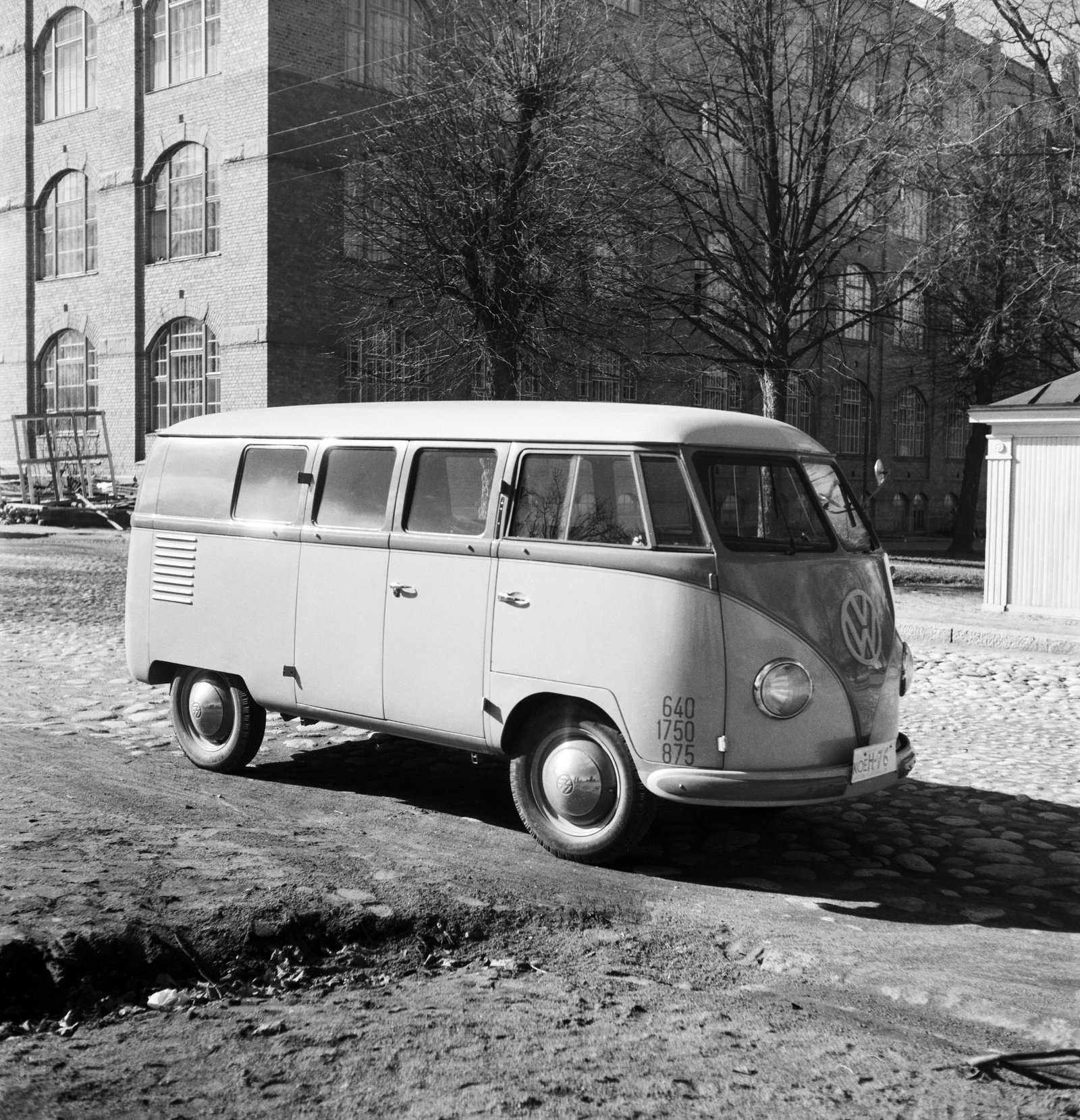
box shape maximizing interior volume, split windscreen providing distinctive face, wraparound windows giving passengers visibility, tall roof allowing standing headroom.

Engine

Engine Size

1600cc (1.6L) Air-cooled

Feature

Body Style

Microbus

Feature

Transmission

Manual (standard)

Quick Facts — 1950 Bus

  • Engine SizeNeeds Review

    1600cc (1.6L) Air-cooled

  • Body StyleNeeds Review

    Microbus

  • TransmissionNeeds Review

    Manual (standard)

  • Market PositionNeeds Review

    The 1950 Bus was part of Volkswagen's air-cooled lineup during this era.

  • Cultural SignificanceNeeds Review

    1950: Post-war reconstruction valued collective effort and community cooperation.

All specifications should be verified before publication.

Top Questions — 1950 Bus

Refer to the specifications section above for the engine code used in the 1950 Bus. The engine code is typically stamped on the engine case above the generator. For verification assistance, use our M-Code decoder tool.

Confidence: medium — This information should be verified with additional sources.

The value of a 1950 Bus varies significantly based on condition, originality, and documentation. Driver-quality examples typically range from lower values, while excellent restored or numbers-matching examples command premiums. Condition, originality, and documentation are the primary value drivers. Always get a professional appraisal for insurance or sale purposes.

Confidence: low — This information requires verification before use.

1950 Bus models were produced at various Volkswagen factories worldwide. Check the production details above for specific factory information. The factory code can often be identified through chassis number analysis.

Confidence: medium — This information should be verified with additional sources.

Common rust areas on air-cooled Volkswagens include heater channels (under running boards), floor pans (especially front and battery tray area), front beam (suspension mounting point), rear chassis/apron (where bumper mounts), and door bottoms. The heater channels are structural and expensive to repair. Always inspect these areas carefully before purchase.

The 1951 Bus received updates from the 1950 model. Check the specifications section above for details about year-to-year evolution. Common changes across model years include safety updates, mechanical refinements, and regulatory compliance features.

Confidence: medium — This information should be verified with additional sources.

A full rotisserie restoration typically costs $25,000-$50,000+ depending on condition and level of finish. Mechanical refresh (engine, brakes, suspension) runs $5,000-$12,000. Bodywork and paint alone can be $8,000-$15,000 for quality work. DIY restorations save labor but require significant time investment (500-1,000 hours). Parts availability is generally good for classic VWs, which helps control costs.

Confidence: low — This information requires verification before use.

Numbers matching (original engine, transmission, and chassis) typically increases value by 20-40% over non-matching examples. However, the premium varies based on overall condition, documentation, and market demand. Use our numbers matching verification tool to check your vehicle.

Confidence: medium — This information should be verified with additional sources.

A well-maintained 1950 Bus can serve as a daily driver, but consider the age of the vehicle. Modern traffic, safety features, and reliability expectations differ from the era. Regular maintenance, mechanical knowledge, and realistic expectations are essential. Many owners use classic VWs as weekend drivers or hobby vehicles rather than primary transportation.

Confidence: medium — This information should be verified with additional sources.

Yes, parts availability for classic air-cooled Volkswagens is generally excellent. The large enthusiast community and aftermarket support mean most mechanical and body parts are readily available. Some year-specific trim pieces or rare options may be harder to find, but the core mechanical components are well-supported.

Why This Year Matters

Needs Review
  • The Kombi's design was revolutionary simplicity: box shape maximizing interior volume, split windscreen providing distinctive face, wraparound windows giving passengers visibility, tall roof allowing standing headroom.
Collector AppealMedium
Restoration ComplexityMedium
Daily Driver SuitabilityMedium

Valuation Resources

Research current market values for the 1950 T1 Single Cab (Type 2)

Buying tip: Condition is everything. A rusty "project" can cost more to restore than buying a finished car. Check heater channels, floor pans, and battery tray first.

Which 1950 Bus fits your style?

Explore the variants available for this model year and find your perfect match.

Want to see a detailed comparison of multiple vehicles?

Compare all variants

Verify Authenticity

Numbers matching verification increases value by 20-40%. Use our tools to verify engine codes, chassis numbers, and M-codes for your 1950 T1 Single Cab (Type 2).

The Full Story

Introduction

1950: VW introduced the Type 2 Bus alongside the Beetle. Same air-cooled engine, same rear-engine layout, but radically different purpose — forward control cab-over-engine design, flat load floor maximizing cargo capacity, commercial functionality meeting practical necessity. The Pickup variant was the most utilitarian expression of this: open bed, covered cab, simplicity calibrated for small business owners and tradespeople.

Post-war Europe needed commercial vehicles for reconstruction. The Pickup delivered honest work transportation. But even then, the forward-control design hinted at something more: put driver up front, put engine in back, create space for possibilities in between. The Pickup was a work vehicle that would eventually enable adventure. Just not yet.

What It Was

The 1950 Bus Pickup's design was revolutionary through simplicity. The forward-control layout — driver sitting ahead of front wheels — was unusual in 1950 when most trucks placed the driver behind the engine. That positioning gave unobstructed forward visibility and maximized usable cargo space. The flat load floor sat low, making loading and unloading easier than conventional trucks with raised beds over engine tunnels.

The Pickup bed was an open rectangle: metal floor, drop-down tailgate, minimal sides. Nothing fancy. Just functional space for hauling materials, tools, supplies. The split windscreen gave the cab its distinctive appearance — two curved panes suggesting honest industrial design over styling pretension. The design communicated purpose: move things efficiently, work reliably, last for years.

What Made It Special

The 1131cc air-cooled flat-four producing 25 HP was modest even for a lightweight commercial vehicle. But the forward-control layout delivered excellent weight distribution: driver and engine balanced, cargo weight centered over rear wheels improving traction. The air-cooled engine proved ideal for commercial use — no radiator to fail on delivery routes, no coolant to maintain on busy work schedules, simple service procedures enabling owner maintenance between jobs.

The rear-engine placement meant a completely flat, unobstructed cargo bed. No transmission tunnel. No driveshaft hump. No wheel wells intruding significantly. Small business owners could load full sheets of material, transport equipment, carry supplies with maximum efficiency. The engineering prioritized utility over power, function over performance, practicality over prestige.

Cultural Context

1950: Post-war reconstruction dominated everything. Small businesses needed affordable commercial vehicles. Farmers needed reliable rural transport. Europe was rebuilding, requiring delivery vehicles, work trucks, commercial transportation. The Bus Pickup served those immediate practical needs through honest engineering: affordable purchase price, simple maintenance, durable construction, efficient operation.

VW wasn't marketing adventure — they were providing utility. But the forward-control design and space efficiency were planting seeds. The Pickup that hauled building materials in 1950 would haul surfboards in 1965, camping gear in 1970. Same vehicle, evolving purposes. The cultural transformation wasn't accidental. It was structural — the honest design that served work could serve play just as well.

How It Drove

Climbing into the 1950 Bus Pickup meant sitting high with commanding visibility over the cab-forward nose. The forward-control position placed driver ahead of front wheels — unusual seating providing unobstructed view of road ahead and enabling tight maneuvering in urban environments. The cab was spartan: basic bench seat, minimal instruments, simple controls. Work vehicle, not comfort conveyance.

Twenty-five horsepower moved it adequately when unladen. Load the bed and you felt every pound in the gearing. The 4-speed manual rewarded attention — double-clutch into first at low speeds, use third on anything resembling a highway. The swing-axle rear meant loaded cornering demanded respect. Drive it like a truck and it behaved like one. That was the point.

Who Bought It

The 1950 Pickup's buyers were determined by practical need rather than desire: small European contractors needing affordable job-site transport, agricultural operators moving supplies between farm and market, urban delivery services requiring something smaller and cheaper to operate than conventional trucks.

Farmers discovered it could haul produce to market and return with supplies. Contractors discovered it could move tools and materials to job sites with none of the overheads of a full-size truck. Tradespeople discovered it fit where larger vehicles couldn't. The Pickup's buyers chose it for economic reasons and were rewarded with something more — a vehicle that worked as hard as they did and asked for almost nothing in return.

Buying Today

1950 Bus Pickups are extraordinarily rare. Most were worked to exhaustion, then parted out. The handful that survive in original condition are sought by collectors who understand their significance: before the counterculture, before the lifestyle marketing, before the mythology — just honest work vehicle establishing the Bus platform.

Restoration is complex. The open bed means more exposure to weather and corrosion than enclosed variants. Good examples command premium prices because good examples are so few. If you find one, consult specialists in early T1 Bus variants before committing — the differences between production years matter for authenticity, and early examples have period-correct details that deserve preservation.

What you're acquiring when you restore a 1950 Pickup is the foundation story: the commercial utility that became adventurous freedom, the work vehicle that enabled play, the practical transportation that later embodied permission.

The Verdict

Original 1950 Bus Pickup buyers chose commercial utility. They needed work vehicles, not lifestyle statements. But the forward-control design, space efficiency, and air-cooled reliability they chose for practical reasons created the foundation for everything that came after.

Today's restorers value the 1950 Pickup as origin story: before counterculture, before adventure marketing, before lifestyle branding. Just honest work vehicle with a design that enabled possibilities nobody had yet imagined. The seeds of freedom planted in commercial soil. They bloomed spectacularly. They still do.