1600cc
Displacement
N/A
Power
N/A
Top Speed

Real Stories

Shaped by Hope: The Story of 'Azul'
The Story of Georgie the VW Bus

First Light. Split Glass. One Big Idea.

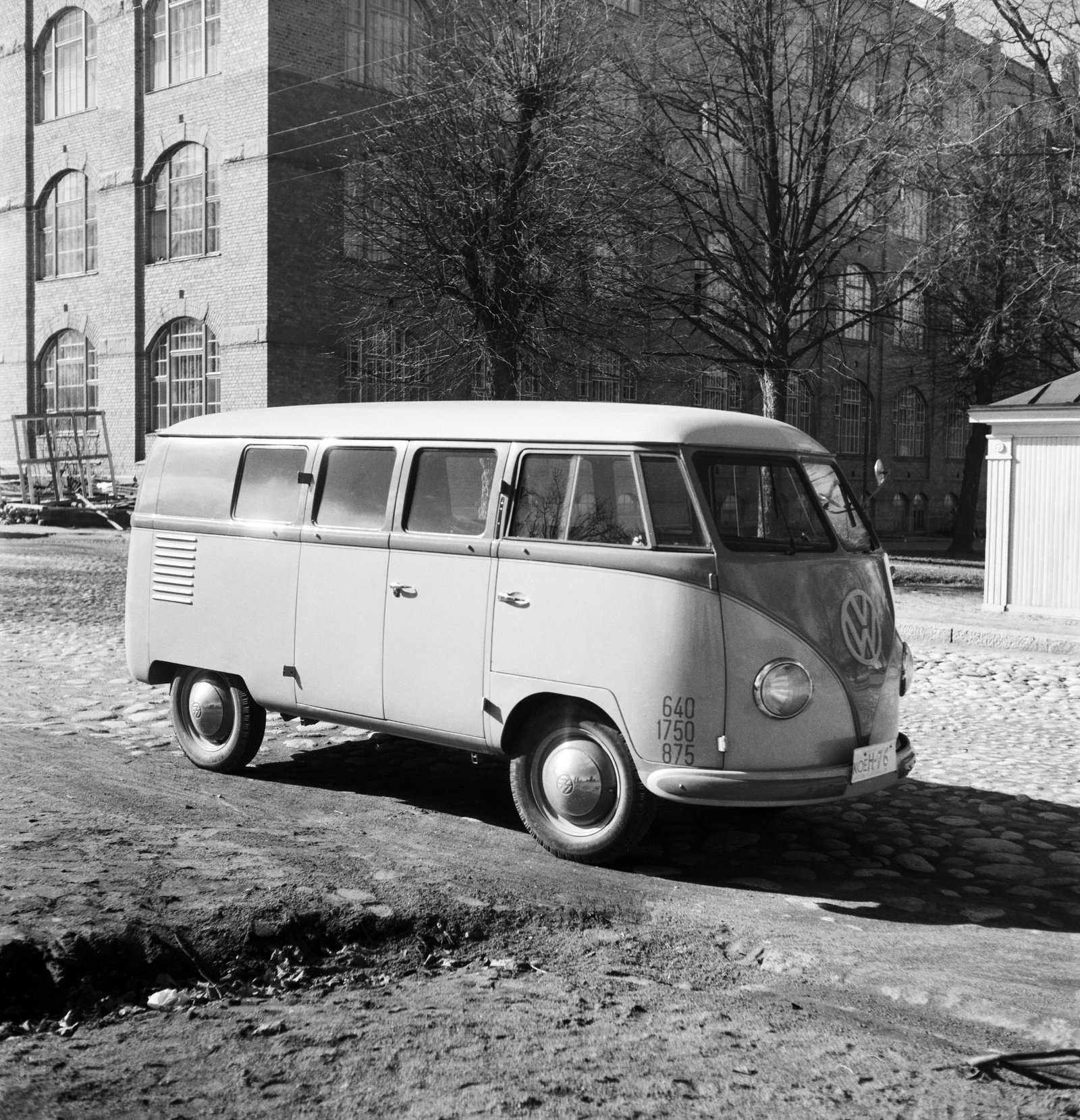
The first production year of the Volkswagen Type 2 Bus. Born from a sketch on a napkin, built in postwar Wolfsburg, destined to outlive every convention it ignored.

March 1950. Wolfsburg is still rubble in places. The Beetle is barely established. And Volkswagen rolls out something nobody asked for and everyone, eventually, needed: a forward-control van with a split windscreen, a rear-mounted air-cooled engine, and enough interior space to haul either eight passengers or the better part of a small business.

Read the Full Story

Engineering.

The air-cooled flat-four that powered the 1950 T1 Microbus (Type 2). Simple, reliable, and endlessly modifiable.

1600cc

Air-cooled

The air-cooled flat-four engine that powered a generation. Code .

Power
N/A
Fuel
Carburetor

Highlights.

Feature

The Kombi's design was revo...

box shape maximizing interior volume, split windscreen providing distinctive face, wraparound windows giving passengers visibility, tall roof allowing standing headroom.

Engine

Engine Size

1600cc (1.6L) Air-cooled

Feature

Body Style

Microbus

Feature

Transmission

Manual (standard)

Quick Facts — 1950 Bus

  • Engine SizeNeeds Review

    1600cc (1.6L) Air-cooled

  • Body StyleNeeds Review

    Microbus

  • TransmissionNeeds Review

    Manual (standard)

  • Market PositionNeeds Review

    The 1950 Bus was part of Volkswagen's air-cooled lineup during this era.

  • Cultural SignificanceNeeds Review

    1950: Post-war reconstruction valued collective effort and community cooperation.

All specifications should be verified before publication.

Top Questions — 1950 Bus

Refer to the specifications section above for the engine code used in the 1950 Bus. The engine code is typically stamped on the engine case above the generator. For verification assistance, use our M-Code decoder tool.

Confidence: medium — This information should be verified with additional sources.

The value of a 1950 Bus varies significantly based on condition, originality, and documentation. Driver-quality examples typically range from lower values, while excellent restored or numbers-matching examples command premiums. Condition, originality, and documentation are the primary value drivers. Always get a professional appraisal for insurance or sale purposes.

Confidence: low — This information requires verification before use.

1950 Bus models were produced at various Volkswagen factories worldwide. Check the production details above for specific factory information. The factory code can often be identified through chassis number analysis.

Confidence: medium — This information should be verified with additional sources.

Common rust areas on air-cooled Volkswagens include heater channels (under running boards), floor pans (especially front and battery tray area), front beam (suspension mounting point), rear chassis/apron (where bumper mounts), and door bottoms. The heater channels are structural and expensive to repair. Always inspect these areas carefully before purchase.

The 1951 Bus received updates from the 1950 model. Check the specifications section above for details about year-to-year evolution. Common changes across model years include safety updates, mechanical refinements, and regulatory compliance features.

Confidence: medium — This information should be verified with additional sources.

A full rotisserie restoration typically costs $25,000-$50,000+ depending on condition and level of finish. Mechanical refresh (engine, brakes, suspension) runs $5,000-$12,000. Bodywork and paint alone can be $8,000-$15,000 for quality work. DIY restorations save labor but require significant time investment (500-1,000 hours). Parts availability is generally good for classic VWs, which helps control costs.

Confidence: low — This information requires verification before use.

Numbers matching (original engine, transmission, and chassis) typically increases value by 20-40% over non-matching examples. However, the premium varies based on overall condition, documentation, and market demand. Use our numbers matching verification tool to check your vehicle.

Confidence: medium — This information should be verified with additional sources.

A well-maintained 1950 Bus can serve as a daily driver, but consider the age of the vehicle. Modern traffic, safety features, and reliability expectations differ from the era. Regular maintenance, mechanical knowledge, and realistic expectations are essential. Many owners use classic VWs as weekend drivers or hobby vehicles rather than primary transportation.

Confidence: medium — This information should be verified with additional sources.

Yes, parts availability for classic air-cooled Volkswagens is generally excellent. The large enthusiast community and aftermarket support mean most mechanical and body parts are readily available. Some year-specific trim pieces or rare options may be harder to find, but the core mechanical components are well-supported.

Why This Year Matters

Needs Review
  • The Kombi's design was revolutionary simplicity: box shape maximizing interior volume, split windscreen providing distinctive face, wraparound windows giving passengers visibility, tall roof allowing standing headroom.
Collector AppealMedium
Restoration ComplexityMedium
Daily Driver SuitabilityMedium

Valuation Resources

Research current market values for the 1950 T1 Microbus (Type 2)

Buying tip: Condition is everything. A rusty "project" can cost more to restore than buying a finished car. Check heater channels, floor pans, and battery tray first.

Which 1950 Bus fits your style?

Explore the variants available for this model year and find your perfect match.

Want to see a detailed comparison of multiple vehicles?

Compare all variants

Verify Authenticity

Numbers matching verification increases value by 20-40%. Use our tools to verify engine codes, chassis numbers, and M-codes for your 1950 T1 Microbus (Type 2).

The Full Story

Introduction

March 1950. Wolfsburg is still rubble in places. The Beetle is barely established. And Volkswagen rolls out something nobody asked for and everyone, eventually, needed: a forward-control van with a split windscreen, a rear-mounted air-cooled engine, and enough interior space to haul either eight passengers or the better part of a small business.

Ben Pon sketched it on a notepad in 1947. Two axles, a box, the driver sitting over the front wheels. The Volkswagen engineers told him it couldn't be done. Then they built it. The world called it a Bus. It called itself honest.

What It Was

The Type 2 was a forward-control cab-over van using the Beetle's 1131cc air-cooled flat-four producing 25 horsepower. The engine sat in the rear, the driver sat over the front axle, and everything in between was flat usable space. No hood. No engine intrusion. Just a box that held eight people or the equivalent in cargo.

The split windscreen — two curved glass panes meeting at a V-shaped divider — was a manufacturing constraint that became a design icon. The body sides were pressed steel. The roof was flat. The floor was as close to the ground as the drivetrain allowed. The whole thing looked like someone drew a vehicle with a ruler and decided that was enough. It was.

What Made It Special

Postwar Europe needed commercial vehicles. The Type 2 arrived with exactly what that meant: a payload capacity that defied its modest engine, interchangeable parts with the Beetle already being serviced across the continent, and a design so simple any reasonably competent mechanic could understand it in an afternoon.

The air-cooled engine was the key. No radiator to freeze in Alpine winters. No coolant to maintain during the busiest work weeks. No water pump to fail on the autobahn. You filled it with oil, you drove it, it worked. That reliability was not incidental — it was the whole point. The Bus wasn't engineered for perfection. It was engineered for reality.

Cultural Context

  1. Europe is rebuilding. Small businesses need affordable commercial transport. Families need to move. The economic miracle — Wirtschaftswunder — is just beginning, and the Type 2 arrives as both its instrument and its symbol. This was a vehicle for the people who were actually building things, delivering things, going places.

In America, the postwar suburban expansion was creating station wagon culture. The Bus went the other direction entirely: utilitarian, honest, built for function over form. It would be a decade before anyone called it countercultural. In 1950 it was just practical. That was enough.

How It Drove

Climb in and you are immediately somewhere unusual: sitting over the front axle, with the windscreen close and the road visible from above in a way no sedan offered. The steering is worm-and-roller, slow, honest, communicative in the way heavy things communicate — not with precision but with presence. You know what the front wheels are doing.

The 25-horsepower engine meant you planned ahead. Hills required downshifts. Highways required patience. The 4-speed manual had a non-synchromesh first gear that demanded double-clutching at low speeds. None of this was a problem so much as a negotiation. The Bus rewarded drivers who understood it. It had nothing to offer those who didn't.

Who Bought It

The early Type 2 found its customers precisely where VW aimed it: small European businesses needing affordable commercial transport. Plumbers, bakers, market traders. Companies with modest fleets and practical requirements. The split between passenger Microbus and utility Kombi variants meant the same platform served both people-moving and goods-carrying without needing separate products.

In the first year, production was modest — a few thousand units while the Wolfsburg factory still prioritized Beetle output. But demand moved faster than supply. The farmers, tradespeople, and small operators who got their hands on early examples became advocates. Word spread the honest way: this thing actually works.

Buying Today

A surviving 1950 Bus is automotive archaeology. Most were worked until they stopped, then parted out or scrapped. The ones that remain in original condition are museum pieces as much as drivers — proof that a commercial vehicle designed without vanity can outlast the ambitions of things designed to impress.

The split-window era (1950-1967) commands the highest collector prices of any T1 generation. The earliest examples — 1950-1953 with the 1131cc engine and split glass — carry a premium beyond that. Expect to pay accordingly for honest metal, and expect to wait. They don't come up often. When they do, they don't last long.

Hagerty and bringatrailer.com track the market. The VW Bus Club communities hold the knowledge. Restoration parts availability is better than you'd expect for a 75-year-old vehicle. The air-cooled community keeps these things alive.

The Verdict

The 1950 Type 2 Bus was not trying to be an icon. It was trying to be useful. That it became both is one of the more improbable accidents of automotive history.

Twenty-five horsepower. A split windscreen. A box on wheels. This is where it started — before the counterculture discovered it, before DDB made it famous, before a generation painted them with flowers and drove them to Woodstock. In 1950 it was just a van from Wolfsburg with honest intentions and a rear engine.

That was enough to change everything.