1131cc
Air-cooled flat-4
The air-cooled flat-four engine that powered a generation. Code M1.
- Power
- 25 HP
- Fuel
- Single carburetor


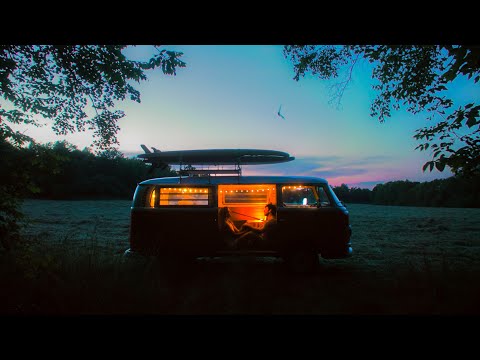
Factory exterior
Westfalia's first official camping conversion for the T1 Bus arrived just as post-war Europe was relearning the art of leisure. Fitted with fold-out furniture, a basic galley, and curtains that kept the curious out, the SO 33 package transformed a 25-horsepower delivery vehicle into the original overlander. It was slow, cold in the mornings, and magnificent.
1952: Europe was hauling itself out of rubble. West Germany had been a sovereign republic for three years. Petrol was still rationed in parts of Britain. The Korean War ground on. Against this backdrop, a coachbuilder from Wiedenbrück named Westfalia-Werke began bolting fold-out furniture into Volkswagen's two-year-old delivery van and calling it a camping vehicle. Nobody asked for this. Everyone needed it.
The air-cooled flat-four that powered the 1952 T1 Westfalia (Type 2). Simple, reliable, and endlessly modifiable.
1600cc (1.6L) Air-cooled
Microbus
Manual (standard)
The 1952 Bus was part of Volkswagen's air-cooled lineup during this era.
1952: Collective values persisted from post-war era: community cooperation, group activities, collective efforts.
All specifications should be verified before publication.
Refer to the specifications section above for the engine code used in the 1952 Bus. The engine code is typically stamped on the engine case above the generator. For verification assistance, use our M-Code decoder tool.
Confidence: medium — This information should be verified with additional sources.
The value of a 1952 Bus varies significantly based on condition, originality, and documentation. Driver-quality examples typically range from lower values, while excellent restored or numbers-matching examples command premiums. Condition, originality, and documentation are the primary value drivers. Always get a professional appraisal for insurance or sale purposes.
Confidence: low — This information requires verification before use.
1952 Bus models were produced at various Volkswagen factories worldwide. Check the production details above for specific factory information. The factory code can often be identified through chassis number analysis.
Confidence: medium — This information should be verified with additional sources.
Key changes for the 1952 Bus: Kombi production with synchromesh improved drivability significantly. Check the specifications section for complete details about year-to-year evolution.
Confidence: medium — This information should be verified with additional sources.
Common rust areas on air-cooled Volkswagens include heater channels (under running boards), floor pans (especially front and battery tray area), front beam (suspension mounting point), rear chassis/apron (where bumper mounts), and door bottoms. The heater channels are structural and expensive to repair. Always inspect these areas carefully before purchase.
The 1953 Bus received updates from the 1952 model. Check the specifications section above for details about year-to-year evolution. Common changes across model years include safety updates, mechanical refinements, and regulatory compliance features.
Confidence: medium — This information should be verified with additional sources.
A full rotisserie restoration typically costs $25,000-$50,000+ depending on condition and level of finish. Mechanical refresh (engine, brakes, suspension) runs $5,000-$12,000. Bodywork and paint alone can be $8,000-$15,000 for quality work. DIY restorations save labor but require significant time investment (500-1,000 hours). Parts availability is generally good for classic VWs, which helps control costs.
Confidence: low — This information requires verification before use.
A well-maintained 1952 Bus can serve as a daily driver, but consider the age of the vehicle. Modern traffic, safety features, and reliability expectations differ from the era. Regular maintenance, mechanical knowledge, and realistic expectations are essential. Many owners use classic VWs as weekend drivers or hobby vehicles rather than primary transportation.
Confidence: medium — This information should be verified with additional sources.
Yes, parts availability for classic air-cooled Volkswagens is generally excellent. The large enthusiast community and aftermarket support mean most mechanical and body parts are readily available. Some year-specific trim pieces or rare options may be harder to find, but the core mechanical components are well-supported.
Research current market values for the 1952 T1 Westfalia (Type 2)
Hagerty Valuation Tools
Industry-standard classic car values
Bring a Trailer Results
Recent auction prices
TheSamba Classifieds
Current listings & asking prices
Buying tip: Condition is everything. A rusty "project" can cost more to restore than buying a finished car. Check heater channels, floor pans, and battery tray first.
Original paint options available for the 1952 T1 Westfalia (Type 2).
Looking for a 1952 T1 Westfalia (Type 2) in Black?
Find for SaleExplore the variants available for this model year and find your perfect match.
Want to see a detailed comparison of multiple vehicles?
Compare all variantsNumbers matching verification increases value by 20-40%. Use our tools to verify engine codes, chassis numbers, and M-codes for your 1952 T1 Westfalia (Type 2).
1952: Europe was hauling itself out of rubble. West Germany had been a sovereign republic for three years. Petrol was still rationed in parts of Britain. The Korean War ground on. Against this backdrop, a coachbuilder from Wiedenbrück named Westfalia-Werke began bolting fold-out furniture into Volkswagen's two-year-old delivery van and calling it a camping vehicle. Nobody asked for this. Everyone needed it.
The SO 33 designation — Sonderausstattung 33, or Special Equipment Package 33 — was Westfalia's catalog entry for the conversion. The Bus itself was already a minor miracle of forward-control packaging: engine in the rear, driver over the front axle, cargo floor flat and low. Westfalia simply recognized that the cargo floor was also a perfectly good bed platform if you installed the right furniture above it.
The 1952 Westfalia Camper was a T1 Bus — the original split-window generation with its distinctive two-piece windscreen divided by a vertical center pillar — fitted with Westfalia's early interior conversion. The foundation was VW's 1131cc air-cooled flat-four producing 25 horsepower, driving the rear wheels through a four-speed manual gearbox. Top speed was approximately 50 mph, achieved with commitment and downhill gradient. The wheelbase stretched 94.5 inches across a ladder-frame chassis with torsion-bar front suspension and swing-axle rear.
The Westfalia conversion fitted a removable wooden cabinet system with fold-out table, a two-burner gas cooker, a rudimentary sink, storage compartments, and curtains for all windows. The rear bench folded flat into a sleeping platform for two adults. There was no roof-raise yet — that came later. What you had in 1952 was essentially a wooden camping box inserted into a metal one, and the combination worked with a logic that seems obvious only in retrospect.
The genius of the Westfalia conversion was not its interior — which was rudimentary by any measure — but its integration with the Bus's architecture. Other vehicles of the era were converted with camping furniture bolted awkwardly into spaces not designed for it. The Bus's flat floor, vertical walls, and generous headroom meant Westfalia's cabinetry could use every cubic inch. The conversion weighed relatively little and, crucially, could be removed. You could sell the camping package to a farmer on Monday and take delivery of a cargo van.
The split-window Bus itself had a quality that would define every Westfalia that followed: it looked purposeful without being aggressive. The face — those two round headlamps flanking the VW badge, the split windscreen above — read as curious and open, not threatening. Park it in a field and it looked like it belonged. That visual approachability was not an accident of design. It was the product of Ferdinand Porsche's original brief: build something honest.
1952 was the year Dwight Eisenhower was elected on a promise of stability, the year the first hydrogen bomb was tested in the Pacific, the year Samuel Beckett's Waiting for Godot premiered in Paris. Western Europe's middle class was cautiously reconstituting itself after a decade of war and reconstruction. Leisure was a new concept being rediscovered by people who had spent the previous fifteen years not having any.
The Westfalia camper arrived at exactly the right moment for exactly the right reason: it made camping affordable and dignified. Tent camping in 1952 was either roughneck adventure or aristocratic safari — there was very little middle. The SO 33 offered an in-between: shelter and cooking from a vehicle that also got you there. You weren't roughing it, exactly, but you weren't in a hotel either. For a continent relearning the art of normalcy, that distinction mattered enormously.
Slowly. Enthusiastically. With purpose. The 25-horsepower flat-four produced its modest output at around 3400 rpm, which meant the driver spent considerable time in that range. The four-speed gearbox was worked constantly on anything with elevation. Hills required strategy: assess gradient, select gear, maintain momentum. Losing momentum on a 1952 Westfalia meant beginning the process again from first gear.
The forward-control seating position placed the driver directly over the front axle, which made the experience of driving something entirely different from anything with a conventional hood. You arrived at intersections before you expected to. You parked in spaces that surprised you. The torsion-bar front suspension absorbed road imperfections with more grace than the vehicle's weight-to-power ratio suggested possible. Sixty miles per hour was available, in the way that a distant mountain is available: technically reachable, not the point.
In 1952, the Westfalia Camper appealed to a specific European type: the practical adventurer. Schoolteachers planning summer holidays across France. Young married couples who wanted to see Switzerland without paying for hotels. Tradespeople who could write the vehicle off as dual-use. The conversion was sold primarily in Germany and adjacent markets — American awareness would come later, when returning GIs and the first wave of VW importers began spreading the gospel.
Westfalia's buyer understood that camping was not about discomfort — it was about mobility. The SO 33 package was not cheap. It added meaningful cost to an already modest vehicle. The buyers who chose it were making a considered statement: they wanted to sleep where they drove, and they wanted to drive far.
A 1952 Westfalia Camper that retains its original interior conversion is one of the rarest objects in the air-cooled VW world. Most survivors have been modified, stripped, or converted to more modern configurations. A complete, documented SO 33 example from 1952 would be considered a museum piece by the collector community, and priced accordingly. Expect six figures for anything approaching original specification.
The practical considerations are substantial. The 1131cc engine will need sympathetic rebuilding or has likely already been upgraded. Correct split-window body panels — particularly the two-piece windscreen and its surrounding seals — are expensive and increasingly difficult to source. The Westfalia cabinet system, if original, will show seven decades of camping life. Finding a specialist who understands both the VW mechanicals and the Westfalia joinery is the first task. Finding the right vehicle is the second.
The 1952 Westfalia Camper is not the most capable camping vehicle ever made, or the most comfortable, or the fastest. It is the first. That matters in the way that first things always matter — not because they did it best, but because they did it at all. Every campervan on the road today owes something to a coachbuilder in Wiedenbrück who looked at VW's practical box in 1951 and asked the obvious question: what if we also slept in it?
Buy one if you can find one. Drive it slowly. Forgive the heater. The split-window face in your rearview mirror will tell you everything you need to know about why this vehicle became what it became.