1600cc
Displacement
N/A
Power
N/A
Top Speed

Real Stories

Shaped by Hope: The Story of 'Azul'
The Story of Georgie the VW Bus

Small Thinking at Its Finest

DDB launched 'Think Small' for the Beetle in 1959. The Kombi had been thinking small — and carrying eight people doing it — since 1950. The campaign named what the Bus had always been. The Bus just kept proving it.

1959: DDB launched 'Think Small' for the Beetle and articulated in two words what the Bus had been demonstrating for nine years. The Kombi didn't need a campaign. It had the evidence of a decade's daily use: eight passengers, one vehicle, remarkable economy, consistent reliability.

Read the Full Story

Engineering.

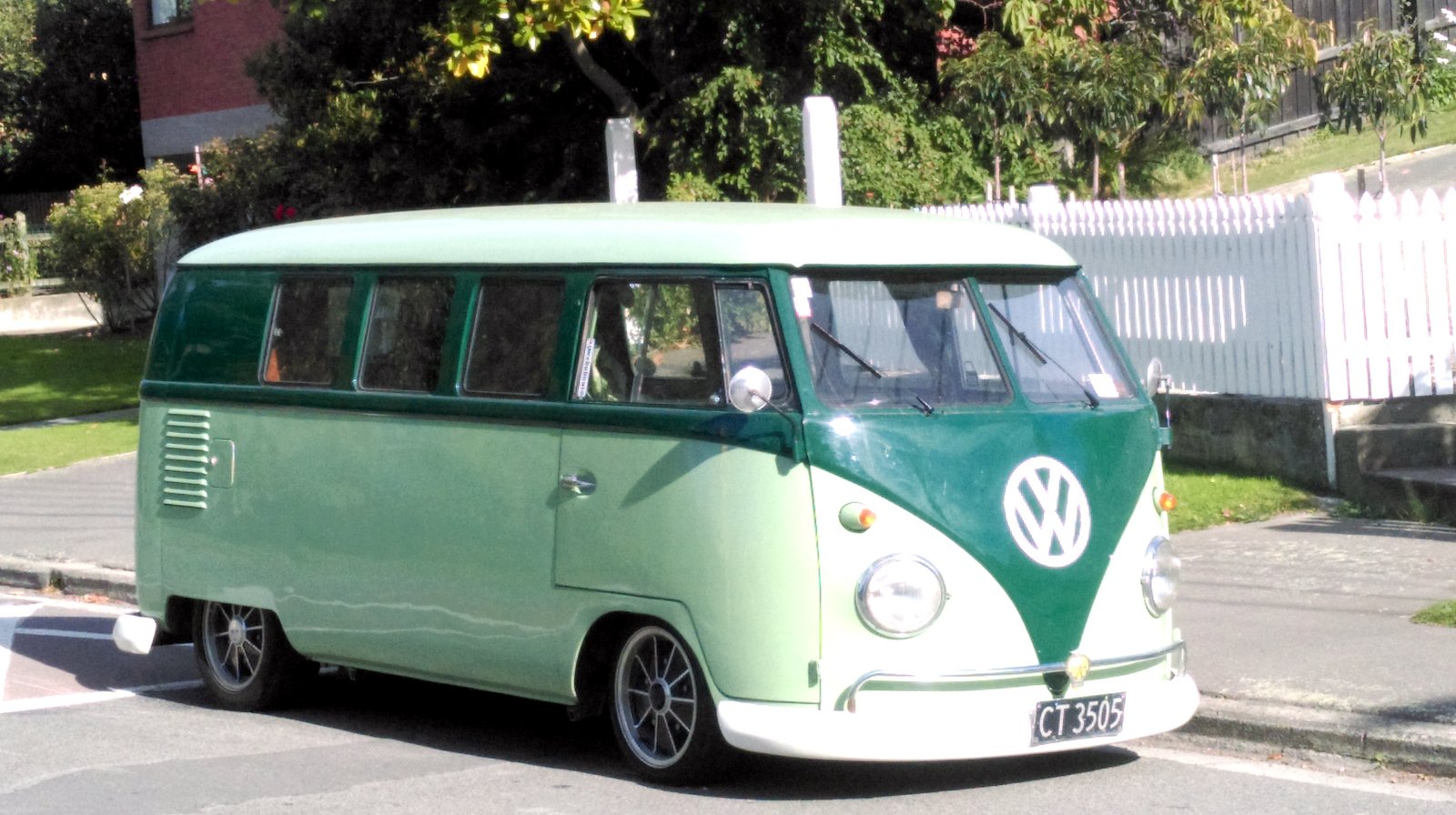
The air-cooled flat-four that powered the 1959 T1 Microbus (Type 2). Simple, reliable, and endlessly modifiable.

1600cc

Air-cooled

The air-cooled flat-four engine that powered a generation. Code .

Power
N/A
Fuel
Carburetor

Highlights.

Feature

Cultural context

counterculture, revolutionary

Feature

Feature 2

The Type 2's boxy, forward-control layout was radical for its time.

Engine

Engine Size

1200cc (1.2L) Air-cooled flat-4

Engine

Horsepower

36 HP

Quick Facts — 1959 Bus

  • Engine SizeNeeds Review

    1200cc (1.2L) Air-cooled flat-4

  • HorsepowerNeeds Review

    36 HP

  • Engine CodeNeeds Review

    M28

  • Body StyleNeeds Review

    Pickup

  • TransmissionNeeds Review

    4-speed manual

  • Cultural SignificanceNeeds Review

    The Type 2 Bus became shorthand for the counterculture.

All specifications should be verified before publication.

Top Questions — 1959 Bus

Refer to the specifications section above for the engine code used in the 1959 Bus. The engine code is typically stamped on the engine case above the generator. For verification assistance, use our M-Code decoder tool.

Confidence: medium — This information should be verified with additional sources.

The value of a 1959 Bus varies significantly based on condition, originality, and documentation. Driver-quality examples typically range from lower values, while excellent restored or numbers-matching examples command premiums. Condition, originality, and documentation are the primary value drivers. Always get a professional appraisal for insurance or sale purposes.

Confidence: low — This information requires verification before use.

1959 Bus models were produced at various Volkswagen factories worldwide. Check the production details above for specific factory information. The factory code can often be identified through chassis number analysis.

Confidence: medium — This information should be verified with additional sources.

The 1959 Bus received several updates from the 1958 model. Refer to the specifications and editorial sections above for detailed information about year-to-year changes. Changes may include mechanical updates, safety features, or cosmetic refinements.

Confidence: medium — This information should be verified with additional sources.

Common rust areas on air-cooled Volkswagens include heater channels (under running boards), floor pans (especially front and battery tray area), front beam (suspension mounting point), rear chassis/apron (where bumper mounts), and door bottoms. The heater channels are structural and expensive to repair. Always inspect these areas carefully before purchase.

The 1960 Bus received updates from the 1959 model. Check the specifications section above for details about year-to-year evolution. Common changes across model years include safety updates, mechanical refinements, and regulatory compliance features.

Confidence: medium — This information should be verified with additional sources.

A full rotisserie restoration typically costs $25,000-$50,000+ depending on condition and level of finish. Mechanical refresh (engine, brakes, suspension) runs $5,000-$12,000. Bodywork and paint alone can be $8,000-$15,000 for quality work. DIY restorations save labor but require significant time investment (500-1,000 hours). Parts availability is generally good for classic VWs, which helps control costs.

Confidence: low — This information requires verification before use.

Numbers matching (original engine, transmission, and chassis) typically increases value by 20-40% over non-matching examples. However, the premium varies based on overall condition, documentation, and market demand. Use our numbers matching verification tool to check your vehicle.

Confidence: medium — This information should be verified with additional sources.

A well-maintained 1959 Bus can serve as a daily driver, but consider the age of the vehicle. Modern traffic, safety features, and reliability expectations differ from the era. Regular maintenance, mechanical knowledge, and realistic expectations are essential. Many owners use classic VWs as weekend drivers or hobby vehicles rather than primary transportation.

Confidence: medium — This information should be verified with additional sources.

Yes, parts availability for classic air-cooled Volkswagens is generally excellent. The large enthusiast community and aftermarket support mean most mechanical and body parts are readily available. Some year-specific trim pieces or rare options may be harder to find, but the core mechanical components are well-supported.

Why This Year Matters

Needs Review
  • Cultural context: counterculture, revolutionary
  • The Type 2's boxy, forward-control layout was radical for its time.
Collector AppealMedium
Restoration ComplexityMedium
Daily Driver SuitabilityMedium

Valuation Resources

Research current market values for the 1959 T1 Microbus (Type 2)

Buying tip: Condition is everything. A rusty "project" can cost more to restore than buying a finished car. Check heater channels, floor pans, and battery tray first.

Which 1959 Bus fits your style?

Explore the variants available for this model year and find your perfect match.

Want to see a detailed comparison of multiple vehicles?

Compare all variants

Verify Authenticity

Numbers matching verification increases value by 20-40%. Use our tools to verify engine codes, chassis numbers, and M-codes for your 1959 T1 Microbus (Type 2).

The Full Story

Introduction

1959: DDB launched 'Think Small' for the Beetle and articulated in two words what the Bus had been demonstrating for nine years. The Kombi didn't need a campaign. It had the evidence of a decade's daily use: eight passengers, one vehicle, remarkable economy, consistent reliability.

The 'Think Small' campaign was about the Beetle. But the Kombi was living the philosophy more completely. Eight people thinking small together.

Nine years is a long time for a vehicle to remain fundamentally unchanged. The Kombi's nine-year longevity by 1959 was not stagnation — it was evidence that VW had gotten the fundamental proposition right on the first attempt and had the discipline not to disturb what was working.

What It Was

The 1959 Kombi represented nine years of continuous improvement: refined transmission, improved windshield sealing, better panel fit, the larger windows introduced in 1958. It was the original article, matured. Not new. Better.

Living with the 1959 Kombi meant experiencing 'Think Small' philosophy for groups: maximum people-moving in minimum vehicle. Eight passengers traveling together, each paying less per mile than any comparable American transport option. The math worked. It had always worked. By 1959, more people were running the numbers.

What Made It Special

Nine years of production had refined what needed refining and confirmed what didn't need changing. The air-cooled engine was perfectly adequate for what the Kombi was asked to do. The removable seats gave it commercial versatility that the Microbus lacked. The windows let in enough light to make the interior pleasant.

The Kombi was the most flexible Bus configuration — not the most luxurious, not the most powerful, but the most useful. It could serve a church congregation Sunday morning and a plumbing supply company Monday. This versatility was the Kombi's genius and its legacy.

Cultural Context

1959: 'Think Small' campaign articulating values the Bus had embodied for groups since 1950. The Kombi was the group vehicle that proved the philosophy — maximum utility, minimum waste, honest engineering that respected the intelligence of its buyers.

Original buyers were proving 'Think Small' philosophy through collective use before the campaign made the phrase iconic. They were the practical vanguard of an idea that would eventually transform American consumer culture. They didn't know that. They were just buying the most sensible vehicle they could find.

How It Drove

The 1959 Kombi drove with nine years of refinement behind it. The transmission shifts were smoother. The wind and road noise were better controlled. The larger windows gave every passenger a genuine view of the journey.

Forty horsepower was enough. Not exciting. Not impressive by American muscle standards. But consistently adequate, reliably present, always available. The Kombi asked for patience and rewarded it with dependability. In 1959 as in 2025, that trade remains worth making.

Every passenger in a 1959 Kombi was equally present to the journey. No one was relegated to a rear-facing seat with a view of where they'd been. Eight people moving together, watching the same road arrive, sharing the same experience. The design made community inevitable.

Who Bought It

By 1959, the Kombi had established its commercial and family-transport reputation. Buyers ranged from growing families needing the capacity to institutions needing the economy. Churches, schools, tour operators, resorts, construction companies, plumbing suppliers — the Kombi served them all.

The 'Think Small' moment made the VW proposition more legible to mainstream American buyers who might have previously dismissed small European vehicles as foreign oddities. By 1959, thinking small was becoming culturally respectable. The Kombi had been right all along.

Buying Today

1959 Kombi production approached a decade of refinement. Nine years of improvement creating a mature product with established mechanical character and well-understood rust patterns. Collectors know what they're getting.

Values range from $35,000 for honest drivers to $100,000 for restoration-quality examples. The 1959 sweet spot: post-small-window, pre-counterculture-premium. A mature early Bus with all the refinements and none of the mythology markup. The math still works.

The 1959 Kombi sweet spot: post-small-window, pre-counterculture-premium. Thirteen years of production wisdom will follow you to every 1959 inspection — the rust patterns are well-documented, the mechanical vulnerabilities are known, the parts supply is robust. This is a well-understood vehicle to restore and own.

The Verdict

The 1959 Kombi was the Bus at the end of its first decade: confident, mature, proven. DDB's 'Think Small' articulated what the Kombi had always been. The campaign found an audience. The audience found the vehicle. The cultural adoption of the 1960s was already in motion.

'Think Small' campaign articulating values Bus had embodied for groups since 1950. The Kombi was the proof. Eight passengers, one vehicle, maximum efficiency, minimum pretense. The philosophy worked at scale.

Today's 1959 Kombi is a direct connection to that moment of cultural clarity — when efficient thinking was first framed as sophisticated thinking, and a German work vehicle was revealed as one of the most honest machines ever made.

The 1959 was the Bus at the end of its first decade, standing at the threshold of the cultural transformation that would define its legacy. It didn't know that yet. It was simply doing what it had always done: moving people honestly, efficiently, together.