1493cc
Air-cooled flat-4
The air-cooled flat-four engine that powered a generation. Code M178.
- Power
- 50 HP
- Fuel
- Single carburetor

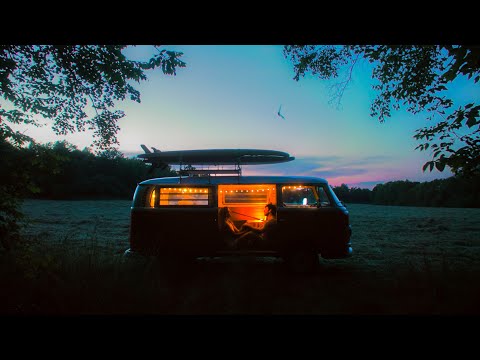
Factory exterior
The 1967 Westfalia was the final T1 split-window Camper — the last year of the two-piece windscreen, the round headlamps, the original Bus face that had been in production since 1950. Fifty horsepower, the Summer of Love in full flower, and a vehicle that had become, in the span of seventeen years, one of the great accidental symbols of the twentieth century.
1967: The Summer of Love. Monterey Pop. Sgt. Pepper. The Six Day War. The first Super Bowl. Muhammad Ali refused induction and was stripped of his title. Che Guevara was killed in Bolivia. Thurgood Marshall became the first Black Supreme Court Justice. Sixty thousand people gathered in San Francisco's Golden Gate Park for the Human Be-In in January, and by June the Haight-Ashbury was the most photographed neighborhood on Earth.
The air-cooled flat-four that powered the 1967 T1 Westfalia (Type 2). Simple, reliable, and endlessly modifiable.
1500cc (1.5L) Air-cooled flat-4
50 HP
D
Pickup
4-speed manual
The Type 2 Bus became shorthand for the counterculture.
All specifications should be verified before publication.
Refer to the specifications section above for the engine code used in the 1967 Bus. The engine code is typically stamped on the engine case above the generator. For verification assistance, use our M-Code decoder tool.
Confidence: medium — This information should be verified with additional sources.
The value of a 1967 Bus varies significantly based on condition, originality, and documentation. Driver-quality examples typically range from lower values, while excellent restored or numbers-matching examples command premiums. Condition, originality, and documentation are the primary value drivers. Always get a professional appraisal for insurance or sale purposes.
Confidence: low — This information requires verification before use.
1967 Bus models were produced at various Volkswagen factories worldwide. Check the production details above for specific factory information. The factory code can often be identified through chassis number analysis.
Confidence: medium — This information should be verified with additional sources.
The 1967 Bus received several updates from the 1966 model. Refer to the specifications and editorial sections above for detailed information about year-to-year changes. Changes may include mechanical updates, safety features, or cosmetic refinements.
Confidence: medium — This information should be verified with additional sources.
Common rust areas on air-cooled Volkswagens include heater channels (under running boards), floor pans (especially front and battery tray area), front beam (suspension mounting point), rear chassis/apron (where bumper mounts), and door bottoms. The heater channels are structural and expensive to repair. Always inspect these areas carefully before purchase.
The 1968 Bus received updates from the 1967 model. Check the specifications section above for details about year-to-year evolution. Common changes across model years include safety updates, mechanical refinements, and regulatory compliance features.
Confidence: medium — This information should be verified with additional sources.
A full rotisserie restoration typically costs $25,000-$50,000+ depending on condition and level of finish. Mechanical refresh (engine, brakes, suspension) runs $5,000-$12,000. Bodywork and paint alone can be $8,000-$15,000 for quality work. DIY restorations save labor but require significant time investment (500-1,000 hours). Parts availability is generally good for classic VWs, which helps control costs.
Confidence: low — This information requires verification before use.
A well-maintained 1967 Bus can serve as a daily driver, but consider the age of the vehicle. Modern traffic, safety features, and reliability expectations differ from the era. Regular maintenance, mechanical knowledge, and realistic expectations are essential. Many owners use classic VWs as weekend drivers or hobby vehicles rather than primary transportation.
Confidence: medium — This information should be verified with additional sources.
Yes, parts availability for classic air-cooled Volkswagens is generally excellent. The large enthusiast community and aftermarket support mean most mechanical and body parts are readily available. Some year-specific trim pieces or rare options may be harder to find, but the core mechanical components are well-supported.
Research current market values for the 1967 T1 Westfalia (Type 2)
Hagerty Valuation Tools
Industry-standard classic car values
Bring a Trailer Results
Recent auction prices
TheSamba Classifieds
Current listings & asking prices
Buying tip: Condition is everything. A rusty "project" can cost more to restore than buying a finished car. Check heater channels, floor pans, and battery tray first.
Original paint options available for the 1967 T1 Westfalia (Type 2).
Looking for a 1967 T1 Westfalia (Type 2) in Black?
Find for SaleExplore the variants available for this model year and find your perfect match.
Want to see a detailed comparison of multiple vehicles?
Compare all variantsNumbers matching verification increases value by 20-40%. Use our tools to verify engine codes, chassis numbers, and M-codes for your 1967 T1 Westfalia (Type 2).
1967: The Summer of Love. Monterey Pop. Sgt. Pepper. The Six Day War. The first Super Bowl. Muhammad Ali refused induction and was stripped of his title. Che Guevara was killed in Bolivia. Thurgood Marshall became the first Black Supreme Court Justice. Sixty thousand people gathered in San Francisco's Golden Gate Park for the Human Be-In in January, and by June the Haight-Ashbury was the most photographed neighborhood on Earth.
Parked in the Haight, parked at Monterey, parked on Highway 1 overlooking the Pacific, was the Bus. The T1 generation — the split-window, the original, the design that had been in production since 1950 — was in its final year. Nobody buying a 1967 Westfalia knew it would be the last split-window. Volkswagen had not announced the redesign. But the T1 was being replaced, and the summer it ended in was the summer the counterculture peaked. The timing was not accidental, but it was not planned.
The 1967 Westfalia was powered by the 1493cc engine in its most powerful T1 tune: 50 horsepower at 4000 rpm, up from 42 horsepower in earlier 1493cc applications. The upgrade came via improved carburetion and revised porting, producing a top speed of approximately 65 mph and, more usefully, improved mid-range torque for loaded highway driving. The four-speed gearbox was unchanged. The chassis was the T1 ladder frame that had carried every Bus since 1950.
The Westfalia interior had reached its final and most developed T1 configuration. The cabinet system was refined, the cooking arrangement practical, the sleeping platform fully engineered. The 1967 models featured improved insulation and, in some markets, a factory-optional roof raise — an early version of what would become standard equipment on later Westfalia conversions. The two-piece windscreen looked out on the world with the same divided curiosity it had in 1950, and would never look that way again after December 1967.
The 1967 Westfalia was special for being the end of something, though nobody framed it that way at the time. The split-window Bus had been in production for seventeen years. It had grown from a 25-horsepower delivery van into a 50-horsepower cultural icon. It had been embraced by European families, American academics, and the counterculture with equal authenticity. It had never been marketed to the people who made it famous — they found it on their own.
The 50-horsepower engine was the best version of the original engine concept, and it was discontinued with the design it powered. The T2 Bay Window Bus that replaced the T1 in 1968 used a different engine in a different architecture. The split-window's final engine, putting out 50 honest horsepower from 1493cc, was an air-cooled refinement two decades in the making, and it was used for exactly one model year before the design was retired. Some achievements are visible only in retrospect.
The Summer of Love was not a planned event. It emerged from the convergence of a specific San Francisco neighborhood, a specific musical moment, a specific generational disillusionment with institutional America, and a specific willingness to try something different in very visible ways. The Bus was in the middle of all of it, not as a symbol that was chosen but as a tool that was useful.
Fifty thousand young people came to San Francisco in the summer of 1967. Many of them came in Buses. The Westfalia conversion, with its cooking capability and sleeping platform, was the premium version of this mobility — it extended the range of what was possible, turning a journey into a lifestyle. The people who converged on the Haight in a Westfalia had, in a meaningful sense, brought their home with them. They were not visitors. They were residents of a mobile republic that happened to be parked on Ashbury Street.
The 1967 Westfalia drove with the confidence that fifty horsepower from a well-developed engine provides: not fast, but untroubled. Highway cruising at 55 mph — the speed that American roads still largely suggested in 1967 — required the engine to work but not strain. The four-speed gearbox was slotted through its range more casually than in earlier years. The extra power had not made the Bus quick; it had made it adequate, and adequacy felt luxurious after a decade of 36 horsepower.
The split-window's driving dynamics were unchanged from earlier T1 models — torsion bar front, swing axle rear, worm-and-roller steering — but by 1967 the design's handling characteristics were well-understood by owners and mechanics. The Bus rewarded smooth driving and penalized hurried driving with a reliability that amounted to character. You drove a 1967 Westfalia deliberately. This was not a limitation. It was the product's personality.
The 1967 Westfalia buyer existed on a spectrum from the conventional camping family to the committed counterculturalist, with every variety of outdoors enthusiast between. Volkswagen's American sales were strong — the Bus was selling in numbers that would not be repeated in the US market for decades — and the Westfalia premium attracted buyers across demographics who shared a preference for purposeful design over decorative chrome.
In San Francisco specifically, and California broadly, the Bus had become the default vehicle of a generation making choices about how to live. The Westfalia conversion elevated those choices: you could cook better, sleep more comfortably, travel further. The people who bought Westfalias in 1967 were, in many cases, making a statement that they intended to travel, and travel slowly, and not necessarily return.
The 1967 Westfalia is among the most sought-after split-window Buses in the collector market. It carries the double premium of the final T1 production year and the Westfalia conversion, augmented by the cultural associations that 1967 carries for everyone who knows what that year meant. A documented, rust-free, correct-specification 1967 Westfalia commands prices that would have seemed extraordinary ten years ago and seem reasonable today.
The 50-horsepower 1493cc engine is the key specification. Buyers should verify the engine code carefully — the 1967 final-year tune is distinct from earlier 42-horsepower applications of the same displacement. Period-correct Westfalia interior components are at their most valuable in a 1967 context. A complete, numbers-matching 1967 Westfalia with provenance documentation is a museum-grade artifact, priced and sold accordingly.
The 1967 Westfalia is the last split-window. This fact does not need embellishment. Seventeen years of the divided windscreen, the round headlamps, the two-piece rear hatch, the air-cooled flat-four in its original home. It ended here, in the summer when the counterculture reached its zenith, in a vehicle that had accidentally become the counterculture's preferred form of transport.
Drive one if you can. Park it somewhere that requires a dirt road to reach. Cook dinner in it. Sleep in it. Wake up to a view that required a night's commitment to earn. This is what it was built for, and nothing about it has changed.