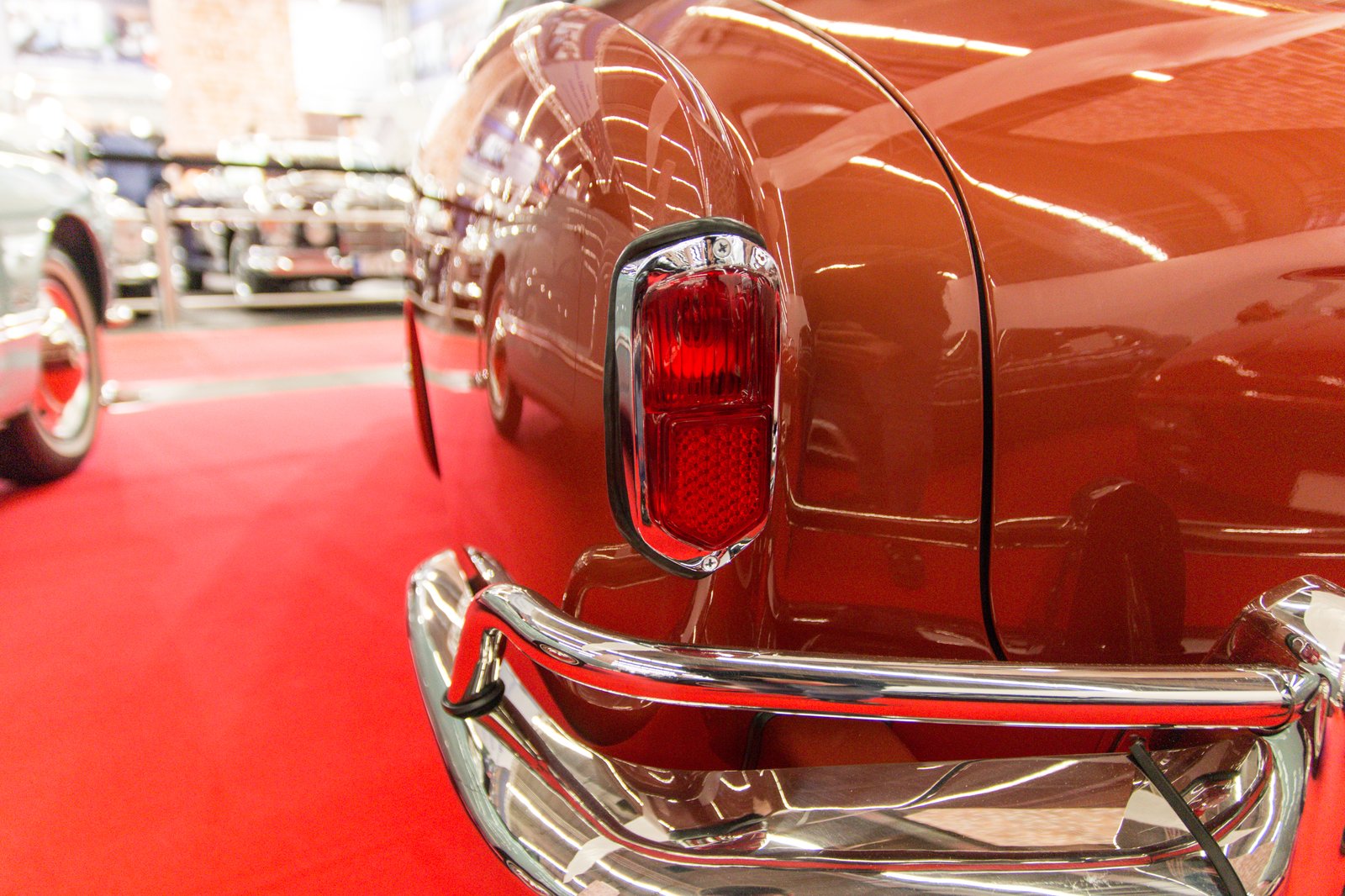
2-door convertible

1957 Type 14 Convertible

1192cc
Displacement
36HP
Power
N/A
Top Speed

Real Stories

VW Karmann Ghia 'lowlight' Debut

The shape of rebellion had a soft top.

The 1957 Karmann Ghia Convertible arrived in the most anxious year of the Cold War with the simplest possible answer to American automotive excess: a soft-top coachbuilt cabriolet that didn't need to prove anything.

When the 1957 Karmann Ghia Convertible rolled off assembly lines, it carried forward a design philosophy that had survived recessions, cultural upheaval, and the endless march of automotive fashion. The Type 14 Karmann Ghia Convertible represented that moment perfectly — a bridge between the elegant restraint of yesterday and the evolving sensibilities of its era.

Read the Full Story

Engineering.

The air-cooled flat-four that powered the 1957 Type 14 Convertible. Simple, reliable, and endlessly modifiable.

1192cc

Air-cooled flat-4

The air-cooled flat-four engine that powered a generation. Code G.

Power
36 HP
Fuel
Carburetor

Valuation Resources

Research current market values for the 1957 Type 14 Convertible

Buying tip: Condition is everything. A rusty "project" can cost more to restore than buying a finished car. Check heater channels, floor pans, and battery tray first.

Black

L41solidcommon

Factory Colors

Original paint options available for the 1957 Type 14 Convertible.

solid Colors

Looking for a 1957 Type 14 Convertible in Black?

Find for Sale

Which 1957 Karmann Ghia fits your style?

Explore the variants available for this model year and find your perfect match.

Want to see a detailed comparison of multiple vehicles?

Compare all variants

Verify Authenticity

Numbers matching verification increases value by 20-40%. Use our tools to verify engine codes, chassis numbers, and M-codes for your 1957 Type 14 Convertible.

Correct Engine CodeG

The Full Story

Introduction

When the 1957 Karmann Ghia Convertible rolled off assembly lines, it carried forward a design philosophy that had survived recessions, cultural upheaval, and the endless march of automotive fashion. The Type 14 Karmann Ghia Convertible represented that moment perfectly — a bridge between the elegant restraint of yesterday and the evolving sensibilities of its era.

Nineteen fifty-seven was the year everything got louder. Sputnik launched in October and made the sky feel contested. Detroit responded to anxiety with aggression — the 1957 Chevrolet's tailfins were taller than ever, the Chrysler 300C had 375 horsepower. The American automotive id was fully expressed.

The Karmann Ghia Convertible did not participate. Top down, it was simply beautiful.

What It Was

The Karmann Ghia never competed on horsepower or size. It competed on something more fundamental: the belief that how you design a car says something about who you are as a designer, and by extension, who you are as a driver. In 1957, when everything else was getting bigger and noisier, the Karmann Ghia stayed itself. Restrained. Purposeful. Elegant.

The convertible body was a Karmann coachbuilding achievement. Despite removing the structural roof, the car remained tight — no cowl shake, no body flex on uneven roads. Internal bracing handled what the roof had done, invisibly.

The soft top folded neatly behind the rear seats. When it was down, the lines of the car improved: the windshield read taller, the body more sculptural, the whole thing more clearly Italian. When it was up, it was a proper enclosed coupe.

What Made It Special

Beneath that graceful body, the torsion bar suspension meant every corner was an interaction, not a fight. The four-speed manual transmission meant driving was a conversation. The leather-trimmed steering wheel, the simple and elegant dashboard, the seats designed for actual human comfort — these weren't luxury touches in a Beetle costume. They were design choices that said: we respect you as a driver.

For original owners in 1957, this meant something specific. For teenagers decades later discovering these cars at used lots in the 1980s and 90s, it meant something equally real but different. Here was proof that cool didn't require expense, that style didn't require shouting, that a car could be authentic without being impractical.

The 1192cc air-cooled flat-four made 36 horsepower. The Chrysler 300C made 375. The difference was a choice. And the choice you made said something about you.

How It Drove

Put the top down. The engine barks to life behind your shoulders — the air-cooled note that defines the era. The gearshift is direct, the clutch light, the steering honest. You are not insulated from the road. You are in conversation with it.

At highway speeds with the soft top down, wind management is imperfect — it was 1957, not 2025. But that turbulence is part of the experience, not a failure of it. The car was not designed to isolate you from the world. It was designed to help you experience it more beautifully.

In town, the convertible draws eyes without demanding attention. Parking is easy. Visibility is excellent. The proportions are so right that the car looks like it belongs wherever it is.

Cultural Context

That Karmann Ghia Convertible in 1957 might have been your first date destination. Or your older sibling's car you borrowed desperately and felt like an adult driving. Or the car you saw once and couldn't stop thinking about.

The cultural moment of 1957 was profound: Kerouac published On the Road in September. Sputnik launched in October. The world suddenly felt both larger and more dangerous. American teenagers were the first generation to grow up with television, with rock and roll, with the possibility of nuclear annihilation and the freedom of the open highway simultaneously.

The Karmann Ghia Convertible didn't fight any of this. It offered an alternative language: European, calm, beautiful. Top down on a summer evening, the anxieties of the Cold War receded. For a moment, the world was just road and sky and the engine singing behind you.

Who Bought It

The 1957 Convertible buyer was specific. Not a performance enthusiast — they had options. Not a luxury buyer — this wasn't that. This was the buyer who wanted something beautiful and honest and open to the sky, at a price that didn't require a compromise elsewhere.

Young women with European sensibilities. Professionals who had spent time in France or Italy and missed open-air driving. Artists who found the styling genuinely moving rather than merely functional.

Later generations — Gen X in particular — discovered these cars as affordable route to the same feeling. A well-kept 1957 Convertible at a used lot in 1985 was still everything it had been. The design hadn't aged because it had never been fashionable. It had simply been right.

Buying Today

The 1957 Convertible is more desirable and more expensive than the equivalent Coupe. Fewer survive in good condition — the soft top admits water and the floor pans reflect every decade of weather. Inspect the car extensively before any purchase.

The mechanical platform is well-supported. The 1192cc engine is as simple as air-cooled gets, and the four-speed manual is similarly robust. Finding parts is not the challenge. Finding good metal is.

A proper soft top replacement in period-correct canvas makes an enormous visual difference. Many cars have incorrect modern vinyl tops that compromise the look entirely. Budget for this if the car needs it. Check Hagerty for current valuations on early convertibles — they've appreciated consistently.

The Verdict

For collectors today, these cars represent something increasingly rare: design that didn't compromise, engineering that didn't lie, a moment when 'good enough' wasn't acceptable but 'excess' wasn't either.

The 1957 Karmann Ghia Convertible is not a car for everyone. It requires patience, some tolerance for imperfection, and an understanding that the experience it offers is not about performance metrics. It's about presence.

If you have a story connected to this car — or want one — that's the reason to own it. The rest is just details.