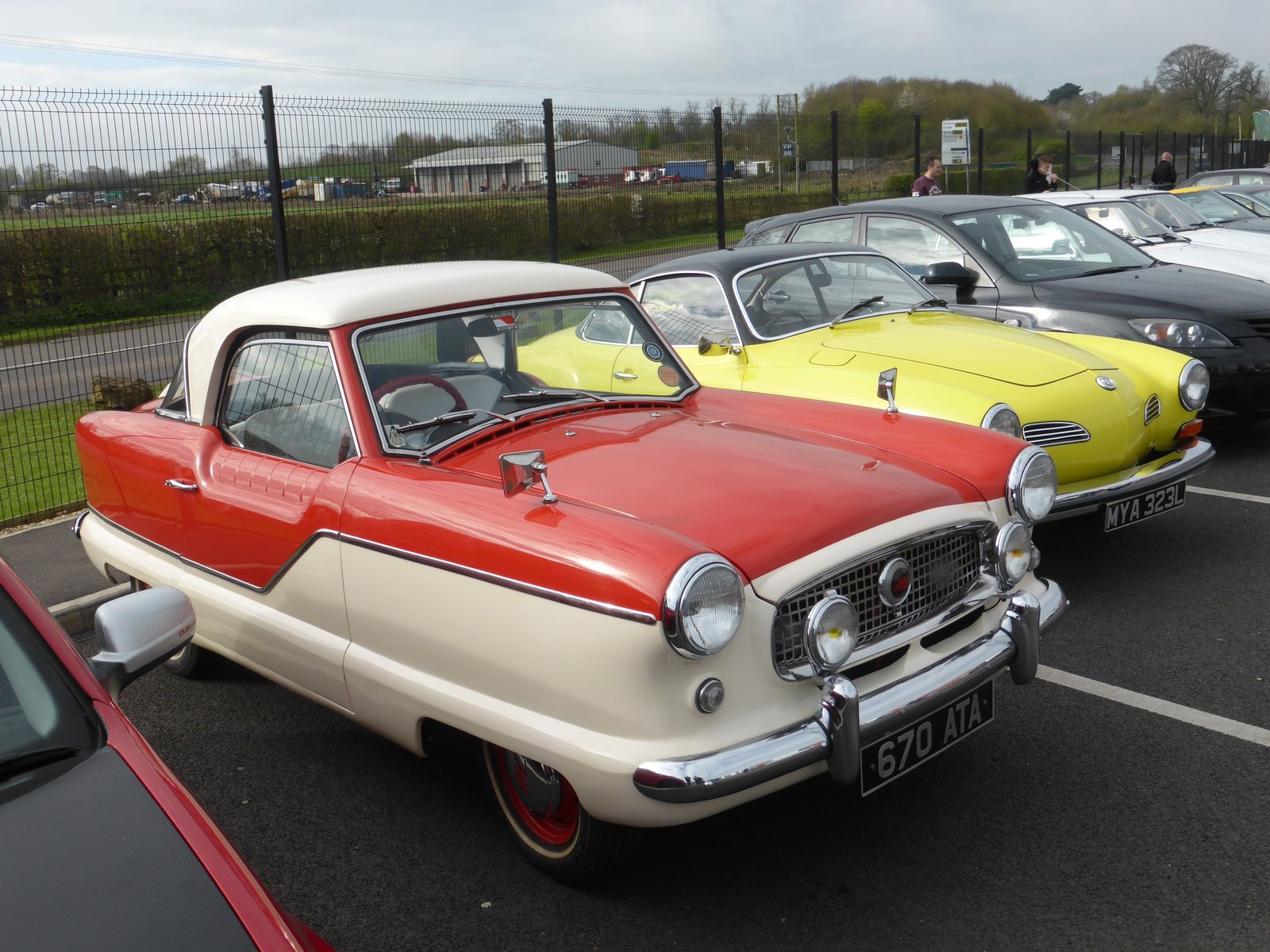
1958 Type 14 Coupe

1192cc • 30 HP • 2-door coupe

1958 Type 14 Coupe

The 1958 Karmann Ghia Coupe was unchanged from its predecessors, and that was the entire point. While American automakers were discovering that excess has consequences, the Karmann Ghia was in its fourth year of proving that restraint endures.

Real Stories

VW Karmann Ghia 'lowlight' Debut

The Story

hen the 1958 Karmann Ghia rolled off assembly lines, it carried forward a design philosophy that had survived recessions, cultural upheaval, and the endless march of automotive fashion. The Karmann Ghia Coupe represented that moment perfectly — a bridge between the elegant restraint of yesterday and the evolving sensibilities of its era.

This was year four of the Karmann Ghia. The template was established. The reputation was building. The car was finding its audience in America — not the mass market, but the market that mattered: people with taste.

The Edsel launched in September 1957 and was already failing by the time the 1958 Karmann Ghia appeared. The contrast was instructive.

Model Information and History

What It Was

The Karmann Ghia never competed on horsepower or size. It competed on something more fundamental: the belief that how you design a car says something about who you are as a designer, and by extension, who you are as a driver. In 1958, when everything else was getting bigger and noisier, the Karmann Ghia stayed itself. Restrained. Purposeful. Elegant.

The coupe body was in its mature, consistent form. Karmann's craftsmen had been building these cars long enough to have developed mastery over the specific challenges of the body. Each car was still individual, still slightly different from the last, but consistently well-made.

The interior was honest: clean dashboard, essential instruments, seats that prioritized actual comfort over the appearance of it. Nothing here required a salesman to explain.

What Made It Special

Beneath that graceful body, the torsion bar suspension meant every corner was an interaction, not a fight. The four-speed manual transmission meant driving was a conversation. The leather-trimmed steering wheel, the simple and elegant dashboard — not luxury touches. Honest choices.

The air-cooled engine was, at its core, the same engine that had powered the Beetle for years. That continuity was not a limitation — it was a proof of concept. The engine worked. The platform worked. The Karmann Ghia was what happened when you dressed proven reliability in Italian design.

In a year when Ford was discovering the costs of overcomplicated design, the Karmann Ghia's simplicity felt principled.

How It Drove

The driving experience was of a piece with the design: composed, honest, requiring engagement. The gearshift demanded thought. The steering communicated. The engine behind you made a sound that told you what it was doing.

You could not drive this car passively. It wasn't that the car was difficult — it was that the car was alive. It responded to inputs the way a well-calibrated instrument responds to touch: precisely, immediately, without amplification.

Highway cruising was comfortable within the car's limits. Those limits were real — no amount of technique would produce performance the engine couldn't provide. Within those limits, the experience was excellent.

Cultural Context

That Karmann Ghia in 1958 might have been your first date destination. Or your older sibling's car you borrowed desperately and felt like an adult driving. Or the car you saw once and couldn't stop thinking about.

The cultural moment of 1958 was a turning point. The Beat Generation was moving from underground to mainstream. The Edsel's failure was a cultural event. Small cars — the Rambler, the VW Beetle, the Karmann Ghia — were having a genuine commercial moment as American consumers reconsidered scale.

The Karmann Ghia didn't benefit from this moment as dramatically as the practical Beetle. But the Convertible and Coupe were finding buyers who understood that the recalibration wasn't just about economy — it was about judgment.

Who Bought It

The 1958 buyer had an increasingly well-defined profile: design-conscious, European-influenced, committed to the idea that a car could be beautiful and practical simultaneously.

These were people who had looked at the Edsel and found it alarming rather than exciting. They had watched American cars grow larger and more complex and had reached a different conclusion than the manufacturers hoped.

They bought the Karmann Ghia because it confirmed what they already believed: that good design is timeless, that restraint is a form of intelligence, that you don't need to shout to be heard.

Buying Today

The 1958 coupe is a reasonable entry point into early Karmann Ghia ownership. Production was growing, survivors are findable, the mechanical platform is well-supported, and the design is everything it was in 1955.

Condition is everything. Cosmetics are easy and relatively inexpensive to address. Structural rust in the heater channels and floor pans is the expensive problem, and it hides under paint. Get the car on a lift. Look carefully.

A daily-driver 1958 coupe in honest condition will bring more joy than a show-quality restoration that requires careful handling. Buy the honest car. Check Hagerty for values.

The Verdict

The 1958 Karmann Ghia represents design that didn't compromise, engineering that didn't lie, a moment when good enough wasn't acceptable but excess wasn't either.

The Edsel is remembered as a cautionary tale. The Karmann Ghia is remembered as beautiful. Both launched in the same automotive moment. The difference was judgment — by the designers, by the craftsmen, and eventually, by history.

Buy the car history remembered correctly.

880 words • ~5 min read

Reference

Engine

Displacement
1192cc (1.192L)
Configuration
Air-cooled flat-4
Power
30 HP
Engine Code
M28

Performance

0-60 mph
N/A
Top Speed
N/A
Fuel Economy
N/A

Drivetrain

Transmission
4-speed manual
Drive Type
RWD

Chassis

Front Suspension
Torsion bar
Rear Suspension
Swing axle
Brakes
Drum front and rear
Steering
Worm and roller

Dimensions

Community Resources

Community

Connect with 1958 Type 14 Coupe owners & experts

Discussions

Soon

Questions, advice, and stories from the community

Photo Gallery

Soon

Owner photos and restoration progress shots

Find a Specialist

Soon

Mechanics and restorers who know this model

Owner Registry

Soon

Connect with other owners near you

Community features coming soon. We're building tools for owners to share knowledge, photos, and connect with specialists. Want early access? Get in touch.

Verify Authenticity

Numbers matching verification increases value by 20-40%. Use our interactive tools to verify engine codes, chassis numbers, and M-codes against production data for your 1958 Type 14 Coupe.

Correct Engine Code
M28
Valid Engine Codes
M28