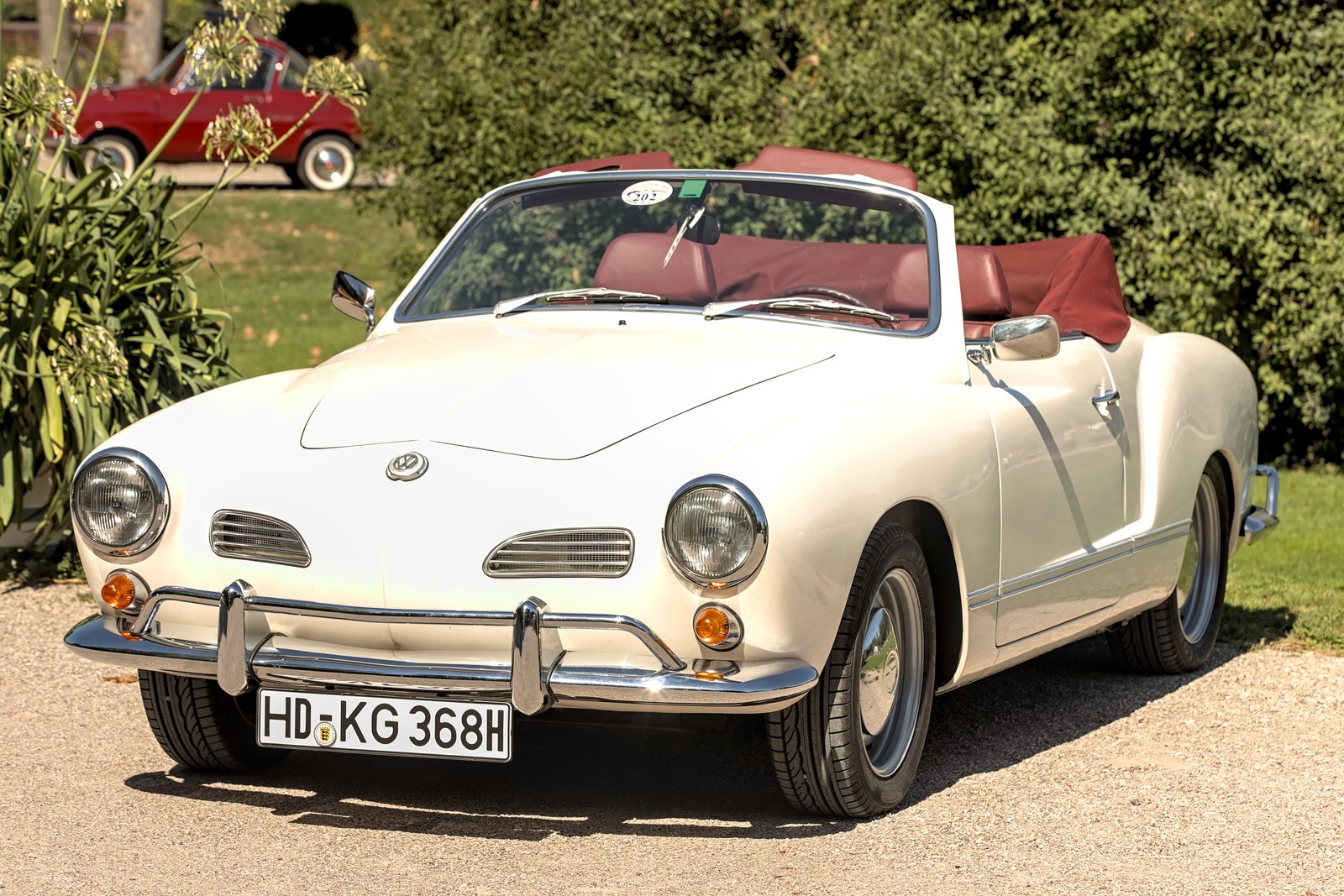
1968 Type 14 Coupe

1493cc • 44 HP • 2-door coupe

1968 Type 14 Coupe

The 1968 Karmann Ghia in European-specification arrived in the year the world decided to question everything. It had already asked the right questions in 1955 and never stopped answering them.

Real Stories

VW Karmann Ghia 'lowlight' Debut

The Story

he 1968 Karmann Ghia Coupe arriving in European markets entered a continent fundamentally transformed by cultural upheaval. The year meant Prague Spring, student movements, Beatles White Album, and a generation beginning to question whether the post-war consensus actually delivered what it promised. Into this moment stepped the 1968 Coupe, looking identical to its 1967 predecessor, but arriving with entirely different cultural resonance. The car that had represented rationality and refined design now represented something else entirely: the possibility that good design could survive radical cultural change.

Model Information and History

What It Was

The 1968 Coupe's proportions hadn't changed significantly, but their meaning had transformed completely. The minimalist design, the absence of chrome excess, the refusal to participate in styling fads, these characteristics that had seemed like thoughtful conservatism now felt like radical simplicity. The body panels showed Karmann's continued mastery, the curves remained confident and assured, and the overall impression was of a car that had achieved such complete design maturity it transcended fashion entirely. In 1968, that transcendence meant something politically.

What Made It Special

The 1600cc air-cooled engine was now proven across millions of vehicles and nearly two decades of production. The mechanical simplicity that had seemed like limitation in 1956 now seemed like an alternative philosophy. The 4-speed manual that earlier generations had accepted as necessity now felt like intentional choice, proof that complexity didn't equal sophistication. The torsion bar suspension that absorbed European roads with predictable grace offered reliability that spoke to a generation increasingly skeptical of technological excess. Driving the 1968 Coupe meant occupying a mechanical philosophy that made sense at a moment when making sense felt revolutionary.

Cultural Context

1968 meant the wall separating conventional society from its critics was beginning to visibly crack. The students on European streets, the anti-establishment movements, the cultural questioning, all of this was beginning to challenge the assumptions that had governed the previous two decades. The 1968 Karmann Ghia Coupe, by simply continuing to embody refined simplicity and mechanical honesty, suddenly seemed like the perfect car for this moment. It wasn't designed for revolution, but its design spoke the language revolution was using.

For original buyers in 1968, the Coupe represented automotive conviction at a moment of cultural questioning. For the generation discovering these cars in the 1980s and 1990s, particularly those fascinated by the 1960s counterculture, the 1968 model represented proof that good design and radical politics could align.

How It Drove

The 1968 interior continued the trajectory of refined simplicity. Upholstery was functional, controls were logical, and the overall space felt like a clear statement: occupy this interior honestly, without pretense, without excess. For drivers questioning the materialism of the post-war economic explosion, the Karmann Ghia interior felt like an answer. It wasn't poverty, it was choice. The eXperience it offered wasn't deprivation, it was clarity.

Who Bought It

The 1968 Karmann Ghia Coupe, particularly European-market examples, represents a specific convergence: perfect design maturity meeting revolutionary cultural moment. That convergence creates meaning beyond the mechanical. Collectors value 1968 examples for their cultural positioning and their design integrity. The mechanical proven-ness means restoration is straightforward, parts are accessible, and reliability is guaranteed. Complete documentation and current market guidance are available through Hagerty (hagerty.com). What makes 1968 Coupe models increasingly collectible is their embodiment of a specific historical moment when simple design felt revolutionary.

Buying Today

Start under the car. Floor pans are the Karmann Ghia's most expensive repair and the most commonly neglected. A proper pre-purchase inspection means a lift, a light, and someone who has seen rusted pans before. Budget for welding if the car has lived anywhere with winter.

Body panels are steel and will rust at the door sills, behind the rear wheels, and in the trunk floor (which is in front, because the engine is in back). None of these repairs are impossible, but all of them are expensive when deferred. The mechanical platform is pure Beetle — parts are available through JBugs, Wolfsburg West, and dozens of independent suppliers. European-specification examples often carry different trim details and mechanical specs — verify documentation carefully before purchase.

Driver-quality examples run $18,000-28,000. Show quality adds another $20,000-35,000. Coupes represent the more attainable entry point into Karmann Ghia ownership without sacrificing any of the design's essential quality. The late 1960s models have strong market support. Prices have held and, for clean examples, trended upward.

The Verdict

Some cars aged. This one didn't. The 1968 Karmann Ghia coupe still looks right parked next to anything built in any decade. The design had an answer to the question of proportion that has not been improved upon.

Buy it because you want to drive something that was built with a point of view. Drive it because the car rewards patience and punishes hurry. Keep it because in five years it will be worth more than you paid and the drive to work will still be better than anything you could replace it with.

802 words • ~5 min read

Reference

Engine

Displacement
1493cc (1.493L)
Configuration
Air-cooled flat-4
Power
44 HP
Engine Code
H

Performance

0-60 mph
N/A
Top Speed
N/A
Fuel Economy
N/A

Drivetrain

Transmission
4-speed manual
Drive Type
RWD

Chassis

Front Suspension
Torsion bar
Rear Suspension
Swing axle
Brakes
Drum front and rear
Steering
Worm and roller

Dimensions

Community Resources

Community

Connect with 1968 Type 14 Coupe owners & experts

Discussions

Soon

Questions, advice, and stories from the community

Photo Gallery

Soon

Owner photos and restoration progress shots

Find a Specialist

Soon

Mechanics and restorers who know this model

Owner Registry

Soon

Connect with other owners near you

Community features coming soon. We're building tools for owners to share knowledge, photos, and connect with specialists. Want early access? Get in touch.

Verify Authenticity

Numbers matching verification increases value by 20-40%. Use our interactive tools to verify engine codes, chassis numbers, and M-codes against production data for your 1968 Type 14 Coupe.

Correct Engine Code
H
Valid Engine Codes
H