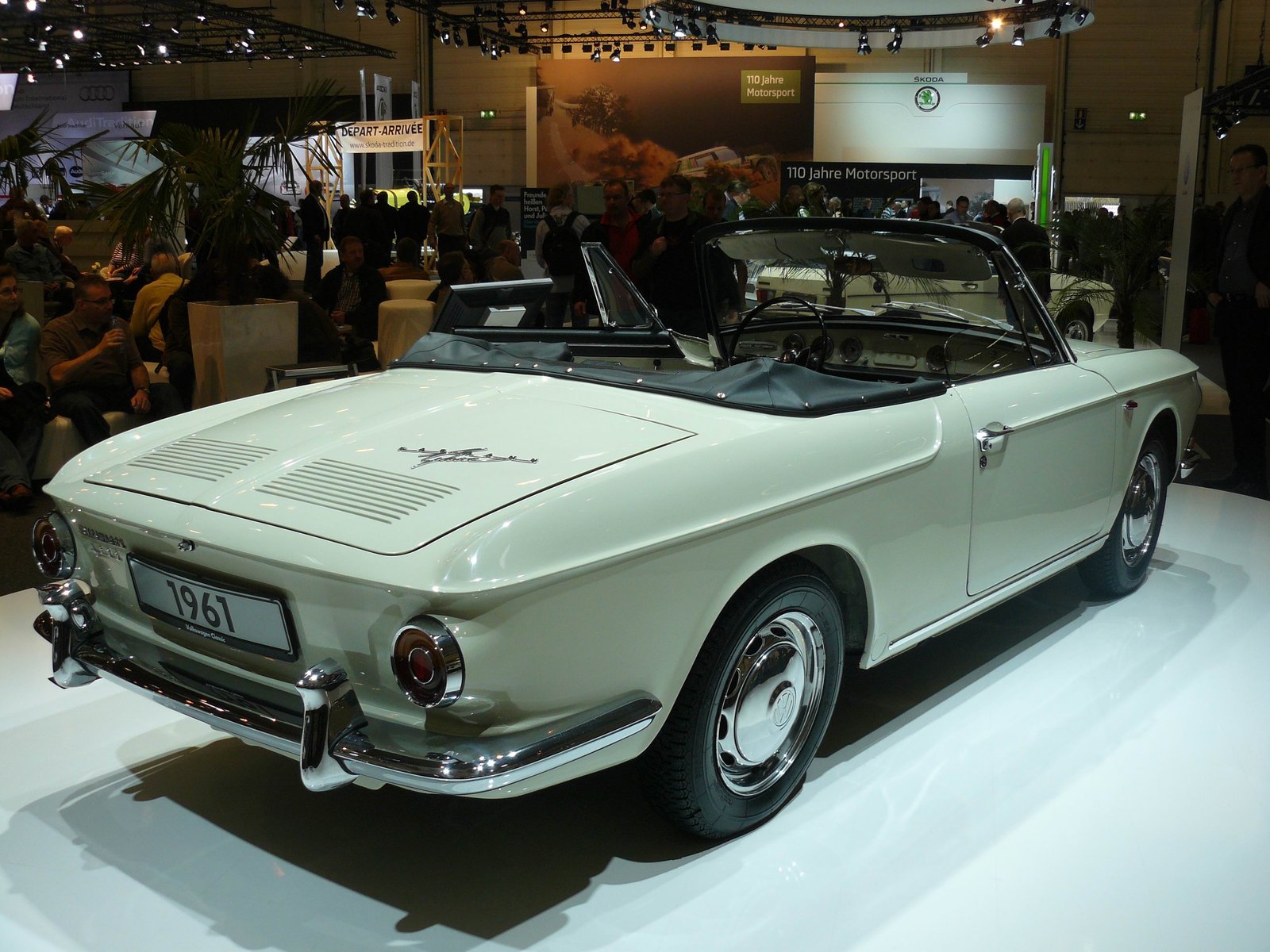
1961 Type 14 Coupe

1192cc • 34 HP • 2-door coupe

1961 Type 14 Coupe

The 1961 Karmann Ghia Coupe was in its sixth year of production, and the accumulated experience of the Karmann coachworks showed. A mature, consistently excellent car in a design that had been right from the first day.

Real Stories

VW Karmann Ghia 'lowlight' Debut

Technical Specifications

Engine

Displacement
1192cc (1.192L)
Configuration
Air-cooled flat-4
Power
34 HP
Engine Code
M28

Performance

0-60 mph
N/A
Top Speed
N/A
Fuel Economy
N/A

Drivetrain

Transmission
4-speed manual
Drive Type
RWD

Chassis

Front Suspension
Torsion bar
Rear Suspension
Swing axle
Brakes
Drum front and rear
Steering
Worm and roller

Dimensions

Factory Colors

Black
L41

Verify Authenticity

Numbers matching verification increases value by 20-40%. Use our interactive tools to verify engine codes, chassis numbers, and M-codes against production data for your 1961 Type 14 Coupe.

Correct Engine Code
M28
Valid Engine Codes
M28

The Full Story

Swipe to explore the story of the 1961 Type 14 Coupe

Image placeholder

Introduction

When the 1961 Karmann Ghia rolled off assembly lines, it carried forward a design philosophy that had survived recessions, cultural upheaval, and the endless march of automotive fashion. The Karmann Ghia Coupe represented that moment perfectly — a bridge between the elegant restraint of yesterday and the evolving sensibilities of its era.

Six years of production had produced a car that was better in execution without being different in character. The design was still Luigi Segre's original vision. The mechanics were still the proven Beetle platform. The coachbuilding was still done by hand, by craftsmen who had found the work's full rhythm.

In 1961, the Karmann Ghia was a known quantity. Its buyers knew what they were buying. And they kept buying it anyway — because the car kept being what they needed.

What It Was

The Karmann Ghia never competed on horsepower or size. It competed on something more fundamental: the belief that how you design a car says something about who you are as a designer, and by extension, who you are as a driver. In 1961, when everything else was getting bigger and noisier, the Karmann Ghia stayed itself. Restrained. Purposeful. Elegant.

The coupe design was now deeply established. Every curve was correct. Every proportion was right. The design that had seemed fresh in 1955 had become authoritative in 1961 — not dated, not fashionable, but simply correct in the way that good things become correct over time.

Interior quality reflected six years of refinement. Seat materials were better. Dashboard execution was more precise. The fundamental character — clean, honest, intimate — was unchanged. The car was still asking you to pay attention.

Image placeholder
Image placeholder

What Made It Special

Beneath that graceful body, the torsion bar suspension meant every corner was an interaction, not a fight. The four-speed manual transmission meant driving was a conversation. The leather-trimmed steering wheel, the simple dashboard — design choices that said: we respect you as a driver.

The 1192cc air-cooled engine was in mature service by 1961. Six years of real-world use had proven its reliability across climates and road conditions. The mechanical simplicity that had been a design choice became a documented fact. These engines lasted.

Karmann's coachbuilding expertise was fully mature. The craftsmen building 1961 cars had been building Karmann Ghias since 1955 or 1956. That experience accumulated into quality that no amount of good intention could substitute.

How It Drove

The 1961 coupe drove with the assurance of a well-established design. Nothing was uncertain. The gearshift was exactly as direct as it had always been. The steering was exactly as honest. The brakes — drum all around — were adequate for the car's weight and speed.

On the new Interstate highways connecting American cities, the coupe cruised at comfortable speeds without drama. The car was not struggling. It was doing exactly what it was designed to do, in conditions slightly more demanding than the European roads for which it was originally conceived.

Town driving remained the car's natural habitat. Compact, maneuverable, excellent visibility, easy parking. The proportions that made it beautiful from the outside also made it practical from behind the wheel.

Image placeholder
Image placeholder

Cultural Context

That Karmann Ghia in 1961 might have been your first date destination. Or your older sibling's car you borrowed desperately and felt like an adult driving. Or the car you saw once and couldn't stop thinking about.

The cultural moment of 1961 lives in these cars. The Berlin Wall. Gagarin. The Peace Corps. Kennedy's New Frontier in its most optimistic months. A year of profound belief that intelligence and elegance could win the century.

The Karmann Ghia was exactly that argument made in metal. It was the belief that design matters. That restraint is intelligence. That a 34-horsepower car built by hand in Germany and designed in Italy could be, and was, better than anything Detroit's excess could produce.

Who Bought It

Check Hagerty for current market values, but the real value of this car? That lives in the stories people tell about them. The first kiss. The road trip. The summer that changed everything. Maybe you have a story. Maybe you're looking for one.

The 1961 buyer was someone with a specific vision of what a car should be. These were Kennedy-era Americans who had absorbed the European aesthetic that the new administration was making fashionable. Design professionals, academics, the creative class of the early 1960s.

They bought the Karmann Ghia because it confirmed something they already believed: that elegance was achievable without excess, that a car could be honest and beautiful simultaneously, that German craft and Italian design could produce something that transcended both.

Image placeholder
Image placeholder

Buying Today

The 1961 coupe is accessible and well-supported. Production was substantial. Survivors are findable. The mechanical platform is one of the most thoroughly documented and well-parts-supported of any car from the era.

The challenge, as always, is the body. Thin steel, thin coatings, sixty-plus years of weather. Heater channels and floor pans are the critical inspection points. Get the car on a lift. Do not trust cosmetics.

A mechanically solid, structurally honest 1961 coupe is a daily driver, a weekend car, and a piece of history simultaneously. Check Hagerty for current market values. The early production years are increasingly collected.

The Verdict

The 1961 Karmann Ghia Coupe represents design that didn't compromise, engineering that didn't lie, a moment when good enough wasn't acceptable but excess wasn't either.

Six years of production had made it better. Nothing had made it different. The design was right from the first day in 1955 and it was right in 1961 and it is right today.

That's the verdict. Six years in, the car was still exactly right.

Image placeholder
Swipe or use arrow keys to explore

Browse by Year