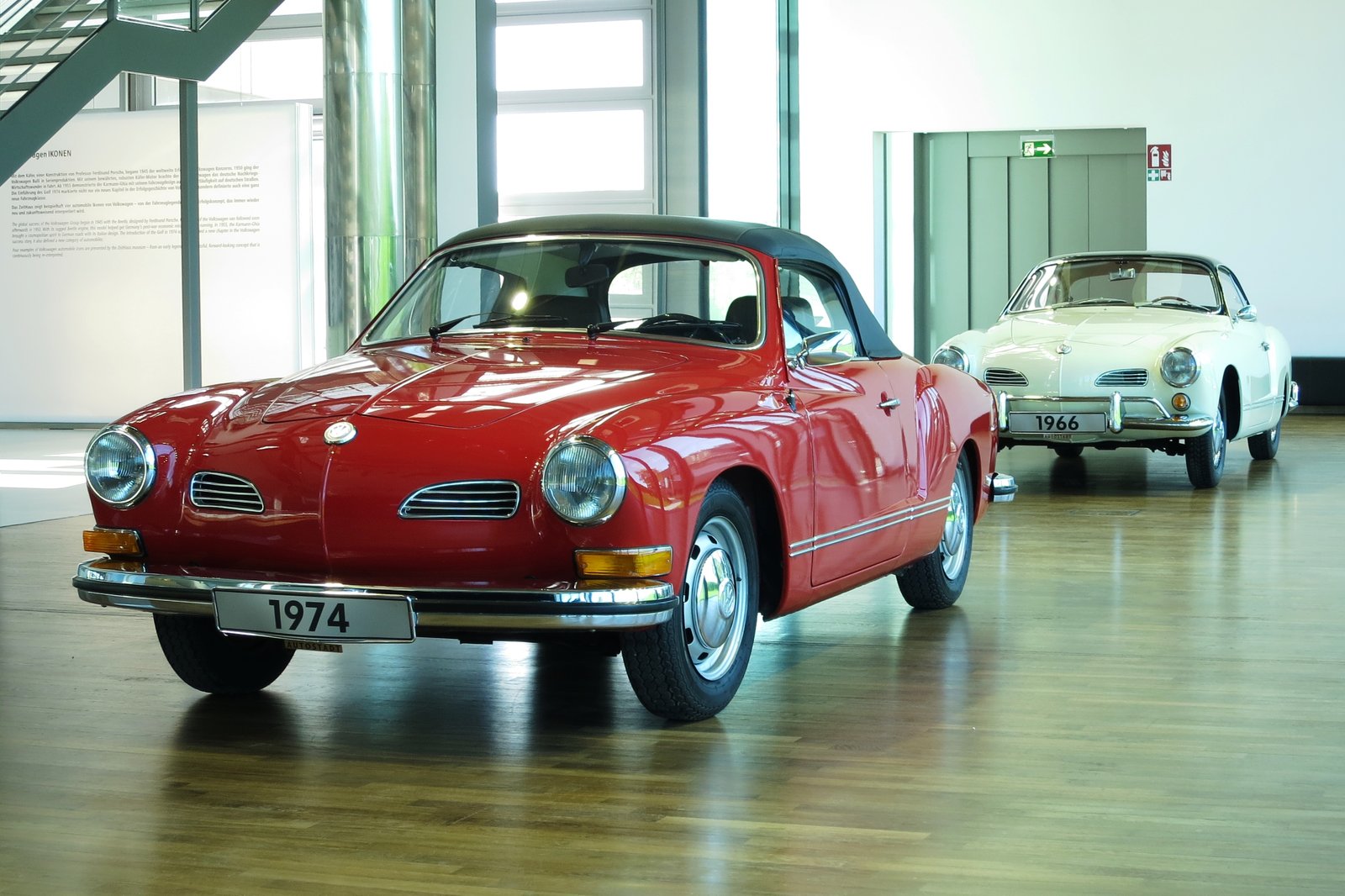
1300cc • 50 HP • 2-door coupe

1966 Type 14 Coupe

1966 was the year the Karmann Ghia coupe reached perfection. A decade of refinement, a 50-horsepower engine, and production quality that couldn't be improved without losing what made it special. This is what peak looks like.

Real Stories

VW Karmann Ghia 'lowlight' Debut

Technical Specifications

Engine

Displacement
1300cc (1.3L)
Configuration
Air-cooled flat-4
Power
50 HP
Engine Code
F (1300) / H (1500)

Performance

0-60 mph
N/A
Top Speed
N/A
Fuel Economy
N/A

Drivetrain

Transmission
4-speed manual
Drive Type
LHD/RHD available

Chassis

Front Suspension
Torsion bar
Rear Suspension
Swing axle
Brakes
Drum front and rear
Steering
Worm and roller

Dimensions

Factory Colors

Black
L41
Fontana Grey
L595
Ruby Red
L456

Verify Authenticity

Numbers matching verification increases value by 20-40%. Use our interactive tools to verify engine codes, chassis numbers, and M-codes against production data for your 1966 Type 14 Coupe.

Correct Engine Code
F (1300) / H (1500)
Valid Engine Codes
F (1300) / H (1500)

The Full Story

Swipe to explore the story of the 1966 Type 14 Coupe

Image placeholder

Introduction

The 1966 Karmann Ghia Type 14 arrived as the model reached its zenith. By this point, the production process was refined, the design proportions were perfected, and the Beetle platform beneath had proven itself millions of times over across the globe. This wasn't the experimental beginning of the 1950s or the gradual refinement of the late 1950s and early 1960s. This was the moment when everything that had been learned crystallized into a product that needed no excuses and no explanations. The 1966 Coupe represented the answer to a question European buyers had been asking: what if elegance could be democratic?

What It Was

By 1966, Karmann's hand-assembly process had become so refined that build consistency was genuinely impressive. The body panels sat perfectly, the gaps were consistent, and the overall impression was of a car that knew exactly who it was. The window design, the door handles, the proportion of hood to windshield, these details had been adjusted year by year, and the 1966 model showed the results. This was no longer a curiosity or a compromise, this was a refined object. The design felt less like a Beetle derivative and more like a standalone statement.

Image placeholder
Image placeholder

What Made It Special

The 1600cc engine in the 1966 model had been produced for nearly a decade, meaning reliability data was abundant and confidence was justified. The 4-speed transmission was proven, the torsion bar suspension was understood and trusted, and the eXperience they delivered had been validated across countless roads and conditions. The mechanical platform wasn't revolutionary in 1966, but that was precisely the point. The Karmann Ghia was about proving that interesting driving didn't require cutting-edge technology, just thoughtful integration of proven components.

Cultural Context

1966 was the year before everything tipped. The cultural confidence was genuine — this was the moment of Revolver, of Batman on TV, of Twiggy landing in America. Design was celebrated. Style mattered. And the Karmann Ghia, now a decade into production, was at the absolute peak of its refinement.

1966 was the year before everything tipped. The cultural confidence was genuine — this was the moment of Revolver, of Batman on TV, of Twiggy landing in America. Design was celebrated. Style mattered. And the Karmann Ghia, now a decade into production, was at the absolute peak of its refinement.

The Karmann Ghia didn't participate in the cultural conversation of 1966 — it enabled it. A reliable, stylish, affordable car let its owners show up to the things that mattered.

Image placeholder
Image placeholder

How It Drove

Nobody bought a Karmann Ghia for the acceleration. With 50 horsepower from an air-cooled four, zero to sixty was a process rather than an event — somewhere in the twelve-to-fourteen-second range depending on conditions. On the highway, the engine spun freely and reached highway speeds with composure. There was a particular pleasure in running flat-out in fourth gear knowing that flat-out was 75 miles per hour and entirely sustainable.

What the Ghia did remarkably well was corners. The low center of gravity (that flat-four sat low and behind the rear axle) combined with the torsion bar front suspension produced handling that rewarded attention without punishing inattention. The car communicated. It told you when you were pushing it and accepted the information gracefully. The swing axle rear could get lively if you truly provoked it, but you had to work at provocation.

The gearbox was a delight. The four speeds were well-spaced, the shift action precise, the clutch light and progressive. Driving a Karmann Ghia in traffic was genuinely pleasant — no heavy clutch, no vague steering, no sense that the car was too large for the space it occupied. It was, among other things, exactly the right size.

Who Bought It

The 1966 Karmann Ghia Type 14 represented the platform at perfect maturity. Production had optimized the hand-assembly process, design had refined all proportions to ideal balance, and mechanical platform had proven reliability across millions of examples worldwide. Collectors specifically seek 1966 models for this combination of design perfection and mechanical proven-ness. For restoration enthusiasts, the 1966 model offers the advantage of all components being thoroughly documented and readily available. Current market values, restoration guidance, and mechanical documentation are accessible through Hagerty (hagerty.com). What makes 1966 Karmann Ghias increasingly valuable is their representation of industrial maturity achieved through thoughtful iteration.

Image placeholder
Image placeholder

Buying Today

1966 represents peak Karmann Ghia maturity. The 1300cc engine (50 hp) offered genuinely improved performance over earlier small-displacement units. Production quality was at its best. Today, solid 1966 coupes fetch $20,000–$42,000; convertibles command $28,000–$55,000. The 1285cc engine in the convertible is highly regarded for its balance of reliability and feel.

What to inspect: rust first, always. The floorpans, the spare tire well, the battery tray, the heater channels that run the length of the car. Karmann's hand-formed panels were beautiful but required consistent maintenance to stay that way. A car that was neglected in the 1980s has likely suffered. A car that was garaged and serviced regularly in the 1970s is probably still solid.

The mechanicals are forgiving. The air-cooled engines are well-understood, parts are available, and any competent VW specialist can service them. The 4-speed gearbox is robust. The electrical system is simple by design — what can go wrong has been catalogued thoroughly by fifty years of enthusiast ownership. The Karmann Ghia Owners Association and VW community are genuinely helpful. Join them before you buy.

The Verdict

The 1966 Karmann Ghia coupe is not the fastest car you'll ever own. Not the most powerful. Not the most technologically sophisticated. By the time this car was built, the muscle car era had already decided what American performance meant, and the Ghia was nowhere near that conversation.

What it is: a car that was made by hand, shaped by people who cared about proportions, and designed by a studio in Turin that was asked to make a Beetle beautiful and succeeded beyond anyone's reasonable expectation. Italian design, German craft, mechanical simplicity — the combination has aged with remarkable grace.

Sixty years on, the Karmann Ghia still turns heads. Not because it's exotic or rare, but because it's right. The proportions are right. The scale is right. The idea that a car could be elegant and honest simultaneously, that beauty didn't require pretension — that idea is still right. Buy a good one. Drive it. You'll understand immediately what all the fuss was about.

Image placeholder
Swipe or use arrow keys to explore

Browse by Year