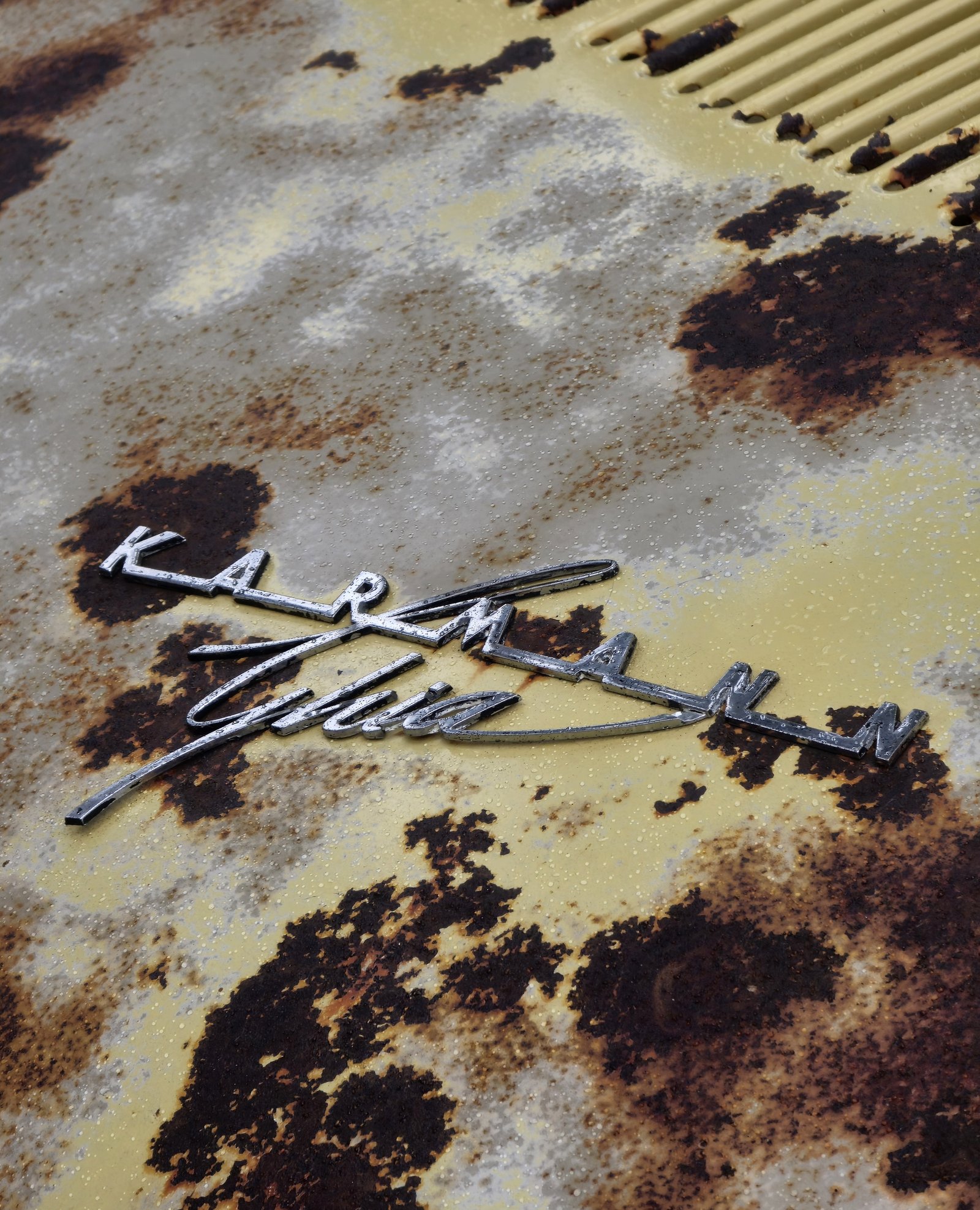
1969 Type 14 Coupe

1584cc • 53 HP • 2-door coupe

1969 Type 14 Coupe

The 1969 Karmann Ghia arrived in the year of Woodstock and the moon landing and kept doing what it had always done: looking exactly right and costing less than it had any right to.

Real Stories

VW Karmann Ghia 'lowlight' Debut

Technical Specifications

Engine

Displacement
1584cc (1.584L)
Configuration
Air-cooled flat-4
Power
53 HP
Engine Code
B

Performance

0-60 mph
N/A
Top Speed
N/A
Fuel Economy
N/A

Drivetrain

Transmission
4-speed manual / Semi-automatic (Autostick)
Drive Type
RWD

Chassis

Front Suspension
Torsion bar
Rear Suspension
Swing axle
Brakes
Drum front and rear
Steering
Worm and roller

Dimensions

Factory Colors

Black
L41

Verify Authenticity

Numbers matching verification increases value by 20-40%. Use our interactive tools to verify engine codes, chassis numbers, and M-codes against production data for your 1969 Type 14 Coupe.

Correct Engine Code
B
Valid Engine Codes
B

The Full Story

Swipe to explore the story of the 1969 Type 14 Coupe

Image placeholder

Introduction

When the 1969 Karmann Ghia rolled off assembly lines, it carried forward a design philosophy that had survived recessions, cultural upheaval, and the endless march of automotive fashion. Type 14 Karmann Ghia Karmann Ghia Coupe represented that moment perfectly, a bridge between the elegant restraint of yesterday and the evolving sensibilities of its era.

What It Was

The Karmann Ghia never competed on horsepower or size. It competed on something more fundamental: the belief that how you design a car says something about who you are as a designer, and by extension, who you are as a driver. In 1969, when everything else was getting bigger and noisier, the Karmann Ghia stayed itself. Restrained. Purposeful. Elegant.

The engine? Straight from the Beetle. A 1,300-1,500cc air-cooled flat-four, depending on year and market. Nothing revolutionary. But that was precisely the point. The Karmann Ghia proved that excellence didn't require extreme power, just thoughtful engineering and beautiful design. Every component earned its place through function and form in equal measure.

Image placeholder
Image placeholder

What Made It Special

Beneath that graceful body, the torsion bar suspension meant every corner was an interaction, not a fight. The 4-speed manual transmission meant driving was a conversation. The leather-trimmed steering wheel, the simple and elegant dashboard, the seats designed for actual human comfort rather than maximum capacity,these weren't luxury touches in a Beetle costume. They were design choices that said: we respect you as a driver.

For original owners in 1969, this meant something specific. For teenagers decades later discovering these cars at used lots in the 1980s and 90s, it meant something equally real but different. Here was proof that cool didn't require expense, that style didn't require shouting, that a car could be authentic without being impractical.

Cultural Context

That Karmann Ghia in 1969? It might have been your first date destination. Or your older sibling's car you borrowed desperately and felt like an adult driving. Or the car you saw once and couldn't stop thinking about. For collectors today, these cars represent something increasingly rare: design that didn't compromise, engineering that didn't lie, a moment when "good enough" wasn't acceptable but "excess" wasn't either.

The cultural moment of 1969 lives in these cars. The music on the radio then, the films you saw, the clothes you wore, the conversations about where the world was heading,all of that shaped why the Karmann Ghia mattered then and why it matters now. Not primarily for what it's worth in dollars, but for what it was worth in meaning.

Check Hagerty (hagerty.com) for current market values, but the real value of this car? That lives in the stories people tell about them. The first kiss, the road trip, the summer that changed everything. Maybe you have a story. Maybe you're looking for one. Either way, that's why the 1969 Karmann Ghia still turns heads.

Image placeholder
Image placeholder

How It Drove

The 1600cc air-cooled flat-four makes 57 horsepower. Write that down. Fifty-seven. Italian sports cars of the era were making three times that. But none of them could match this car's fuel economy, its mechanical transparency, or the particular satisfaction of knowing exactly what every component does.

The 4-speed manual transmission has a gear for every situation, four of them. The torsion bar suspension translates every road surface honestly to your hands. Understeer if you push it. Manageable if you respect it. Zero to sixty takes about 17 seconds on a good day with the wind cooperating.

Who Bought It

The 1969 coupe buyer had usually seen one somewhere and simply never forgotten it. A parking lot. An older sibling's driveway. A film still. The Karmann Ghia lodged itself in the memory differently than other cars.

Teachers bought it. Artists bought it. The occasional dentist bought it and felt briefly younger. Women bought it in numbers that made dealerships rethink their assumptions about sports car demographics. The common thread was an allergy to obvious choices.

Image placeholder
Image placeholder

Buying Today

The floor pan inspection is mandatory. Not optional. Lift the carpet, look at the metal, and if the seller won't allow it, thank them for their time and walk away. The pans on a 55-year-old car tell you everything about how it was kept.

The 1969 coupe and convertible have strong parts support through the VW aftermarket. The engine and transmission are Beetle-derived and can be rebuilt by anyone who knows flat-fours. Join a Karmann Ghia club before buying — the community will help you find the right car and avoid expensive mistakes.

Driver quality: $18,000-28,000. Show quality: $38,000-62,000. Coupes represent the more attainable entry point into Karmann Ghia ownership without sacrificing any of the design's essential quality. The 1969 models attract buyers who connect the car to the cultural moment, which has kept values firm.

The Verdict

Some cars aged. This one didn't. The 1969 Karmann Ghia coupe still looks right parked next to anything built in any decade. The design had an answer to the question of proportion that has not been improved upon.

Buy it because you want to drive something that was built with a point of view. Drive it because the car rewards patience and punishes hurry. Keep it because in five years it will be worth more than you paid and the drive to work will still be better than anything you could replace it with.

Image placeholder
Swipe or use arrow keys to explore

Browse by Year