1962 Type 34 Coupe
1493cc
View Details
Reference review: source-recorded details; historical accuracy has not been comprehensively verified.
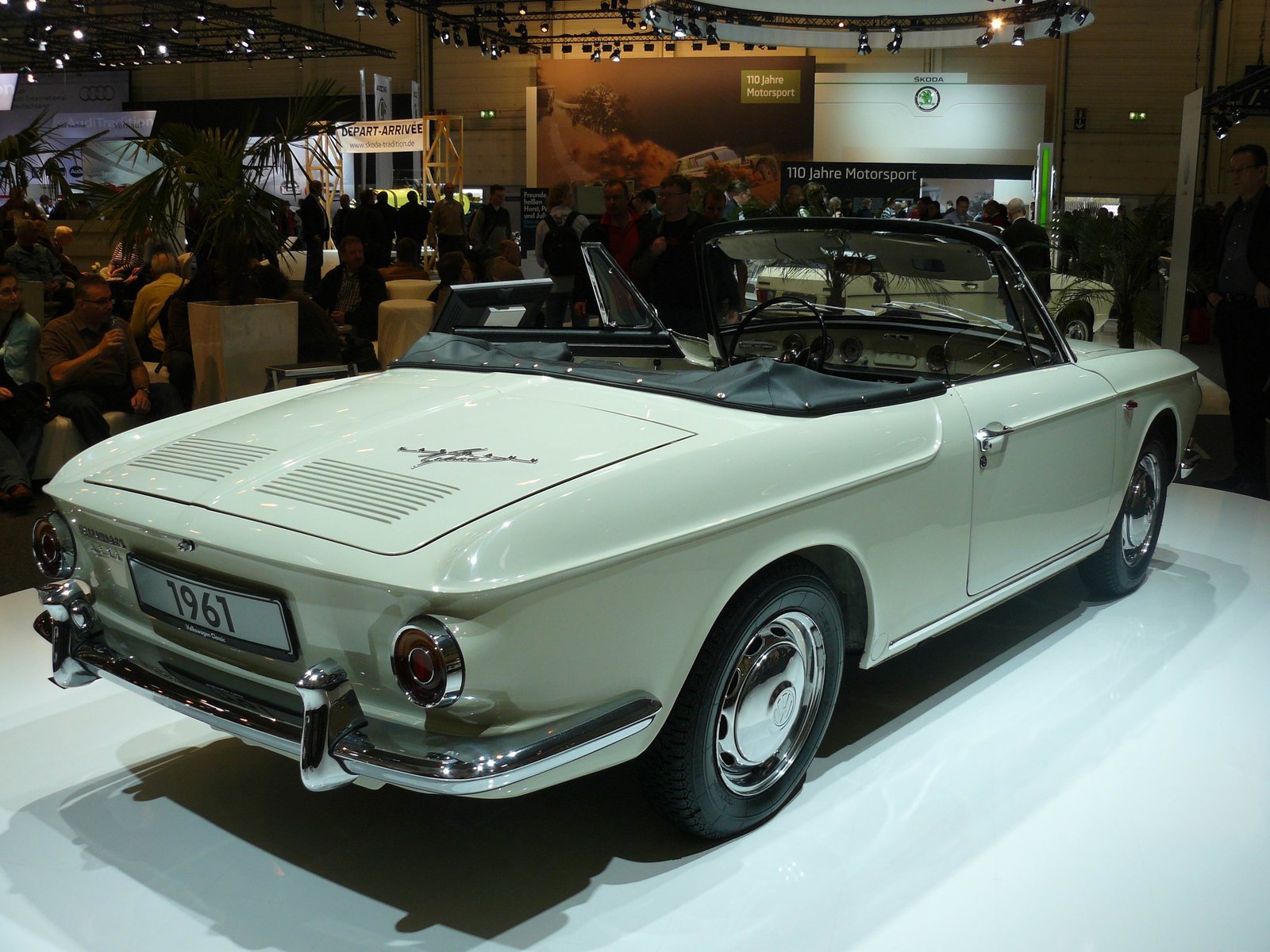
1500cc • 2-door coupe
Reference review: source-recorded details; historical accuracy has not been comprehensively verified.
Featured story
The 1961 Type 34 Coupe is the only 1961 record with a story on file. Source candidate · under review.
Open the Type 34 Coupe record961: The Berlin Wall rises, Kennedy takes office, American fins are fading. Detroit's excess is yielding to European restraint. Into this moment steps the Karmann Ghia Type 34—VW's razor-edged response to changing tastes. Not quite Beetle, not quite grand tourer, all contradiction. The Type 34 was VW's experiment in upmarket evolution. Type 3 mechanicals wrapped in Italian-German bodywork. More power than a standard Karmann Ghia, more presence than a Type 3, more questions than answers. VW called it 'the big Karmann.' History calls it the razor edge. Both descriptions miss the point: this was VW admitting style mattered, while refusing to sacrifice substance.
Displacement
From the 1961 Type 34 Coupe record.
The Type 34 was VW's upmarket grand tourer, built on Type 3 mechanicals. Factory specifications tell the story: Engine: 1500cc 'pancake' flat-four, 54 horsepower (DIN), Type 3-derived. Transmission: 4-speed manual, fully synchronized. Body: Two-door coupe by Karmann, styled by Ghia. Steel unibody with razor-edge styling, curved glass, electric sunroof optional. Dimensions: Longer, wider, and lower than standard Karmann Ghia. More interior space, more presence, more everything. VW positioned it above the standard Karmann Ghia in both price and prestige. At 8,900 DM in Germany, it cost more than a Porsche 356. You paid for exclusivity and got it.
The Type 34's specialness lived in its contradictions. It used Type 3 mechanicals—not exotic, but evolved. The 'pancake' engine sat lower than a Beetle's, improving handling and interior space. The body was pure modernism: razor-edge styling when curves ruled, restraint when excess sold. Electric sunroof? In 1961? From conservative VW? The Type 34 broke rules. The curved windshield wrapped into the A-pillars—expensive to produce, beautiful to behold. The dashboard was art: padded top, clean instruments, wood-grain when wood-grain meant luxury. Front disc brakes were optional—rare for 1961, essential for autobahn touring. But the real special sauce? The Type 34 proved VW could build an upmarket car without compromising its values. Style without excess. Luxury without waste. Engineering without apology.
From the 1961 Type 34 Coupe record.
1961 was transition incarnate. The '50s were fading but the '60s hadn't arrived. Kennedy's New Frontier promised change while the Cold War deepened. The Berlin Wall divided East from West. In automotive terms: Detroit's chrome dreams were ending. Fins were shrinking. European influence was growing. Sports cars were evolving from weekend toys to genuine transportation. The Type 34 read the room perfectly. Its razor-edge styling bridged '50s formality and '60s modernism. The pancake engine offered sports car handling without sports car pretense. The interior balanced luxury with restraint. In Germany, the Type 34 represented postwar confidence—we can build luxury cars again. In America, it offered European sophistication without European pricing. In both markets, it suggested a future where style and substance could coexist. The timing was perfect: just as tail fins became embarrassing, here was their philosophical opposite.
Period road tests praised the Type 34's grand touring abilities. The pancake engine's 54 horsepower wasn't impressive, but its lower mounting point transformed handling. Less body roll, more stability, genuine confidence in corners. Zero to 60 mph took about 18 seconds—slow by modern standards, adequate for 1961. Top speed was around 90 mph. The real magic was high-speed cruising. The Type 34 felt planted at autobahn speeds, thanks to that low center of gravity and superior aerodynamics. Today, driving a Type 34 is time travel. The thin pillars and curved glass offer panoramic visibility no modern car can match. The steering is light but communicative. The engine still feels eager despite its modest output. The brakes—if upgraded to discs—are surprisingly capable. It's not fast, but it's involving. Every drive is an event.
Type 34 buyers in 1961 were making a statement: I want sophistication without ostentation. They were professionals, architects, designers—people who appreciated clean lines and honest engineering. The price positioned it against entry-level Mercedes and BMW models. But Type 34 buyers weren't chasing badges. They wanted something different. In Germany, it attracted the emerging professional class—successful enough for luxury, subtle enough to avoid showing off. In export markets, it drew intellectual types who found American cars gauche and European sports cars impractical. The Type 34 said: I understand design, I value engineering, I don't need chrome to feel special. It was the thinking person's grand tourer.
The Type 34's evolution tells two stories: mechanical refinement and market reality. 1961-1962: Initial release with 1500cc engine, optional electric sunroof, manual brakes. 1962: Front disc brakes optional. 1963: Engine upgraded for more torque. 1964: Dashboard redesigned, more wood grain added. 1965: 1600cc engine optional in some markets. 1966: Last major updates before phase-out began. Production ended in 1969 after roughly 42,505 units (all variants). Why so few? Price was part of it—the Type 34 cost more than VW's image could support. But timing mattered too. By mid-60s, buyers wanted either full luxury or pure sport. The Type 34's elegant compromise became a hard sell.
Current market values reflect growing appreciation for the Type 34's design and rarity. Concours examples command $75,000-95,000. Excellent drivers bring $45,000-65,000. Good drivers: $30,000-45,000. Project cars start around $15,000. These values have doubled in the last decade as collectors recognize the Type 34's significance. Rarity drives value—just 42,505 built, perhaps 2,000 survive. Parts availability varies. Body panels are rare and expensive. Mechanical parts (being Type 3-based) are easier to source. Investment outlook is strong, particularly for original, documented examples. But buy for love, not speculation. These cars reward the patient collector.
Restoring a Type 34 requires patience, expertise, and deep pockets. Common issues: Rust in rocker panels, fenders, and floor pans. The complex curved glass is expensive if broken. Electric sunroofs are problematic—mechanisms wear, parts are scarce. The Type 3 mechanicals are straightforward, but body and trim parts can be impossible to find. Panel fit matters—poor alignment ruins the razor-edge aesthetic. Interior materials are specific to Type 34—correct reproduction parts are rare. Documentation is critical: original colors, options, build details. Join the Type 34 Registry. Network with owners. Buy the best example you can afford—cheap projects become expensive quickly. Budget realistically: full restoration can exceed $100,000. Major mechanical work is straightforward. Body and trim restoration separates success from heartbreak.
The 1961 Type 34 Karmann Ghia was VW's experiment in upmarket evolution. It proved the company could build luxury without losing its soul. The experiment succeeded aesthetically but failed commercially—too expensive for VW buyers, too practical for luxury buyers. Today, that makes it special. The Type 34 represents a road not taken: sophisticated without showing off, luxurious without excess, European without compromise. Buy one because you appreciate the contradiction: a luxury VW that makes perfect sense. Just don't expect anyone else to understand immediately. The best designs require explanation. The Type 34 rewards those who take time to learn its language.
1,110 words • ~6 min read
Research current market values for the 1961 Type 34 Ghia
Hagerty Valuation Tools
Industry-standard classic car values
Bring a Trailer Results
Recent auction prices
TheSamba Classifieds
Current listings & asking prices
Buying tip: Condition is everything. A rusty "project" can cost more to restore than buying a finished car. Check heater channels, floor pans, and battery tray first.
This story
Some of this works today. Some of it is still an idea. The chips say which.