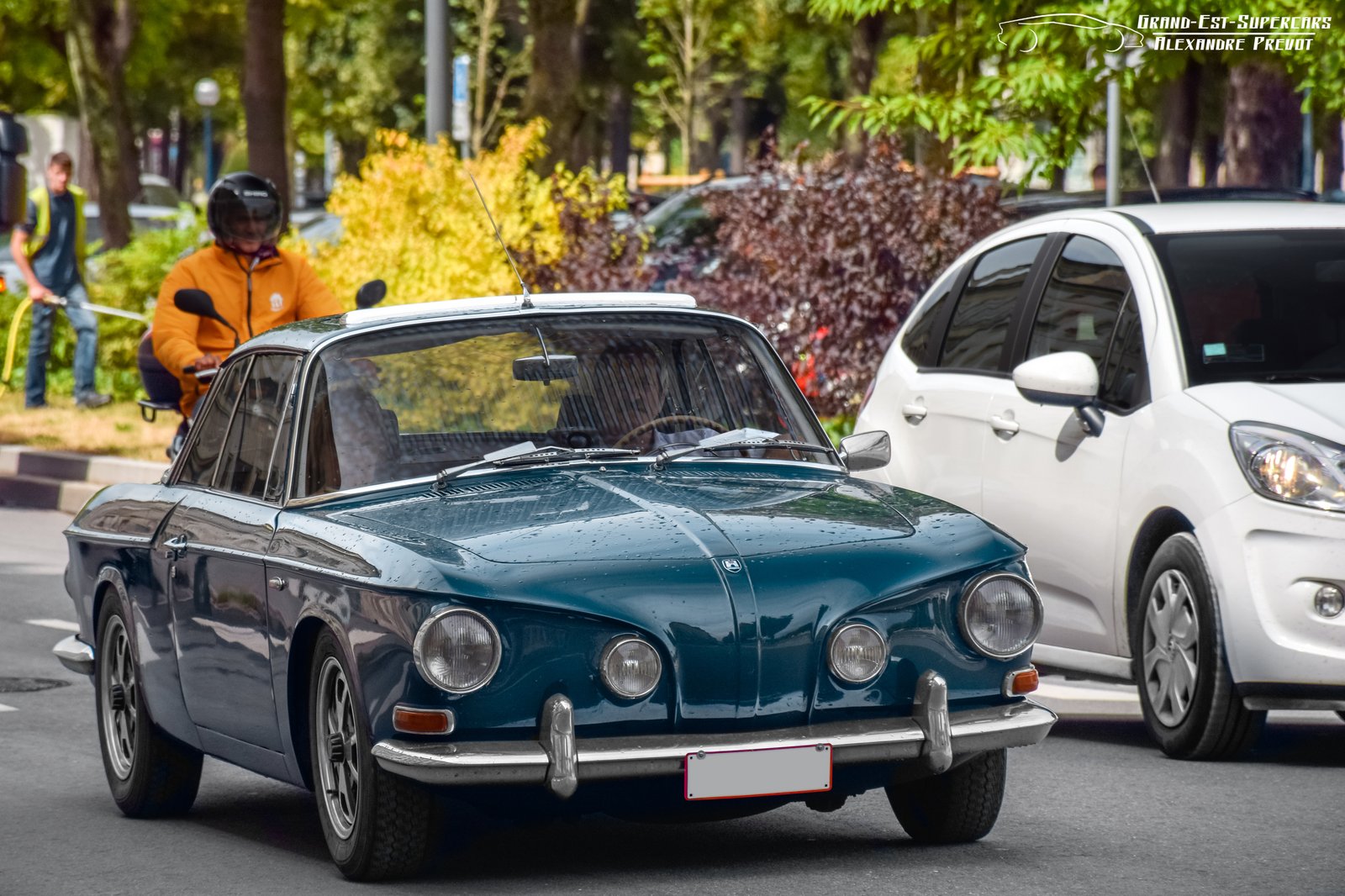
1493cc • 45 HP • 2-door coupe

1962 Type 34

The 1962 Type 34 Karmann Ghia was the angular alternative — ~42,000 built, sold mostly in Europe, designed with the 'Razor Edge' philosophy that valued proportion over charm. The more sophisticated choice, then and now.

Real Stories

VW Karmann Ghia 'lowlight' Debut

Technical Specifications

Engine

Displacement
1493cc (1.493L)
Configuration
Air-cooled flat-4 (Type 3 pancake)
Power
45 HP
Engine Code
D

Performance

0-60 mph
N/A
Top Speed
N/A
Fuel Economy
N/A

Drivetrain

Transmission
4-speed manual
Drive Type
LHD/RHD available (European market)

Chassis

Front Suspension
Torsion bar
Rear Suspension
Swing axle
Brakes
Drum front and rear
Steering
Worm and roller

Dimensions

Factory Colors

Black
L41
Gulf Blue
L390

Verify Authenticity

Numbers matching verification increases value by 20-40%. Use our interactive tools to verify engine codes, chassis numbers, and M-codes against production data for your 1962 Type 34.

Correct Engine Code
D
Valid Engine Codes
D

The Full Story

Swipe to explore the story of the 1962 Type 34

Image placeholder

Introduction

When the 1962 Type 34 Karmann Ghia rolled off assembly lines in Osnabrück, it carried a design that had already proven its argument: that elegance didn't require curves. That proportion mattered more than ornamentation. That a car could be beautiful through geometry alone.

The Type 34 was the Karmann Ghia that Europe kept for itself. The Type 14 — rounder, softer, more immediately charming — was the export success, the car that conquered America. The Type 34's angular 'Razor Edge' design was the more sophisticated statement, the one that rewarded looking longer rather than looking first.

What It Was

The Type 34's distinguishing feature was its angular approach to proportion and line. The hood line, the side profile, the window design all embraced geometry over curves. This wasn't merely stylistic — it was philosophical. The Razor Edge design said: 'We know exactly what we are, and we're not apologizing.'

The engine was shared with the Beetle — a 1300-1600cc air-cooled flat-four, depending on year — because the Type 34's argument was never about power. It was about form. The Karmann Ghia proved that excellent design was transferable: that the same mechanical foundation beneath a more carefully designed body produced a fundamentally different experience.

Image placeholder
Image placeholder

What Made It Special

Beneath that graceful body, the torsion bar suspension meant every corner was an interaction, not a fight. The four-speed manual transmission meant driving was a conversation. The leather-trimmed steering wheel was precisely sized for actual control rather than impression.

Only about 42,000 Type 34s were ever built across the entire production run — a fraction of the Type 14's volume. This wasn't a mainstream success. It was a design statement for the design-conscious. For original owners in 1962, that meant belonging to a small community of people who understood something specific. For collectors today, it means genuine rarity.

Cultural Context

1962 was the year humanity almost ended and didn't. The Cuban Missile Crisis brought the world to the edge of nuclear exchange — thirteen days in October when the news from Washington and Moscow was genuinely terrifying. On the other side of it: relief, and a strange gratitude for ordinary pleasures. The Karmann Ghia's elegant restraint — its refusal to shout, its trust in proportion over spectacle — felt appropriate for a world that had just been reminded how fragile spectacle was.

The Type 34 in 1962 wasn't the car for everyone. It never tried to be. It was the car for someone who looked at the entire VW range and chose the one that didn't compromise its geometry for popular appeal. That someone existed in 1962, and the car they chose is now, increasingly, exactly right.

Image placeholder
Image placeholder

How It Drove

The Type 34 Karmann Ghia drove like a car that knew its own proportions. The 1300-1600cc air-cooled engine — modest, honest, completely reliable — moved the car without drama. The torsion bar suspension delivered a connected, engaged feel without harshness. The four-speed manual gearbox rewarded smooth operation. And the sight lines from the driver's position — across that long angular hood, through those geometric windows — made every drive feel like a conversation between driver and design.

The experience wasn't about performance metrics. It was about the quality of the interaction — the sense that the car had been designed by someone who cared about driving rather than just about selling. That care is still present in every example that survives in honest condition.

Who Bought It

The original 1962 Type 34 buyer in Europe was an aesthete who could distinguish between the Type 14's Italian curves and the Type 34's razor-edge geometry — and preferred the latter. This was not the mass market. This was someone with an opinion about design, who understood that the more angular car was making a more specific argument about what elegance meant. Professionals, architects, designers, the culturally fluent upper-middle class of early-1960s Europe.

Today's Type 34 collector is typically someone who found the Type 14 first and eventually discovered the Type 34 — and immediately understood that the angular car was making a more interesting argument. The transition from Type 14 admirer to Type 34 devotee is, in the air-cooled VW world, a recognized rite of passage.

Image placeholder
Image placeholder

Buying Today

The Type 34 Karmann Ghia was produced from 1962 to 1969, with the 1962 model sitting early in that production window. Earlier cars have the 1300cc engine; later production moved through 1500 to 1600cc. Verify engine displacement and specification carefully against production records.

The body presents specific challenges: the angular panels are not interchangeable with Type 14 parts, and reproduction body panels are harder to source. Rust in the lower sills and floor areas is the primary concern. A surviving Type 34 in honest original condition is increasingly valuable — find a specialist who knows the difference between a Type 14 repair and a Type 34 repair before any bodywork is attempted.

Check Hagerty (hagerty.com) for current market values. Type 34s command a premium over comparable Type 14s precisely because of their rarity — roughly 42,000 total production versus hundreds of thousands of Type 14s. That scarcity is real and is reflected in the collector market.

The Verdict

The 1962 Type 34 Karmann Ghia represents a specific historical conviction: that beauty through proportion was worth pursuing even when beauty through curves sold better. It's the car that trusted the buyer to see what it was doing.

That trust — placed in people who looked carefully, who understood the argument, who chose the harder beauty over the easier one — turned out to be well-founded. The Type 34's 42,000 total examples are now among the most coveted air-cooled Volkswagens. Not because they're the rarest. Because they were most completely right.

Own one and you own the proof that sophistication, patiently applied and stubbornly maintained, outlasts fashion by decades.

Image placeholder
Swipe or use arrow keys to explore

Browse by Year