They Called It 'The Thing.' They Meant It as a Compliment.

1600cc • 46 HP • Convertible utility / Off-road vehicle

They Called It 'The Thing.' They Meant It as a Compliment.

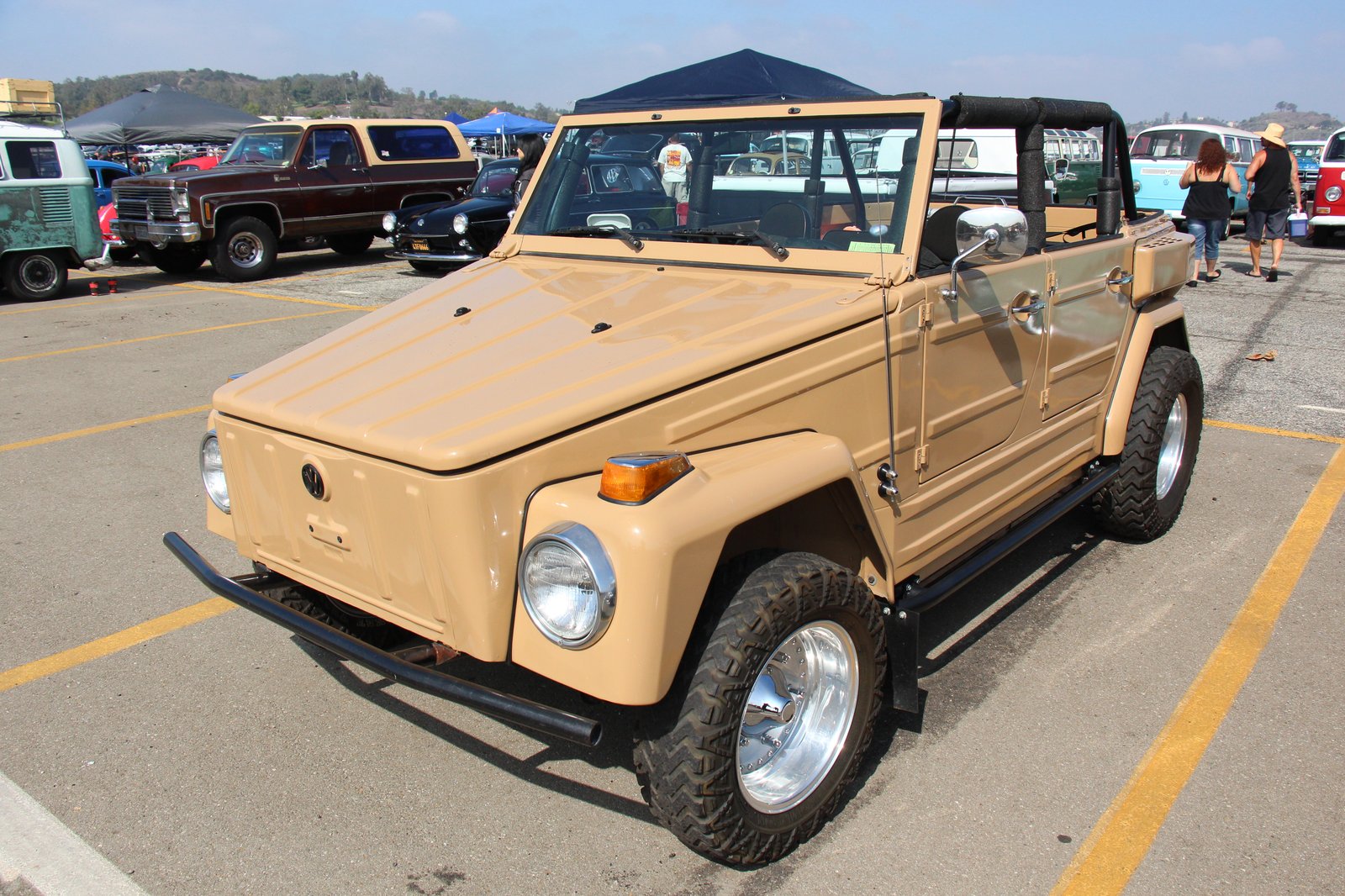
In 1973, Volkswagen brought the Type 181 to the United States under the name 'The Thing' — a name so honest it bordered on daring. A military-heritage utility vehicle with removable doors, a foldable windshield, and 46 horsepower, it arrived just as the oil crisis made fuel efficiency a virtue and just as beach culture made open-air driving a religion.

Real Stories

A Birthday in Bali in a VW Thing

The Story

ost car names are aspirational. Mustang. Thunderbird. Galaxie. They reach for something the car probably isn't. Volkswagen named their Type 181 'The Thing' — and in doing so, committed an act of such radical honesty that it became marketing genius. This was, indeed, a thing. It had four wheels, an engine in the back, removable doors, and a windshield that folded flat. Everything else was optional.

The US market Thing debuted in 1973, VW's first year of American sales for the model, arriving just as the OPEC embargo made 46-horsepower vehicles seem not merely affordable but wise. It would sell in the US for only two model years, 1973 and 1974. In that short window, it established a cult that has never dispersed.

Model Information and History

What It Was

The US-market Thing used the GD-coded 1,600cc air-cooled flat-four producing 46 horsepower, tuned to meet American emissions requirements. The four-speed manual was the only transmission offered. IRS rear suspension gave it a more composed ride than the Beetle's swing axle. Torsion bars up front completed a chassis that was simple, rugged, and entirely serviceable.

The body was the story: a pressed-steel tub with flat, vertical surfaces, a folding or removable fabric top, doors that came off with the removal of two pins, a windshield that folded forward. Safety equipment for US regulations included padded dash and roll bar provision. Colors were Sunshine Yellow, Pumpkin Orange, and Blizzard White — paint shades chosen as if the design team knew exactly where these cars were going.

What Made It Special

In 1973, the Thing was the most democratic open-air vehicle in America. Cheaper than a Jeep. More characterful than any other economy car. It offered an experience — not merely transportation — at a price the working person could reach. Remove the doors and the top and you were in something closer to a dune buggy than a conventional automobile, but with VW reliability backing every drive.

The Kübelwagen ancestry gave it a certain military credibility that dune buggies lacked. This wasn't a kit car or a conversion — it was a production vehicle from one of the world's most respected manufacturers, built to a standard, designed with intention. That provenance mattered to buyers who wanted adventure without risk.

Cultural Context

Nineteen seventy-three: the last year of easy American confidence in several directions simultaneously. Watergate dominated the summer. The Paris Peace Accords ended US involvement in Vietnam. In October, OPEC cut supply and gasoline lines appeared at American service stations for the first time since the Second World War.

Into this climate arrived a 46-horsepower VW that used fuel sparingly and was, coincidentally, ideal for the beach. Southern California embraced it immediately. Florida saw its potential. The Thing was simultaneously the right car for austerity and the right car for sun — which in 1973 was the only combination that made complete sense.

How It Drove

The 1973 US Thing drove with a directness that its stripped bodywork promised and its engineering delivered. The 1,600cc engine was the same basic unit powering late-model Beetles and Karmann Ghias, tuned conservatively for emissions compliance but still pulling willingly from low revs. On beach roads and country lanes, it was entirely in its element.

Highway driving was committed rather than comfortable — the square body profile caught wind with enthusiasm, and at sustained freeway speeds the experience required earplugs more than a sound system. Within its intended territory — coastal routes, resort towns, weekend roads — the Thing was exactly right. Responsive, involving, impossible to make boring.

Who Bought It

The US Thing found its people almost immediately: the Southern California beach community, the Florida sun crowd, the outdoors-oriented young professional who wanted something that said nothing about status and everything about intention. Surfers. Divers. People who drove to boat launches and didn't care about parking lot opinions.

It also sold to VW faithful who recognized the Type 181's heritage and wanted the most honest expression of VW's air-cooled utility. These were people who had read about the Kübelwagen, who understood what 'pancake engine' meant, and who appreciated that 'The Thing' was not a marketing gimmick but a declaration of values.

Buying Today

US-market Things are among the most collected of all air-cooled Volkswagens. The two-year US production run — 1973 and 1974 only — created natural scarcity, and the cult has only deepened. Original-color examples in Sunshine Yellow and Pumpkin Orange command premiums; original documentation adds more.

The body's flat surfaces are relatively straightforward to restore compared to Beetle or Karmann Ghia work, but rust in the floorpan and lower sills is endemic. The soft components — top, side curtains, door seals — are specific to the Type 181 and require dedicated sourcing. Mechanically the car is the familiar 1600cc air-cooled package: well-supported, widely understood, forgiving of careful maintenance. Buy the cleanest body you can find. Everything else follows.

The Verdict

The 1973 VW Thing is the most honest car Volkswagen ever sold in America. It made no promises it couldn't keep. It pretended to nothing. It arrived in the right year, at the right price, for the right people, and became an icon by being entirely and unapologetically itself.

They called it 'The Thing.' They meant it as a compliment. So do we.

940 words • ~5 min read

Reference

Engine

Displacement
1600cc (1.6L)
Configuration
Air-cooled flat-4
Power
46 HP
Engine Code
GD

Performance

0-60 mph
N/A
Top Speed
N/A
Fuel Economy
N/A

Drivetrain

Transmission
4-speed manual
Drive Type
RWD

Chassis

Front Suspension
Torsion bar
Rear Suspension
IRS
Brakes
Drum front and rear
Steering
Worm and roller

Dimensions

Community Resources

Community

Connect with 1973 Thing owners & experts

Discussions

Soon

Questions, advice, and stories from the community

Photo Gallery

Soon

Owner photos and restoration progress shots

Find a Specialist

Soon

Mechanics and restorers who know this model

Owner Registry

Soon

Connect with other owners near you

Community features coming soon. We're building tools for owners to share knowledge, photos, and connect with specialists. Want early access? Get in touch.

Verify Authenticity

Numbers matching verification increases value by 20-40%. Use our interactive tools to verify engine codes, chassis numbers, and M-codes against production data for your 1973 Thing.

Correct Engine Code
GD
Valid Engine Codes
GD