1600cc
Air-cooled flat-4
Source-recorded engine code: GD.
- Power
- N/A
- Fuel
- Unknown
Reference review: source-recorded details; historical accuracy has not been comprehensively verified.

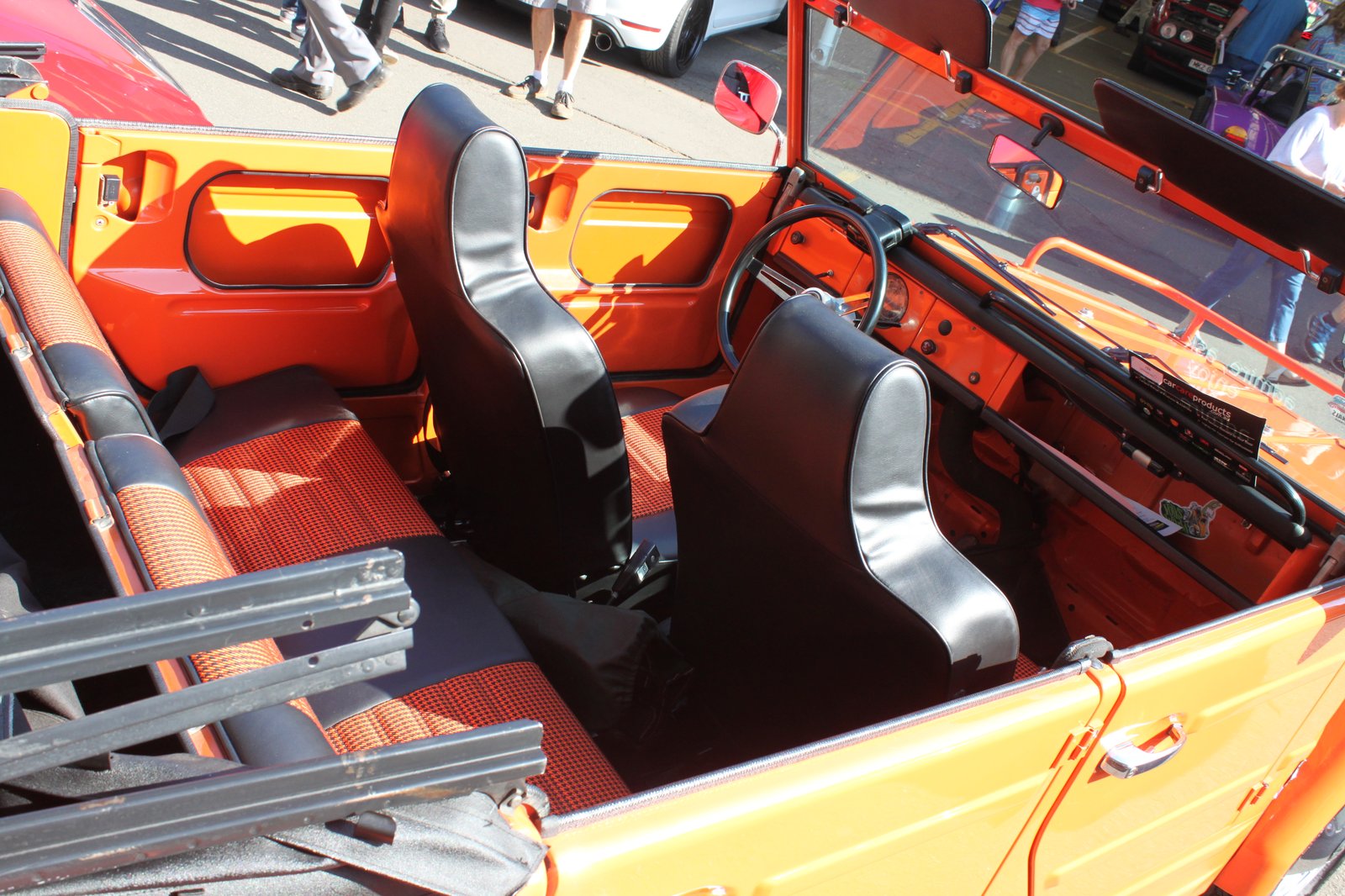
Representative imagery; exact configuration unverified
Explore the 1974 VW Thing: military-inspired utility, air-cooled simplicity, and zero pretense. VW's most honest vehicle meets America's most cynical era.
The air-cooled flat-four that powered the 1974 Thing. Simple, reliable, and endlessly modifiable.
Research current market values for the 1974 Thing
Hagerty Valuation Tools
Industry-standard classic car values
Bring a Trailer Results
Recent auction prices
TheSamba Classifieds
Current listings & asking prices
Buying tip: Condition is everything. A rusty "project" can cost more to restore than buying a finished car. Check heater channels, floor pans, and battery tray first.
Original paint options available for the 1974 Thing.
Looking for a 1974 Thing in Pumpkin Orange?
Find for SaleUse retained catalog and code references as a starting point for researching your 1974 Thing. Applicability remains under review; VWX does not authenticate vehicles.
1974: Watergate climaxing, oil crisis biting, trust in institutions collapsing. Detroit was building personal luxury cars with vinyl roofs and opera windows. VW built the Thing—a vehicle so ruthlessly honest it became cool by accident.
The Thing was anti-design. Anti-marketing. Anti-everything Detroit stood for. No curves, no chrome, no pretense. Just flat panels, visible hinges, and a windshield that folded flat because sometimes you need your windshield to fold flat.
VW called it the Thing because calling it anything else would have been dishonest. It was a thing that moved people and cargo. Period. In an era of automotive theater, it was a documentary.
The Thing was military utility stripped of military context. Factory specifications tell the story:
VW positioned it as a civilian utility vehicle. No fancy trim levels. No option packages. Just basic transportation that happened to climb hills and ford streams. The price? $3,150 in 1974—about $17,500 in 2025 dollars. Cheap for what it could do.
The Thing was special because it wasn't trying to be special. Every feature served function:
The flat panels? Easier to manufacture, easier to repair. The removable doors? Access and versatility. The folding windshield? Military heritage meets weekend adventure. The spartan interior? You could literally hose it out.
The 1600cc engine made 48 horsepower—not much, but it was bulletproof. Air-cooling meant no radiator to leak. The four-speed transmission was simple and sturdy. Ground clearance rivaled purpose-built off-roaders.
But what really made it special was its honesty. In 1974, when cars were becoming living rooms on wheels, the Thing was a tool. It didn't pretend to be luxurious. It didn't claim to be fast. It promised to work, and it kept that promise.
That honesty created something rare: a vehicle without an image to maintain. It was whatever you needed it to be—beach cruiser, farm implement, weekend explorer. Its lack of pretense became its signature.
1974 America was having an identity crisis. Watergate destroyed trust in authority. The oil crisis ended cheap gas forever. Vietnam was winding down, leaving questions about American power. The muscle car era was dead. Detroit was lost.
Into this moment of disillusionment came the Thing—a vehicle that couldn't lie if it tried. Its timing was perfect: Americans were tired of being sold images. The Thing sold pure function.
The competition was telling stories: Jeep CJ-5 promised freedom. International Scout pitched adventure. Land Rover sold British sophistication. The Thing just was what it was.
The automotive landscape was shifting. Japanese imports were gaining ground—Toyota Land Cruiser, Honda Civic, Datsun Z. American manufacturers were downsizing, adding catalytic converters, watching their muscle cars die.
The Thing offered an alternative: deliberate simplicity. No emissions controls to strangle (yet). No safety features to add weight. No luxury to maintain. In an era discovering limits, it was a vehicle without excess.
Buyers in 1974 were questioning everything—authority, consumption, American automotive orthodoxy. The Thing's brutal honesty resonated. It wasn't beautiful, but it was true.
In 1974, the Thing drove exactly as it looked—no surprises, no pretense. The steering was manual and direct. The four-speed transmission shifted with mechanical precision. The ride was... present. You felt everything because insulation was unnecessary.
The 48-horsepower engine moved it adequately. Zero-to-60 took about 23 seconds, but that wasn't the point. It cruised at 65mph, climbed grades, traversed rough terrain. It did what you asked, no more.
Driving a Thing today is time travel. No power steering, no power brakes, no sound insulation. The engine's sound is conversation in German. The wind makes itself known. Every input is mechanical, direct, honest.
Modern drivers find it slow, loud, primitive. Thing owners call that character. They're both right.
Thing buyers in 1974 fell into distinct camps:
The Pragmatists: Farmers, ranchers, maintenance crews. They needed a tool that worked. The Thing was that tool.
The Individualists: Counter-culture holdovers, beach dwellers, free spirits. The Thing's anti-style became their style.
The Military Veterans: They recognized the Kübelwagen DNA. They trusted mechanical simplicity. They knew this design worked.
The Contrarians: While neighbors bought personal luxury cars, they bought honesty on wheels. The Thing became their statement against automotive excess.
What united them? They valued function over form, simplicity over status, honesty over hype. In 1974, that was revolutionary.
The Thing's evolution was minimal by design:
1973: U.S. introduction - Basic spec, manual everything 1974: Minor updates - Improved heating (relatively speaking), emissions tweaks 1975: Final year - Emissions regulations effectively ended U.S. sales
But the Thing's story started earlier:
1969: European introduction as Type 181 1970-1980: Mexican production as Safari 1973-1975: U.S. sales as Thing
Changes were functional, never cosmetic. The design remained deliberately basic. When U.S. emissions laws made compliance too expensive, VW simply stopped importing it.
The Thing was essentially a civilian version of the WW2 Kübelwagen, updated with the Beetle's 1600cc engine and running gear. Its platform shared DNA with the Karmann Ghia and Type 3, but its purpose remained pure utility.
Current Thing values (2025) reflect rising interest in honest, mechanical vehicles:
Show Quality: $25,000-35,000 Excellent: $18,000-25,000 Good: $12,000-18,000 Fair: $8,000-12,000 Project: $3,000-8,000
Restoration costs often exceed market value—$20,000-40,000 for full restoration. But Thing owners rarely restore for profit. They restore because these vehicles represent something lost: pure functional honesty.
Investment outlook: Values are rising slowly but steadily. Things offer affordable entry into classic VW ownership. Their simplicity makes them relatively easy to maintain.
Restoring a Thing requires understanding its simplicity:
Common Issues:
Parts Availability:
Key Tips:
The 1974 Thing is automotive honesty distilled. It's slow, loud, primitive, and completely truthful about all three. It promises nothing except function. It delivers exactly that.
Who should buy one?
Who shouldn't?
The Thing is a tool that became an icon by refusing to be anything except itself. In 2025, that's still revolutionary.