The Go-Anywhere Machine, Still Going

1584cc • 46 HP • Convertible utility / Off-road vehicle

The Go-Anywhere Machine, Still Going

In 1977, cinema invented new worlds and disco ruled the dance floor. The Type 181 continued in production, indifferent to cultural weather, doing what it had always done: going where it was pointed.

Real Stories

A Birthday in Bali in a VW Thing

The Story

he 1977 Volkswagen Type 181 is what happens when German engineers ask one simple question: 'What if we removed everything unnecessary?' The answer is a vehicle so honest, so purely functional, that it becomes remarkable precisely by refusing to be remarkable.

In the postwar years when practical meant something real, the Type 181 embodied that philosophy completely. Not a car pretending to be useful. A genuine tool designed for actual work — military dispatch, rough terrain, institutional service. It happened, later, to become a cultural object. But it didn't try to.

Model Information and History

What It Was

That air-cooled flat-four engine? Around 1,500-1,600cc depending on year. Reliable. Dependable. Not trying to win races. Just trying to work every single time you turned the key. The transmission was a four-speed manual — mechanical, precise, without ambiguity. The suspension was independent torsion bar: simple, effective, repairable in the field.

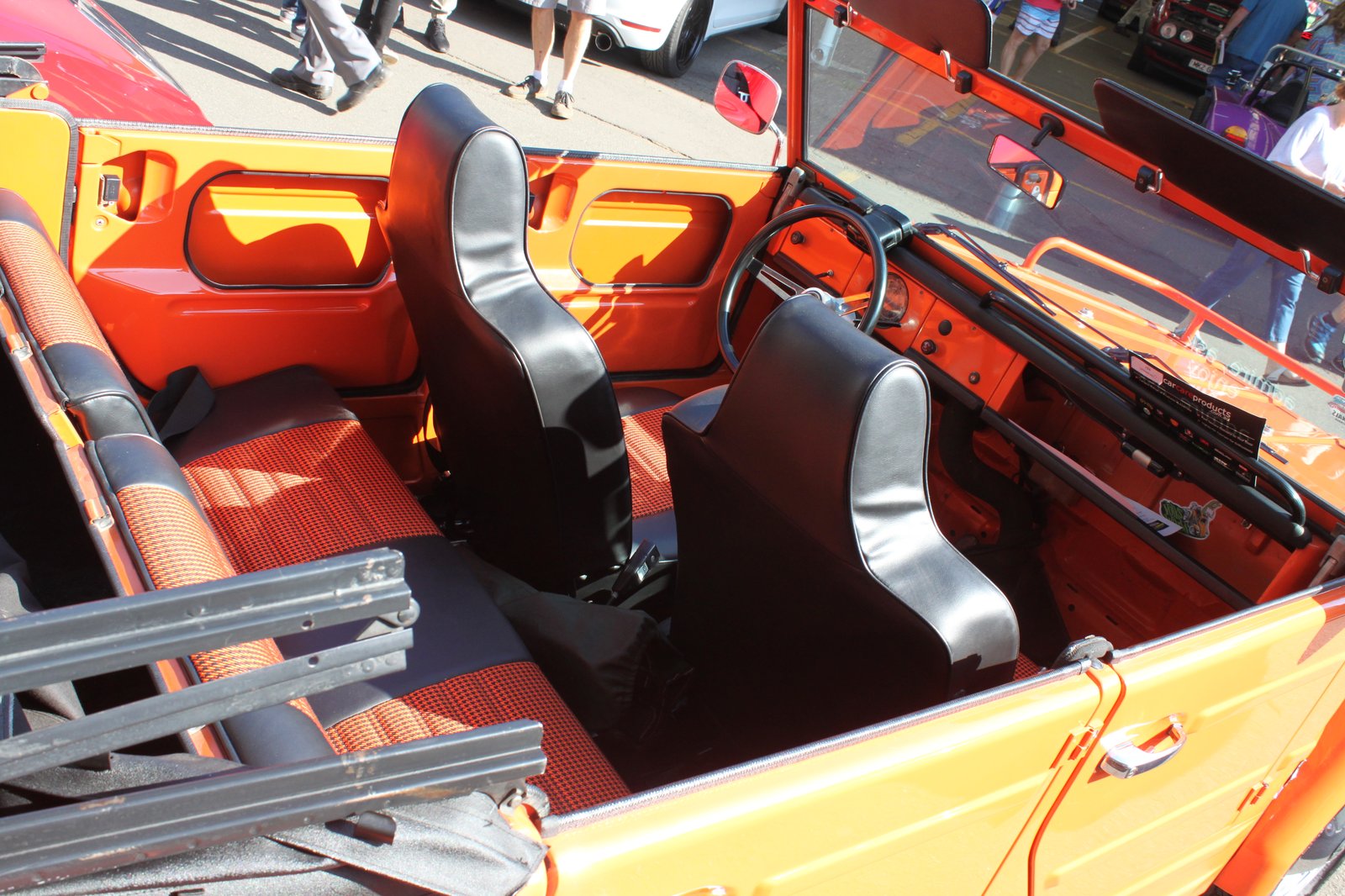
The interior was spartan. Metal seats. Rubber flooring. Minimal insulation. You could hose it out if needed. Every choice was about functionality, not fashion. There were no surfaces designed to look expensive. There was no padding designed to suggest comfort that wasn't there. There was a vehicle that did exactly what it said it would do.

That's the entire philosophy: this vehicle is a tool. Tools don't need to be pretty. They need to work.

What Made It Special

The Type 181 came from military thinking. Designed for work, not display. You could load it with cargo. You could drive it over rough terrain. You could use it as a mobile platform for absolutely anything that needed to move through difficult country. You could start it in cold mornings in the field and trust it to continue.

Original owners in 1977 weren't buying style. They were buying reliability. They understood: this machine will work. This machine will work until you're tired of using it. This represents the absolute inversion of everything the automotive industry sells: not aspiration, but actuality. Not promise, but proof.

Cultural Context

1977: Star Wars opened in May and changed popular culture's relationship with fantasy forever. Saturday Night Fever arrived in December and disco reached its apex. Elvis died in August. Jimmy Carter had been in the White House less than a year. The city of New York went dark for 25 hours in a massive blackout. It was a year of invention and loss, spectacle and darkness. The Type 181 observed all of it from the useful margins — still in production in Mexico, still finding buyers who wanted something the fantasy machines couldn't provide.

Decades later, Type 181s started appearing at auctions and shows, and people realized something remarkable: they'd held up incredibly well. Not because they were built special. But because there was nothing unnecessary to fail. That's when 'simple' became synonymous with 'brilliant.'

How It Drove

The 1977 Type 181 drove exactly as it had in 1969 — which was both its limitation and its argument. Nothing had been softened. Nothing had been insulated. Nothing had been made more convenient at the expense of character. In an era when automotive manufacturers were learning to sell comfort as a proxy for quality, the 181 made the opposite case: that quality meant doing the job faithfully, completely, every time, without excuses. You sat exposed. You felt the road. You arrived.

In a world filled with unnecessary complexity, that honesty never stops mattering.

Who Bought It

The 1977 Type 181 buyer was, by this point, definitively a person who knew what they were getting. The vehicle had been in production nearly a decade. Its characteristics were documented. Its reputation was established. Choosing it in 1977, against the full backdrop of automotive alternatives, was a deliberate statement about what you valued in a vehicle. Function. Simplicity. The honest answer to the honest question of what a vehicle is actually for.

Decades later, Type 181s started appearing at auctions and shows, and people realized something remarkable: they'd held up incredibly well. Not because they were built special. But because there was nothing unnecessary to fail. That's when 'simple' became synonymous with 'brilliant.'

Buying Today

Late-production Mexican 181s like the 1977 model represent the end of the original production run and carry their own collectability as a result. Documentation of Mexican production history is sometimes incomplete by European standards — provenance research may require contact with Mexican VW registries. The mechanical platform is identical to earlier examples and equally well-supported by the enthusiast community. Check Hagerty for current values, understanding that late-production Mexican examples occupy a distinct market niche from earlier US-market or European-spec vehicles.

Your grandfather might have used a Type 181 for work. Your generation discovered them because they actually solve problems in ways modern vehicles don't. They're honest about what they are. No marketing, no aspiration — just function delivered faithfully. In a world filled with unnecessary complexity, that honesty never stops mattering.

The Verdict

A 1977 Type 181 isn't valuable as an investment in the conventional sense. Check Hagerty (hagerty.com) for values, but every Type 181 owner knows the truth: you're preserving a philosophy. The idea that engineering should solve problems rather than create impressions.

These vehicles represent a moment when builders asked 'what's necessary?' instead of 'what can we add?' That question stays relevant forever.

The Type 181 doesn't judge. It just works. Year after year. Exactly as promised.

850 words • ~5 min read

Reference

Engine

Displacement
1584cc (1.584L)
Configuration
Air-cooled flat-4
Power
46 HP
Engine Code
GD

Performance

0-60 mph
N/A
Top Speed
N/A
Fuel Economy
N/A

Drivetrain

Transmission
4-speed manual
Drive Type
RWD

Chassis

Front Suspension
Torsion bar
Rear Suspension
IRS
Brakes
Drum front and rear
Steering
Worm and roller

Dimensions

Community Resources

Community

Connect with 1977 Thing owners & experts

Discussions

Soon

Questions, advice, and stories from the community

Photo Gallery

Soon

Owner photos and restoration progress shots

Find a Specialist

Soon

Mechanics and restorers who know this model

Owner Registry

Soon

Connect with other owners near you

Community features coming soon. We're building tools for owners to share knowledge, photos, and connect with specialists. Want early access? Get in touch.

Verify Authenticity

Numbers matching verification increases value by 20-40%. Use our interactive tools to verify engine codes, chassis numbers, and M-codes against production data for your 1977 Thing.

Correct Engine Code
GD
Valid Engine Codes
GD