1970 Notchback
View Details
Reference review: source-recorded details; historical accuracy has not been comprehensively verified.
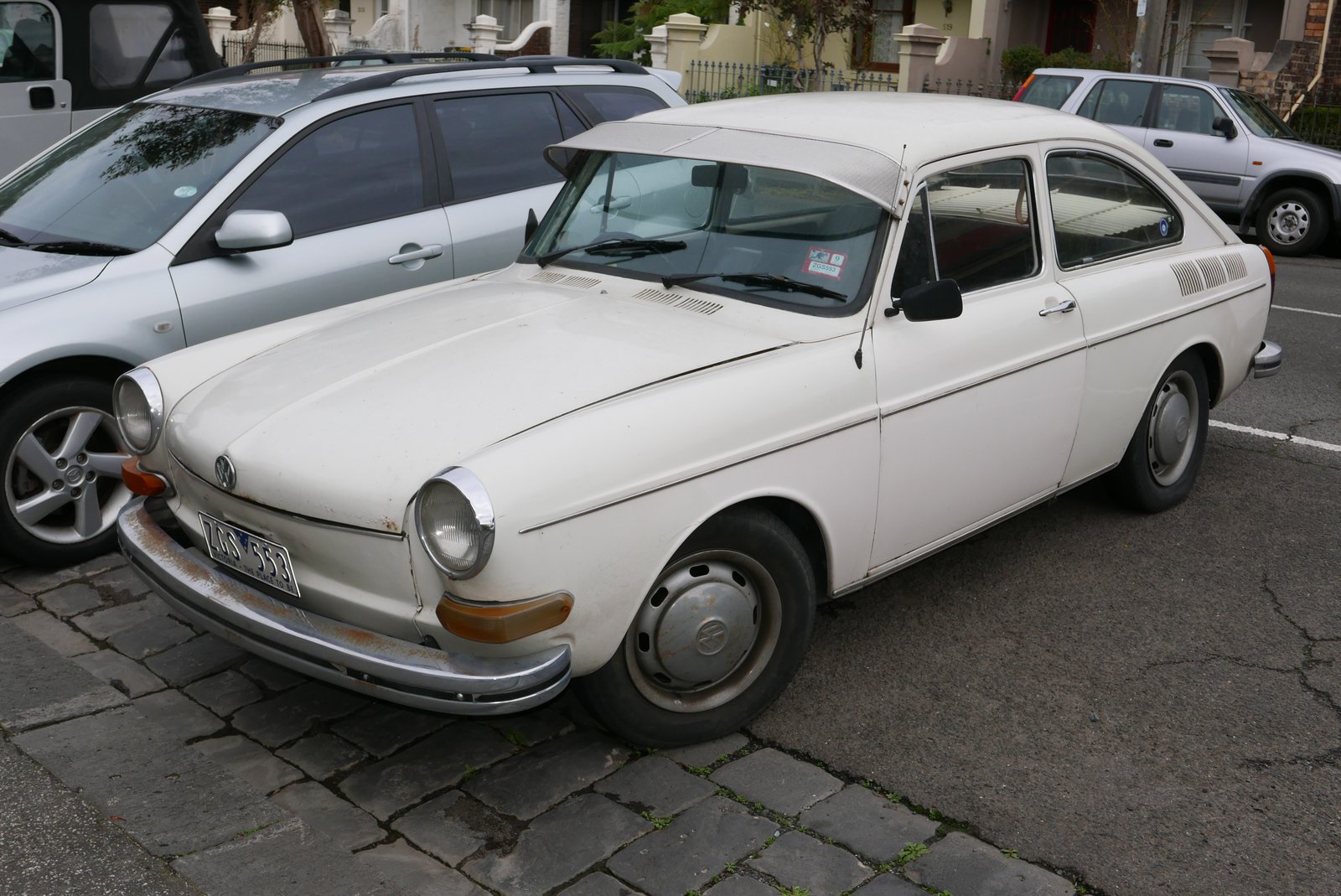
1600cc • 65 HP • Station Wagon
Explore the 1970 Type 3 Squareback: pancake engine, dual trunks, and pioneering fuel injection. VW's sophisticated answer to practical needs in an era of environmental awakening.
Featured story
The 1970 Squareback is the only 1970 record with a story on file. Source candidate · under review.
Open the Squareback record970: Earth Day's first celebration, Kent State's tragedy, Apollo 13's drama. America was questioning progress, examining values, discovering environmentalism. Detroit responded with muscle cars and luxury barges. VW answered with intelligent utility.
The 1970 Type 3 Squareback was VW's proof that practicality didn't require excess. While American wagons stretched past 18 feet, the Squareback packed two trunks and a folding rear seat into 15 feet of honest engineering. It wasn't a compromise between Beetle and station wagon—it was a synthesis: German precision meets daily utility.
VW called it practical. Engineers called it innovative. History would call it ahead of its time. All three were right.
Displacement
Power
From the 1970 Squareback record.
The 1970 Type 3 Squareback was VW's sophisticated evolution of the air-cooled philosophy. Factory specifications tell the story:
VW positioned it as the thinking person's wagon—more sophisticated than a Beetle, more efficient than American competitors, more honest than both.
The Type 3's pancake engine was engineering elegance: VW's air-cooled flat-four redesigned to lay flat, creating cargo space above. This wasn't just clever packaging—it was philosophical innovation. The engine still cooled itself, still maintained VW simplicity, but served a new purpose: practical utility.
Optional electronic fuel injection (Bosch D-Jetronic) was automotive pioneering. While Detroit relied on carburetors, VW embraced electronic precision. It wasn't perfect—early systems could be temperamental. But it pointed to the future.
The Squareback's dual trunks redefined utility. Front trunk for daily items, rear cargo area for real hauling. The rear seat folded flat—a feature American wagons hadn't mastered. VW proved utility could be intelligent rather than excessive.
Independent rear suspension separated the Type 3 from its Beetle cousin. Better handling, more stability, sophisticated road manners. VW was growing up without selling out.
From the 1970 Squareback record.
1970 marked America's environmental awakening. The first Earth Day launched in April. Clean Air Act amendments passed in December. The muscle car era was peaking, but consciousness was shifting—efficiency and responsibility were entering the conversation.
The automotive landscape reflected this tension. Detroit's full-size wagons stretched past 18 feet, powered by V8s making 300 horsepower. Japanese imports were just beginning to matter—Toyota's Corona wagon offered economy but felt primitive. European competitors like Peugeot's 504 wagon brought sophistication but at premium prices.
The Squareback landed in this conflicted market with German clarity: efficient but sophisticated, practical but intelligent, compact but capable. Its values aligned perfectly with emerging environmental consciousness—proof that utility didn't require excess.
Buyers in 1970 were discovering new priorities. The postwar bigger-is-better ethos was fading. Young professionals wanted sophistication without waste. Young families needed space without excess. The counterculture appreciated honest engineering over marketing flash. The Squareback served all three.
In 1970, the Type 3 Squareback drove like sophisticated evolution. The pancake engine's lower center of gravity improved handling. Independent rear suspension delivered stability Beetle owners never knew. Steering was light but precise. It wasn't fast—65 horsepower meant 0-60 in about 19 seconds. But it was composed, confident, capable.
Fuel-injected models added sophistication: smoother power delivery, better cold starts, improved efficiency. When it worked properly, D-Jetronic was automotive magic. When it didn't, it taught owners about electronics.
Today's Perspective: Driving a 1970 Squareback in 2025 is experiencing intelligent evolution. It's slower than modern traffic but more engaging. The steering talks to you. The engine's air-cooled sound is mechanical honesty. The dual trunks still make sense. The sophistication that set it apart in 1970 still impresses—proof that good engineering transcends time.
Squareback buyers in 1970 fell into three distinct camps:
The Young Professionals:
The Young Families:
The Environmental Pioneers:
VW priced the Squareback at $2,650—above Beetle territory but below American wagons. The value proposition was clear: sophisticated utility at honest prices.
The Type 3 line evolved thoughtfully from 1961 to 1973:
1961: Type 3 debuts in Europe (Notchback) 1962: Squareback joins lineup 1965: US imports begin 1966: 1600cc engine becomes standard 1968: Electronic fuel injection option debuts 1969: Independent rear suspension refined 1970: Our subject year—peak sophistication 1971-1973: Final refinements before discontinuation
The Squareback represented Type 3's most practical expression. While the Notchback was conservative and the Fastback sporting, the Squareback served real needs without pretense.
The 1970 model year represented peak development: proven mechanics, refined suspension, optional fuel injection, evolved interior. It was the Type 3 fully realized.
2025 Market Values (USD):
Fuel-injected cars command 20-30% premium when properly sorted. Original engines with matching numbers add value. Preservation examples increasingly desirable.
Market Trajectory: Rising steadily. Type 3s are being recognized as sophisticated alternatives to early Beetles. The Squareback's practical utility and engineering innovation are finally getting proper respect.
Common Issues:
Parts Availability:
Restoration Tips:
Preservation > Restoration: Original examples increasingly valuable. Preserve what you can.
The 1970 Type 3 Squareback was VW proving sophistication and utility could coexist with honesty. It wasn't perfect—65 horsepower won't impress anyone today, and D-Jetronic electronics can confound modern mechanics. But it was right: practical without excess, sophisticated without pretense, capable without waste.
Who Should Buy It:
The Type 3 Squareback was VW's proof that growing up doesn't require selling out. That's still true in 2025.
1,097 words • ~6 min read
Research current market values for the 1970 Type 3
Hagerty Valuation Tools
Industry-standard classic car values
Bring a Trailer Results
Recent auction prices
TheSamba Classifieds
Current listings & asking prices
Buying tip: Condition is everything. A rusty "project" can cost more to restore than buying a finished car. Check heater channels, floor pans, and battery tray first.
Identity under review
Reference only
This story
Some of this works today. Some of it is still an idea. The chips say which.