1951 Standard Convertible
1131cc
View Details
Reference review: source-recorded details; historical accuracy has not been comprehensively verified.
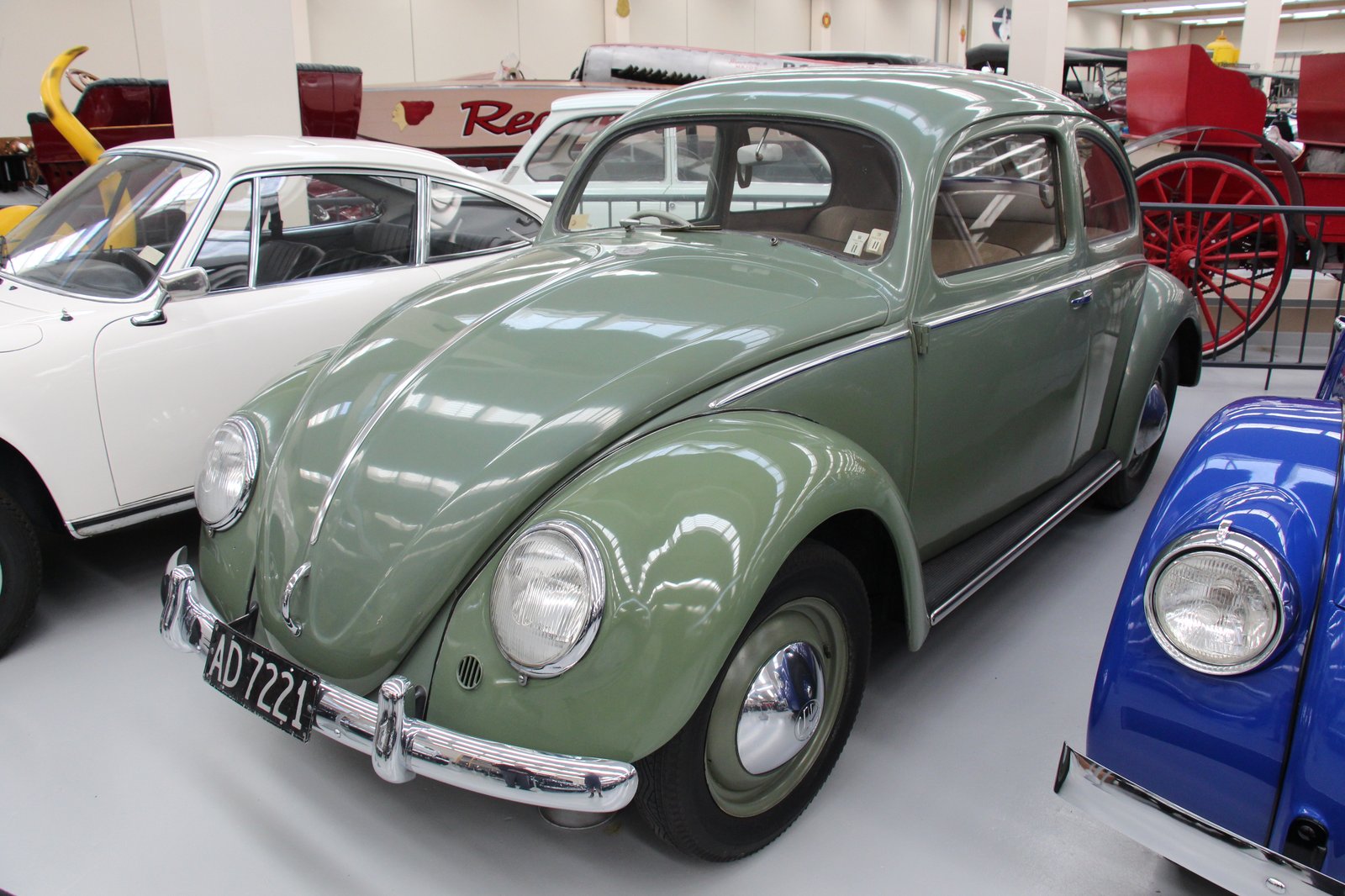
1131cc • 25 HP • 2-door sedan
Explore the 1951 Beetle: 25hp of pure conviction, split rear window, and the quiet revolution of reliability. When German engineering met American skepticism.

Featured story
The 1951 Standard Sedan is the only 1951 record with a story on file. Source candidate · under review.
Open the Standard Sedan record951: Korean War grinding on, McCarthyism rising, America celebrating victory with chrome and horsepower. Detroit was building dreams in V8 form. Volkswagen was building something else entirely: truth on four wheels.
The 1951 Beetle arrived with 25 horsepower, a split rear window, and zero pretense. It wasn't trying to be American. It wasn't trying to be anything except honest transportation. That turned out to be revolutionary.
This was the year reliability became a story worth telling. Not through advertising—VW hadn't discovered that yet. Through owners who kept their Beetles running while their neighbors' tailfins rusted. Through immigrants who recognized German engineering and explained it to skeptical Americans. Through the quiet revolution of cars that simply worked.
Displacement
Power
From the 1951 Standard Sedan record.
The 1951 Beetle was automotive minimalism when minimalism wasn't cool yet:
VW built it like they were still proving something. Hand-welded seams. Multiple paint coats. Quality that suggested someone cared about the outcome. It wasn't luxury—it was craftsmanship disguised as economy.
The split rear window wasn't style—it was engineering honesty visible in glass. The short overhangs weren't design—they were geometry made metal. Nothing was pretending to be anything except exactly what it was.
The 1951 Beetle's greatest innovation was refusing to innovate unnecessarily. While Detroit reinvented everything annually, VW kept refining what worked:
That split rear window? Engineering necessity that became accidental art. Two curved pieces were cheaper than one big one. VW didn't hide this fact—they let the engineering show. Honesty as aesthetic.
The 25-horsepower engine wasn't a limitation—it was a commitment to reliability. VW could have made it more powerful. They chose durability instead. The engine ran in Minnesota winters and Arizona summers. It kept running while more powerful engines failed.
Cable brakes were ancient technology even in 1951. But they were simple, reliable, and taught drivers mechanical sympathy. You learned to anticipate stops. The car taught you how to drive it properly.
Torsion bar suspension was primitive but brilliant. It absorbed American roads better than systems twice as complex. Sometimes the best innovation is knowing what not to change.
From the 1951 Standard Sedan record.
1951 America was a study in contradictions. Postwar prosperity was building suburbs and highways. The Korean War was reminding everyone that peace was temporary. McCarthy was seeing communists everywhere. Americans were celebrating victory with consumption.
Detroit understood the moment perfectly: big cars, big engines, big chrome. Tailfins weren't aerodynamic—they were optimism in sheet metal. Power wasn't about speed—it was about potential. Americans wanted cars that looked like their aspirations.
The Beetle arrived like an alien spacecraft. Small when big meant success. Simple when complex meant progress. German when American meant patriotic. It violated every rule of 1951 car culture.
Television was replacing radio. Rock and roll was embryonic. Drive-in theaters were becoming teenage capitals. Car culture was defining American youth. Dating happened in backseats. Freedom had a V8 soundtrack.
Into this moment came a car that celebrated efficiency over excess, simplicity over chrome, reliability over status. It wasn't just different—it was heretical. The Beetle wasn't just a car choice in 1951—it was a philosophical statement.
The 1951 Beetle drove exactly like 25 horsepower and cable brakes suggest: slowly, deliberately, honestly.
0-60 happened eventually. Top speed was theoretical. Acceleration required planning and patience. But here's the thing: it didn't matter. The Beetle wasn't slow because it failed—it was slow because speed wasn't the point.
Those cable brakes needed regular adjustment. They worked through mechanical sympathy rather than hydraulic certainty. You learned to read the road, anticipate stops, understand momentum. The car taught you to drive better.
The steering was direct and communicative. The suspension absorbed terrible roads with surprising grace. The whole experience was involving in a way that made faster cars feel disconnected.
Driving a '51 today is time travel. Everything mechanical connects directly to your inputs. No power assistance, no hydraulics, no electronics. Just you, physics, and German engineering honesty. It's slow by modern standards. It's perfect by character standards.
1951 Beetle buyers were automotive philosophers disguised as pragmatists:
The European Immigrants: They recognized German engineering and didn't need convincing. They became unofficial ambassadors, explaining the Beetle to skeptical Americans.
The Early Adopters: They saw past the strange shape to the engineering underneath. They became evangelists, proving reliability beat horsepower.
The Pragmatists: They did the math on maintenance costs and fuel economy. They became converts when the math proved right.
The Contrarians: They bought Beetles because everyone else bought Fords and Chevrolets. They became vindicated when their cars outlasted the competition.
What united them? They all had to defend their choice at dinner parties. They all had to explain why they bought a German car six years after the war. They all discovered they had bought something more significant than transportation.
The 1951 Beetle represented peak purity in the model's evolution. This was the Beetle before it knew it was a Beetle:
1938: Original design (KdF-Wagen) 1945: Post-war production begins 1949: First exports 1950: First US imports 1951: THIS model - split window, cable brakes, pure intention 1953: Last split window year
Everything after 1951 was improvement: hydraulic brakes, bigger engines, synchronized transmissions. But this was the Beetle at its most honest. No compromises. No market adjustments. Just pure engineering solving transportation problems.
The split window era (1949-1953) marked the Beetle's most primitive modern form. Closer to pre-war design than 1960s evolution. Every later improvement made the car better but slightly less pure.
1951 wasn't just a year—it was a philosophy frozen in metal.
Today, 1951 Beetles occupy a unique market position:
Show Quality: $40,000-60,000 Excellent: $25,000-35,000 Good Driver: $15,000-20,000 Project Car: $5,000-10,000
But here's the irony: perfect restorations miss the point. These cars were built to work, not show. A too-perfect '51 Beetle is like a factory-aged leather jacket. The authenticity gets lost in the perfection.
The sweet spot? Good driver condition. Original enough to show honest wear. Restored enough to drive regularly. These cars still want to work for a living.
Investment outlook? Strong but not spectacular. Values rise steadily because each year fewer survive. But explosive growth is unlikely. These cars attract philosophers, not speculators. That's exactly as it should be.
Restoring a '51 Beetle requires philosophical alignment with the car's original values:
Common Issues:
Parts Availability:
Restoration Philosophy:
Budget Reality: $30,000-50,000 for proper restoration. You'll never make money. That's not why you do it.
The 1951 Beetle wasn't trying to change automotive history. It was just trying to provide honest transportation. That turned out to be revolutionary.
This was the Beetle before fame, before DDB's advertising genius, before the counterculture adopted it. Pure engineering solving problems without pretense.
Who should buy one?
Who shouldn't?
The 1951 Beetle proves that doing one thing perfectly matters more than doing many things adequately. That's still revolutionary.
1,300 words • ~7 min read
Research current market values for the 1951 Beetle
Hagerty Valuation Tools
Industry-standard classic car values
Bring a Trailer Results
Recent auction prices
TheSamba Classifieds
Current listings & asking prices
Buying tip: Condition is everything. A rusty "project" can cost more to restore than buying a finished car. Check heater channels, floor pans, and battery tray first.
Reference only
This story
Some of this works today. Some of it is still an idea. The chips say which.