1131cc
Air-cooled flat-4
Source-recorded engine code: Type 1 engine.
- Power
- 25 HP
- Fuel
- Unknown
Reference review: source-recorded details; historical accuracy has not been comprehensively verified.

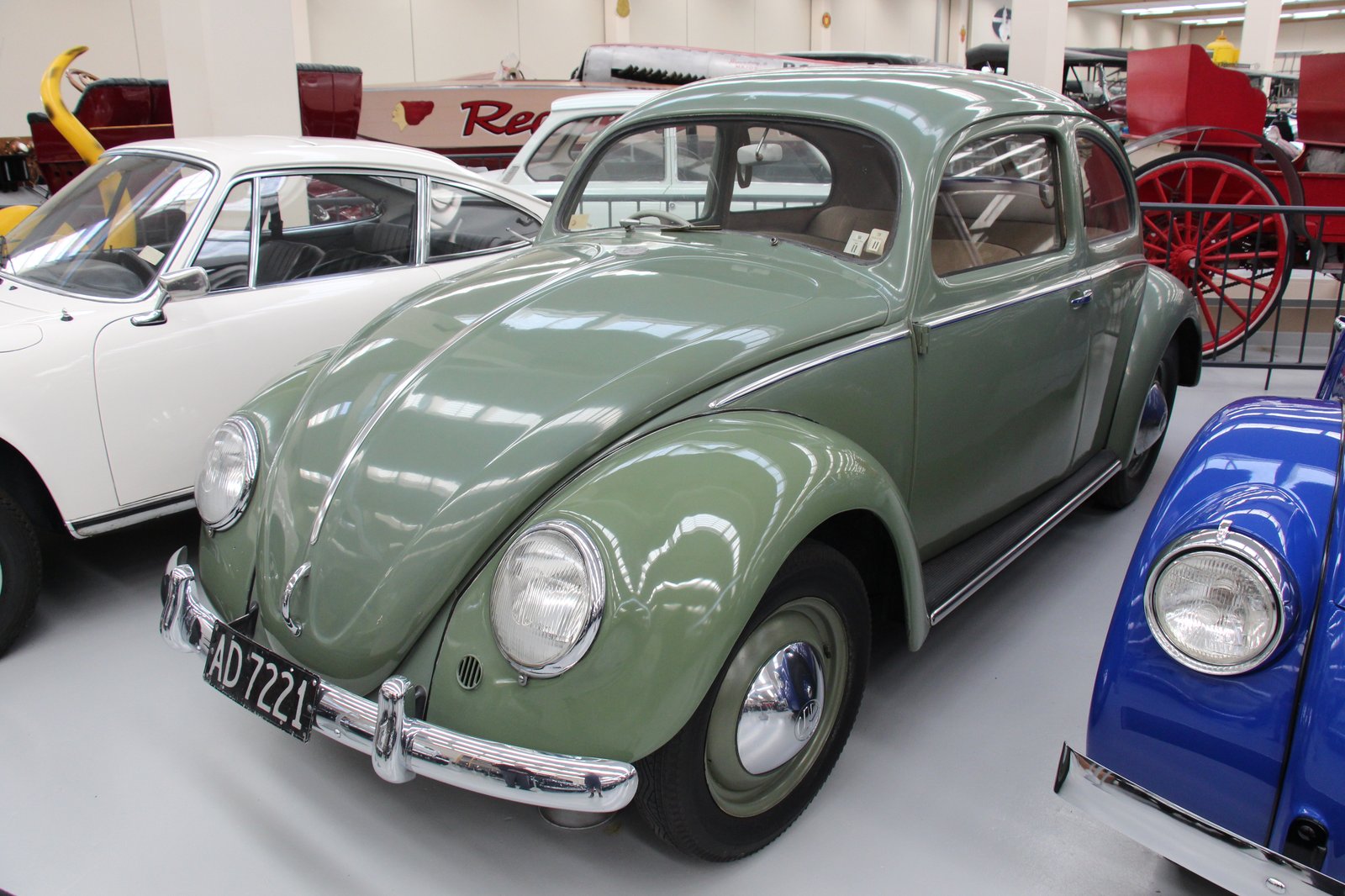
Representative imagery; exact configuration unverified
Discover the 1952 VW Beetle: 25hp of pure evolution, synchromesh revolution, and split-window charm. When engineering beat marketing and simplicity converted skeptics.
The air-cooled flat-four that powered the 1952 Beetle. Simple, reliable, and endlessly modifiable.
Research current market values for the 1952 Beetle
Hagerty Valuation Tools
Industry-standard classic car values
Bring a Trailer Results
Recent auction prices
TheSamba Classifieds
Current listings & asking prices
Buying tip: Condition is everything. A rusty "project" can cost more to restore than buying a finished car. Check heater channels, floor pans, and battery tray first.
Original paint options available for the 1952 Beetle.
Looking for a 1952 Beetle in Pastel Green?
Find for SaleContinue from this 1952 reference to other recorded model years and variants.
Want to see a detailed comparison of multiple vehicles?
Compare all variantsUse retained catalog and code references as a starting point for researching your 1952 Beetle. Applicability remains under review; VWX does not authenticate vehicles.
1952: Eisenhower winning elections, hydrogen bombs testing patience, and Americans buying cars that would look dated by Christmas. Meanwhile, in Wolfsburg, VW was quietly committing automotive heresy: improving things that worked instead of replacing things that didn't. Mid-year, they added synchromesh to three gears. Americans barely noticed—synchromesh was old news in Detroit. But for Beetle owners, it was revolution by evolution. Suddenly, you didn't need a PhD in Double-Clutching to drive German engineering. The 1952 Beetle wasn't just selling transportation; it was systematically dismantling excuses not to buy one. Detroit sold dreams. VW solved problems. Both worked. One lasted.
The 1952 Beetle was 25 horsepower of pure, unfiltered German logic. Split rear window (because two small glass panes were cheaper than one big one). Air-cooled engine (because radiators leak). Four wheels (because three wasn't enough and five was showing off). Specifications read like engineering haiku: 1131cc flat-four engine, four-speed manual transmission (now with synchromesh!), torsion bar suspension, mechanical brakes. Colors? Pearl Grey, Dove Blue, Pastel Green, Black—because Henry Ford's ghost was apparently consulting. Standard models got exactly what you needed. Export models got exactly what you needed plus chrome bumpers, because America. The whole package was smaller than most American cars' trunk space. It was also better built than most American cars' everything else.
Mid-1952 brought the great synchromesh revelation: second, third, and fourth gears suddenly shifted without requiring an advanced degree in mechanical sympathy. First gear remained gloriously non-synchro until 1960, because VW believed in teaching humility one gear at a time. This wasn't just mechanical evolution—it was VW admitting that maybe, just maybe, making things easier wasn't the same as making them worse. The split rear window remained, dividing both glass and opinions. Visibility suffered slightly, but the design screamed 'engineering purity' in a way that made architects weak in the knees. Late-1952 cars quietly received the 30-horsepower engine that would become standard in 1953. Five more horsepower doesn't sound like much, but when you're starting with 25, it's practically a muscle car revolution. The real magic? Everything worked together with the precision of a Swiss watch built by Germans who thought Swiss watches were a bit flashy.
1952 America was embracing bigger everything: bigger cars, bigger suburbs, bigger nuclear arsenals. Detroit was selling chrome-plated dreams on monthly payments. TV was replacing radio, suburbs were replacing cities, and planned obsolescence was replacing common sense. The Korean War reminded everyone that peace was complicated. The hydrogen bomb reminded everyone that war was terrifying. And here came the Beetle, selling exactly none of that zeitgeist. No annual styling changes, no planned obsolescence, no chrome dreams. Just continuous improvement and relentless reliability. It was automotive counter-programming before counter-programming existed. The few Americans buying Beetles in 1952 weren't making statements—they were making decisions. European immigrants who remembered German engineering. Professors who questioned consumer culture. Mechanics who appreciated mechanical honesty. The synchromesh addition converted more skeptics. Not because it was revolutionary, but because it proved VW was listening. In 1952, that was revolutionary enough.
Driving a '52 Beetle was an exercise in mechanical mindfulness. Twenty-five horsepower meant planning acceleration like a chess game. Sixty miles per hour was technically possible, theoretically achievable, and practically terrifying. The steering had more feedback than a therapy session. The brakes worked eventually. But here's the thing: it all worked together perfectly. The synchromesh transmission (on post-June cars) shifted like mechanical poetry. The suspension managed to be both soft and controlled—a neat trick Detroit wouldn't master for decades. The whole experience was slower than American cars but somehow more engaging. You weren't just driving; you were participating in a German engineering seminar. Today, driving a '52 feels like time travel with better brakes. Modern traffic requires more planning than D-Day, but that's part of the charm. You're not just driving a car; you're operating a piece of automotive philosophy.
1952 Beetle buyers came in distinct flavors: The European Expats (who knew German engineering), The Early Adopters (who distrusted Detroit excess), The Practical Professors (who appreciated mechanical honesty), and The Accidental Revolutionaries (who just wanted reliable transportation and stumbled into automotive counterculture). They paid $1,280 for Standard models—about half a Chevrolet's price. Export models cost more, added chrome, fooled nobody. These weren't status seekers; they were sense seekers. They bought Beetles because the math worked, kept them because the engineering worked, and became evangelists because the philosophy worked. In 1952, buying a Beetle wasn't a statement—it was a decision. The statement part came later, when everyone else realized these early adopters were right.
The 1952 Beetle straddled VW's early purity and emerging refinement. Early '52s had the full split-window, non-synchro charm of post-war minimalism. Mid-year brought synchromesh to three gears, because evolution doesn't check marketing calendars. Late '52s quietly received the 30hp engine, previewing 1953's power revolution. The Standard/Export split continued: Standards for purists, Exports for Americans who needed chrome to feel complete. Production was ramping up, quality was improving, and VW was learning that maybe some creature comforts (like synchromesh) didn't compromise the soul. This wasn't just a model year; it was a philosophy in transition. The last full year of split-window purity met the first wave of user-friendly refinement. Collectors today call it 'peak early Beetle.' They're not wrong.
Today's market values '52 Beetles like archeologists value transitional fossils. Early '52s (pre-synchro) command premium prices from purists: $40,000-60,000 for museum-quality examples. Post-synchro cars run $25,000-45,000 restored, because comfort has a price and it's lower than purity. Project cars start around $5,000, but remember: rust never sleeps, and '52 Beetles rusted while they were still in the showroom. Parts availability is excellent (thank you, reproduction industry), but authenticity costs extra. Want original German glass? Sell a kidney. Need correct fabric? Hope you like refinancing. The investment outlook is solid—early Beetles keep appreciating. But don't buy one as investment. Buy it because you want to drive mechanical philosophy.
Restoring a '52 requires equal parts mechanical skill, archaeological patience, and philosophical acceptance. Common issues? Rust everywhere: heater channels, floorpans, fenders, thoughts about fenders. The split window's rubber seals perished decades ago. Pre-synchro transmissions need expertise; post-synchro need less expertise but more parts. The 25hp engine is basically immortal unless previous owners thought oil changes were optional. The 30hp is equally immortal but harder to authenticate. Parts availability ranges from 'abundant' (mechanical bits) to 'good luck' (correct trim pieces). Reproduction quality varies from 'better than original' to 'maybe squint at it from distance.' The good news? The '52's mechanical simplicity means most repairs are DIY-possible. The bad news? Authenticity is expensive. Very expensive. Consider it tuition in early Beetle philosophy.
The 1952 Beetle marks the moment when VW's engineering philosophy met America's market reality and decided to compromise just enough to succeed without surrendering its soul. The synchromesh addition wasn't just mechanical improvement—it was proof that evolution beats revolution. You want one if: you appreciate mechanical honesty, enjoy explaining split windows to confused onlookers, and believe 25 horsepower is plenty if you plan ahead. You don't want one if: you need to arrive places quickly, think comfort is important, or believe cars should be seen and not heard. The '52 Beetle isn't just a car—it's a masterclass in doing more with less, improving without changing, and winning arguments through endurance. Buy it because it's important. Keep it because it's honest. Drive it because some philosophies only make sense at 60 mph. Eventually.