The Year Rock and Roll Needed an Open Car

1192cc • 30 HP • 2-door convertible

The Year Rock and Roll Needed an Open Car

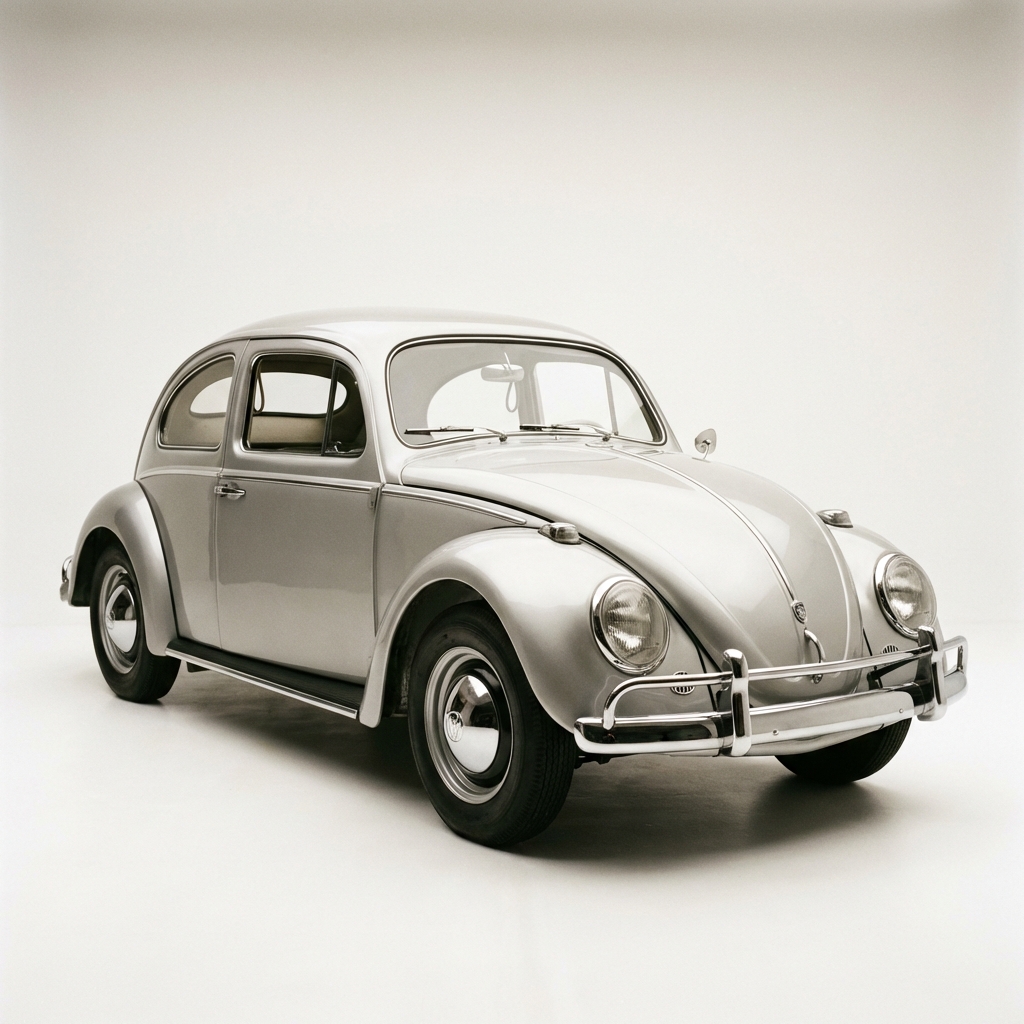
Elvis appeared on television. James Dean died in September. Detroit grew fins and chrome. The 1955 Volkswagen Cabriolet buyer was the person in the room who watched all of it and made a different choice.

Real Stories

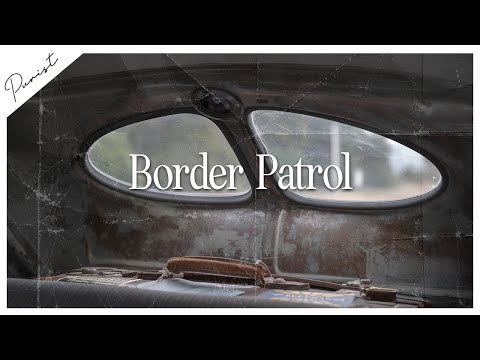
1949 VW Split Window Beetle - German Border Patrol
11:49

The Story

he 1955 Volkswagen Beetle is what happens when an engineer asks a radical question: "What if we just... didn't lie?" In an era when post-war America, chrome excess, suburban dreams, Detroit was selling horsepower fantasies and chrome dreams. The Beetle arrived as proof that you could be honest about what you were—and still be extraordinary.

This wasn't a car trying to impress anyone. It was a car that admired honesty more than flashiness. And that philosophy of radical self-awareness is precisely why it mattered so much in 1955.

Model Information and History

What It Was

That air-cooled flat-four? Not powerful. Genuinely not. Around 40-50 horsepower depending on market. The Beetle wasn't hiding this. The advertising famous admitted it: "Ugly is only skin-deep." "Think Small." "It goes boing." This wasn't false modesty—it was genuine acknowledgment that the point wasn't acceleration, it was arrival.

The torsion bar suspension meant every pothole was a conversation. The manual transmission meant driving was engagement, not automation. The cramped interior meant you were close to the people who mattered. None of these were bugs. They were features celebrated through honest advertising that treated customers like intelligent humans.

In 1955, when Elvis emerging, early rock and roll, the Beetle's refusal to perform was its most radical statement.

What Made It Special

Here's what made VW different: the advertising didn't hide the truth, it celebrated it. While Detroit sold fantasy, VW sold self-aware reality. "We're not fancy, but we're honest." Not as apology, but as philosophy.

Original owners in 1955 got something deeper than a car. They got permission to stop wanting what they were supposed to want. They got a vehicle that respected their intelligence enough to admit its limitations. That kind of honesty was revolutionary—especially as the culture began questioning what authority was selling them.

For Elvis emerging, early rock and roll, for the cultural moment happening, the Beetle was the perfect mirror: unpretentious, authentic, deliberately modest.

Cultural Context

Years later, teenagers in the 1980s and 90s would buy these same Beetles at auctions because they still represented something true: you don't need to participate in the lie. You don't need to chase the status symbol. You can just... be honest about what matters.

The Beetle's advertising strategy—admitting weakness as strength—has never aged because it was never trendy to begin with. It was just true.

How It Drove

A 1955 Beetle isn't valuable because it's rare or exotic. Check Hagerty (hagerty.com) for values, but every Beetle owner knows the real treasure: you're preserving a moment when a machine was more honest than its entire culture.

That Beetle represents something increasingly rare: self-aware marketing that respected the customer. Design that admitted its constraints. Engineering that celebrated simplicity. A cultural moment when admitting you weren't trying to be impressive was the most impressive thing you could do.

Do you have a story? Maybe you drove a Beetle and felt permission to be yourself. Maybe you remember when owning one meant something about your values. Maybe you discovered one later and realized Detroit had been lying to you the whole time. Maybe you learned something about authenticity from a car that refused to perform.

The Beetle doesn't judge. It never has. It just keeps running, honestly, with everyone who gets in.

Who Bought It

Elvis Presley appeared on television in 1955. James Dean died in September. Rock and roll was no longer a novelty; it was a fact. The American teenager had become an economic and cultural force, and the automobile industry would spend the next decade trying to sell them enormous chrome propositions.

The Volkswagen Cabriolet buyer of 1955 was, almost by definition, not a teenager. They were the person who watched all this happen and made a different choice: smaller, simpler, more honest. Graduate students. Young architects. The English teacher who understood irony before irony was fashionable. They chose the Cabriolet not despite the era's cultural noise but in full awareness of it. The car was their counterargument, parked quietly at the curb while everyone else was making noise.

Buying Today

The 1955 Cabriolet carries the oval rear window, the 1192cc engine, and the growing Export specification improvements that made mid-decade Karmann Cabriolets the most refined pre-1960 examples. Production was approaching 15,000 units annually for Cabriolets — still low by any modern standard, but meaningfully more available than the earliest years.

Survivor-quality 1955 Cabriolets exist in reasonable numbers among VW collectors. A properly restored example: $65,000 to $100,000. The increased production means more parts are available and more restorers have specific experience with this model year. Condition of the Karmann body stampings and soft top hardware remain primary value drivers. Have the floor assessed by a specialist before any purchase.

The Verdict

The 1955 Cabriolet's buyers were ahead of the cultural moment by about a decade. The counterculture they represented wouldn't have a name for ten more years. The advertising campaign that would make their car famous wouldn't launch until 1959. They drove their open-top Beetles through 1955 America not as a statement but as a preference — quiet, decided, correct.

The history caught up with them eventually. It always does, with the right cars.

835 words • ~5 min read

Reference

Engine

Displacement
1192cc (1.192L)
Configuration
Air-cooled flat-4
Power
30 HP
Engine Code
2

Performance

0-60 mph
N/A
Top Speed
N/A
Fuel Economy
N/A

Drivetrain

Transmission
4-speed manual (synchromesh 2nd-4th)
Drive Type
RWD

Chassis

Front Suspension
Torsion bar
Rear Suspension
Swing axle
Brakes
Drum front and rear
Steering
Worm and roller

Dimensions

Community Resources

Community

Connect with 1955 Beetle owners & experts

Discussions

Soon

Questions, advice, and stories from the community

Photo Gallery

Soon

Owner photos and restoration progress shots

Find a Specialist

Soon

Mechanics and restorers who know this model

Owner Registry

Soon

Connect with other owners near you

Community features coming soon. We're building tools for owners to share knowledge, photos, and connect with specialists. Want early access? Get in touch.

Verify Authenticity

Numbers matching verification increases value by 20-40%. Use our interactive tools to verify engine codes, chassis numbers, and M-codes against production data for your 1955 Beetle.

Correct Engine Code
2
Valid Engine Codes
2