1192cc
Air-cooled flat-4
Source-recorded engine code: D.
- Power
- N/A
- Fuel
- Unknown
Reference review: source-recorded details; historical accuracy has not been comprehensively verified.

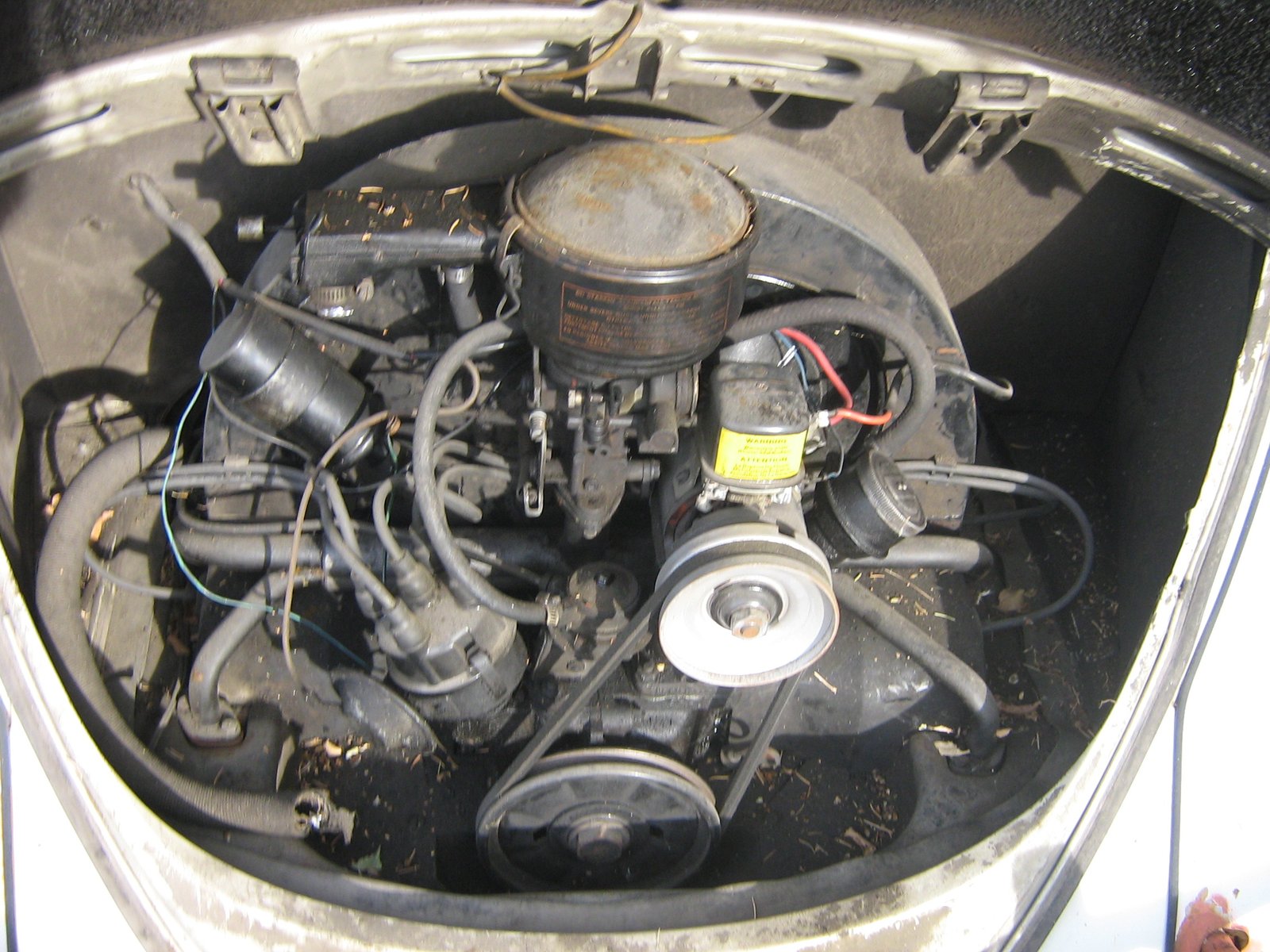
Representative imagery; exact configuration unverified
Explore the 1962 Beetle: 40hp of mechanical certainty during the Cuban Missile Crisis. When everything felt fragile, German engineering remained dependable.
The air-cooled flat-four that powered the 1962 Beetle. Simple, reliable, and endlessly modifiable.
Research current market values for the 1962 Beetle
Hagerty Valuation Tools
Industry-standard classic car values
Bring a Trailer Results
Recent auction prices
TheSamba Classifieds
Current listings & asking prices
Buying tip: Condition is everything. A rusty "project" can cost more to restore than buying a finished car. Check heater channels, floor pans, and battery tray first.
Original paint options available for the 1962 Beetle.
Looking for a 1962 Beetle in Black?
Find for SaleContinue from this 1962 reference to other recorded model years and variants.
Want to see a detailed comparison of multiple vehicles?
Compare all variantsUse retained catalog and code references as a starting point for researching your 1962 Beetle. Applicability remains under review; VWX does not authenticate vehicles.
October 1962: Nuclear war felt imminent. The Cuban Missile Crisis had Americans building fallout shelters and practicing duck-and-cover drills. Kennedy and Khrushchev played chess with ICBMs. The world held its breath for thirteen days.
Meanwhile, Beetles just kept running. That's not poetry—it's engineering. While humanity contemplated mutual destruction, thousands of 1200cc air-cooled engines started reliably, shifted predictably, and delivered exactly what they promised. No more, no less.
The contrast was beautiful: apocalyptic anxiety versus mechanical certainty. Existential dread versus German engineering. The 1962 Beetle wasn't built for the end times—it was built for Monday mornings. That honesty felt revolutionary.
The 1962 Beetle was 40 horsepower of pure certainty:
VW positioned it as transportation for people who valued function over fashion. Base price: $1,595. Options were few because the standard car was honest. Revolutionary concept: Build it right, price it fairly, improve it constantly.
The 1962 Beetle represented peak mechanical honesty before complexity crept in. The relocated gas filler cap wasn't just convenience—it was VW admitting humans deserve dignity while refueling. The improved vinyl wasn't luxury—it was recognition that durability matters more than fashion.
The 40-horsepower engine wasn't powerful by any standard except reliability. It would run 100,000 miles with basic maintenance. It started in any weather. It didn't leak coolant because it didn't have any. The engineering was transparent: you could understand it, fix it, trust it.
This was the last generation before emissions controls, safety regulations, and market demands began complicating the formula. The 1962 Beetle was pure engineering: everything you needed, nothing you didn't. That clarity became more valuable as the decade progressed and everything else got more complex.
1962 was the year America discovered how fragile everything was. The Cuban Missile Crisis brought nuclear war to doorsteps. Civil rights struggles exposed systemic injustice. Rachel Carson's Silent Spring revealed environmental fragility. Bob Dylan released his first album. The Beatles released 'Love Me Do.' Everything felt like it was changing.
Detroit was building chrome dreams: massive engines, planned obsolescence, styling that screamed 'next year will be better.' Cars as consumer culture totems. Marketing promised that bigger meant better, newer meant improved, status meant happiness.
The Beetle rejected all of it. While Detroit sold dreams, VW sold transportation. While American cars promised tomorrow, the Beetle delivered today. DDB's 'Think Small' campaign wasn't just advertising—it was philosophy. When everything felt uncertain, mechanical certainty became revolutionary.
The timing was perfect: a generation was questioning assumptions about consumption, status, and progress. The Beetle offered answers: simplicity over complexity, function over fashion, honesty over hype. It became the car for people who didn't trust cars—or the culture selling them.
In 1962, the Beetle drove like mechanical truth. The steering was heavy but honest. The gearshift required intention but rewarded technique. The brakes worked eventually. The heater tried its best. Everything communicated exactly what it was doing—no filters, no pretense.
Zero to 60 happened... eventually. Top speed was theoretical. But that wasn't the point. The Beetle moved through space with absolute predictability. The swing-axle rear end would try to kill you if provoked, but it warned you first. The torsion bar front suspension communicated every road imperfection. You always knew exactly what the car was doing.
Driving a '62 today is time travel. No power assistance. No electronic anything. Just pure mechanical interaction. It's slow by modern standards, but that slowness feels intentional. You work for speed. You earn progress. The reward is understanding exactly how transportation works.
The 1962 Beetle attracted three distinct tribes:
The Pragmatists: Engineers, teachers, people who understood that transportation doesn't need theatre. They bought Beetles because the engineering made sense. They kept buying them because the reliability proved them right.
The Early Adopters: Cultural critics who saw through Detroit's planned obsolescence. They chose Beetles as philosophical statements. The car's honesty aligned with their skepticism of consumer culture.
The Converts: Former Detroit buyers tired of chrome dreams and repair bills. They tried Beetles because they were different. They stayed because different worked better.
What united them? Appreciation for honesty in an era of hype. The Beetle wasn't just transportation—it was validation that questioning assumptions made sense.
The 1962 Beetle represented peak simplicity in the model's evolution:
1938-1945: Development and war production 1946-1955: Basic transportation era 1956-1961: Refinement of the formula 1962-1965: Peak mechanical purity 1966-1967: Safety improvements begin 1968-1979: Complexity creeps in
The '62 had everything it needed: proven 1200cc engine, reliable transmission, functional interior. Changes were meaningful: relocated gas cap, better materials, refined switchgear. The engineering was mature but not yet complicated by regulations.
After '62, changes accelerated: bigger engines, more features, safety equipment. The purity of purpose began diluting. The '62 remains the sweet spot: everything sorted, nothing excessive.
Today, 1962 Beetles occupy a sweet spot in the market:
Show Quality: $25,000-35,000 Excellent: $15,000-25,000 Good Driver: $8,000-15,000 Project Car: $3,000-8,000
Why these values? The '62 combines mechanical purity with excellent parts availability. It's simple enough to maintain but refined enough to drive regularly. It's pre-emissions but post-primitive. Perfect balance.
Investment outlook: Strong. As later Beetles get more expensive, early '60s examples look increasingly attractive. Buy now if you want one. They're not getting cheaper, and they're not making more.
Restoring a '62 Beetle requires honesty about three things:
Rust: Check floorpans, heater channels, jack points. German steel met American salt. Physics won.
Mechanicals: Engine rebuilds are straightforward if you respect the engineering. Parts availability is excellent. The manual is your friend.
Details: Correct '62 parts matter. The relocated gas cap means specific fenders. Interior materials are year-specific. Research before buying.
Key resources:
Budget reality: $20,000-30,000 for quality restoration. More if you pay others. Less if you enjoy learning German engineering principles.
The 1962 Beetle is automotive honesty frozen in time. It represents the peak of VW's original vision: transportation reduced to essential truth. No pretense, no theatre, no planned obsolescence.
Why does it matter? Because 1962 taught us how fragile everything is. The Cuban Missile Crisis proved that tomorrow isn't guaranteed. The Beetle proved that some things can be trusted anyway.
Who should buy one? People who value mechanical honesty. Who appreciate engineering over marketing. Who understand that slow is okay if slow is reliable.
The 1962 Beetle isn't just transportation. It's philosophy you can drive.