1192cc
Air-cooled flat-4
Source-recorded engine code: D (40hp unit).
- Power
- N/A
- Fuel
- Unknown
Reference review: source-recorded details; historical accuracy has not been comprehensively verified.

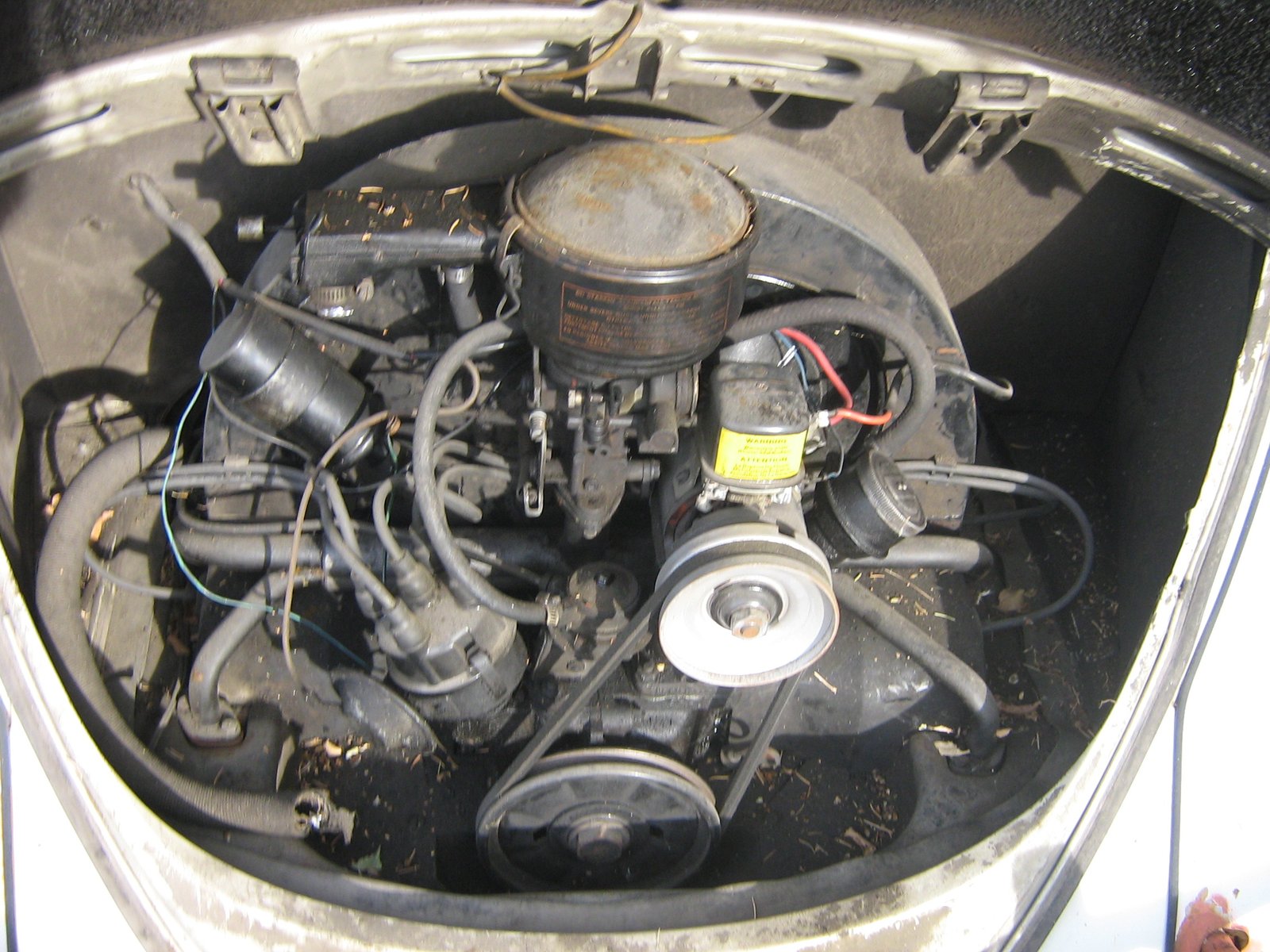
Representative imagery; exact configuration unverified
Explore the 1961 Beetle: perfected simplicity meets Kennedy-era questioning. 34hp of honest engineering when America needed answers. The year VW proved small was enough.
The air-cooled flat-four that powered the 1961 Beetle. Simple, reliable, and endlessly modifiable.
Research current market values for the 1961 Beetle
Hagerty Valuation Tools
Industry-standard classic car values
Bring a Trailer Results
Recent auction prices
TheSamba Classifieds
Current listings & asking prices
Buying tip: Condition is everything. A rusty "project" can cost more to restore than buying a finished car. Check heater channels, floor pans, and battery tray first.
Original paint options available for the 1961 Beetle.
Looking for a 1961 Beetle in Yukon Yellow?
Find for SaleContinue from this 1961 reference to other recorded model years and variants.
Want to see a detailed comparison of multiple vehicles?
Compare all variantsUse retained catalog and code references as a starting point for researching your 1961 Beetle. Applicability remains under review; VWX does not authenticate vehicles.
1961: JFK asked Americans what they could do for their country. Detroit asked how cars could get bigger. The Beetle answered a different question: What if less was enough? The 1961 Type 1 arrived as America's assumptions were crumbling. Kennedy was young. The Cold War was heating. Detroit was chrome-plating everything that didn't move. And here was this German bubble, 34 honest horsepower, refusing to apologize for being small. The Beetle wasn't just transportation—it was a philosophical position paper on wheels. Think Small wasn't just advertising. It was revolution in a rounded package.
The 1961 Beetle was VW's perfectly refined rejection of excess. Factory specs read like a manifesto of minimalism: 1192cc flat-four making 34 DIN horsepower (40 SAE if you're feeling generous), four-speed manual with synchromesh on three gears (first gear liked it rough), swing axle rear suspension that made every corner an adventure. Higher-mounted turn signals because VW thought being seen was more important than being stylish. Rectangular rear window because seeing where you've been matters. Paint colors chosen for timelessness, not trendiness. Everything essential, nothing extra. Detroit was building rocket ships. VW was building confidence.
The 1961 Beetle was the year everything clicked. Twelve years of continuous improvement had refined every component. The 1200cc engine wasn't just reliable—it was bulletproof. The transmission wasn't just functional—it was precise. The interior wasn't just adequate—it was comfortable. VW had spent a decade perfecting the art of systematic improvement. While Detroit changed tailfins annually, VW changed bearing tolerances. While American cars got wider, Beetles got better. The front end redesign wasn't cosmetic—higher turn signals meant better visibility. The improved bumper wasn't styling—it was safety. Every change served function. That's what made 1961 special: it was the year when doing less proved to be more than enough.
1961 was the year America started questioning everything. JFK's New Frontier speech in January. Bay of Pigs in April. Berlin Wall in August. Yuri Gagarin in space. Freedom Riders in the South. The postwar certainties were crumbling. Detroit responded with more chrome, more power, more planned obsolescence. A 1961 Cadillac had fins that could guide missiles. A 1961 Chrysler made enough power to launch them. American cars weren't just transportation—they were rolling metaphors for excess. Enter the Beetle: 34 honest horsepower, no fins, no pretense. While America wrestled with its identity, the Beetle knew exactly what it was. DDB's 'Think Small' campaign wasn't just selling cars—it was offering an alternative philosophy. Question excess. Embrace honesty. Trust engineering over marketing. The timing was perfect: a questioning generation needed a car that had answers.
Driving a 1961 Beetle was a masterclass in mechanical honesty. Zero to 60? Eventually. Top speed? Depends on wind direction and how many passengers ate lunch. But that wasn't the point. The steering told you exactly what the front wheels were doing. The gearshift moved with mechanical precision. The brakes worked when you needed them (mostly). The swing axle rear suspension made every corner interesting—physics doesn't negotiate. Modern drivers find it slow, loud, and primitive. They're missing the point. The 1961 Beetle wasn't about speed—it was about connection. You felt every component working. You understood the machine. That transparency built trust. Modern cars are faster, quieter, safer. But they'll never be more honest.
The 1961 Beetle attracted three types of buyers, all questioning conventional wisdom. First: The Early Adopters—intellectuals, professors, architects who'd been driving Beetles since the '50s. They knew quality when they saw it. Second: The New Questioners—young professionals influenced by Kennedy's call to think differently. They saw the Beetle as practical rebellion. Third: The Pragmatists—value-focused buyers who did the math and realized reliability beat status. What united them? They all questioned Detroit's bigger-is-better orthodoxy. They all appreciated engineering over marketing. They all understood that 34 horsepower was enough if you weren't trying to compensate for something. The Beetle wasn't just a car choice—it was an identity statement.
The 1961 Beetle represented peak refinement of the original concept. Since 1949, VW had improved everything without changing anything fundamental. The 1200cc engine gained reliability but kept its character. The transmission got synchromesh but stayed mechanical. The body grew a rectangular rear window but remained instantly recognizable. The front end was updated for safety but kept its personality. This wasn't evolution for marketing—it was evolution for improvement. Every change served function. Nothing changed for style. The result was a car that could park next to its 1949 ancestor and look related but refined. That's not evolution—that's integrity. The 1961 model year set the template that would carry through until the big changes of 1966. It was the last year of pure, uncompromised Beetle philosophy.
In 2025, a good 1961 Beetle costs more than it did new—inflation aside, irony is expensive. Perfect examples command $30,000-40,000. Driver-quality cars range from $15,000-25,000. Projects start around $5,000, but rust never sleeps and German steel is expensive. Why these prices? Because 1961 represents peak classic Beetle: refined enough to drive regularly, vintage enough to matter, honest enough to matter more. Investment potential? Steady appreciation likely—questioning excess never goes out of style. But buy it because you get it, not because your portfolio needs it. The best Beetles go to owners who understand what 34 horsepower meant in 1961. And still means today.
Restoring a 1961 Beetle requires understanding what you're preserving: mechanical honesty, systematic refinement, questioning spirit. Common issues? Rust (everywhere), floor pans (always), heater channels (naturally), engine tin (obviously). Parts availability is excellent—VW's standardization pays off decades later. The 1200cc engine rebuilds easily if you respect its simplicity. Transmission synchros can be sourced. Body panels exist. Interior parts reproduce well. But authenticity matters: correct engine case numbers, proper paint codes, original-style materials. The 1961's special front-end pieces demand premium prices. Don't modernize what doesn't need it. The point isn't making it better—it's preserving what made it honest. Budget? $30,000-50,000 for perfection. Half that for driver quality. Double that if you find rust. Which you will.
The 1961 Beetle wasn't the fastest, newest, or most powerful car of its year. It wasn't trying to be. While America questioned its assumptions, the Beetle provided answers through engineering: Small is enough. Simple is sophisticated. Honesty beats hype. Thirty-four horsepower can change minds if not land speed records. The 1961 model year caught lightning in a rounded bottle: peak refinement meeting peak cultural relevance. It was the Beetle at its most honest meeting America at its most questioning. That's why it matters. That's why it still runs. That's why we're still talking about it. Sometimes the best answers are the smallest ones.