1963 Standard Sedan
1192cc40 HP
View Details
Reference review: source-recorded details; historical accuracy has not been comprehensively verified.
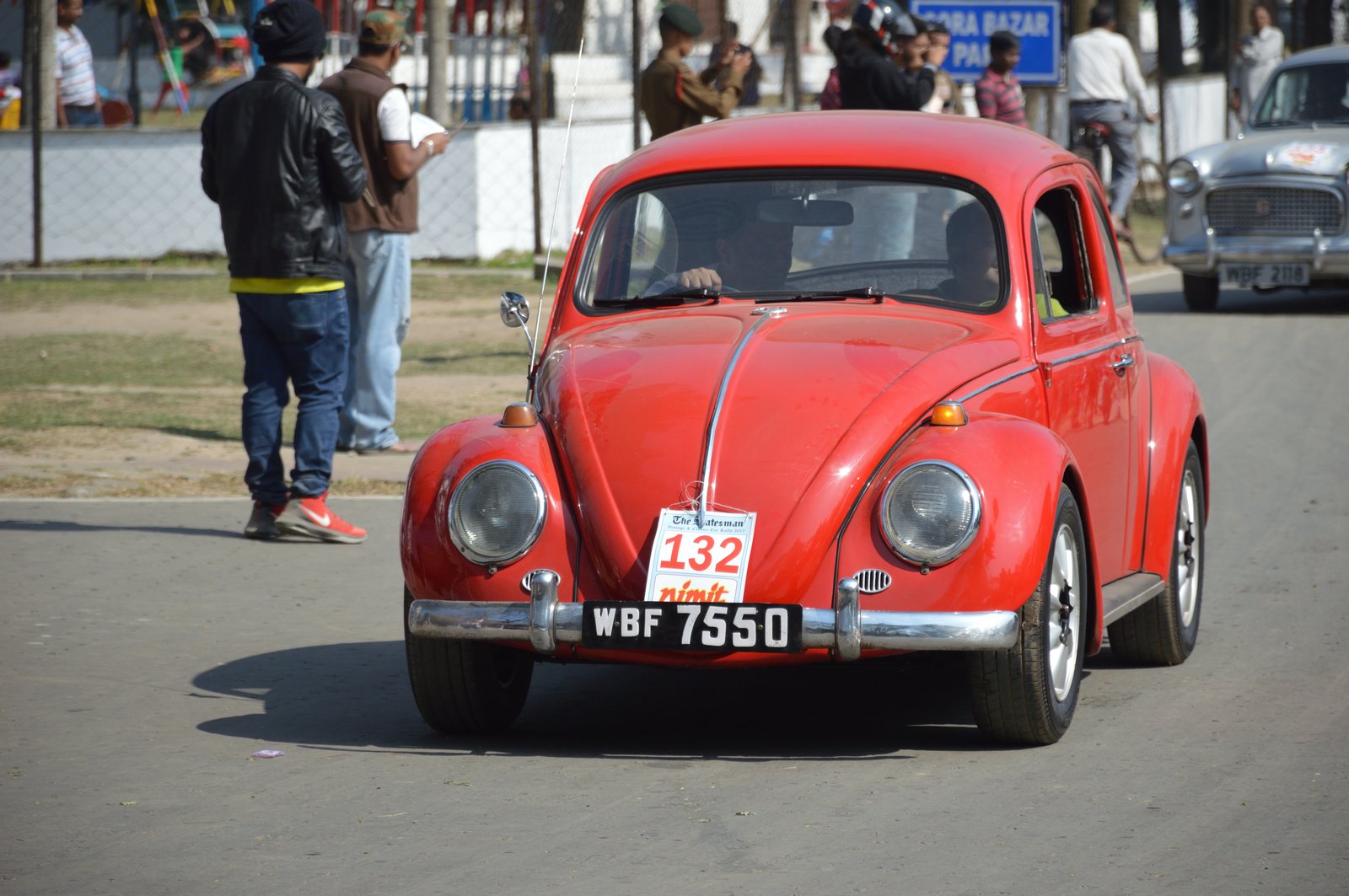
1192cc • 40 HP • 2-door sedan
Explore the 1964 Beetle: 40hp of pure conviction, unchanged design in a changing world. When The Beatles met Das Auto. Cultural icon meets engineering truth.

Featured story
The 1964 Standard Sedan is the only 1964 record with a story on file. Source candidate · under review.
Open the Standard Sedan record964: The Beatles landed at JFK, America discovered British accents were cool, and teenagers started questioning everything their parents believed. Detroit responded by making cars bigger, faster, shinier. VW responded by changing... nothing.
The 1964 Beetle was gloriously, defiantly, almost radically identical to the 1963 model. Same curves. Same simplicity. Same dedication to getting it right instead of making it new. In a year when everything was revolutionary, the Beetle's revolution was refusing to revolve.
It wasn't stubbornness—it was conviction. While America reinvented itself monthly, the Beetle suggested maybe some things were worth keeping. The irony? By not changing, it became a symbol of change.
Displacement
Power
From the 1964 Standard Sedan record.
The 1964 Beetle was 40 horsepower of pure conviction wrapped in metal that knew exactly what it was:
VW positioned it exactly where it had always been: the intelligent choice for people who valued intelligence over chrome. The price stayed reasonable ($1,595), the quality kept improving, and the marketing kept telling the truth. How revolutionary.
The 1964 Beetle's special sauce wasn't what changed—it was what didn't. While Detroit reinvented grilles annually, VW perfected panel gaps. While American cars grew fins, the Beetle grew better.
The 1300cc engine option arrived mid-year—first displacement increase since 1954. Not because marketing wanted it. Because engineering said it was ready. The extra power wasn't about racing; it was about climbing hills without embarrassment.
Quality control reached new heights. Wolfsburg's obsession with perfection meant every bolt, every weld, every panel fit better than ever. The paint depth was measured in microns. The chrome was applied by perfectionists. Even the owner's manual was a masterpiece of German technical clarity.
But the real special sauce? In 1964, not changing meant something. It meant rejecting planned obsolescence. It meant believing in engineering over marketing. It meant being counter-cultural without trying.
From the 1964 Standard Sedan record.
1964 was the year America discovered revolution could have a British accent. The Beatles landed in February, performed on Ed Sullivan, and suddenly teenagers realized authority could be questioned with a smile. The Civil Rights Act passed in July. The Gulf of Tonkin incident escalated Vietnam. Bob Dylan went electric. Everything was changing.
Detroit responded with more of everything: more power (GTO), more luxury (Imperial), more chrome (everything else). Cars were becoming statements about excess, about power, about the American dream supersized.
Enter the Beetle. Its unchanging design became a statement against statements. Its honest advertising (thanks to DDB's 'Think Small' campaign) became truth-telling in an era discovering truth was radical. Its simplicity became philosophical position: reject excess, embrace enough.
The counterculture was just beginning. College students were starting to question capitalism, consumerism, conformity. The Beetle—designed in the 1930s—somehow became their perfect vehicle. Not because it tried to be revolutionary, but because it simply was what it was.
The zeitgeist was shifting from 'bigger is better' to 'what if it isn't?' The Beetle was ready, having asked that question since 1949.
In 1964, the Beetle drove like engineering philosophy made metal. The steering was direct because direct meant honest. The pedals were firm because firm meant control. The shifter clicked through gears like German clockwork—precise, mechanical, satisfying.
The 40hp engine wasn't quick (0-60 in... eventually). But it was willing. The air-cooled thrum was mechanical meditation. Highway speed was possible, sustained speed was reliable, and passing required planning and patience. Zen before Zen was cool.
Today? Driving a '64 Beetle is time travel. Everything talks to you: the steering wheel telegraphs road texture, the pedals have conversation, the shifter expects commitment. Modern cars isolate. The '64 Beetle connects.
It's slow by 2025 standards. Glacially, gloriously slow. But that's the point. You don't drive a '64 Beetle to get somewhere fast. You drive it to remember when getting there was the whole point.
The 1964 Beetle attracted three distinct tribes:
The Rationalists: Engineers, professors, people who appreciated mechanical honesty and logical design. They bought Beetles because marketing couldn't fool them, and VW didn't try.
The Early Adopters of Less: Young professionals discovering that rejecting excess could be sophisticated. They read 'Think Small' ads and thought bigger thoughts. The Beetle was their four-wheeled manifesto.
The Accidental Revolutionaries: College students, young teachers, people about to invent the counterculture. They bought Beetles because they were cheap and honest. The revolution came standard.
What united them? They all chose the Beetle not despite what it wasn't, but because of what it was. In 1964, that was becoming a revolutionary act.
The 1964 Beetle's evolution was almost invisible—exactly as intended:
1961: Larger rear window introduced 1962: Improved transmission synchromesh 1963: Better heater ducts (still inadequate) 1964: First gear synchronization, 1300cc option
The real evolution was in precision. Every year, tolerances got tighter. Paint got better. Assembly got more precise. The Beetle wasn't evolving its design—it was evolving its execution.
Compared to 1954? Better in every measurable way. Compared to 1963? You needed calipers and stopwatches to find differences. That was the point.
VW's philosophy: Perfect what works. Detroit's philosophy: Change everything annually. History suggests one approach lasted longer.
In 2025, a 1964 Beetle sits at the perfect intersection of collectibility and usability:
Values (USD):
Why these numbers? The '64 combines bulletproof engineering, peak build quality, and perfect cultural timing. It's pre-smog, post-early-bugs, and exactly when the Beetle became more than transportation.
Investment outlook? Rising. As early Beetles cross $50k, the '64 looks increasingly attractive. Buy now, drive it, watch value climb. Or just drive it. That was always the point.
Restoring a '64 Beetle is like reading German engineering philosophy in metal:
Common Issues:
Parts availability? Excellent. The Beetle's popularity means everything exists. The challenge is choosing quality:
Advice:
Difficulty level? Moderate. Everything is logical, documented, and available. Just expensive.
The 1964 Beetle is perfect because it wasn't trying to be. While America was reinventing itself, the Beetle was simply being itself. That turned out to be revolutionary.
It's the Beetle to buy if:
It's not for you if:
The Beatles changed everything in 1964. The Beetle proved some things don't need changing. Both were right.
1,199 words • ~6 min read
Research current market values for the 1964 Beetle
Hagerty Valuation Tools
Industry-standard classic car values
Bring a Trailer Results
Recent auction prices
TheSamba Classifieds
Current listings & asking prices
Buying tip: Condition is everything. A rusty "project" can cost more to restore than buying a finished car. Check heater channels, floor pans, and battery tray first.
Identity under review
This story
Some of this works today. Some of it is still an idea. The chips say which.