1965 Standard Sedan
1285cc
View Details
Reference review: source-recorded details; historical accuracy has not been comprehensively verified.
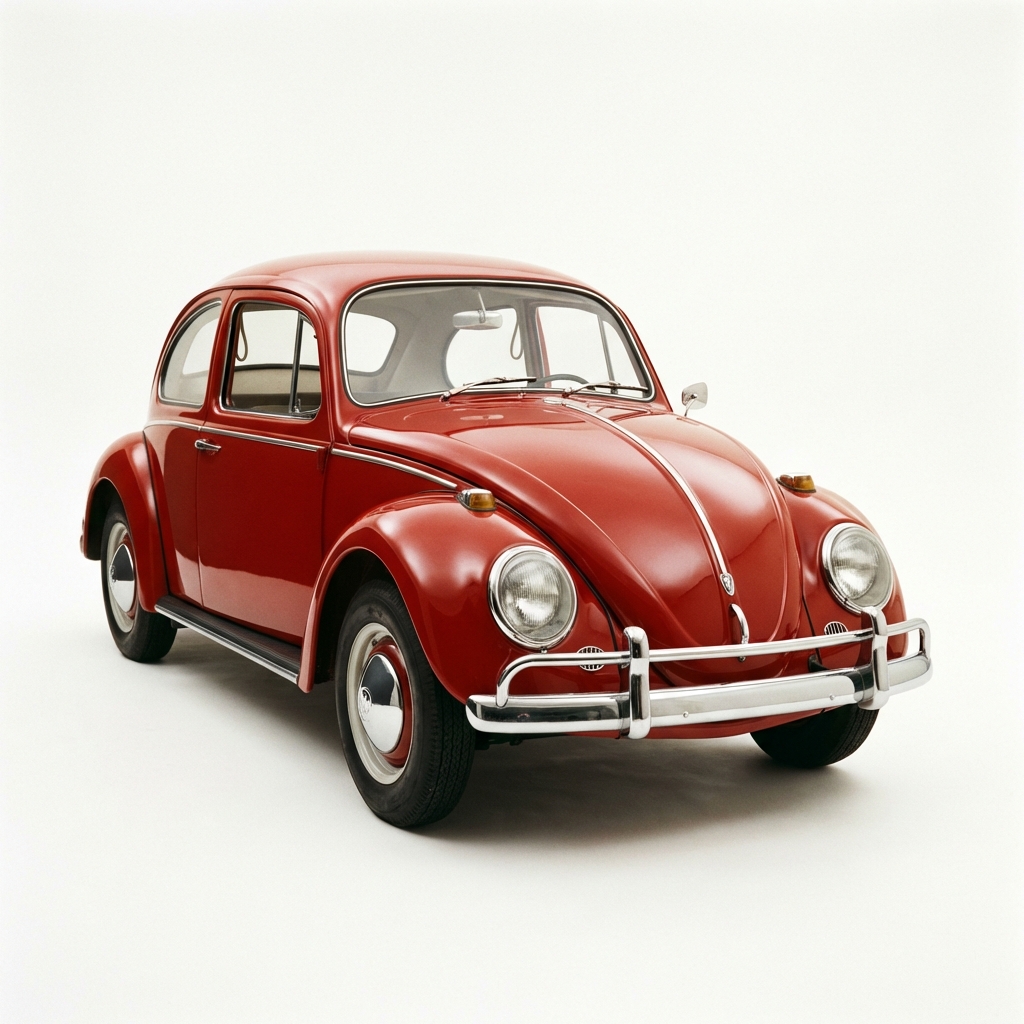
2-door sedan
Explore the 1966 Beetle: 1300cc power meets counterculture spirit. The year VW's honest engineering became philosophical statement. From protests to communes, the icon emerges.
Representative imagery. Depicted year, configuration and image rights remain unverified.

Featured story
The 1966 Standard Sedan is the only 1966 record with a story on file. Source candidate · under review.
Open the Standard Sedan record966: Timothy Leary preaching consciousness expansion, Ken Kesey's bus touring America, Vietnam protests growing. The counterculture was gathering momentum but hadn't exploded yet. And there, parked at every college campus, folk club, and forming commune: The Volkswagen Beetle. Not just transportation anymore—something else. Something bigger.
VW didn't plan this. They were just building honest cars while Detroit chased chrome dreams. Mid-year, they added the 1300cc engine option—50 honest horsepower instead of 40. Not because the times demanded it. Because their engineering said it was ready.
The timing was perfect. Just as young America started questioning everything, here was a car that questioned everything first: planned obsolescence, marketing hype, the bigger-is-better gospel. The 1966 Beetle wasn't trying to be revolutionary. It was just being itself. That's why the revolution chose it.
The 1966 Beetle came in two flavors: the proven 1200cc (40hp) and the mid-year surprise—1300cc (50hp). Both paired with a 4-speed manual transmission that felt like mechanical meditation. Both looked identical because VW believed in evolution, not revolution.
Key specs (because even countercultures need data):
The body? Pure Beetle. Large rear window, minimal chrome, honest curves. While Detroit added fins, VW subtracted doubt.
The 1966 Beetle wasn't special because it changed everything—it was special because it changed nothing while everything else changed. Detroit was building 400-horsepower statements of excess. VW added 10 horsepower and called it progress.
The 1300cc engine wasn't just more displacement—it was VW admitting that maybe, just maybe, American highways deserved a little more power. The larger bore (77mm to 83mm) kept the same stroke, like a boxer learning to punch harder without losing technique.
But the real magic? Timing. The Beetle's values—honesty, simplicity, anti-materialism—aligned perfectly with the gathering counterculture. VW wasn't trying to be revolutionary. They were just building cars the way they always had: no planned obsolescence, no marketing lies, no chrome dreams. In 1966, that engineering philosophy became political statement.
The expanded color palette wasn't fashion—it was freedom. New reds, blues, and greens that said 'express yourself' in German engineering accent. Even the interior refinements (better vinyl, improved seats) weren't luxury—they were longevity.
From the 1966 Standard Sedan record.
1966 was the last normal year before everything changed. The Beatles released 'Revolver,' exploring consciousness through studio tricks. The Beach Boys answered with 'Pet Sounds,' proving complexity could be beautiful. Bob Dylan went electric and folk purists cried betrayal. The counterculture was tuning up but hadn't started the show.
Detroit's answer to cultural shifts? More power. The GTO, Chevelle SS, and Mustang GT offered 400+ horsepower declarations of conventional values. Chrome was religion. Annual styling changes were gospel. Planned obsolescence was business model.
The Beetle became accidental prophet. College students chose it because it rejected consumer culture. Civil rights workers chose it because it was honest transport for honest work. Folk musicians chose it because, like their music, it stripped away artifice. The car that made no statements became the strongest statement.
DDB's 'Think Small' campaign wasn't just advertising—it was anthropology. Each ad validated rejection of excess, celebrated engineering over marketing, elevated honesty above hype. In 1966, that wasn't just selling cars—it was articulating philosophy before the philosophers arrived.
By year's end, the Beetle wasn't just parked at protests—it was part of the protest. The car that questioned automotive excess became symbol for questioning everything.
In 1966, driving a Beetle was mechanical meditation. The steering had no power assistance because VW believed in human power. The clutch pedal required intention because relationships take work. The gearshift felt like a mechanical handshake—firm, direct, honest.
The 1300cc engine transformed highway personality. Passing trucks went from prayer to possibility. Hills became challenges rather than ordeals. Fifth gear remained fantasy, but fourth gear became friend.
Today? Driving a '66 Beetle is time travel. Modern cars isolate you from mechanical reality. The Beetle connects you to every engineering decision. The steering talks. The pedals have opinions. The engine speaks air-cooled German behind you.
It's slow by 2025 standards—zero to sixty happens eventually. But speed isn't the point. The point is mechanical honesty in an era of digital lies. Every mile in a '66 Beetle is rebellion against planned obsolescence.
1966 Beetle buyers fell into three tribes, each rejecting something different:
The Campus Revolutionaries:
The Practical Rebels:
The Early Adopters:
Price? $1,639 base, $1,789 with the 1300cc engine. Not cheap, not expensive—honest.
The 1966 Beetle represented peak evolutionary refinement before the Summer of Love changed everything. Seventeen years of constant improvement had created mechanical perfection through iteration:
1949: Basic transportation 1954: More power, better synchros 1958: Larger windows, refined interior 1961: Larger engine option begins 1965: Large rear window standardized 1966: 1300cc option arrives mid-year
Each change was evolutionary, not revolutionary. VW believed in refining what worked rather than replacing what didn't fail. The 1300cc engine followed this philosophy—more power through intelligent development, not radical redesign.
The 1966 model shared DNA with every Beetle before it. Parts interchanged. Repairs remained owner-accessible. Engineering principles stayed consistent. This wasn't resistance to change—it was respect for proven solutions.
2025 Values (because even counterculture icons have price tags):
Show Quality: $25,000-35,000
Excellent: $18,000-25,000
Good Driver: $12,000-18,000
Project Car: $5,000-12,000
Investment outlook? Rising. The '66 represents peak pre-Summer of Love engineering with emerging counterculture significance. Buy now, before the market fully understands.
Restoring a '66 Beetle is like archaeological meditation. Common issues:
Rust Archaeology:
Mechanical Mysteries:
Parts availability ranges from 'abundant' to 'vision quest':
Restoration tips:
Difficulty level: Intermediate meditation. Perfect for questioning consumer culture while learning mechanical truth.
The 1966 Beetle was the perfect car at the perfect moment—honest engineering meeting philosophical revolution. It didn't try to be significant. It just was.
Who should buy one?
Who shouldn't?
The 1966 Beetle wasn't the fastest, newest, or most powerful car of its year. It was just the most honest. In 1966, that was revolutionary enough.
1,300 words • ~7 min read
Research current market values for the 1966 Beetle
Hagerty Valuation Tools
Industry-standard classic car values
Bring a Trailer Results
Recent auction prices
TheSamba Classifieds
Current listings & asking prices
Buying tip: Condition is everything. A rusty "project" can cost more to restore than buying a finished car. Check heater channels, floor pans, and battery tray first.
Identity under review
This story
Some of this works today. Some of it is still an idea. The chips say which.