1966 Standard Sedan
View Details
Reference review: source-recorded details; historical accuracy has not been comprehensively verified.
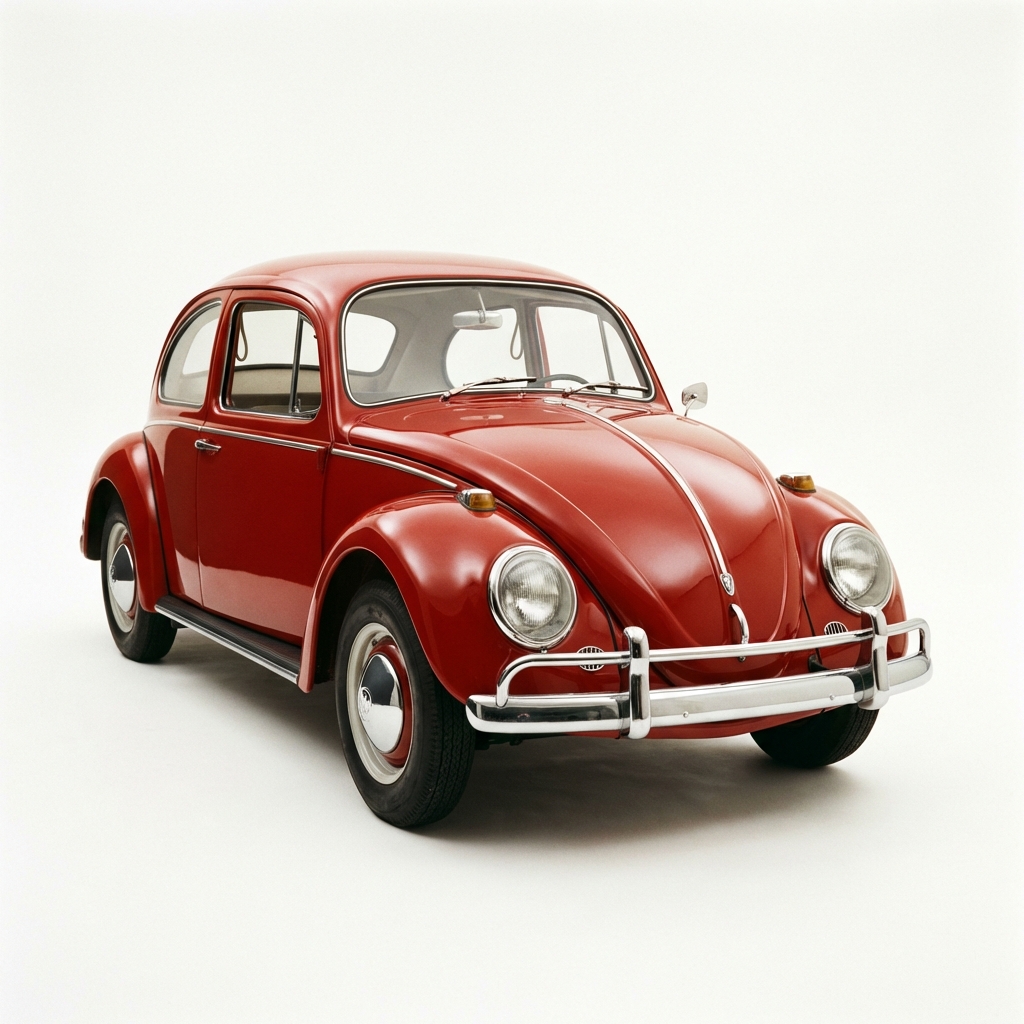
1500cc • 2-door sedan
Explore the 1967 Beetle: 1500cc dual-port power, counterculture icon status, and the year VW perfected minimalism. When Detroit zigged, Wolfsburg zagged.
Representative imagery. Depicted year, configuration and image rights remain unverified.

Featured story
The 1967 Standard Sedan is the only 1967 record with a story on file. Source candidate · under review.
Open the Standard Sedan record967: The Summer of Love exploding, Vietnam protests intensifying, and Detroit building ever-bigger engines. VW's response? The same car they'd been building since 1949—only better. The '67 Beetle wasn't a revolution. It was a revelation. While America supersized everything, VW refined nothing. The 1500cc engine made 53 horsepower—a number that would've embarrassed Detroit's marketing department. The body looked identical to 1966. The interior remained spartan. The heater still barely worked. VW wasn't just ignoring the horsepower race; they were running in the opposite direction. It was the perfect car for an era questioning everything. The counterculture didn't choose the Beetle. The Beetle chose the counterculture.
Displacement
0-60 mph
Compression ratio
From the 1967 Standard Sedan record.
The '67 Beetle was minimalism perfected. Let's count what you didn't get: No power steering (who needs it at 1,800 pounds?). No automatic transmission (shift it yourself, feel something). No radiator (air is free). No pretense (that was extra). What you did get: 1500cc flat-four making 53 honest horsepower, dual-port heads for better breathing, 12-volt electrical system (welcome to the future), ball-joint front suspension, and the best heater VW had ever built (which is like being the tallest jockey). The body was pure Beetle—steel, simple, shaped by wind tunnels before anyone cared about aerodynamics. Inside: vinyl seats, four-speed manual, two-speed wipers, and the world's most optimistic fuel gauge. The trunk was in front. The engine was in back. Logic was optional.
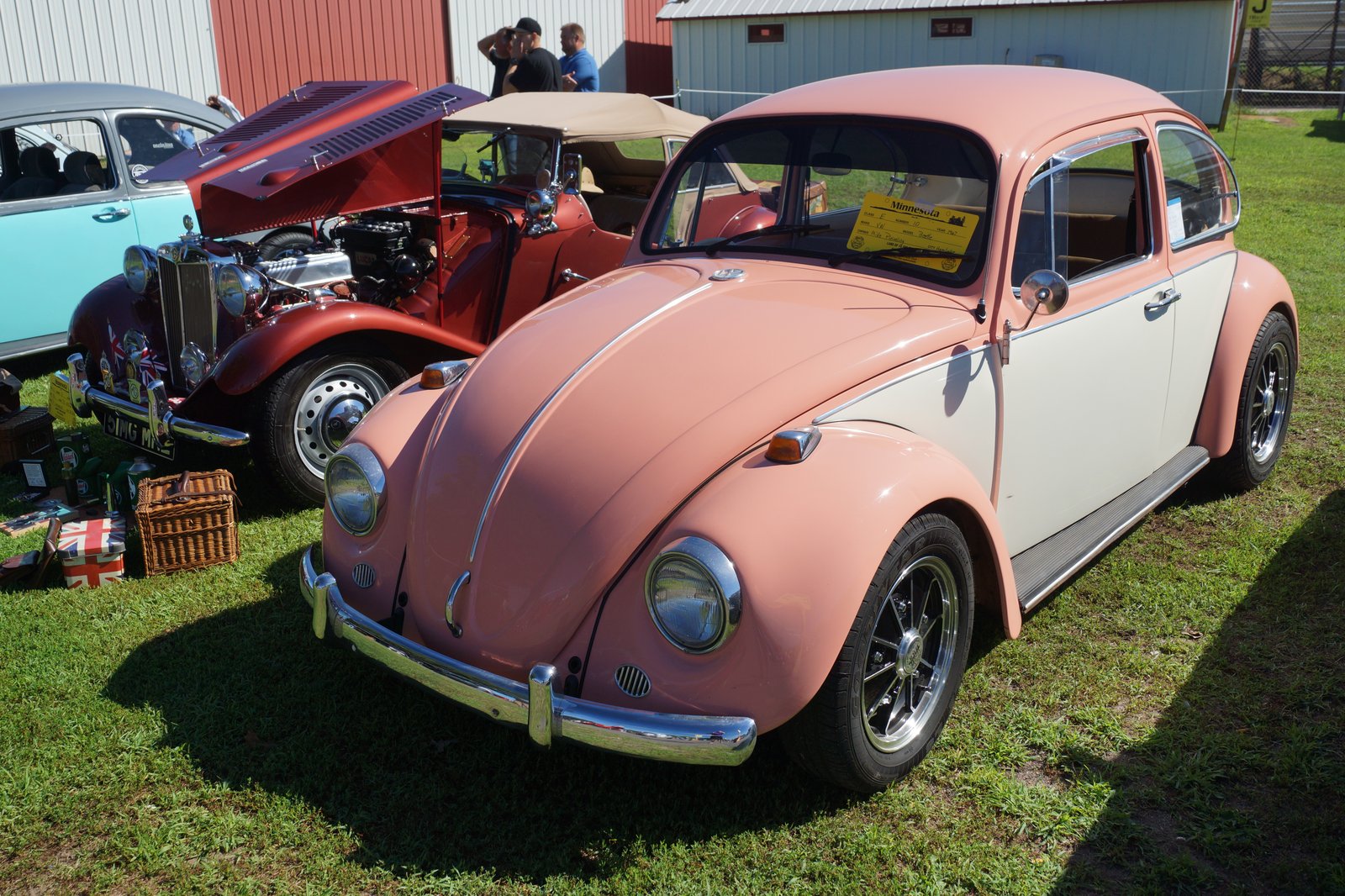
The '67 was the Beetle hitting its stride. The 1500cc engine with dual-port heads transformed the car from slow to... less slow. But that misses the point. The dual-port design meant better breathing, smoother power delivery, and the ability to maintain speed on hills without downshifting to first and praying. The 12-volt electrical system meant reliable starting and headlights that actually illuminated things. The ball-joint front end improved handling without compromising the Beetle's character. It was still a Beetle, just... better. VW had spent 18 years refining the same basic car. In '67, they nailed it. Not with revolution, but with relentless evolution. While Detroit reinvented their cars annually, VW kept polishing the same diamond. It wasn't perfect. It was better than perfect—it was honest.
From the 1967 Standard Sedan record.
1967 was the year America's postwar consensus cracked. Vietnam divided the nation. The counterculture questioned everything. Detroit was building 400-horsepower muscle cars while students protested war. Gas was cheap, cars were huge, and the American Dream came with a V8. Enter the Beetle—small when everything was big, simple when complexity was king, honest when marketing was mastering the art of beautiful lies. The Beetle became counterculture transport not through marketing but through alignment. It rejected excess naturally. It embraced utility honestly. It was the automotive equivalent of sitting out the rat race. The Summer of Love needed wheels. The Beetle was there, unchanged, uncompromised, unapologetic. Jefferson Airplane bought them. College students bought them. Artists bought them. Not because VW marketed to the counterculture—VW was too square for that—but because the car's values perfectly matched the moment. Sometimes the zeitgeist chooses you.
In 1967, the Beetle drove like nothing else. That was both good and bad. The 53-horsepower engine moved you with determined indifference. Zero to 60 happened... eventually. But the chassis was light, the steering direct, and the four-speed gearbox a masterclass in mechanical satisfaction. It understeered until it oversteered—sometimes in the same corner. The brakes worked through philosophical reasoning rather than hydraulic force. Today? It's a time machine. Modern traffic makes 53 horsepower feel theoretical. But the experience is pure. No power steering means you feel everything. No sound insulation means you hear the flat-four's determined thrash. The heater still doesn't work. The wipers still quit in heavy rain. It's glorious. You don't drive a '67 Beetle to get somewhere. You drive it to remember when getting there was the whole point.
The '67 Beetle attracted three distinct tribes: First, the Rationalists—teachers, professors, engineers who appreciated the mechanical honesty and logical design. They bought the Beetle with their heads. Second, the Counterculture—students, artists, musicians who saw the car's rejection of excess as a rolling statement. They bought with their hearts. Third, the Pragmatists—families who needed reliable, affordable transport and didn't care about horsepower races or cultural statements. They bought with their wallets. Price? $1,769 new. Less than half the average American car. VW's marketing spoke to the Rationalists, but the car spoke to everyone else. The Beetle transcended its marketing. It became what you needed it to be—transportation, statement, or both. In 1967, that was revolutionary.
The '67 represented Peak Beetle—the perfect evolution of the original concept. The journey there: 1961 brought the larger engine (1200cc). 1965 gave us the ball-joint front suspension. 1966 added the 1300cc option. Then 1967: 1500cc dual-port, 12-volt electrics, better heating (relatively speaking). After '67, changes were mostly regulatory—emissions controls, safety features, bigger bumpers. The purity peaked here. The platform was unchanged—same torsion bar suspension, same flat-four architecture, same basic body. But every component had been refined, improved, perfected. The '67 wasn't the last great Beetle. But it was the last pure one. Everything after was compromise with progress.
Today, the '67 Beetle sits in value purgatory—not old enough to be 'early,' not new enough to be 'last.' That's good news for buyers. Market values (2025): Show-quality cars: $25,000-35,000. Excellent drivers: $15,000-25,000. Good drivers: $8,000-15,000. Projects: $3,000-8,000. Buy the best you can afford. These cars reward quality. Investment potential? Steady. The '67 is the sweet spot—best of the pure Beetles, before federal regulations changed everything. Values will rise, but you're buying experience, not appreciation. That's exactly how it should be.
Restoring a '67 Beetle is like building a German puzzle with American tools and Mexican parts. Common issues: Heater channels rust (check with a magnet, then check again). Floor pans dissolve (they all do). Engine tin corrodes. Wiring gets creative. Good news? Every part exists. Bad news? Quality varies wildly. Buy German when you can. Brazilian when you must. Never Chinese. The 12-volt conversion is already done (thanks, 1967). Parts sources: Wolfsburg West, CIP1, German suppliers for sheet metal. Budget reality: $20,000 minimum for a proper restoration. Double that if you're paying someone else. Triple that if you want perfection. But here's the truth: These cars were built to be fixed. Basic tools, basic skills, and patience will keep one running. Perfect is the enemy of driving.
The 1967 Beetle is the one to buy if you want the purest expression of the air-cooled idea. It's the best of the simple ones, before safety and emissions regulations complicated everything. It's slow. It's noisy. The heater is theoretical. Buy one anyway. In a world of digital everything, the '67 Beetle is gloriously analog. It demands attention, rewards skill, and teaches patience. It's the automotive equivalent of vinyl records—not because it's better, but because it's more honest. Perfect for an era rediscovering authenticity. Just check those heater channels first.
1,134 words • ~6 min read
Research current market values for the 1967 Beetle
Hagerty Valuation Tools
Industry-standard classic car values
Bring a Trailer Results
Recent auction prices
TheSamba Classifieds
Current listings & asking prices
Buying tip: Condition is everything. A rusty "project" can cost more to restore than buying a finished car. Check heater channels, floor pans, and battery tray first.
Identity under review
This story
Some of this works today. Some of it is still an idea. The chips say which.