1500cc
Displacement
53HP
Power
N/A
Top Speed

Real Stories

1949 VW Split Window Beetle - German Border Patrol
11:49

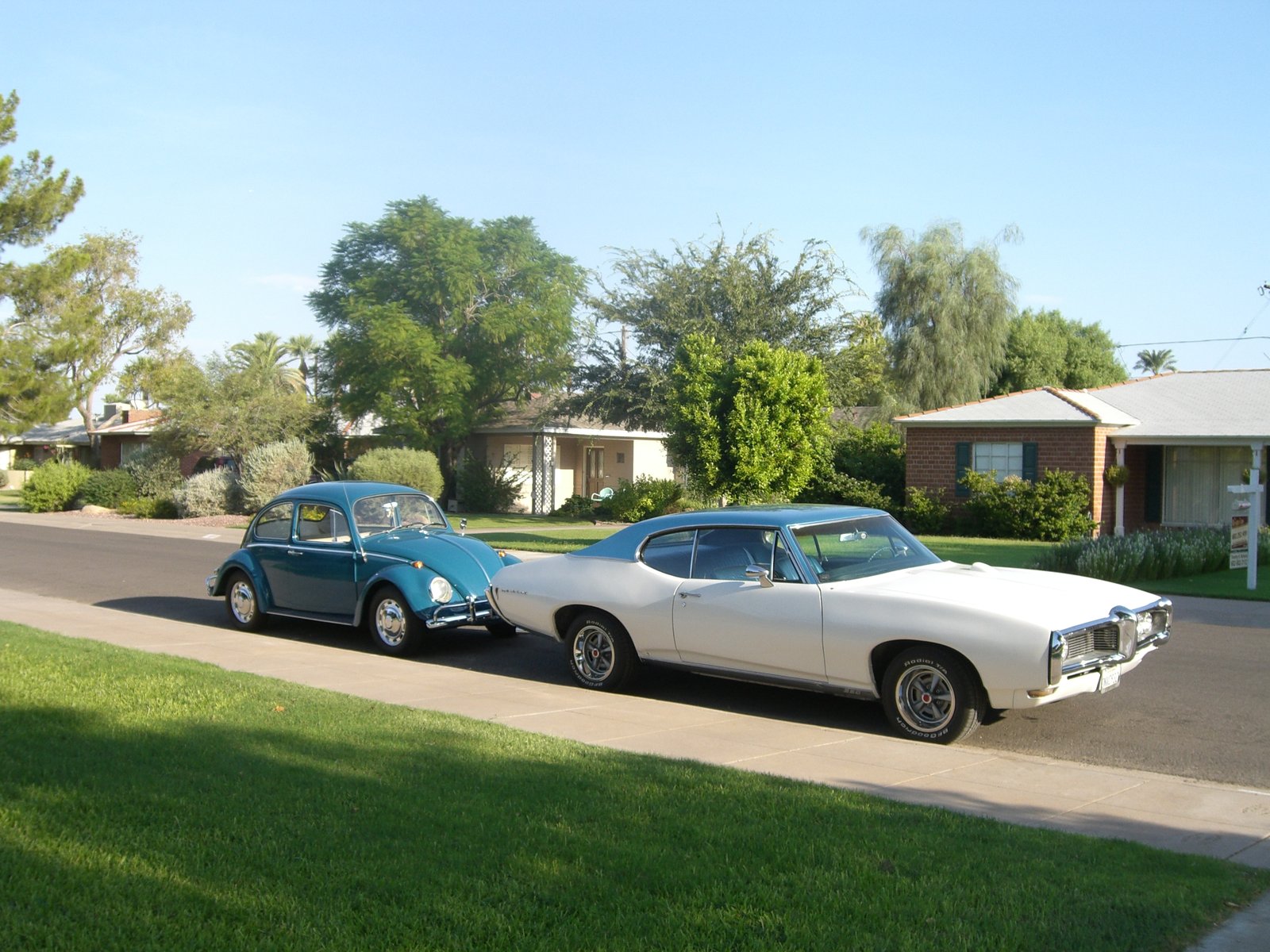
1968 Beetle

1968: Everything changed. Martin Luther King assassinated in April. Robert Kennedy assassinated in June. Vietnam Tet Offensive shattered optimism about war's end. Democratic Convention in Chicago erupted in violence. Nixon elected promising "law and order." Student protests shut down Columbia University. Paris exploded in worker-student rebellion. Prague Spring crushed by Soviet tanks. Mexico City Olympics marred by massacre. Apollo 8 orbited the moon while Earth descended into chaos. Everything felt broken, uncertain, violent. Except Beetles kept starting. Kept running. Kept delivering predictable transportation while the world shattered. That mechanical certainty felt like philosophical anchor when everything else felt uncertain.

Read the Full Story

Engineering.

The air-cooled flat-four that powered the 1968 Beetle. Simple, reliable, and endlessly modifiable.

1500cc

Air-cooled flat-4

The air-cooled flat-four engine that powered a generation. Code H.

Power
53 HP
Fuel
Carburetor

Highlights.

Feature

Feature 1

Part of the classic air-cooled era

Feature

Feature 2

Review historical context for verification

Feature

Total Production

Needs verification

Feature

Numbers Matching Value Premium

20-40% increase over non-matching examples

Quick Facts — 1968 Beetle

  • Total ProductionNeeds Review

    Needs verification

    Production data not available in current dataset

  • Numbers Matching Value PremiumNeeds Review

    20-40% increase over non-matching examples

    Market data suggests premium, but varies by condition and documentation

All specifications are approximate and based on factory documentation. Individual vehicles may vary due to regional specifications, options, or modifications.

Values and market data are estimates based on recent sales and should not be used for insurance or financial decisions without professional appraisal.

Top Questions — 1968 Beetle

Refer to the specifications section above for the engine code used in the 1968 Beetle. The engine code is typically stamped on the engine case above the generator. For verification assistance, use our M-Code decoder tool.

Confidence: medium — This information should be verified with additional sources.

Sources

  • VWX Reference: VWX Database - 1968 Beetle

The value of a 1968 Beetle varies significantly based on condition, originality, and documentation. Driver-quality examples typically range from lower values, while excellent restored or numbers-matching examples command premiums. Condition, originality, and documentation are the primary value drivers. Always get a professional appraisal for insurance or sale purposes.

Confidence: low — This information requires verification before use.

Sources

  • VWX Reference: VWX Database - 1968 Beetle

1968 Beetle models were produced at various Volkswagen factories worldwide. Check the production details above for specific factory information. The factory code can often be identified through chassis number analysis.

Confidence: medium — This information should be verified with additional sources.

Sources

  • VWX Reference: VWX Database - 1968 Beetle

The 1968 Beetle received several updates from the 1967 model. Refer to the specifications and editorial sections above for detailed information about year-to-year changes. Changes may include mechanical updates, safety features, or cosmetic refinements.

Confidence: medium — This information should be verified with additional sources.

Sources

  • VWX Reference: VWX Database - 1968 Beetle

Common rust areas on air-cooled Volkswagens include heater channels (under running boards), floor pans (especially front and battery tray area), front beam (suspension mounting point), rear chassis/apron (where bumper mounts), and door bottoms. The heater channels are structural and expensive to repair. Always inspect these areas carefully before purchase.

Sources

  • VWX Reference: VWX Database - 1968 Beetle

The 1969 Beetle received updates from the 1968 model. Check the specifications section above for details about year-to-year evolution. Common changes across model years include safety updates, mechanical refinements, and regulatory compliance features.

Confidence: medium — This information should be verified with additional sources.

Sources

  • VWX Reference: VWX Database - 1968 Beetle

A full rotisserie restoration typically costs $25,000-$50,000+ depending on condition and level of finish. Mechanical refresh (engine, brakes, suspension) runs $5,000-$12,000. Bodywork and paint alone can be $8,000-$15,000 for quality work. DIY restorations save labor but require significant time investment (500-1,000 hours). Parts availability is generally good for classic VWs, which helps control costs.

Confidence: low — This information requires verification before use.

Sources

  • VWX Reference: VWX Database - 1968 Beetle

Numbers matching (original engine, transmission, and chassis) typically increases value by 20-40% over non-matching examples. However, the premium varies based on overall condition, documentation, and market demand. Use our numbers matching verification tool to check your vehicle.

Confidence: medium — This information should be verified with additional sources.

Sources

  • VWX Reference: VWX Database - 1968 Beetle

A well-maintained 1968 Beetle can serve as a daily driver, but consider the age of the vehicle. Modern traffic, safety features, and reliability expectations differ from the era. Regular maintenance, mechanical knowledge, and realistic expectations are essential. Many owners use classic VWs as weekend drivers or hobby vehicles rather than primary transportation.

Confidence: medium — This information should be verified with additional sources.

Sources

  • VWX Reference: VWX Database - 1968 Beetle

Yes, parts availability for classic air-cooled Volkswagens is generally excellent. The large enthusiast community and aftermarket support mean most mechanical and body parts are readily available. Some year-specific trim pieces or rare options may be harder to find, but the core mechanical components are well-supported.

Sources

  • VWX Reference: VWX Database - 1968 Beetle

Why This Year Matters

Needs Review
  • Part of the classic air-cooled era
  • Review historical context for verification
Collector AppealMedium
Restoration ComplexityMedium
Daily Driver SuitabilityMedium

Cultural context requires editorial review and verification

Valuation Resources

Research current market values for the 1968 Beetle

Buying tip: Condition is everything. A rusty "project" can cost more to restore than buying a finished car. Check heater channels, floor pans, and battery tray first.

Which 1968 Beetle fits your style?

Explore the variants available for this model year and find your perfect match.

Want to see a detailed comparison of multiple vehicles?

Compare all variants

Verify Authenticity

Numbers matching verification increases value by 20-40%. Use our tools to verify engine codes, chassis numbers, and M-codes for your 1968 Beetle.

Correct Engine CodeH

The Full Story

Introduction

1968: Everything changed. Martin Luther King assassinated in April. Robert Kennedy assassinated in June. Vietnam Tet Offensive shattered optimism about war's end. Democratic Convention in Chicago erupted in violence. Nixon elected promising "law and order." Student protests shut down Columbia University. Paris exploded in worker-student rebellion. Prague Spring crushed by Soviet tanks. Mexico City Olympics marred by massacre. Apollo 8 orbited the moon while Earth descended into chaos. Everything felt broken, uncertain, violent. Except Beetles kept starting. Kept running. Kept delivering predictable transportation while the world shattered. That mechanical certainty felt like philosophical anchor when everything else felt uncertain.

What It Was

The 1968 Beetle looked fundamentally unchanged from 1967—deliberate consistency that felt increasingly meaningful. Nineteen years of visual continuity had created timeless design that transcended trends. The rounded fenders, upright roofline, minimal chrome—these proportions looked right because they'd always been right. While American car culture fragmented into muscle car aggression and luxury car excess, the Beetle's restraint looked more purposeful every year. The design didn't change because it didn't need to. It had been honest all along.

Paint colors in 1968 continued expanding to accommodate expression desires: brighter reds, vibrant oranges, distinctive blues. But even with broader palette, VW avoided garish excess. These were colors chosen for authenticity and longevity, not trend-chasing or market segmentation. The interior featured continued refinements—better materials, improved fit, enhanced quality. Everything communicated craftsmanship without pretense. Exactly the values counterculture articulated before trauma shattered idealism.

The 1968 Beetle represented design endurance in the year when everything felt fragile. Assassinations revealed how vulnerable leaders were. Protests revealed how divided America was. Vietnam revealed how institutions lied. But the Beetle's design endured—unchanged, honest, reliable. That visual consistency felt philosophical. The car that looked the same year after year because it had been designed right originally. No planned obsolescence. No styling gimmicks. Just honest proportions refined through continuous improvement. That integrity felt revolutionary when everything else felt broken.

What Made It Special

The 1968 Beetle continued offering three engine options: 1200cc (40 HP), 1300cc (50 HP), and 1500cc (53 HP). The displacement progression provided power choices while maintaining core engineering simplicity. But more significant was what didn't change: same air-cooled architecture, same fundamental simplicity, same owner-serviceability. In a year when everything felt uncertain, the Beetle's mechanical consistency felt like anchor. You could trust this engineering because it had been proven through two decades of production and millions of accumulated miles.

The air-cooled design looked increasingly intelligent by 1968. No radiator meant no coolant to leak, freeze, or boil over. No water pump meant one less failure point. Maintenance remained owner-accessible—valve adjustments with basic tools, spark plug changes without specialty equipment, oil changes requiring minimal supplies. In a year when institutions felt untrustworthy—government lying about Vietnam, police attacking protesters, leaders being assassinated—the Beetle's mechanical transparency felt politically significant. You could understand this car. You could maintain this car. You could trust this car. That accessibility was practical and philosophical.

The suspension geometry, perfected through nineteen years of refinement, provided predictable handling that inspired confidence without requiring expertise. The swing-axle rear (replaced by semi-trailing arm on some variants late in year) and torsion bar front telegraphed road conditions clearly. The steering communicated honestly. Everything about the driving dynamics built trust through transparency. When political trust was shattered—by assassinations, by lies, by violence—mechanical trust felt precious. The Beetle kept working even when everything else felt broken.

The transmission featured full synchromesh on all forward gears. Shifting was smooth, precise, mechanically satisfying. The clutch was progressive and honest. Everything telegraphed mechanical connection. In a year when connection felt tenuous—generation gap widening, political consensus shattered, violence erupting—the Beetle's mechanical connection felt meaningful. You engaged with this car. You understood this car. You trusted this car. That relationship, based on honesty and reliability, felt like model for what relationships should be when human relationships felt fragile.

Cultural Context

1968: The year that broke America. Martin Luther King assassinated April 4th—riots burned 100+ cities. Robert Kennedy assassinated June 5th—just after winning California primary. Tet Offensive in January shattered optimism about Vietnam. My Lai Massacre (revealed later) destroyed moral authority for war. Democratic Convention in Chicago descended into police riot—television broadcast cops beating protesters. Nixon elected promising "law and order"—code for ending protests, restoring authority, repressing dissent.

Student protests shut down Columbia University. Paris exploded in May—worker-student rebellion nearly toppled government. Prague Spring crushed by Soviet tanks in August. Mexico City police massacred students before Olympics. Anti-war movement fractured—some advocating peace, some calling for militant resistance. Black Power movement grew stronger—rejecting integration for self-determination. Feminism emerged—questioning patriarchy, demanding equality. Everything fragmented. No consensus remained. Violence felt inevitable.

The Beetle navigated this chaos by not changing. While the world shattered, Beetles kept running. While political trust evaporated, mechanical reliability endured. While institutions revealed themselves untrustworthy, German engineering proved trustworthy. The Beetle wasn't solution to 1968's trauma. But it was constant amid chaos. It started reliably when waking up felt difficult. It ran predictably when nothing else felt predictable. It required minimal maintenance when maintaining hope felt impossible.

By 1968, owning a Beetle carried meanings beyond transportation. It signaled values: reject planned obsolescence when political systems felt obsolescent, embrace simplicity when complexity felt overwhelming, trust engineering when institutions felt untrustworthy. The Beetle was present at King's funeral marches. Present at Kennedy vigils. Present at Chicago protests. Present at commune formations. Not because VW marketed to trauma. Because Beetles had been embodying enduring values—honesty, reliability, accessibility—that felt especially precious when everything else felt broken.

How It Drove

Climbing into the 1968 Beetle meant entering a space that retained honesty while offering refinement. The larger rear window provided excellent visibility. The improved materials communicated quality. The padded dashboard enhanced safety. The seats offered better support. Everything balanced function with comfort, simplicity with sophistication. Exactly the values counterculture sought before trauma shattered idealism into fragments: some retreating to communes, some turning militant, some giving up entirely.

The controls remained mechanically direct and engaging. The steering required effort and communicated feel. The gearshift demanded deliberate engagement. The clutch pedal was progressive. Everything reinforced mechanical connection—you felt engaged with the car's operation, understanding what was happening, trusting the feedback. That transparency and honesty felt increasingly valuable in 1968. Political leaders lied. Media manipulated. Institutions concealed. But the Beetle's mechanical operation was transparent. It never pretended to be more than it was. That honesty felt revolutionary.

The interior space continued proving that simplicity could be sufficient. Four activists fit for trips to protests. Two communards fit for supply runs. The front trunk accommodated camping gear for back-to-the-land retreats from urban chaos. The fold-down rear seat expanded capacity for everything needed when cities felt unsafe and countryside felt safer. The Beetle's spatial intelligence demonstrated that you didn't need excess—you needed intelligent design, honest engineering, reliable function. Exactly the values that endured when idealism shattered.

Living with a 1968 Beetle meant experiencing mechanical certainty while processing incomprehensible trauma. King assassinated—the Beetle still started. Kennedy assassinated—the Beetle still ran. Chicago police rioting—the Beetle still shifted smoothly. Soviet tanks in Prague—the Beetle still required only basic maintenance. That mechanical reliability felt like philosophical anchor. Some things could be trusted even when everything else felt untrustworthy. The Beetle proved it every time it started, every mile it ran, every year it endured.

Who Actually Bought One

The 1968 sedan was the everyman's Beetle — bought by people who needed a car and had thought about it carefully. Entry-level office workers whose first paycheck included a car payment. College graduates who weren't interested in impressing anyone from the lot. Families running a second car on a budget that didn't have room for error. The 1500cc engine gave this generation of sedan enough to merge with confidence, and the 1968 updates — external fuel filler, improved ventilation, larger rear window — addressed real complaints without raising the price meaningfully. It sold to practical people. They kept them for decades, which is its own kind of verdict.

Buying Today

Model Year 1968 saw VW produce over eight million cumulative Beetles. American sales remained strong despite cultural trauma—testament to the car's practical reliability and cultural resonance. The three engine options continued providing power choices. Manufacturing quality remained superb. Reliability was legendary. The dealer network was comprehensive. Everything validated the choice—whether buyers sought cultural symbol or just dependable transportation during uncertain times.

The 1968 Beetle epitomized endurance through trauma. While the world shattered, VW kept building honest cars. The design didn't change in response to chaos. The engineering didn't compromise despite uncertainty. The strategy remained: build quality products, respect customers, improve continuously, refuse obsolescence. That consistency felt increasingly valuable when nothing else felt consistent. Political leaders were assassinated. Cities burned. Institutions lied. But Beetles kept running. That mechanical reliability was practical and philosophical.

The cultural impact of 1968 Beetles was profound and lasting. These cars were present at King's funeral marches, Kennedy vigils, Chicago protests, commune formations. They transported people through trauma, provided reliability during chaos, offered mechanical certainty when emotional certainty felt impossible. They proved that some things could be trusted even when everything else felt untrustworthy. The 1968 Beetle represented that endurance perfectly—it kept working when everything else broke, kept running when trauma felt overwhelming, kept proving that honest engineering endures. That's why 1968 matters: it's the year when everything changed except reliability, and reliability mattered more than ever.

Verdict

Original 1968 buyers remember the Beetle as anchor during the year everything shattered. King assassinated. Kennedy assassinated. Cities burning. War escalating. Protests intensifying. Everything felt traumatic, uncertain, violent. But the Beetle kept working. That mechanical reliability felt like philosophical stability. The car that started every morning despite trauma, ran predictably despite chaos, required minimal maintenance despite overwhelming events. Some things endured even when everything else broke. The Beetle proved it.

Enthusiasts in the 1980s-90s recognized 1968 as the pivotal year—when counterculture optimism shattered into fragments, when trauma revealed that simple solutions didn't exist, when idealism confronted violence and violence won. The 1968 Beetle was present for all of it—at protests, at vigils, at commune formations, at retreats from urban chaos. Understanding the Beetle's cultural role meant understanding 1968 as the year when everything changed except mechanical reliability. That constancy makes 1968 specimens historically significant—they represent endurance through trauma.

Today's restorers value 1968 Beetles because they represent mechanical certainty during cultural trauma. Every generation faces moments when everything feels broken—political systems failing, institutions lying, violence erupting, trust shattering. The Beetle offers lesson: build something honest, make it reliable, let endurance speak for itself. Restoring a 1968 means preserving that philosophy. The car that kept working when everything else felt broken, kept running when trauma felt overwhelming, kept enduring when endurance felt impossible. That reliability makes 1968 specimens philosophically significant beyond their mechanical function.