Reference review: source-recorded details; historical accuracy has not been comprehensively verified.
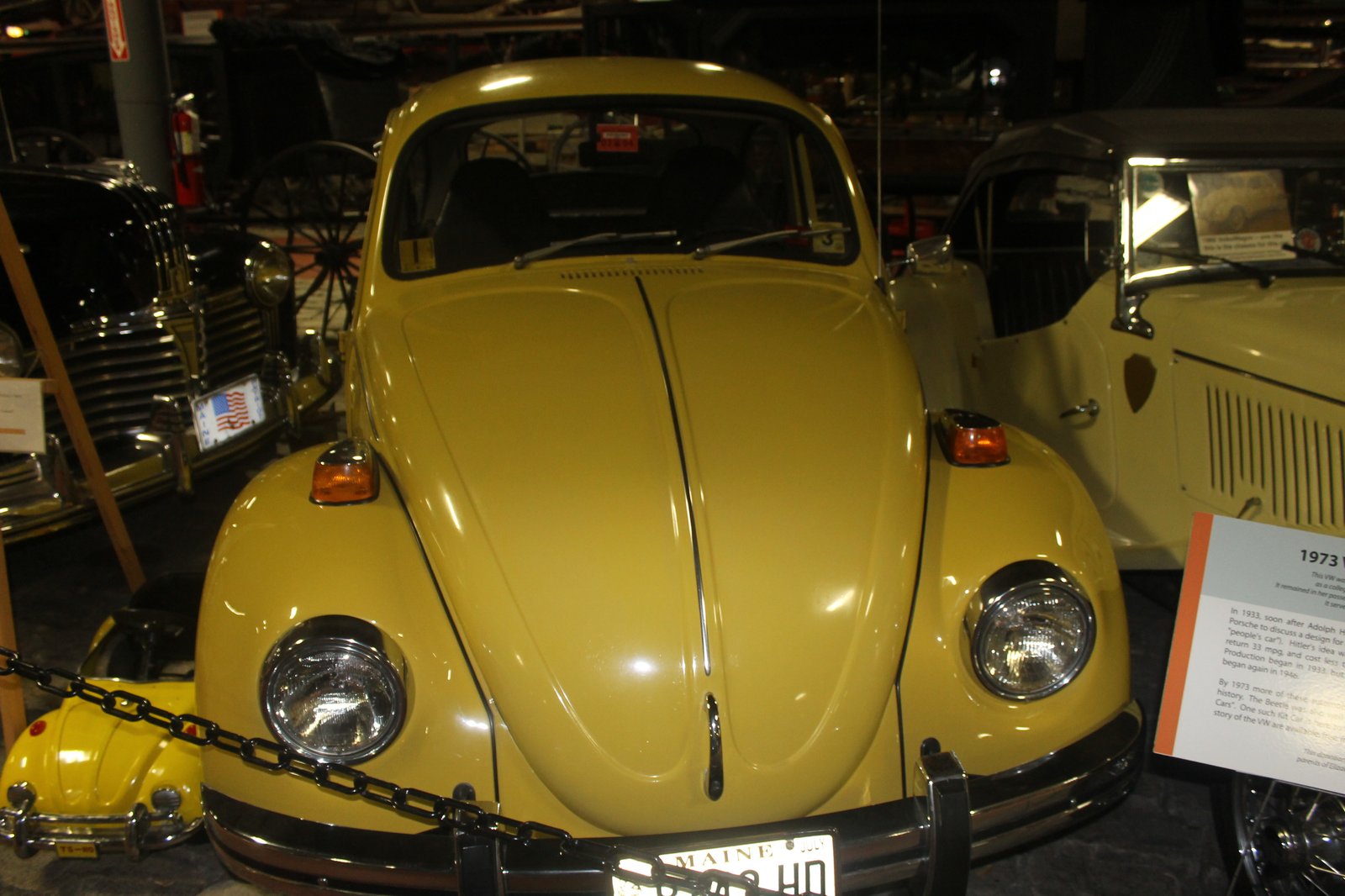
1973 · Beetle
1973 Beetle
We hold 4 records for the 1973 Beetle: 2 body styles, specifications. No story has been published for this year. A story is recorded against a record whose identity is under review. It is below, labelled.
Real Stories

We hold 4 records for the 1973 Beetle: 2 body styles, specifications. No story has been published for this year. A story is recorded against a record whose identity is under review. It is below, labelled.
1973 body styles
1973 Super Convertible
Identity under review · story recorded
1973 Super Sedan
Reference only
- Engine:
- Not recorded
- Power:
- Not recorded
- Body style:
- Sedan
Factory colours recorded for 1973
Paint codes whose recorded availability covers 1973, from the VWX colour reference. They are not tied to any record on this page; year applicability remains under review.
- Saturn YellowL10C1973
- Signal OrangeL20E1973
- Blood OrangeL21E1973
- Biscay BlueL52B1973
- Ceylon BeigeL13H1973-1974
- Sunshine YellowL13K1973-1974
- Brilliant OrangeL20B1973-1974
- Mars RedL31B1973-1974
- Midnight BlueL96A1973-1974
- Texas YellowL10B1972-1973
- Turquoise MetallicL95B1972-1973
- Maya MetallicL98A1972-1973
Identity under review
1973 Type 1 Beetle: The Last Dance of Air-Cooled Defiance
More than one record claims this car, and VWX has not picked one. So the specifications, the colours and the factory data stay off this page. The story does not: it was written from the sources we hold, and hiding it would not make the car any clearer.
Reference review: source-recorded details; historical accuracy has not been comprehensively verified.
Open the Super Convertible recordThe story on file
973: Watergate unfolding on TV, OPEC flexing its muscles, America's muscle cars wheezing under emissions controls. Detroit was having an identity crisis. VW was having none of it. The '73 Beetle rolled into showrooms exactly as it had for decades: air-cooled, rear-engined, and utterly unconcerned with fashion. Its 48 horsepower (now measured in realistic SAE Net) was a rounding error in Detroit's calculations. But timing is everything. Just as America discovered it needed small cars, VW had spent 24 years perfecting one. Sometimes stubbornness looks like prophecy.
Model Information and History
What It Was
The 1973 Beetle was automotive minimalism perfected through repetition. The specs read like a rebellion against excess: 1600cc flat-four engine making 48 honest horsepower (down from previous ratings because SAE Net measurements finally admitted that engines work better installed in cars than on test stands). Four-speed manual transmission because automatics were for people who didn't want to drive. Two doors, four seats, zero pretense. The AD/AE/AF/AK engine codes weren't improvements—they were regional variations on the same theme of mechanical simplicity. VW offered 'luxury' features like a rear window defroster and leatherette seats. Calling them luxury was either German humor or German honesty. Maybe both. The car was shorter than a modern Mini, lighter than a Miata, and more recognizable than Mickey Mouse. It was the anti-car car, and proud of it.
What Made It Special
The '73 Beetle wasn't special because it changed—it was special because it refused to. While Detroit reinvented itself annually, the Beetle remained steadfastly, almost comically consistent. The 1600cc engine was as refined as air-cooled got: dual-port heads, improved oil cooling, better breathing. It made less power on paper than before (thanks, SAE Net), but more in reality. The suspension was still torsion bars and swing axles—a design that made engineers cry and drivers smile. The body was still stamped steel and basic curves, a shape so pure it belonged in MoMA (which, coincidentally, it did). But 1973's special sauce was timing. Just as the muscle car era wheezed its last smoky breath, just as the first oil crisis loomed, just as America realized bigger wasn't better, here was the Beetle: 25 mpg, bulletproof reliability, and a complete immunity to automotive fashion. Sometimes the best innovation is no innovation at all.
Cultural Context
1973 was the year American automotive mythology collided with reality. The muscle car era was dying under the weight of insurance costs and emissions controls. The first oil crisis hit in October, turning gas stations into war zones of anxiety and empty tanks. Detroit's giants were learning to say 'downsizing' without crying. Into this chaos rolled the Beetle, unchanged and unimpressed. It had always been small. It had always been efficient. It had always been itself. The counterculture that adopted it in the '60s was now mainstream-ish, trading communes for careers but keeping their suspicion of excess. The Beetle was their four-wheeled 'I told you so.' Japanese cars were arriving in force—Civic, Corolla, 510—modern, efficient, and thoroughly logical. The Beetle was none of those things. It was a rolling anachronism that happened to be exactly what America needed. The ads wrote themselves: while Detroit learned to think small, VW helped America think different. The Beetle wasn't just surviving in 1973; it was leading a revolution it had started by accident decades earlier.
How It Drove
The '73 Beetle drove exactly like a Beetle should: slow enough to build character, nimble enough to be fun, quirky enough to start conversations. Zero to 60 happened eventually—around 19 seconds if you were skilled or brave. Top speed was theoretical. The steering had more feedback than a therapy session. The swing-axle rear suspension made every corner an adventure in weight management. The brakes worked better than they had any right to. The heater remained more of a suggestion than a system. Modern drivers, raised on power everything and digital interfaces, find the Beetle either terrifying or transcendent. Usually both. The gearbox was precise if you understood mechanical empathy. The pedals were perfectly placed for heel-toe downshifts that nobody needed but everybody attempted. It wasn't a good car by 1973 standards. It was a great car by any standard that valued personality over perfection.
Who Bought It
The '73 Beetle's buyers were a fascinating mix of pragmatists and rebels. The pragmatists saw the writing on the wall: gas prices rising, complexity increasing, Detroit downsizing badly. They bought the Beetle because it was honest transportation that wouldn't break them at the pump. The rebels—now with jobs and mortgages but still fighting the power—bought it because it thumbed its air-cooled nose at automotive excess. Then there were the Beetle true believers, who'd been driving them since the '50s and saw no reason to change. College students bought them because they were cheap and cool. Parents bought them as first cars for teenagers because they were slow and tough. Nobody bought a '73 Beetle because they had to. They bought it because it represented something: simplicity, honesty, defiance, or just the joy of driving a car that required actual driving.
Evolution
By 1973, the Beetle's evolution was more philosophical than mechanical. The basic platform hadn't changed since 1938—a testament to either brilliant initial design or German stubbornness. Probably both. The 1600cc engine was as big as the flat-four would get in U.S. Beetles. The dual-port heads, 12-volt electrics, and improved ventilation were as modern as the classic Beetle would become. VW was already planning its replacement (the Golf/Rabbit), but the Beetle refused to go quietly. It had survived Hitler, won America's heart, launched a cultural revolution, and was now watching Detroit struggle with the concept of small cars. The Super Beetle existed in parallel, offering more modernity and less purity. The standard Beetle remained for purists and poets. It wasn't evolution—it was refinement through repetition. The same way blues musicians don't evolve the 12-bar form; they just play it better.
Today
In 2025, a '73 Beetle sits in an fascinating market position. Not old enough to be properly vintage (like '50s and '60s examples), not new enough to be modern, but somehow more relevant than ever. Values? Expect to pay: $25,000+ for show-quality examples (rare), $15,000-20,000 for excellent drivers, $8,000-12,000 for good runners, $3,000-7,000 for projects. But here's the twist: as electric cars take over and automotive complexity reaches supercomputer levels, the Beetle's mechanical simplicity becomes almost exotic. It's not just a classic car; it's a rolling meditation on essentials. You don't buy a '73 Beetle as an investment. You buy it because in a world of automotive smartphones, it's a perfectly crafted pencil.
Restoration
Restoring a '73 Beetle is either the easiest or hardest thing in classic cars, depending entirely on your perspective. The good news: every part exists, either NOS or reproduction. The community is massive. The engineering is logical. The bad news? Rust loves these cars like teenagers love TikTok. Check the heater channels first—they're structural and expensive to fix. Floor pans usually need work. The engine's reliability is legendary, but 50 years of amateur mechanics means you'll probably need to undo some 'improvements.' Parts sources span from German OEM (expensive but correct) to Brazilian aftermarket (cheap but adventurous). The wiring is simple enough to understand over a weekend. The fuel system can be rebuilt in an afternoon. Just remember: originality matters less than honesty. These cars were built to be fixed, not preserved. Fix it right, drive it often, keep it real.
The Bottom Line
The 1973 Beetle is automotive irony perfected: a car that succeeded by refusing to change, that became revolutionary by remaining reactionary, that solved a crisis it never saw coming by solving no crisis at all. It's slow by modern standards, crude by any standard, and more charming than a basket of puppies. You don't buy a '73 Beetle because you need a car. You buy it because you need a reminder that perfection isn't about features—it's about purpose. In a world of automotive complexity, the Beetle's simplicity isn't just refreshing; it's almost radical. Buy one because you believe in mechanical honesty. Drive it because modern cars have forgotten how to smile. Just don't expect the heater to work. Some traditions deserve to live forever.
Nearby years
Explore the ecosystem
Some of this works today. Some of it is still an idea. The chips say which.