Reference review: source-recorded details; historical accuracy has not been comprehensively verified.
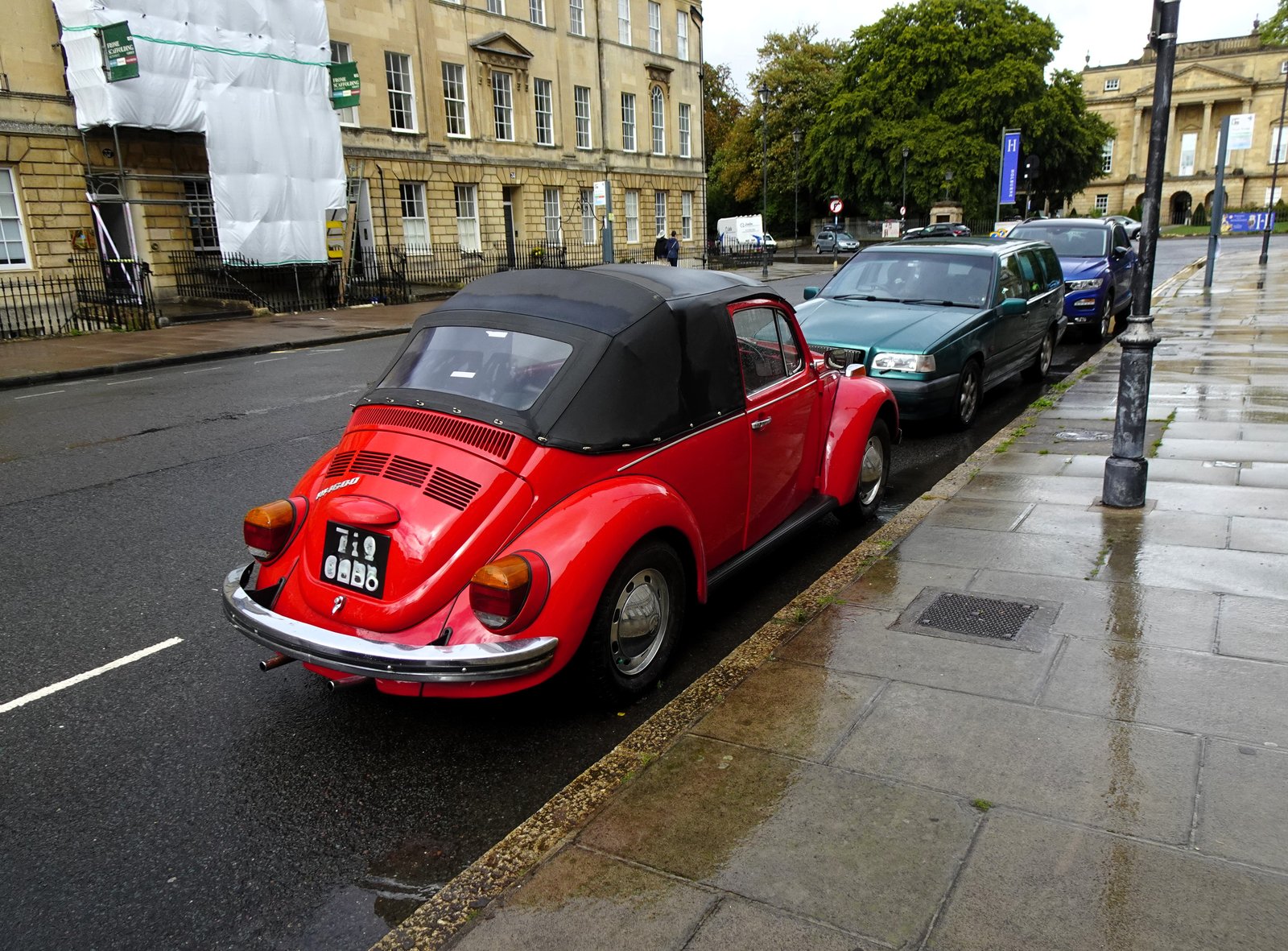
1978 · Beetle
1978 Beetle
We hold 3 records for the 1978 Beetle: 2 body styles, specifications. No story has been published for this year. A story is recorded against a record whose identity is under review. It is below, labelled.
Real Stories

We hold 3 records for the 1978 Beetle: 2 body styles, specifications. No story has been published for this year. A story is recorded against a record whose identity is under review. It is below, labelled.
1978 body styles
1978 Super Convertible
Identity under review · story recorded
1978 Super Sedan
Reference only
- Engine:
- Not recorded
- Power:
- Not recorded
- Body style:
- Sedan
Factory colours recorded for 1978
Paint codes whose recorded availability covers 1978, from the VWX colour reference. They are not tied to any record on this page; year applicability remains under review.
- Sage GreenL63D1978
- Champagne YellowL10E1977-1978
- Signal RedL31D1977-1978
- Phoenix RedL32K1977-1978
- Miami BlueL51C1977-1978
- Barrier BlueL52K1977-1978
- Pine GreenL63C1977-1978
- Dove BlueL87C1977-1978
- Neptune BlueL96C1977-1978
- Marathon Blue MetallicL96M1977-1978
- Inari Silver MetallicL94A1978-1980
- Brazil Brown MetallicL96F1978-1980
Identity under review
1978 Beetle Convertible: The Last Honest Car in a Dishonest Era
More than one record claims this car, and VWX has not picked one. So the specifications, the colours and the factory data stay off this page. The story does not: it was written from the sources we hold, and hiding it would not make the car any clearer.
Reference review: source-recorded details; historical accuracy has not been comprehensively verified.
Open the Super Convertible recordThe story on file
978: Punk exploding, disco thumping, Star Wars rewiring culture. Detroit was selling personal luxury coupes with opera windows. Japan was selling efficiency with digital dashboards. VW was selling... honesty. The last Beetle Convertible arrived as automotive counter-programming—48 honest horsepower, manual everything, a roof that folded because you folded it. No power assists. No pretense. No lies. In an era when automotive marketing was reaching peak absurdity, the Beetle Convertible was automotive punk rock: three chords, no pretense, pure attitude. It wasn't the fastest. Wasn't the newest. Wasn't trying to be. In 1978, that made it revolutionary.
Model Information and History
What It Was
The '78 Convertible was automotive minimalism perfected over three decades. The specs read like a rebellion against progress: 1600cc flat-four making 48 horsepower (SAE Net, because even the power rating was honest). Four-speed manual because automatics were for people who didn't want to drive. Manual convertible top because power assists were for people who couldn't use their arms. Heater that worked on principle rather than practice. The equipment list was essentially a list of things it didn't have: no power steering, no power brakes, no power anything. What it did have: build quality that would embarrass modern cars, metal thick enough to survive the Cold War, and the dignity to admit exactly what it was.
What Made It Special
The '78 Convertible wasn't special because it was good—it was special because it was the last of its kind. The last air-cooled German Beetle. The last convertible built on a platform older than most of its buyers. The last car that could honestly claim it hadn't changed much since Hitler was a problem. The engineering was essentially 1930s tech refined to perfection: flat-four engine that cooled itself with air and optimism, torsion beam suspension that treated corners as suggestions, manual steering that built character and forearm muscles. But that was the point. In 1978, when every other car was trying to hide its nature behind vinyl roofs and digital gauges, the Beetle Convertible was automotive existentialism: it was what it was, nothing more, nothing less. That honesty made it revolutionary. The fact that it worked made it legendary.
Cultural Context
1978 was peak identity crisis. Punk was attacking prog rock's excesses. Disco was both dominating and dying. Star Wars had rewired pop culture. Personal computers were suggesting the future might be digital. The automotive landscape was equally confused. Detroit was building personal luxury barges with opera windows and crushed velour. Japan was building the efficient future with fuel injection and digital dashboards. Europe was discovering turbochargers. And there sat the Beetle Convertible, completely unconcerned with any of it. Its design dated to 1938. Its engineering principles were older than the Space Race. Its marketing strategy was 'admit everything.' In this context, the Beetle wasn't just a car—it was a rejection of planned obsolescence, a middle finger to the idea that newer meant better, a rolling argument that honesty mattered more than horsepower. The fact that it was a convertible just made the statement more obvious: you couldn't hide in a Beetle Convertible. That was the whole point.
How It Drove
The '78 Convertible drove exactly like what it was: a 1930s design refined over four decades. The steering was manual and proud of it—every turn was a conversation between you, physics, and that rear-mounted engine. The brakes worked eventually. The gearbox felt like engineering from an era when precision was hand-built. The engine made 48 horsepower and used every single one. Highway speeds were possible but philosophical—you'd get there when you got there. Modern drivers, spoiled by power everything, find it shockingly physical. Good. That's the point. You don't drive a '78 Beetle Convertible—you operate it. Every control is a deliberate action. Every response is honest feedback. It's not a car for people who want transportation. It's a car for people who want to experience what driving felt like before computers got involved.
Who Bought It
The '78 Convertible attracted three distinct tribes: The Believers: They'd been buying Beetles since the '60s. They understood the philosophy. The car was a continuation of their values. The Rebels: Usually younger, often into punk or new wave. They saw the Beetle's honesty as a middle finger to automotive marketing nonsense. The car was a statement. The Rationalists: They did the math. German engineering, proven design, top-down fun, reasonable price. The car was logic. What united them? A shared appreciation for authenticity in an era of increasing artifice. The Beetle Convertible wasn't trying to be anything it wasn't. In 1978, that was either hopelessly outdated or revolutionary, depending on your perspective. History sided with revolutionary.
Evolution
The '78 Convertible represented the final evolution of a car that refused to evolve. The basic platform dated to 1938. The convertible variant launched in 1949. By 1978, the changes were minimal but meaningful: 1600cc engine instead of 1200cc, better electrical system, upgraded interior materials. But the philosophy remained unchanged: keep it simple, keep it honest, keep it working. The model lineage reads like a study in minimal evolution: 1949: Basic convertible introduced. 1957: Slightly more power. 1961: Slightly better electrics. 1967: 12-volt system (finally). 1973: More safety features. 1978: The end. German production ceased. The last honest car from Wolfsburg rolled into history.
Today
In 2025, the '78 Convertible occupies a unique market position. Values vary wildly: Perfect examples: $25,000-35,000 (rising). Good drivers: $15,000-25,000. Projects: $5,000-15,000. Basket cases: Free to 'please take it.' But here's the truth: condition matters less than honesty. Original cars command premiums. Over-restored examples miss the point. The market rewards authenticity—just like the car did. Investment potential? Strong but ironic. The last honest car is becoming genuinely valuable. Somewhere, an original VW copywriter is laughing. Buy one because you want one. The investment potential is just automotive irony.
Restoration
Restoring a '78 Convertible requires philosophical alignment with the car's values. Common issues: Rust (everywhere, especially floorpans), top mechanism wear, electrical gremlins (Lucas-level cursed), engine oil leaks (if it's not leaking, it's empty). Parts availability ranges from excellent (mechanical) to challenging (convertible-specific trim). The good news: These cars were built to be fixed. The bad news: They need fixing. Crucial areas: Structural integrity (check heater channels), top fit (water is the enemy), engine maintenance (regular valve adjustments or else). Budget realistically: $20,000-30,000 for quality restoration. Or just keep it running and embrace the patina. The car doesn't care about perfection. Why should you?
The Bottom Line
The 1978 Beetle Convertible wasn't the best car of 1978. It wasn't the fastest, newest, most comfortable, or most advanced. It wasn't trying to be. It was the last honest car from an era when automotive marketing was becoming pure fiction. Its value today isn't in its performance (modest), its technology (ancient), or its luxury (nonexistent). Its value is in its truth: This is a car that never lied about what it was. In 2025, that makes it not just rare, but revolutionary. Buy one because you understand that. Drive it because you value honesty more than horsepower. Keep it because we'll never see its kind again.
Nearby years
Explore the ecosystem
Some of this works today. Some of it is still an idea. The chips say which.