Reference review: source-recorded details; historical accuracy has not been comprehensively verified.
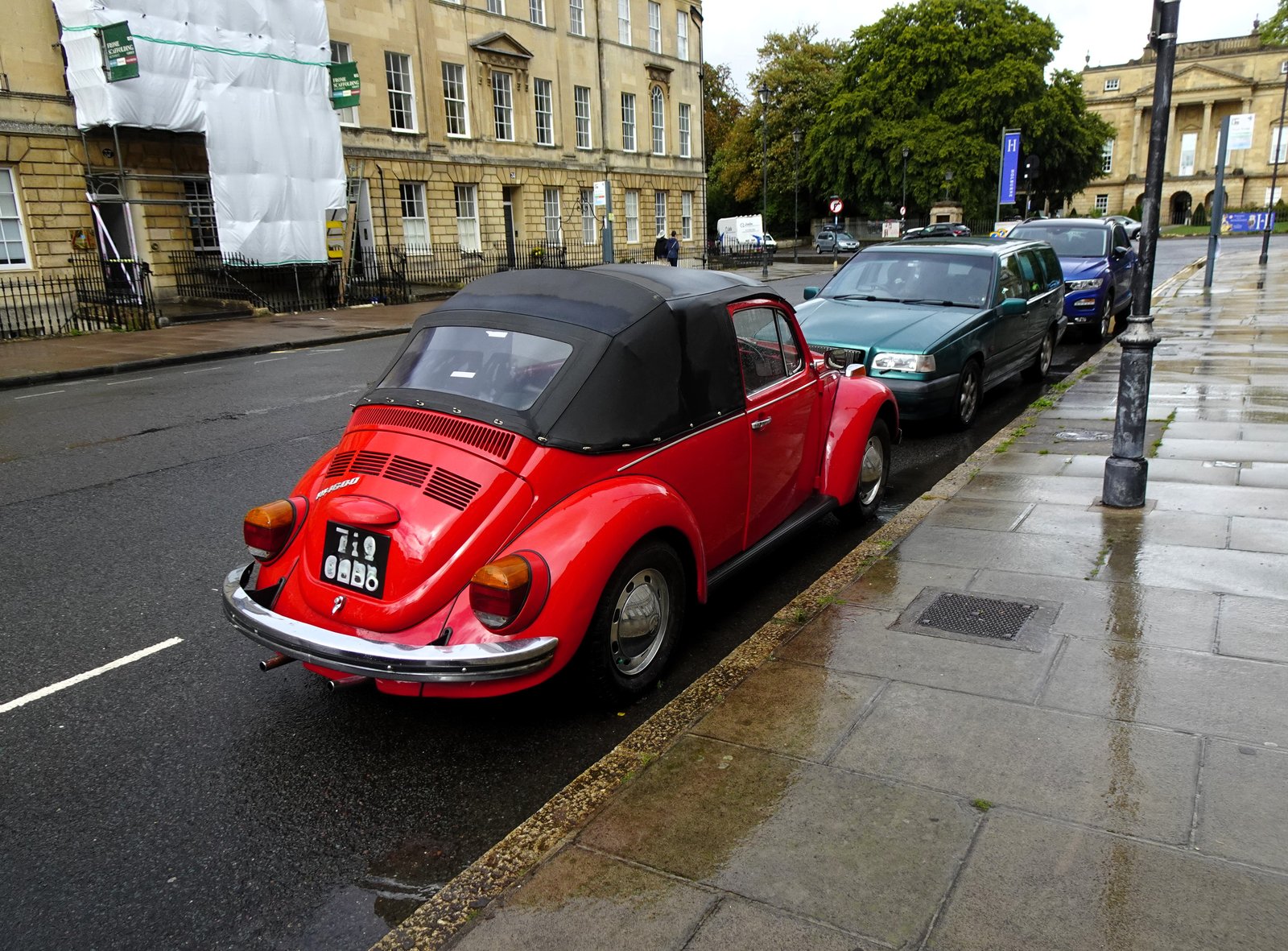
1980 · Beetle
1980 Beetle
Every 1980 Beetle record we hold — 2 Super Convertible entries — is under identity review. VWX does not pick one.
Real Stories

Every 1980 Beetle record we hold — 2 Super Convertible entries — is under identity review. VWX does not pick one.
The records conflict. Rather than choose one and call it history, we leave both visible and say so.
1980 body styles
1980 Super Convertible
Identity under review · story recorded
Factory colours recorded for 1980
Paint codes whose recorded availability covers 1980, from the VWX colour reference. They are not tied to any record on this page; year applicability remains under review.
- Pale YellowL1D1980
- Colibri Green MetallicL99Y1980
- Mars RedLA3A1980
- Indiana Red MetallicLA3V1980
- River Blue MetallicLK6V1980
- Bay Green MetallicL63E1979-1980
- Taiga GreenL63H1979-1980
- Pearl WhiteL87E1979-1980
- Light IvoryL90F1979-1980
- Florida BlueLA5A1979-1980
- Inari Silver MetallicL94A1978-1980
- Brazil Brown MetallicL96F1978-1980
Identity under review
1980 Beetle Convertible: When Honesty Became Punk Rock
More than one record claims this car, and VWX has not picked one. So the specifications, the colours and the factory data stay off this page. The story does not: it was written from the sources we hold, and hiding it would not make the car any clearer.
Reference review: source-recorded details; historical accuracy has not been comprehensively verified.
Open the Super Convertible recordThe story on file
980: The Clash on the radio, punk reshaping music, Reagan about to reshape politics. Detroit was selling digital dashboards and plastic luxury. Japan was selling efficient futures. VW was selling... honesty.
The 1980 Beetle Convertible was the last air-cooled drop-top sold in America. Not because it couldn't compete—because it refused to pretend. While other automakers chased digital dreams, the Beetle kept its mechanical soul: air-cooled engine, manual everything, a roof you folded by hand.
It made 48 horsepower. In 1980, that wasn't just honest—it was punk rock.
Model Information and History
What It Was
The 1980 Beetle Convertible was automotive archaeology living in the present. Factory specs read like a rebellion against progress:
- Engine: 1600cc flat-four (Type AJ), 48 honest horsepower
- Transmission: 4-speed manual, because automatics are for cowards
- Body: Two-door convertible with manual top (yes, MANUAL)
- Heating: Air-cooled dreams and warm wishes
- Features: Wind-up windows, fresh air ventilation (aka windows down)
- Safety: You could see trouble coming. That was the safety system.
VW priced it at $6,995—expensive for a Beetle, cheap for a convertible, perfect for making a statement about authenticity in the age of digital excess.
What Made It Special
The 1980 Beetle Convertible wasn't special because it evolved. It was special because it didn't. In an era when cars were becoming computers with wheels, the Beetle remained defiantly mechanical.
The convertible top was manual—no hydraulics, no electronics, just German canvas and human effort. The engine was still air-cooled when everyone else had radiators. The dashboard had actual gauges showing actual things, not digital approximations of information.
But its real specialness? It was the last air-cooled convertible VW would sell in America. The last chance to buy automotive honesty brand new. The last year you could walk into a VW dealer and order a car that refused to pretend it was something else.
In 1980, that wasn't just special—it was revolutionary. While America chased digital dreams, the Beetle Convertible remained stubbornly analog. It was punk rock on wheels.
Cultural Context
1980 was the year authenticity died everywhere except in punk rock and air-cooled VWs. The Clash released 'London Calling.' The Talking Heads were singing about life during wartime. The Dead Kennedys were asking if punk was dead. Everyone was questioning everything.
Detroit's answer: digital dashboards, fake wood grain, vinyl roofs pretending to be leather. Japan's answer: efficient, reliable futures wrapped in conservative packages. The automotive world was running away from mechanical honesty as fast as it could.
The culture was splitting: New Wave vs. Punk, disco's last gasp vs. hip-hop's first breath, Carter's malaise vs. Reagan's morning in America. Everything was about choosing sides, picking aesthetics, declaring allegiance.
The Beetle Convertible chose no sides. It remained what it had always been: a machine honest enough to admit it was a machine. Its 48 horsepower wasn't a bug, it was a feature—proof that you could reject the horsepower race and still cross continents.
In 1980, that made it more than transportation. It made it a statement.
How It Drove
In 1980, the Beetle Convertible drove exactly like it had in 1979: slowly, deliberately, with character. Zero to 60? Eventually. Top speed? Faster than you'd want with the top down. Handling? Like a pendulum with an opinion.
Driving it today is time travel. Everything mechanical. Everything manual. Everything honest. The steering talks to you—actual conversations about road texture and camber. The brakes suggest stopping rather than demand it. The gearshift feels like it's connected to actual gears (because it is).
The convertible top adds drama: manual operation requires human intelligence and German vocabulary. The wind noise is authentic. The heater still doesn't work. The whole experience is a masterclass in mechanical honesty.
Modern cars filter reality. The '80 Beetle Convertible amplifies it. That's not a flaw—it's the point.
Who Bought It
The 1980 Beetle Convertible attracted three distinct tribes:
Tribe 1: The Authenticity Seekers
- Rejected digital dashboards and fake luxury
- Wanted mechanical honesty
- Probably owned The Clash albums
Tribe 2: The Last Chance Brigade
- Knew it was the end of an era
- Wanted the last air-cooled convertible
- Probably still own those cars
Tribe 3: The Statement Makers
- Chose the anti-car deliberately
- Rejected automotive fashion
- Definitely had opinions about punk rock
What united them? They all wanted something honest in a world going plastic. They chose 48 horsepower when they could have had 200. They picked manual tops when power was available. They weren't buying transportation—they were buying philosophy.
Evolution
The 1980 Beetle Convertible's evolution was its refusal to evolve. The timeline tells the story:
1949: Basic Beetle design established 1950-1979: Continuous small improvements 1980: Still basically the same car
While other manufacturers redesigned models yearly, the Beetle Convertible remained stubbornly constant. The 1600cc engine gained fuel injection in some markets (not U.S.), the electrical system got marginally more reliable, the convertible top material improved slightly.
But the soul stayed pure: air-cooled engine in back, manual transmission in middle, driver up front making decisions. No computers. No compromises. No pretense.
It was the end of the line for air-cooled convertibles in America. Not because the design was obsolete—because the world had changed around it.
Today
In 2025, the 1980 Beetle Convertible exists in a weird value paradox:
Show Quality: $25,000-35,000 Excellent: $18,000-25,000 Good: $12,000-18,000 Project: $5,000-12,000
But here's the truth: those numbers miss the point. The '80 Convertible isn't valuable because it's rare (it isn't) or because it's the best Beetle (debatable). It's valuable because it's honest.
In 2025, finding mechanical honesty is harder than finding horsepower. The '80 Convertible offers something modern cars can't: an unfiltered connection between human and machine.
Investment potential? Steady. But if you're buying an '80 Beetle Convertible as an investment, you've missed the point entirely.
Restoration
Restoring a 1980 Beetle Convertible requires three things: mechanical sympathy, a German dictionary, and punk rock attitude.
Common Issues:
- Rust: Check floorpans, heater channels, jack points
- Top mechanism: Manual means fixable, but parts are specific
- Fuel system: Original fuel injection (in some markets) needs expertise
- Electrical: Better than earlier years, still requires patience
Parts Availability:
- Mechanical: Excellent (it's still a Beetle)
- Body: Good (but check panel authenticity)
- Trim: Mixed (1980-specific pieces can be tricky)
- Top: Available but expensive ($800-1,500)
Restoration Tips:
- Keep it original—'80s were peak build quality
- Document everything—last-year authenticity matters
- Join a club—the knowledge base is invaluable
- Expect $15,000-25,000 for full restoration
Most important: Preserve the honesty. It's not just a car, it's a philosophy.
The Bottom Line
The 1980 Beetle Convertible wasn't the best air-cooled VW. It wasn't the most valuable, the most refined, or even the most practical. It was something better: the last honest car sold in America.
While others chased digital futures, it remained defiantly analog. While others promised luxury, it promised truth. In 1980, that wasn't just different—it was revolutionary.
Who should buy one now? Anyone who values mechanical honesty over modern convenience. Anyone who understands that 48 horsepower is enough if you're not lying about it. Anyone who thinks punk rock might have been right about authenticity.
The 1980 Beetle Convertible was the anti-car in the best possible way. It still is.
Nearby years
Explore the ecosystem
Some of this works today. Some of it is still an idea. The chips say which.