1600cc
Displacement
N/A
Power
N/A
Top Speed

Real Stories

Shaped by Hope: The Story of 'Azul'
The Story of Georgie the VW Bus

American Vacation Discovered the Bus.

  1. American families were discovering that the VW Bus could vacation better than a cramped sedan. Yellowstone. The California coast. Cross-country adventures. The Kombi offered something impossible in a sedan: everybody had a window.

1955: American families were discovering that eight-passenger VW Bus could vacation better than cramped sedans. Yellowstone trips. California coast drives. Cross-country adventures. The Kombi offered something impossible in sedans: everyone faced forward, everyone had windows, everyone participated in the journey rather than being passively transported.

Read the Full Story

Engineering.

The air-cooled flat-four that powered the 1955 T1 Microbus (Type 2). Simple, reliable, and endlessly modifiable.

1600cc

Air-cooled

The air-cooled flat-four engine that powered a generation. Code .

Power
N/A
Fuel
Carburetor

Highlights.

Feature

The 1955 Kombi's design ena...

wraparound windows giving passengers visibility, forward-facing seats allowing conversation, open interior creating shared space.

Engine

Engine Size

1600cc (1.6L) Air-cooled

Feature

Body Style

Microbus

Feature

Transmission

Manual (standard)

Quick Facts — 1955 Bus

  • Engine SizeNeeds Review

    1600cc (1.6L) Air-cooled

  • Body StyleNeeds Review

    Microbus

  • TransmissionNeeds Review

    Manual (standard)

  • Market PositionNeeds Review

    The 1955 Bus was part of Volkswagen's air-cooled lineup during this era.

  • Cultural SignificanceNeeds Review

    1955: American prosperity enabling vacation culture.

All specifications should be verified before publication.

Top Questions — 1955 Bus

Refer to the specifications section above for the engine code used in the 1955 Bus. The engine code is typically stamped on the engine case above the generator. For verification assistance, use our M-Code decoder tool.

Confidence: medium — This information should be verified with additional sources.

The value of a 1955 Bus varies significantly based on condition, originality, and documentation. Driver-quality examples typically range from lower values, while excellent restored or numbers-matching examples command premiums. Condition, originality, and documentation are the primary value drivers. Always get a professional appraisal for insurance or sale purposes.

Confidence: low — This information requires verification before use.

1955 Bus models were produced at various Volkswagen factories worldwide. Check the production details above for specific factory information. The factory code can often be identified through chassis number analysis.

Confidence: medium — This information should be verified with additional sources.

Key changes for the 1955 Bus: of. mouth growing: the Bus could vacation! That vacation capability discovery established Bus as more than commercial vehicle—it could lifestyle. Foundation for counterculture adoption being built through American family adventure.. Kombi sales benefited from American vacation discovery. Check the specifications section for complete details about year-to-year evolution.

Confidence: medium — This information should be verified with additional sources.

Common rust areas on air-cooled Volkswagens include heater channels (under running boards), floor pans (especially front and battery tray area), front beam (suspension mounting point), rear chassis/apron (where bumper mounts), and door bottoms. The heater channels are structural and expensive to repair. Always inspect these areas carefully before purchase.

The 1956 Bus received updates from the 1955 model. Check the specifications section above for details about year-to-year evolution. Common changes across model years include safety updates, mechanical refinements, and regulatory compliance features.

Confidence: medium — This information should be verified with additional sources.

A full rotisserie restoration typically costs $25,000-$50,000+ depending on condition and level of finish. Mechanical refresh (engine, brakes, suspension) runs $5,000-$12,000. Bodywork and paint alone can be $8,000-$15,000 for quality work. DIY restorations save labor but require significant time investment (500-1,000 hours). Parts availability is generally good for classic VWs, which helps control costs.

Confidence: low — This information requires verification before use.

Numbers matching (original engine, transmission, and chassis) typically increases value by 20-40% over non-matching examples. However, the premium varies based on overall condition, documentation, and market demand. Use our numbers matching verification tool to check your vehicle.

Confidence: medium — This information should be verified with additional sources.

A well-maintained 1955 Bus can serve as a daily driver, but consider the age of the vehicle. Modern traffic, safety features, and reliability expectations differ from the era. Regular maintenance, mechanical knowledge, and realistic expectations are essential. Many owners use classic VWs as weekend drivers or hobby vehicles rather than primary transportation.

Confidence: medium — This information should be verified with additional sources.

Yes, parts availability for classic air-cooled Volkswagens is generally excellent. The large enthusiast community and aftermarket support mean most mechanical and body parts are readily available. Some year-specific trim pieces or rare options may be harder to find, but the core mechanical components are well-supported.

Why This Year Matters

Needs Review
  • The 1955 Kombi's design enabled vacation participation: wraparound windows giving passengers visibility, forward-facing seats allowing conversation, open interior creating shared space.
Collector AppealMedium
Restoration ComplexityMedium
Daily Driver SuitabilityMedium

Valuation Resources

Research current market values for the 1955 T1 Microbus (Type 2)

Buying tip: Condition is everything. A rusty "project" can cost more to restore than buying a finished car. Check heater channels, floor pans, and battery tray first.

Which 1955 Bus fits your style?

Explore the variants available for this model year and find your perfect match.

Want to see a detailed comparison of multiple vehicles?

Compare all variants

Verify Authenticity

Numbers matching verification increases value by 20-40%. Use our tools to verify engine codes, chassis numbers, and M-codes for your 1955 T1 Microbus (Type 2).

The Full Story

Introduction

1955: American families were discovering that eight-passenger VW Bus could vacation better than cramped sedans. Yellowstone trips. California coast drives. Cross-country adventures. The Kombi offered something impossible in sedans: everyone faced forward, everyone had windows, everyone participated in the journey rather than being passively transported.

Kids could see landscapes. Parents could point out sights. Grandparents could share the journey. The Bus was enabling participatory family travel — collective experience rather than isolated transportation. American vacation culture was finding its perfect vehicle through German commercial engineering adapted for family adventure.

What It Was

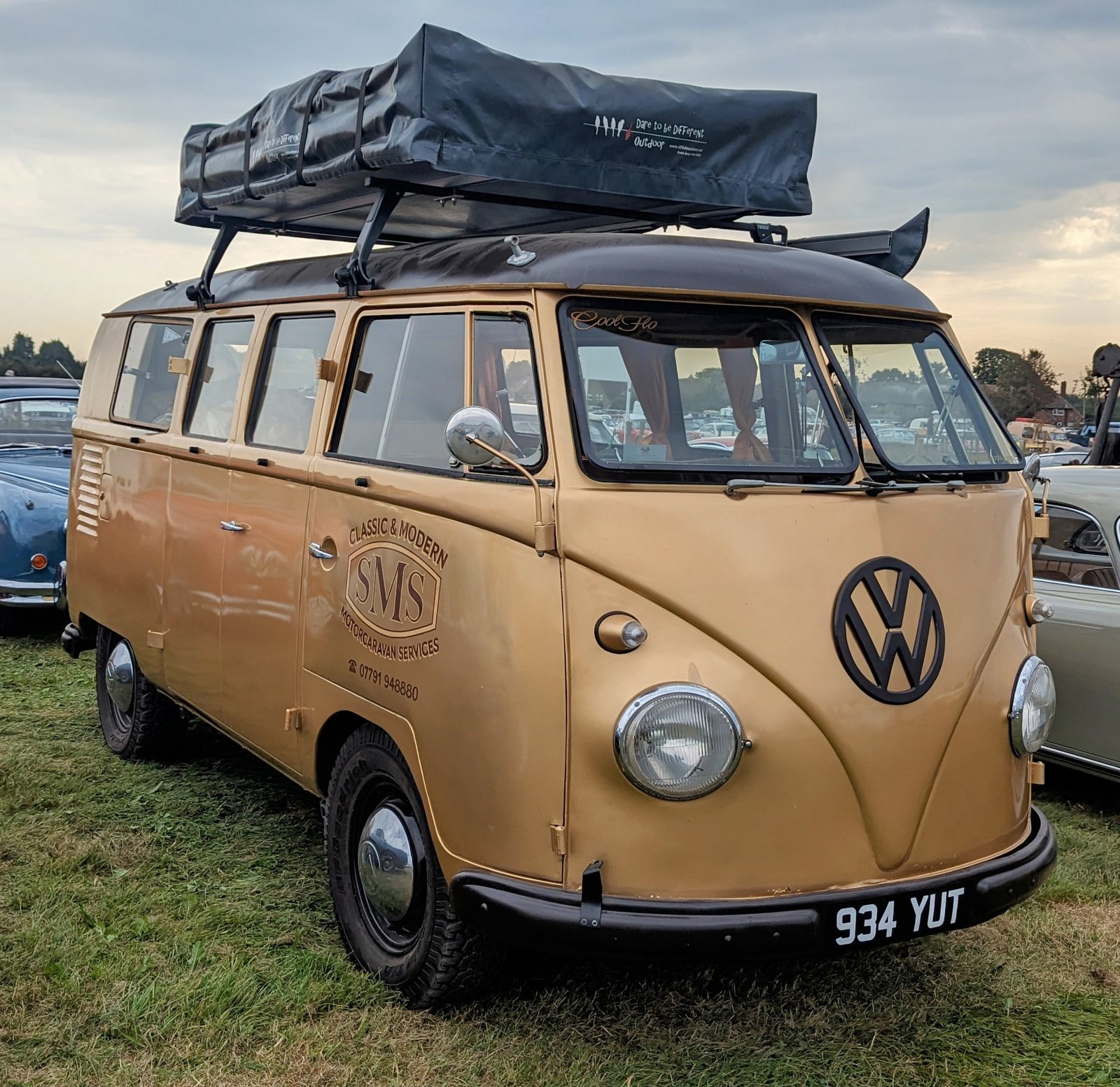
The 1955 Kombi's design enabled vacation participation: wraparound windows giving all passengers visibility, forward-facing seats allowing conversation, open interior creating shared space. Families discovering this made Kombis vacation vehicles: pack luggage on roof rack, seat eight family members inside, drive to national parks experiencing the landscape together through windows all around.

The 30-horsepower 1192cc engine carried this vision with reasonable highway capability — adequate for the Interstate-aspirational America of 1955, sufficient for the mountain passes between family and national park. The Bus transformed family vacation from transportation necessity into shared adventure through design enabling collective visual experience and real conversation.

What Made It Special

The 1955 Kombi's special quality was its participatory design. Most vehicles of the era positioned passengers as cargo: you went from A to B, and the journey was something to endure rather than experience. The Kombi positioned every passenger as a participant: windows on all sides, forward-facing seats, the high vantage point of the forward-control layout giving everyone a different view of the world going past.

Living with the 1955 Kombi meant experiencing American vacation potential. The same vehicle that served church group Sundays could serve Yellowstone summers. The commercial capacity that moved passengers locally could move family regionally. Owners were discovering dual purpose: work AND adventure from the same vehicle through honest versatile engineering.

Cultural Context

1955: American prosperity enabling vacation culture. The Interstate Highway System was being approved. National parks were becoming family destinations. The road trip was emerging as an American ritual — and the VW Kombi was perfectly positioned to enable it.

Affordable enough for middle-class families. Spacious enough for eight people. Reliable enough for extended distance. Simple enough for owner maintenance during trips. American families were discovering that a German commercial vehicle enabled American leisure perfectly. Rock and roll was breaking. Television was everywhere. And somewhere on the road to Yellowstone, a family in a split-window Bus was discovering that the journey was the point.

How It Drove

The 1955 Kombi drove American vacation routes with 30 horsepower, a will to continue, and a forward-control driving position that gave everyone aboard the sense of being present in the landscape rather than enclosed against it.

The driving was collaborative — the Bus asked the driver to understand its capabilities and work with them. On the highway, third gear and patience. On mountain roads, second gear and respect. Arriving at the Grand Canyon rim in a Bus that everyone had ridden together, in windows-all-around collective experience, was different from arriving in a sedan. It was the journey that made the destination. The Bus understood that before the driver did.

Who Bought It

1955 Kombi buyers were increasingly vacation-motivated. Families who had done the passenger-capacity calculation and found two sedans more expensive than one well-chosen Bus. Parents who wanted everyone to experience the drive, not just endure it. Outdoor-oriented families planning national park itineraries and needing cargo capacity for camping gear plus passenger capacity for eight people.

The church groups and community organizations continued their purchases. But the family vacation buyer was growing as American prosperity spread and the road trip culture established itself. Word of mouth was working: families who had taken the Bus to Yellowstone or the California coast told families who hadn't. The Bus was building its American reputation through genuine experience rather than advertising.

Buying Today

The 1955 Kombi sits in the mid-period split-window era — improved mechanical specification over the founding years, historical significance intact, split-window aesthetics at their most refined before the 1958 updates.

Collector values for mid-1950s split-window Kombis are strong. The American vacation-era context adds romantic resonance for buyers who understand the cultural moment these vehicles occupied. Restoration quality matters more than model year within this period; an honest driver condition example beats a problematic concours candidate. The market is informed and active.

The Verdict

The 1955 Kombi was the Bus discovering its American destiny. The practical German commercial vehicle was becoming something its designers hadn't intended: the perfect instrument for the American family vacation.

Original buyers who vacation-discovered the Kombi were pioneers of Bus lifestyle adoption: commercial vehicle becoming adventure enabler, work truck becoming family explorer. That pattern — practical purchase revealing adventure capability — would define Bus cultural impact for the next two decades and the collector market for the half-century after that. In 1955, it was just a family going to Yellowstone. That was enough.