1500cc
Displacement
47HP
Power
N/A
Top Speed

Real Stories

Shaped by Hope: The Story of 'Azul'
The Story of Georgie the VW Bus

Forty-Seven Horses. Every One of Them Earning Its Keep.

The engine climbed to 47 horsepower for 1965. The Single Cab used all of them, every day, without ceremony or complaint.

By 1965, the T1 Single Cab had been earning its living for over a decade. It had outlasted its initial novelty and become something more durable: a known quantity in the working vehicle market. Tradespeople didn't need to explain it anymore. It explained itself.

Read the Full Story

Engineering.

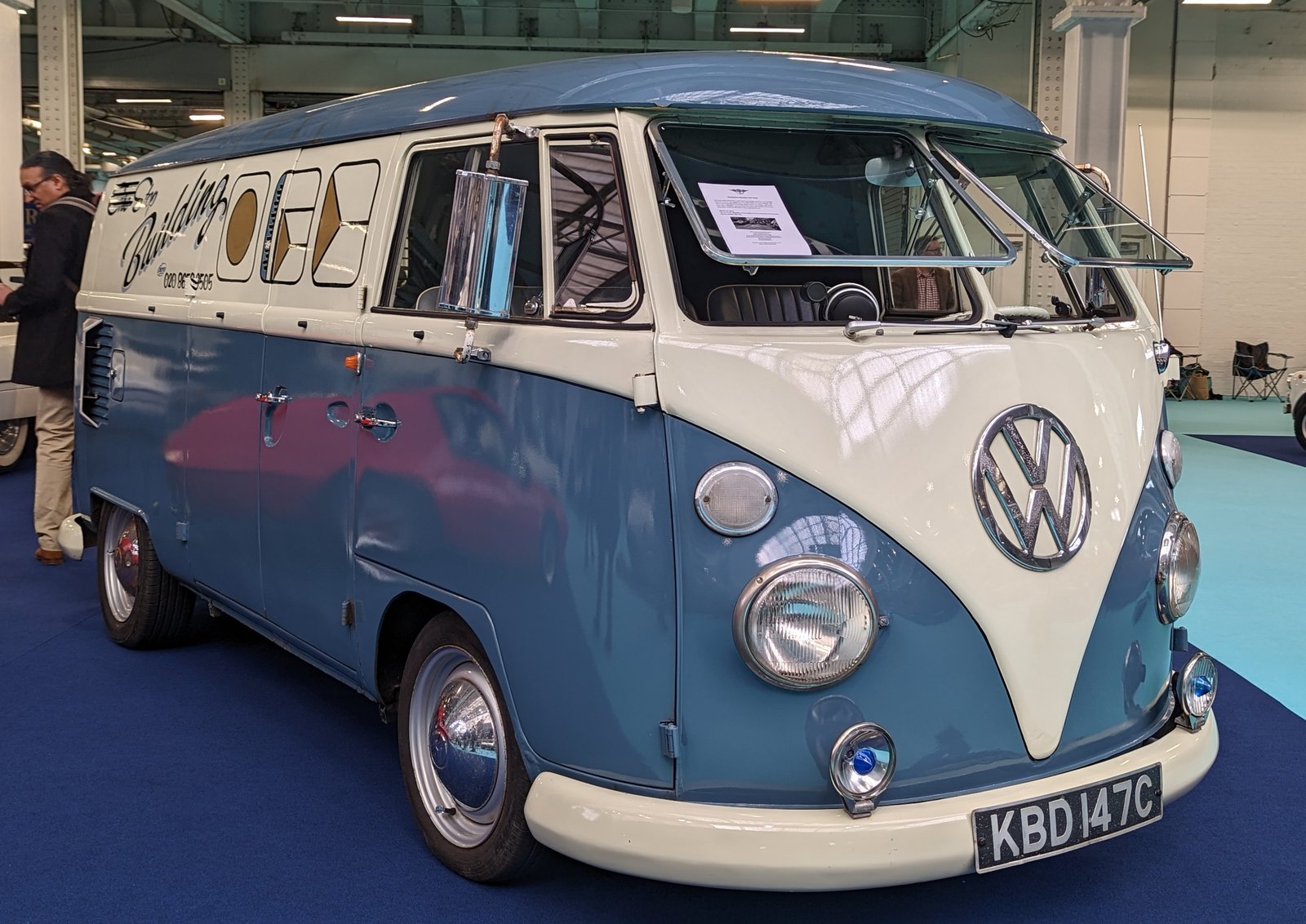
The air-cooled flat-four that powered the 1965 T1 Single Cab (Type 2). Simple, reliable, and endlessly modifiable.

1500cc

Air-cooled flat-4

The air-cooled flat-four engine that powered a generation. Code D.

Power
47 HP
Fuel
Carburetor

Highlights.

Feature

Cultural context

counterculture

Feature

Feature 2

The 1965 Type 2's magic wasn't in its specifications—it was in its space.

Engine

Engine Size

1500cc (1.5L) Air-cooled flat-4

Engine

Horsepower

47 HP

Quick Facts — 1965 Bus

  • Engine SizeNeeds Review

    1500cc (1.5L) Air-cooled flat-4

  • HorsepowerNeeds Review

    47 HP

  • Engine CodeNeeds Review

    D

  • Body StyleNeeds Review

    Pickup

  • TransmissionNeeds Review

    4-speed manual

  • Cultural SignificanceNeeds Review

    The Type 2 Bus became shorthand for the counterculture.

  • Current Market ValueNeeds Review

    Show quality: $75,000-120,000. Excellent: $45,000-85,000. Good: $25,000-45,000. Project: $5,000-15,000.

    Values from editorial 'Today' section, market conditions vary

  • Common Rust AreasNeeds Review

    Check: heater channels, floor pans, battery tray, cargo floor, wheel wells

  • Restoration Cost EstimateNeeds Review

    full restoration: $60,000-120,000. rust repair: $60,000-120,000

    Costs vary dramatically by region and quality expectations

All specifications should be verified before publication.

Top Questions — 1965 Bus

Refer to the specifications section above for the engine code used in the 1965 Bus. The engine code is typically stamped on the engine case above the generator. For verification assistance, use our M-Code decoder tool.

Confidence: medium — This information should be verified with additional sources.

A 1965 Bus's value ranges from $5,000-15,000 for project cars, $15,000-25,000 for fair condition, $25,000-45,000 for good drivers, $45,000-85,000 for excellent restored examples, $75,000-120,000 for show-quality examples. Condition, originality, and documentation are the primary value drivers. Always get a professional appraisal for insurance or sale purposes.

Confidence: medium — This information should be verified with additional sources.

Sources

  • VWX Reference: VWX Editorial - 1965 Bus Today section

1965 Bus models were produced at various Volkswagen factories worldwide. Check the production details above for specific factory information. The factory code can often be identified through chassis number analysis.

Confidence: medium — This information should be verified with additional sources.

Key changes for the 1965 Bus: generation Bus. Evolution from 1950 launch: 1953: Deluxe model with chrome and two. tone paint. 1955: High roof delivery van option. 1963: 1500cc engine replaces 1200cc. 1964: Wider rear door, improved heater. 1965: Fresh air system redesigned, larger taillights. The basic format remained unchanged: forward control, split screen, air. cooled simplicity. The 1967 model would bring major changes: larger windows, different taillights, 1600cc engine. The split screen would disappear. The first generation's purity would end. The '65 represents final development of Volkswagen's original vision: maximum space, minimum complexity, honest function. It's the last pure expression of Ben Pon's original sketch: a box on wheels, drawn in 1947, that changed mobility.. Check the specifications section for complete details about year-to-year evolution.

Confidence: medium — This information should be verified with additional sources.

Common rust areas on a 1965 Bus include: heater channels, floor pans, battery tray, cargo floor, wheel wells, rockers. The heater channels are structural and expensive to repair. Always inspect these areas carefully before purchase.

The 1966 Bus received updates from the 1965 model. Check the specifications section above for details about year-to-year evolution. Common changes across model years include safety updates, mechanical refinements, and regulatory compliance features.

Confidence: medium — This information should be verified with additional sources.

Restoration costs for a 1965 Bus: Full rotisserie restoration: $60,000-120,000. DIY restorations save labor but require significant time investment. Parts availability is generally good for classic VWs. Pro tip: Check the heater channels first

Confidence: medium — This information should be verified with additional sources.

Numbers matching (original engine, transmission, and chassis) typically increases value by 20-40% over non-matching examples. However, the premium varies based on overall condition, documentation, and market demand. Use our numbers matching verification tool to check your vehicle.

Confidence: medium — This information should be verified with additional sources.

A well-maintained 1965 Bus can serve as a daily driver, but consider the age of the vehicle. Modern traffic, safety features, and reliability expectations differ from the era. Regular maintenance, mechanical knowledge, and realistic expectations are essential. Many owners use classic VWs as weekend drivers or hobby vehicles rather than primary transportation.

Confidence: medium — This information should be verified with additional sources.

Yes, parts availability for classic air-cooled Volkswagens is generally excellent. The large enthusiast community and aftermarket support mean most mechanical and body parts are readily available. Some year-specific trim pieces or rare options may be harder to find, but the core mechanical components are well-supported.

Why This Year Matters

Needs Review
  • Cultural context: counterculture
  • The 1965 Type 2's magic wasn't in its specifications—it was in its space.
Collector AppealHigh
Restoration ComplexityMedium
Daily Driver SuitabilityMedium

Valuation Resources

Research current market values for the 1965 T1 Single Cab (Type 2)

Buying tip: Condition is everything. A rusty "project" can cost more to restore than buying a finished car. Check heater channels, floor pans, and battery tray first.

Black

L41solidcommon

Factory Colors

Original paint options available for the 1965 T1 Single Cab (Type 2).

solid Colors

Looking for a 1965 T1 Single Cab (Type 2) in Black?

Find for Sale

Which 1965 Bus fits your style?

Explore the variants available for this model year and find your perfect match.

Want to see a detailed comparison of multiple vehicles?

Compare all variants

Verify Authenticity

Numbers matching verification increases value by 20-40%. Use our tools to verify engine codes, chassis numbers, and M-codes for your 1965 T1 Single Cab (Type 2).

Correct Engine CodeD

The Full Story

Introduction

By 1965, the T1 Single Cab had been earning its living for over a decade. It had outlasted its initial novelty and become something more durable: a known quantity in the working vehicle market. Tradespeople didn't need to explain it anymore. It explained itself.

The 47-horsepower engine upgrade was the meaningful news for 1965. Against a backdrop of Vietnam escalation and civil rights legislation and the first stirrings of what would become the counterculture, a small German truck got slightly more powerful. Everything is relative.

What It Was

The 1965 T1 Single Cab ran the 1500cc engine at 47 horsepower, an improvement over the 42-horse unit from 1963-64. The truck retained its core configuration: forward control, rear engine, open flatbed, three-seat cab. The platform was mature and the changes were incremental, which was exactly the right approach for a working tool.

Forty-seven horsepower moved a truck that weighed considerably less than its American counterparts. The power-to-weight relationship meant the performance gap was narrower than the numbers suggested. The Single Cab had always been lighter than it looked, which was part of why the smaller engine worked as well as it did.

What Made It Special

The Single Cab by 1965 had established a market position based on a specific advantage: city-scale utility at a price that made sense for independent operators. The truck could go where American pickups couldn't. It cost less to fuel. It required less expensive maintenance. For the right buyer, these advantages compounded.

There's a kind of tool that proves itself through years of use rather than initial impression. The Single Cab was that kind of tool. The 1965 model wasn't trying to win new customers by being exciting. It was holding the ones it had by being reliable.

Cultural Context

The mid-sixties in America carried a particular tension: enormous optimism about what the country could become and growing anxiety about the cost of becoming it. The Great Society programs were expanding. Vietnam was expanding faster. Young men were being drafted. The cultural consensus that had defined the postwar era was starting to fracture.

None of this changed what small contractors needed from their trucks. The fractures in the cultural consensus didn't close the job sites. The Single Cab was indifferent to the historical moment in exactly the way a good tool should be.

How It Drove

Forty-seven horsepower in a light truck was a different proposition than forty-seven horsepower in a heavier one. The Single Cab felt capable in ways the raw number undersold. Highway speeds were achievable. Grades were manageable with appropriate gear selection. Full loads required realistic expectations, and realistic expectations were the price of understanding the vehicle.

What experienced Single Cab drivers reported consistently was that the truck rewarded knowledge of its character. Learn when to downshift, where the engine's comfortable range was, how the steering felt light versus loaded. Apply that knowledge and the truck gave back reliability and simplicity.

Who Bought It

The 1965 customer profile was consistent with prior years: independent tradespeople, small operations, urban-adjacent contractors who valued compact size and economy. The Single Cab also attracted buyers in the agricultural sector, particularly small farms and nurseries where the combination of open bed, light footprint, and simple mechanics made it a sensible daily driver.

Some buyers were on their second or third VW truck, upgrading from earlier models or replacing high-mileage units with new ones. Repeat purchase is its own kind of endorsement.

Buying Today

Good condition 1965 Single Cabs are uncommon. The mechanical platform is strong and well-supported. The body requires the standard working-truck inspection for rust in the lower panels, floor, and cab corners. The flatbed floor and structural members should be checked for fatigue from years of load-bearing.

These trucks were not typically preserved. They were used. Find one that was used carefully and you have a solid starting point. Find one that was used hard and then parked is a different calculation entirely.

The Verdict

The 1965 Single Cab arrived with a small engine upgrade and otherwise continued being exactly the truck it had always been. No redesign. No identity crisis. No attempt to be something it wasn't.

Forty-seven horsepower of honest German engineering, doing the same job it had always done, one gear change at a time.