1977 T2 Westfalia (Type 2)
Camper with pop-top

1977 T2 Westfalia (Type 2)

2000cc
Displacement
70HP
Power
N/A
Top Speed
1977 T2 Westfalia (Type 2) profile

Real Stories

Shaped by Hope: The Story of 'Azul'
The Story of Georgie the VW Bus
1977 T2 Westfalia (Type 2) exterior view

Factory exterior

1 / 1
T2 Westfalia (Type 2)

The Summer Never Had to End

Star Wars opened in May 1977 and changed everything. The Westfalia Campmobile changed nothing — because it was already perfect. Pop the top, light the stove, and let the galaxy wait.

The summer of 1977 belonged to two things: Star Wars and the Westfalia Campmobile. One was a fantasy about escaping to somewhere extraordinary. The other was parked in your driveway with a two-burner stove and enough room to sleep four.

Read the Full Story

Engineering.

The air-cooled flat-four that powered the 1977 T2 Westfalia (Type 2). Simple, reliable, and endlessly modifiable.

2000cc

Air-cooled Type 4 flat-4

The air-cooled flat-four engine that powered a generation. Code GD / GE.

Power
70 HP
Fuel
Carburetor

Highlights.

Feature

Cultural context

counterculture, icon

Feature

Feature 2

The Type 2's boxy, forward-control layout was radical for its time.

Engine

Engine Size

1584cc (1.584L) Air-cooled flat-4 / Type 4

Engine

Horsepower

60 HP

Quick Facts — 1977 Bus

  • Engine SizeNeeds Review

    1584cc (1.584L) Air-cooled flat-4 / Type 4

  • HorsepowerNeeds Review

    60 HP

  • Engine CodeNeeds Review

    CA, CB, CV

  • Body StyleNeeds Review

    Pickup

  • TransmissionNeeds Review

    4-speed manual

  • Cultural SignificanceNeeds Review

    The 1977 Bus was approaching production end (would cease in early 1980s depending on variant).

All specifications should be verified before publication.

Top Questions — 1977 Bus

Refer to the specifications section above for the engine code used in the 1977 Bus. The engine code is typically stamped on the engine case above the generator. For verification assistance, use our M-Code decoder tool.

Confidence: medium — This information should be verified with additional sources.

The value of a 1977 Bus varies significantly based on condition, originality, and documentation. Driver-quality examples typically range from lower values, while excellent restored or numbers-matching examples command premiums. Condition, originality, and documentation are the primary value drivers. Always get a professional appraisal for insurance or sale purposes.

Confidence: low — This information requires verification before use.

1977 Bus models were produced at various Volkswagen factories worldwide. Check the production details above for specific factory information. The factory code can often be identified through chassis number analysis.

Confidence: medium — This information should be verified with additional sources.

The 1977 Bus received several updates from the 1976 model. Refer to the specifications and editorial sections above for detailed information about year-to-year changes. Changes may include mechanical updates, safety features, or cosmetic refinements.

Confidence: medium — This information should be verified with additional sources.

Common rust areas on air-cooled Volkswagens include heater channels (under running boards), floor pans (especially front and battery tray area), front beam (suspension mounting point), rear chassis/apron (where bumper mounts), and door bottoms. The heater channels are structural and expensive to repair. Always inspect these areas carefully before purchase.

The 1978 Bus received updates from the 1977 model. Check the specifications section above for details about year-to-year evolution. Common changes across model years include safety updates, mechanical refinements, and regulatory compliance features.

Confidence: medium — This information should be verified with additional sources.

A full rotisserie restoration typically costs $25,000-$50,000+ depending on condition and level of finish. Mechanical refresh (engine, brakes, suspension) runs $5,000-$12,000. Bodywork and paint alone can be $8,000-$15,000 for quality work. DIY restorations save labor but require significant time investment (500-1,000 hours). Parts availability is generally good for classic VWs, which helps control costs.

Confidence: low — This information requires verification before use.

Numbers matching (original engine, transmission, and chassis) typically increases value by 20-40% over non-matching examples. However, the premium varies based on overall condition, documentation, and market demand. Use our numbers matching verification tool to check your vehicle.

Confidence: medium — This information should be verified with additional sources.

A well-maintained 1977 Bus can serve as a daily driver, but consider the age of the vehicle. Modern traffic, safety features, and reliability expectations differ from the era. Regular maintenance, mechanical knowledge, and realistic expectations are essential. Many owners use classic VWs as weekend drivers or hobby vehicles rather than primary transportation.

Confidence: medium — This information should be verified with additional sources.

Yes, parts availability for classic air-cooled Volkswagens is generally excellent. The large enthusiast community and aftermarket support mean most mechanical and body parts are readily available. Some year-specific trim pieces or rare options may be harder to find, but the core mechanical components are well-supported.

Why This Year Matters

Needs Review
  • Cultural context: counterculture, icon
  • The Type 2's boxy, forward-control layout was radical for its time.
Collector AppealMedium
Restoration ComplexityMedium
Daily Driver SuitabilityMedium

Valuation Resources

Research current market values for the 1977 T2 Westfalia (Type 2)

Buying tip: Condition is everything. A rusty "project" can cost more to restore than buying a finished car. Check heater channels, floor pans, and battery tray first.

Pistachio

L13Hsolidcommon

Factory Colors

Original paint options available for the 1977 T2 Westfalia (Type 2).

solid Colors

Looking for a 1977 T2 Westfalia (Type 2) in Pistachio?

Find for Sale

Which 1977 Bus fits your style?

Explore the variants available for this model year and find your perfect match.

Want to see a detailed comparison of multiple vehicles?

Compare all variants

Verify Authenticity

Numbers matching verification increases value by 20-40%. Use our tools to verify engine codes, chassis numbers, and M-codes for your 1977 T2 Westfalia (Type 2).

Correct Engine CodeGD / GE

The Full Story

Introduction

The summer of 1977 belonged to two things: Star Wars and the Westfalia Campmobile. One was a fantasy about escaping to somewhere extraordinary. The other was parked in your driveway with a two-burner stove and enough room to sleep four.

While America stood in line around the block for a two-hour movie about freedom, the Westfalia had been delivering the real thing since 1967. No ticket required. No theater. Just a folding table, a gas stove that lit on the third try, and a pop-top roof that opened to the actual sky.

What It Was

The 1977 Westfalia Campmobile was a Type 2 T2b Late Bay converted by Westfalia-Werke in Rheda-Wiedenbruck into a complete dwelling on wheels. The conversion carried the M228 factory designation, meaning VW's own blessing on every cabinet joint and fresh water fitting.

Power came from the 2.0-liter Type 4 air-cooled flat-four — 70 horsepower DIN, reliable as a postman, about as quick as one too. Four-speed manual or three-speed automatic. Independent rear suspension. Twelve-volt electrics. The Westfalia Berlin pop-top was the defining feature: a hydraulic roof that lifted to reveal canvas walls and a sleeping loft above the cab, turning a vehicle into a shelter with a view.

Inside: fold-out rear bed, two-burner propane stove, stainless sink with foot-pump faucet, icebox, cabinetry with more clever storage than most Manhattan apartments, fresh water tank, dual battery system. The Riviera model added a 12/110-volt refrigerator. Westfalia called it camping. Everyone else called it living.

What Made It Special

By 1977 the Westfalia conversion had been refined for a decade. The awkward experiments were gone. What remained was a system that worked — not because engineers had overengineered it, but because they had arrived at the minimum required to be genuinely comfortable anywhere.

The 2.0-liter Type 4 had been in the Bus since 1972, and by now its character was established: torquey at low revs, happiest between 55 and 65 mph, indifferent to altitude, and willing to be fixed by anyone with a basic tool kit and a Haynes manual. The Westfalia's systems were equally transparent. The fresh water tank filled from outside. The stove connected to a propane bottle stored in the front compartment. Everything had a place. Nothing required a specialist.

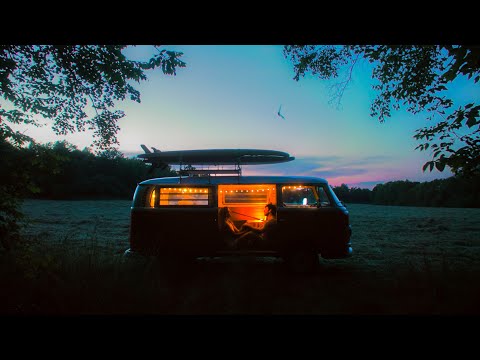
The pop-top was the masterstroke. With it down, the Campmobile looked like any other Bus. With it up, you had standing room, sleeping room, and the sound of wind in the canvas at 2 a.m. somewhere between Yosemite and nowhere.

Cultural Context

1977 was the year America discovered it could still believe in something. Star Wars said so on one screen. Jimmy Carter said so from the Oval Office. The Sex Pistols said so from a different direction entirely, with guitars instead of lightsabers, equally convinced of impending doom.

The Westfalia sat outside all of that and all of it at once. The commune crowd still had theirs from 1969 and was keeping them running. The environmental movement had claimed the Bus as a symbol of efficient collective transport. And now a new generation — the ones who'd grown up watching their older siblings drive these things to Woodstock — was buying them for weekend camping trips, family vacations, surfing pilgrimages down the Pacific Coast Highway.

The 1970s energy crisis had made the Westfalia's frugality look prescient. At 15-19 mpg loaded, it wasn't fast but it wasn't embarrassing at the pump either — not compared to the station wagons and land barges Americans had been driving. The Westfalia asked you to slow down. That turned out to be exactly what a lot of people needed.

How It Drove

You didn't drive a Westfalia so much as you piloted it. Seated directly over the front wheels, surrounded by glass, no hood in front of you — it was like driving from inside a greenhouse. Every surface was visible. Every intersection required a moment of spatial reasoning. None of this was bad. It was just different.

The 2.0-liter pulled willingly from low revs. You learned to think in terms of momentum rather than acceleration. Merge early. Coast hills. Use the four-speed deliberately. The Campmobile fully loaded — four people, camping gear, full water tank, dog — weighed close to 3,650 pounds and topped out at 75 mph on a good day with a tailwind. The highway was not where it lived. The highway was just how you got to where it lived.

Handling was competent rather than inspiring. The torsion bar front and IRS rear were well-suited to the load. The steering, worm-and-roller, required actual engagement. In exchange: a ride quality that forgave gravel roads, dirt tracks, and the occasional slow-speed off-pavement adventure. The Westfalia went where you pointed it and got there eventually. That was the contract.

Who Bought It

In 1977 the Westfalia Campmobile cost more than a base microbus but far less than any comparable RV. The buyers were people who wanted to travel but not tour — who preferred sleeping where they stopped to booking rooms three months in advance.

Schoolteachers with summers off. Young couples delaying mortgages. Families who'd given up on persuading their teenagers to enjoy motels. Photographers and writers who needed a mobile workspace. Surfers. Climbers. Anyone who'd looked at the map and thought: what if I could sleep there?

Westfalia built roughly 28,500 Campmobiles for 1978 model production, with about 40 percent going to the US. Waiting lists were real. The Bus was already culturally loaded — buying a Westfalia meant buying into something, even if you couldn't quite say what. People understood it anyway.

Buying Today

A 1977 Westfalia in honest, running condition trades between $18,000 and $45,000 depending on condition and how complete the camping systems are. Restored, documented, pop-top-intact examples with working kitchenettes climb well above $65,000. Concours examples touch $95,000 and above.

What to check: the pop-top canvas deteriorates at the seams and zipper. The fresh water system develops leaks everywhere — tank, pump, fittings, sink drain. Refrigeration if equipped is usually dead and expensive to resurrect. Interior wood veneer delaminates with moisture. The auxiliary electrical system, if original, will need attention. The engine itself is generally the most reliable part of the vehicle.

Westfalia-specific parts — cabinetry hardware, canvas, interior plastics — are expensive and sometimes unavailable new. The community is active and generous with sourcing help. Join the forums before you buy. Talk to a Westfalia specialist before you write the check. And then write the check — because these don't get cheaper, and they don't make them anymore.

The Verdict

The 1977 Westfalia Campmobile was built three years before its production line stopped. By then everything that could be refined had been. The 2.0-liter ran reliably. The kitchen worked. The pop-top sealed. The sleeping loft fit two adults if they were friends.

People were discovering in 1977 that escape didn't require a galaxy far, far away. It required a filled propane tank, a dirt road, and enough sense to unplug. The Westfalia had been providing exactly that for a decade. It would keep doing it for everyone who understood what it was actually selling. Not a vehicle. A way of moving through the world on your own terms.

That never goes out of style. Neither does the Westfalia.