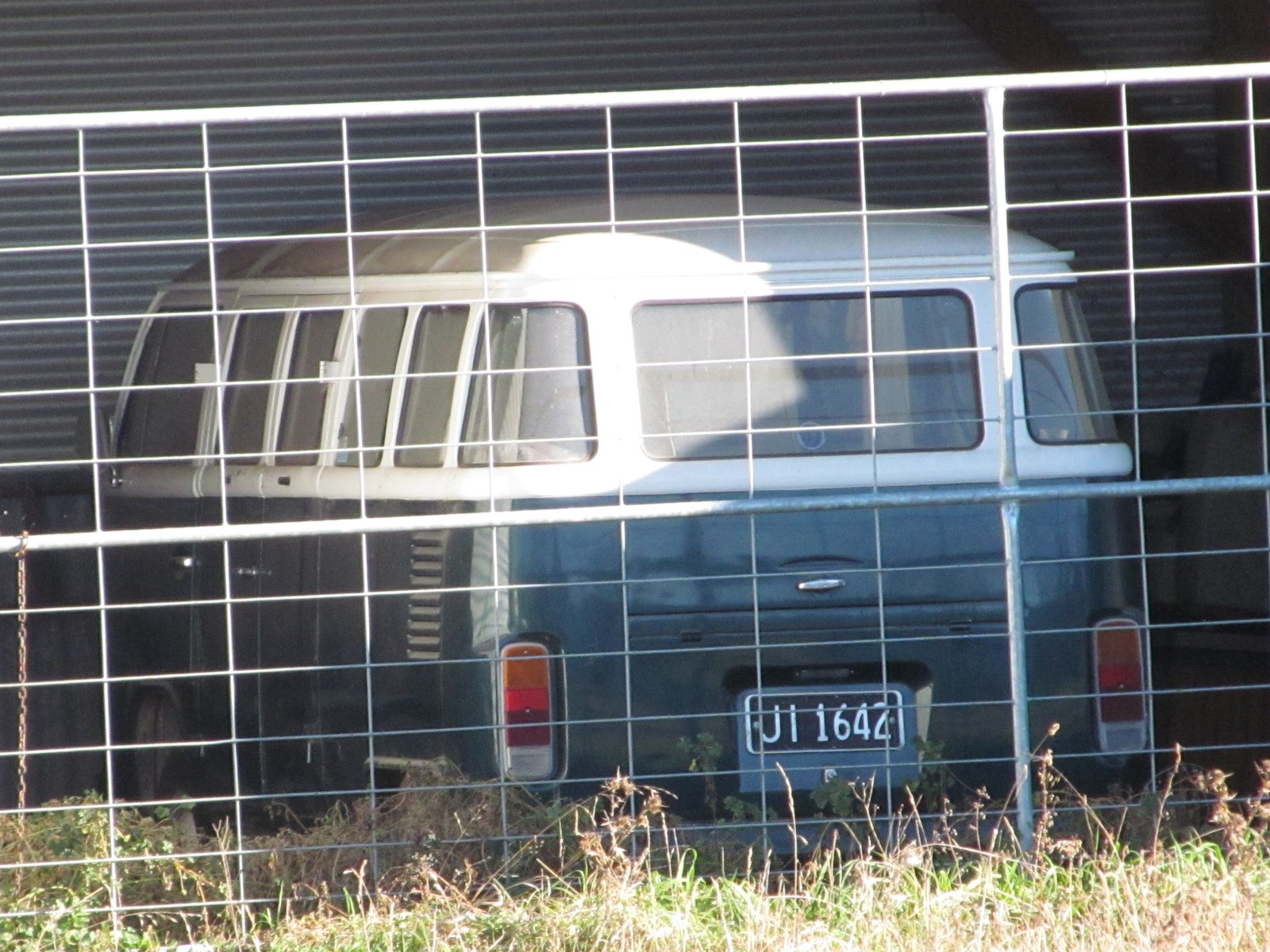
1977 T2 Microbus (Type 2)
Microbus (9-passenger)

1977 T2 Microbus (Type 2)

2000cc
Displacement
70HP
Power
N/A
Top Speed
1977 T2 Microbus (Type 2) profile

Real Stories

Shaped by Hope: The Story of 'Azul'
The Story of Georgie the VW Bus
1977 T2 Microbus (Type 2) exterior view

Factory exterior

1 / 1
T2 Microbus (Type 2)

Where the Counterculture Went Camping.

By 1977, the Bus had survived everything the decade threw at it. Oil crisis. Recession. Disco. It kept moving at its preferred speed, carrying whoever needed carrying, toward wherever they needed to go.

Nineteen seventy-seven was the year punk declared war on everything that came before it and disco declared war on punk. The culture was sorting itself into factions. The VW Bus remained stubbornly outside the argument.

Read the Full Story

Engineering.

The air-cooled flat-four that powered the 1977 T2 Microbus (Type 2). Simple, reliable, and endlessly modifiable.

2000cc

Air-cooled Type 4 flat-4

The air-cooled flat-four engine that powered a generation. Code GD / GE.

Power
70 HP
Fuel
Carburetor

Highlights.

Feature

Cultural context

counterculture, icon

Feature

Feature 2

The Type 2's boxy, forward-control layout was radical for its time.

Engine

Engine Size

1584cc (1.584L) Air-cooled flat-4 / Type 4

Engine

Horsepower

60 HP

Quick Facts — 1977 Bus

  • Engine SizeNeeds Review

    1584cc (1.584L) Air-cooled flat-4 / Type 4

  • HorsepowerNeeds Review

    60 HP

  • Engine CodeNeeds Review

    CA, CB, CV

  • Body StyleNeeds Review

    Pickup

  • TransmissionNeeds Review

    4-speed manual

  • Cultural SignificanceNeeds Review

    The 1977 Bus was approaching production end (would cease in early 1980s depending on variant).

All specifications should be verified before publication.

Top Questions — 1977 Bus

Refer to the specifications section above for the engine code used in the 1977 Bus. The engine code is typically stamped on the engine case above the generator. For verification assistance, use our M-Code decoder tool.

Confidence: medium — This information should be verified with additional sources.

The value of a 1977 Bus varies significantly based on condition, originality, and documentation. Driver-quality examples typically range from lower values, while excellent restored or numbers-matching examples command premiums. Condition, originality, and documentation are the primary value drivers. Always get a professional appraisal for insurance or sale purposes.

Confidence: low — This information requires verification before use.

1977 Bus models were produced at various Volkswagen factories worldwide. Check the production details above for specific factory information. The factory code can often be identified through chassis number analysis.

Confidence: medium — This information should be verified with additional sources.

The 1977 Bus received several updates from the 1976 model. Refer to the specifications and editorial sections above for detailed information about year-to-year changes. Changes may include mechanical updates, safety features, or cosmetic refinements.

Confidence: medium — This information should be verified with additional sources.

Common rust areas on air-cooled Volkswagens include heater channels (under running boards), floor pans (especially front and battery tray area), front beam (suspension mounting point), rear chassis/apron (where bumper mounts), and door bottoms. The heater channels are structural and expensive to repair. Always inspect these areas carefully before purchase.

The 1978 Bus received updates from the 1977 model. Check the specifications section above for details about year-to-year evolution. Common changes across model years include safety updates, mechanical refinements, and regulatory compliance features.

Confidence: medium — This information should be verified with additional sources.

A full rotisserie restoration typically costs $25,000-$50,000+ depending on condition and level of finish. Mechanical refresh (engine, brakes, suspension) runs $5,000-$12,000. Bodywork and paint alone can be $8,000-$15,000 for quality work. DIY restorations save labor but require significant time investment (500-1,000 hours). Parts availability is generally good for classic VWs, which helps control costs.

Confidence: low — This information requires verification before use.

Numbers matching (original engine, transmission, and chassis) typically increases value by 20-40% over non-matching examples. However, the premium varies based on overall condition, documentation, and market demand. Use our numbers matching verification tool to check your vehicle.

Confidence: medium — This information should be verified with additional sources.

A well-maintained 1977 Bus can serve as a daily driver, but consider the age of the vehicle. Modern traffic, safety features, and reliability expectations differ from the era. Regular maintenance, mechanical knowledge, and realistic expectations are essential. Many owners use classic VWs as weekend drivers or hobby vehicles rather than primary transportation.

Confidence: medium — This information should be verified with additional sources.

Yes, parts availability for classic air-cooled Volkswagens is generally excellent. The large enthusiast community and aftermarket support mean most mechanical and body parts are readily available. Some year-specific trim pieces or rare options may be harder to find, but the core mechanical components are well-supported.

Why This Year Matters

Needs Review
  • Cultural context: counterculture, icon
  • The Type 2's boxy, forward-control layout was radical for its time.
Collector AppealMedium
Restoration ComplexityMedium
Daily Driver SuitabilityMedium

Valuation Resources

Research current market values for the 1977 T2 Microbus (Type 2)

Buying tip: Condition is everything. A rusty "project" can cost more to restore than buying a finished car. Check heater channels, floor pans, and battery tray first.

Pistachio

L13Hsolidcommon

Factory Colors

Original paint options available for the 1977 T2 Microbus (Type 2).

solid Colors

Looking for a 1977 T2 Microbus (Type 2) in Pistachio?

Find for Sale

Which 1977 Bus fits your style?

Explore the variants available for this model year and find your perfect match.

Want to see a detailed comparison of multiple vehicles?

Compare all variants

Verify Authenticity

Numbers matching verification increases value by 20-40%. Use our tools to verify engine codes, chassis numbers, and M-codes for your 1977 T2 Microbus (Type 2).

Correct Engine CodeGD / GE

The Full Story

Introduction

Nineteen seventy-seven was the year punk declared war on everything that came before it and disco declared war on punk. The culture was sorting itself into factions. The VW Bus remained stubbornly outside the argument.

The 1977 T2 Microbus with the 2000cc engine and 70 horsepower continued its role as the vehicle that didn't require a cultural affiliation to justify. Families drove it. Artists drove it. Bands drove it. Church groups drove it. The Bus was genuinely ecumenical in a year when ecumenicism was unfashionable.

What It Was

The 1977 T2 Microbus represented the T2 platform at its most developed. Eight years of production refinement had addressed the rough edges. The 2000cc Type 4 engine, available in GD/GE configurations, provided 70 horsepower that made the Bus genuinely capable on modern roads.

The nine-passenger capacity remained the core proposition. Nine seats in a vehicle with manageable dimensions and reasonable operating costs. The proposition hadn't changed since 1950. The execution had improved continuously.

What Made It Special

By 1977, the T2's improvement over the T1 was evident in every aspect of the ownership experience. Quieter. More comfortable for passengers. Better performing on grades and at highway speeds. The 70-horsepower engine made a meaningful difference in the Bus's ability to travel with traffic rather than around it.

What had not changed was the fundamental character. The forward-control layout still gave the driver a panoramic view. The sliding door still worked with the sliding-door satisfaction. The interior still invited imagination about all the ways it could be arranged and used.

Cultural Context

In 1977, the original hippie generation was approaching thirty. Some had cut their hair and gone to law school. Others had maintained the thread of the lifestyle that the Bus had symbolized. The Bus itself had accumulated a second generation of owners: younger people who discovered it not as a cultural moment but as a practical vehicle that happened to be deeply interesting.

Star Wars was rewriting popular mythology. Punk was rewriting popular music. The Bus was just being the Bus, which by 1977 was its own kind of reliable mythology.

How It Drove

The 1977 T2 Microbus with 70 horsepower drove with a confidence that earlier generations couldn't match. Highway speeds were sustainable. The engine operated well within its range at the speeds modern traffic required. Long-distance travel was genuinely comfortable rather than heroic.

The T2's accumulated refinements made the 1977 model the most pleasant Bus to spend extended time in. The seats were better. The insulation was better. The mechanical refinement was better. What remained constant was the character: the view from the cab, the sound of the engine, the particular satisfaction of driving something this honest.

Who Bought It

The breadth of the 1977 Microbus buyer was one of its defining characteristics. No other vehicle in the American market in 1977 served such a genuinely diverse range of uses with equal appropriateness. Families, churches, bands, communes, shuttle services, outdoor clubs: all of them found the Microbus fit their requirements.

This breadth was not accidental. It was the product of a design that prioritized useful space over everything else and allowed the users to define that space according to their needs. The most adaptable designs are the ones that become durable.

Buying Today

The 1977 T2 Microbus is entering the collector market at a moment when the T2 generation as a whole is being reappraised. Values are rising. Good original examples are becoming harder to find. The 2000cc engine variants command a premium over the 1600cc units.

Buy sooner rather than later if this vehicle appeals to you. The market for T2 Microbuses has moved in one direction consistently, and there's no structural reason for it to reverse.

Find the best condition example available at your budget. These are worth maintaining and driving.

The Verdict

The 1977 T2 Microbus was the Bus at its most capable and most culturally loaded. It had accumulated a decade of meaning without asking for any of it.

It just kept moving. At its own speed, on its own terms, carrying whoever needed to get somewhere. That was always the whole story. In 1977, it was still a good one.