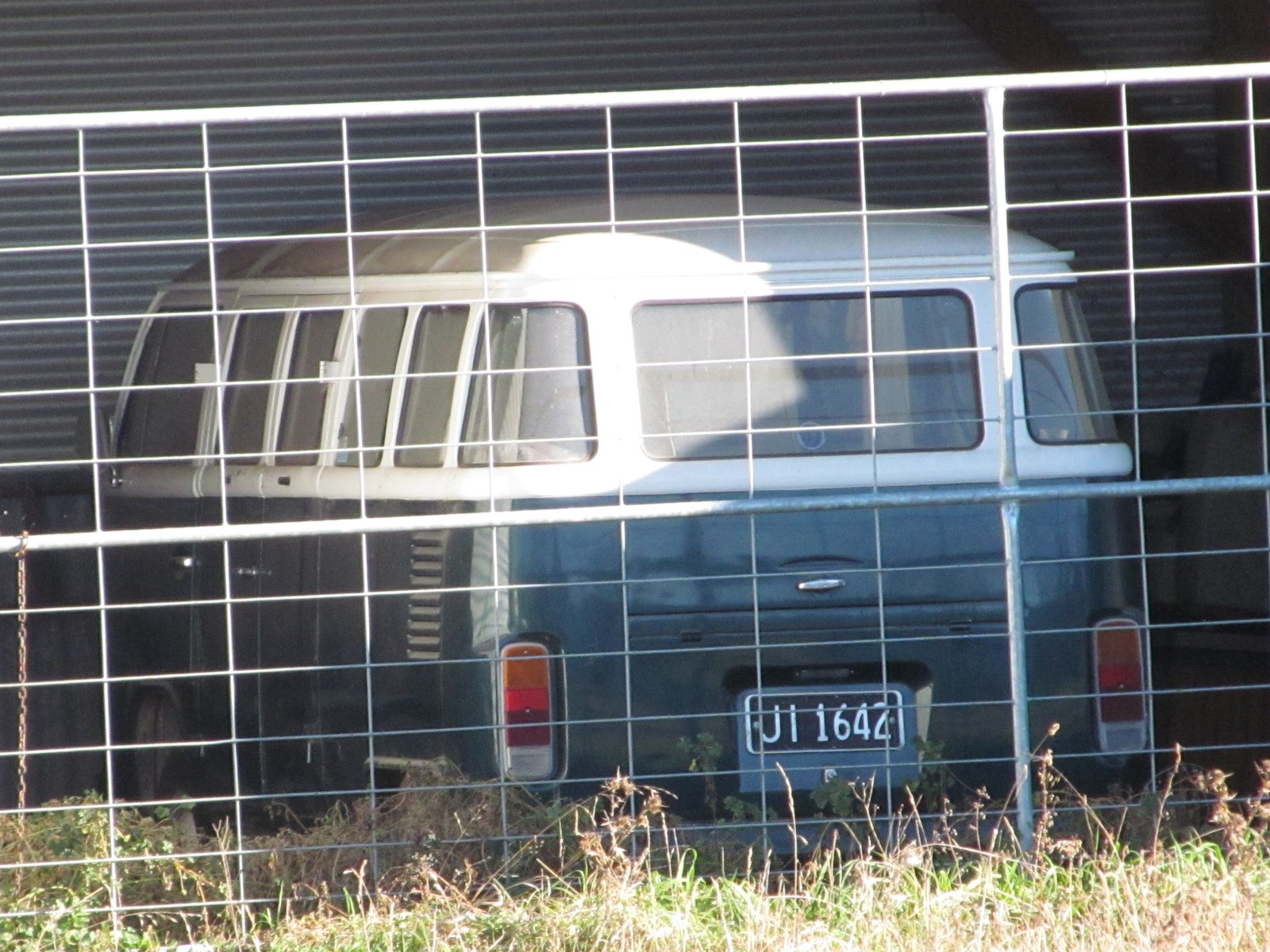
1978 T2 Single Cab (Type 2)
Single Cab Pickup

1978 T2 Single Cab (Type 2)

2000cc
Displacement
70HP
Power
N/A
Top Speed
1978 T2 Single Cab (Type 2) profile

Real Stories

Shaped by Hope: The Story of 'Azul'
The Story of Georgie the VW Bus
1978 T2 Single Cab (Type 2) exterior view

Factory exterior

1 / 1
T2 Single Cab (Type 2)

Just the Two of You and Everything You Need

The 1978 Single Cab Pickup was the Bus stripped to its working bones: one cab, one bed, one job. While the Grease soundtrack played on every radio, this one was hauling pipe, plants, and lumber without a choreographed step in sight.

There are vehicles that make promises and vehicles that keep them. The 1978 VW Single Cab Pickup never made promises. It showed up with a flat bed and a willingness to work, which turned out to be exactly what a specific kind of buyer needed.

Read the Full Story

Engineering.

The air-cooled flat-four that powered the 1978 T2 Single Cab (Type 2). Simple, reliable, and endlessly modifiable.

2000cc

Air-cooled Type 4 flat-4

The air-cooled flat-four engine that powered a generation. Code GD / GE.

Power
70 HP
Fuel
Carburetor

Highlights.

Feature

Cultural context

counterculture, icon

Feature

Feature 2

The Type 2's boxy, forward-control layout was radical for its time.

Engine

Engine Size

1584cc (1.584L) Air-cooled flat-4 / Type 4

Engine

Horsepower

60 HP

Quick Facts — 1978 Bus

  • Engine SizeNeeds Review

    1584cc (1.584L) Air-cooled flat-4 / Type 4

  • HorsepowerNeeds Review

    60 HP

  • Engine CodeNeeds Review

    CA, CB, CV

  • Body StyleNeeds Review

    Pickup

  • TransmissionNeeds Review

    4-speed manual

  • Cultural SignificanceNeeds Review

    The 1978 Bus was approaching production end (would cease in early 1980s depending on variant).

All specifications should be verified before publication.

Top Questions — 1978 Bus

Refer to the specifications section above for the engine code used in the 1978 Bus. The engine code is typically stamped on the engine case above the generator. For verification assistance, use our M-Code decoder tool.

Confidence: medium — This information should be verified with additional sources.

The value of a 1978 Bus varies significantly based on condition, originality, and documentation. Driver-quality examples typically range from lower values, while excellent restored or numbers-matching examples command premiums. Condition, originality, and documentation are the primary value drivers. Always get a professional appraisal for insurance or sale purposes.

Confidence: low — This information requires verification before use.

1978 Bus models were produced at various Volkswagen factories worldwide. Check the production details above for specific factory information. The factory code can often be identified through chassis number analysis.

Confidence: medium — This information should be verified with additional sources.

The 1978 Bus received several updates from the 1977 model. Refer to the specifications and editorial sections above for detailed information about year-to-year changes. Changes may include mechanical updates, safety features, or cosmetic refinements.

Confidence: medium — This information should be verified with additional sources.

Common rust areas on air-cooled Volkswagens include heater channels (under running boards), floor pans (especially front and battery tray area), front beam (suspension mounting point), rear chassis/apron (where bumper mounts), and door bottoms. The heater channels are structural and expensive to repair. Always inspect these areas carefully before purchase.

The 1979 Bus received updates from the 1978 model. Check the specifications section above for details about year-to-year evolution. Common changes across model years include safety updates, mechanical refinements, and regulatory compliance features.

Confidence: medium — This information should be verified with additional sources.

A full rotisserie restoration typically costs $25,000-$50,000+ depending on condition and level of finish. Mechanical refresh (engine, brakes, suspension) runs $5,000-$12,000. Bodywork and paint alone can be $8,000-$15,000 for quality work. DIY restorations save labor but require significant time investment (500-1,000 hours). Parts availability is generally good for classic VWs, which helps control costs.

Confidence: low — This information requires verification before use.

Numbers matching (original engine, transmission, and chassis) typically increases value by 20-40% over non-matching examples. However, the premium varies based on overall condition, documentation, and market demand. Use our numbers matching verification tool to check your vehicle.

Confidence: medium — This information should be verified with additional sources.

A well-maintained 1978 Bus can serve as a daily driver, but consider the age of the vehicle. Modern traffic, safety features, and reliability expectations differ from the era. Regular maintenance, mechanical knowledge, and realistic expectations are essential. Many owners use classic VWs as weekend drivers or hobby vehicles rather than primary transportation.

Confidence: medium — This information should be verified with additional sources.

Yes, parts availability for classic air-cooled Volkswagens is generally excellent. The large enthusiast community and aftermarket support mean most mechanical and body parts are readily available. Some year-specific trim pieces or rare options may be harder to find, but the core mechanical components are well-supported.

Why This Year Matters

Needs Review
  • Cultural context: counterculture, icon
  • The Type 2's boxy, forward-control layout was radical for its time.
Collector AppealMedium
Restoration ComplexityMedium
Daily Driver SuitabilityMedium

Valuation Resources

Research current market values for the 1978 T2 Single Cab (Type 2)

Buying tip: Condition is everything. A rusty "project" can cost more to restore than buying a finished car. Check heater channels, floor pans, and battery tray first.

Light Green

L13Asolidlimited

Factory Colors

Original paint options available for the 1978 T2 Single Cab (Type 2).

solid Colors

Looking for a 1978 T2 Single Cab (Type 2) in Light Green?

Find for Sale

Which 1978 Bus fits your style?

Explore the variants available for this model year and find your perfect match.

Want to see a detailed comparison of multiple vehicles?

Compare all variants

Verify Authenticity

Numbers matching verification increases value by 20-40%. Use our tools to verify engine codes, chassis numbers, and M-codes for your 1978 T2 Single Cab (Type 2).

Correct Engine CodeGD / GE

The Full Story

Introduction

There are vehicles that make promises and vehicles that keep them. The 1978 VW Single Cab Pickup never made promises. It showed up with a flat bed and a willingness to work, which turned out to be exactly what a specific kind of buyer needed.

While the Double Cab Pickup carried a crew, the Single Cab was a two-person operation: driver, one passenger, maximum cargo. It was the most truck-like thing in the Bus lineup — the variant that had drifted furthest from the Bus's people-moving origins and closest to pure commercial utility.

What It Was

The 1978 Single Cab Pickup shared the T2b Late Bay platform with every other Type 2 that year, but the body configuration was fundamentally different from the passenger variants. Behind the two-person cab was an open cargo bed with wood-plank floor, fold-down sides, and a payload capacity that made small commercial operators genuinely consider it against American truck alternatives.

Engine: 2.0-liter Type 4 air-cooled flat-four, 70 horsepower DIN. New for 1978: hydraulic valve lifters that eliminated the periodic valve adjustment requirement — a meaningful reduction in maintenance overhead for commercial operators running these vehicles on tight schedules. Four-speed manual or three-speed automatic. Torsion bar front suspension, IRS rear.

The cab interior was straightforward: vinyl bench seat for two, rubber floor mats, minimal trim. The steering wheel was large-diameter thin-rim — the period-correct design that suited the physical effort required at low speeds. No pretensions. No options that weren't useful. This was a commercial vehicle, and Volkswagen built it like one.

What Made It Special

The Single Cab's genius was dimensional. The forward-control layout gave the operator a short overall vehicle length with a disproportionately long cargo bed. You could park this pickup in a space that would defeat a comparable American truck, while carrying the same payload.

The 1978's hydraulic lifters made the Type 4 engine genuinely competitive on maintenance cost with contemporary American truck engines. Not cheaper to buy — Volkswagen never won on purchase price — but cheaper to run. Fewer service visits. Less downtime. For a small business where every vehicle day lost is revenue lost, this mattered.

The air-cooled simplicity was the final advantage. No radiator. No coolant system. No water pump. The failure modes of the Single Cab were fewer and more predictable than a liquid-cooled alternative, and when something did fail, it usually failed in a way that could be diagnosed and often repaired without a specialist.

Cultural Context

1978 was the year of the Three Mile Island near-miss — no, wait, that was 1979. In 1978 America was still dancing, still watching Fonzie jump over things, still in the extended cultural hangover of the 1970s without quite understanding how it would end.

The Single Cab Pickup existed entirely outside this cultural register. It was a European commercial vehicle in a market dominated by American trucks. Its buyers were practical rather than ideological — people who'd looked at the total cost of operation and concluded that the VW made sense for their business regardless of what it said on the cultural scoreboard.

This was the penultimate year of German Single Cab production. 1979 would be the last. Neither fact was widely advertised or widely known at the time. People buying a 1978 Single Cab were buying a work truck, not a collector's item. History would reassign its status. It usually does.

How It Drove

The Single Cab drove like a Bus that had had its rear section removed and replaced with honesty. The cab dynamics were identical to any T2b: forward seating over the front wheels, enormous visibility, a turning circle that belied the vehicle's length.

Unloaded, the 2.0-liter felt surprisingly willing — lighter rear end without the passenger cabin meant the engine wasn't pulling as much weight. Loaded to capacity, it settled into its working rhythm: steady, capable, unhurried. The four-speed manual rewarded the operator who understood it. You used all four gears deliberately. You planned hills and passes. You were in a relationship with the driving, not just doing it.

Ride quality varied significantly with load. Empty, the rear bounced over pavement imperfections in the way of all light trucks unladen. Loaded, it settled and smoothed. The working state was actually the more comfortable state. Another thing the Single Cab had in common with people who work best when they have work to do.

Who Bought It

Nurseries and garden centers drove them for plant delivery. Electrical and plumbing contractors used them for solo-operator jobs where the Double Cab's extra seating was unnecessary overhead. Farmers with light hauling needs. Small delivery operations. Airport and facility maintenance departments.

In Europe the Single Cab had deeper commercial penetration than in the US — it was more familiar to buyers, more embedded in the commercial vehicle landscape, available from more dealers as a standard inventory item rather than a special order.

American buyers who found them were usually in specialized trades or had specifically sought out the forward-control format for its dimensional advantages. These were not impulse purchases. These were considered decisions by operators who'd done the math and liked the answer.

Buying Today

Single Cab pickups from 1978 are rarer than Microbus or van variants — commercial vehicles get worked hard and often discarded rather than restored. Survivors are genuinely uncommon in clean condition.

Expect to pay $25,000 to $55,000 for a driving, honest example. Restored Singles with original bed hardware and correct cab trim trade at $55,000 and above. The cargo bed is the critical inspection point: wood floor rot, side panel rust, bed-to-cab structural integrity. The cab corners and rocker panels rust like all Bay Window vehicles. Underneath inspection is mandatory.

The hydraulic-lifter engine of 1978 is a genuine asset — note it in your inspection checklist. Parts availability for mechanicals is good. Body panels for the commercial variants are harder to source than passenger Bus components. Budget for fabrication if you're doing a serious restoration, and find a restorer who has done Singles before. The specific knowledge matters.

The Verdict

The 1978 VW Single Cab Pickup was never meant to be collected. It was meant to be used, and used hard, and replaced when it stopped working. The fact that survivors are treasured objects today is a kind of historical reversal that would have puzzled the nurserymen and electricians who drove them to job sites.

But time clarifies values. The Single Cab was built to do one thing well, without apology, without ornament. By 1978 it had been doing it for most of two decades. One more year left. Every one that survived is the record of work honestly done.

That's worth something. It always was.