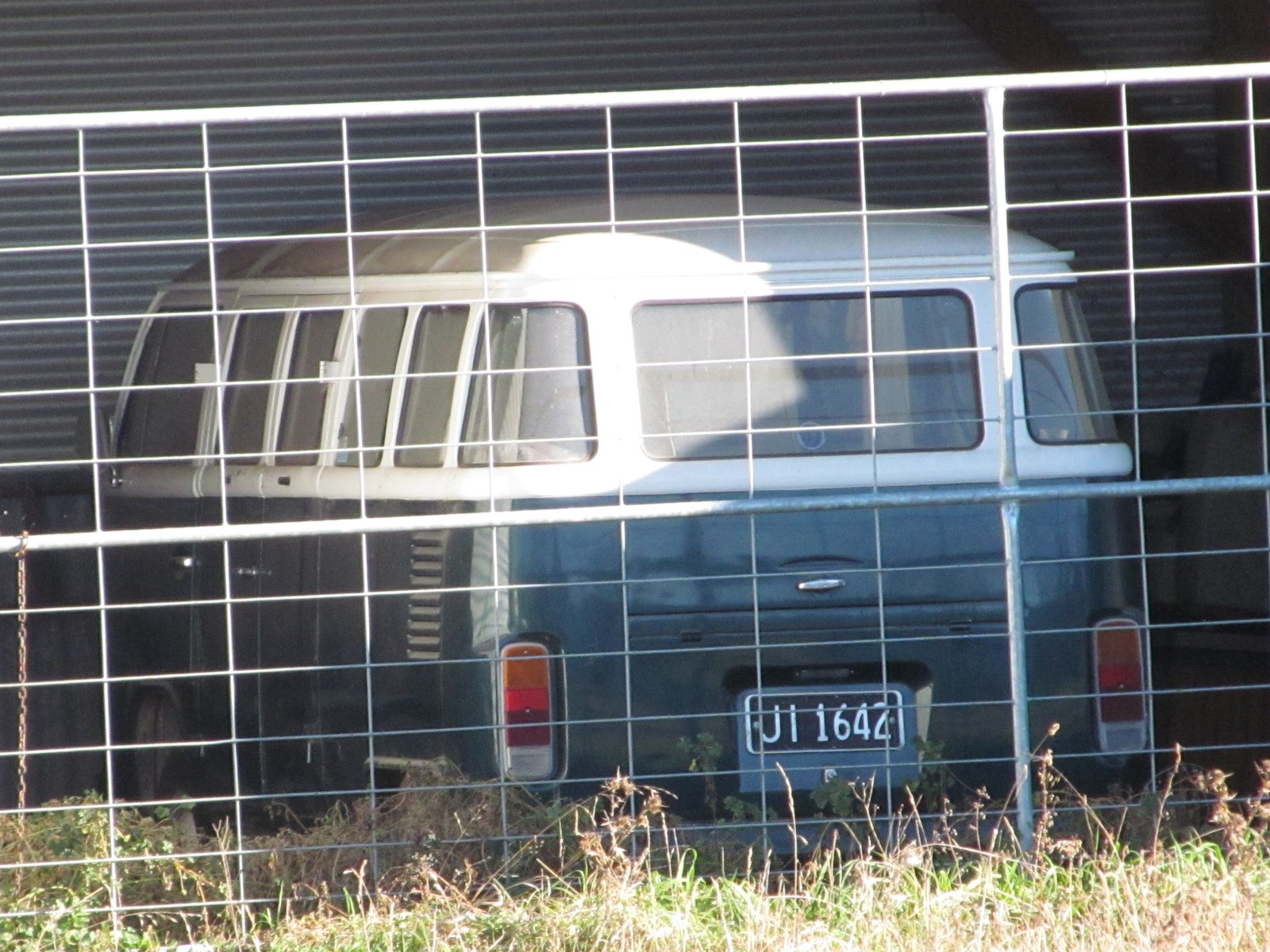
1978 T2 Microbus (Type 2)
Microbus (9-passenger)

1978 T2 Microbus (Type 2)

2000cc
Displacement
70HP
Power
N/A
Top Speed
1978 T2 Microbus (Type 2) profile

Real Stories

Shaped by Hope: The Story of 'Azul'
The Story of Georgie the VW Bus
1978 T2 Microbus (Type 2) exterior view

Factory exterior

1 / 1
T2 Microbus (Type 2)

Nine People, No Apologies

The 1978 Microbus arrived with hydraulic valve lifters and left with a reputation. Nine passengers, 70 horsepower, more character than anything in the showroom. The penultimate act of an era that started before most of its buyers were born.

By 1978 the Type 2 Microbus had been in continuous production for 28 years. It had survived the Eisenhower administration, the Beatles, three oil crises, the EPA, and the Department of Transportation. It had watched American culture mutate through at least six distinct phases and emerged, at each turn, still recognizable as itself.

Read the Full Story

Engineering.

The air-cooled flat-four that powered the 1978 T2 Microbus (Type 2). Simple, reliable, and endlessly modifiable.

2000cc

Air-cooled Type 4 flat-4

The air-cooled flat-four engine that powered a generation. Code GD / GE.

Power
70 HP
Fuel
Carburetor

Highlights.

Feature

Cultural context

counterculture, icon

Feature

Feature 2

The Type 2's boxy, forward-control layout was radical for its time.

Engine

Engine Size

1584cc (1.584L) Air-cooled flat-4 / Type 4

Engine

Horsepower

60 HP

Quick Facts — 1978 Bus

  • Engine SizeNeeds Review

    1584cc (1.584L) Air-cooled flat-4 / Type 4

  • HorsepowerNeeds Review

    60 HP

  • Engine CodeNeeds Review

    CA, CB, CV

  • Body StyleNeeds Review

    Pickup

  • TransmissionNeeds Review

    4-speed manual

  • Cultural SignificanceNeeds Review

    The 1978 Bus was approaching production end (would cease in early 1980s depending on variant).

All specifications should be verified before publication.

Top Questions — 1978 Bus

Refer to the specifications section above for the engine code used in the 1978 Bus. The engine code is typically stamped on the engine case above the generator. For verification assistance, use our M-Code decoder tool.

Confidence: medium — This information should be verified with additional sources.

The value of a 1978 Bus varies significantly based on condition, originality, and documentation. Driver-quality examples typically range from lower values, while excellent restored or numbers-matching examples command premiums. Condition, originality, and documentation are the primary value drivers. Always get a professional appraisal for insurance or sale purposes.

Confidence: low — This information requires verification before use.

1978 Bus models were produced at various Volkswagen factories worldwide. Check the production details above for specific factory information. The factory code can often be identified through chassis number analysis.

Confidence: medium — This information should be verified with additional sources.

The 1978 Bus received several updates from the 1977 model. Refer to the specifications and editorial sections above for detailed information about year-to-year changes. Changes may include mechanical updates, safety features, or cosmetic refinements.

Confidence: medium — This information should be verified with additional sources.

Common rust areas on air-cooled Volkswagens include heater channels (under running boards), floor pans (especially front and battery tray area), front beam (suspension mounting point), rear chassis/apron (where bumper mounts), and door bottoms. The heater channels are structural and expensive to repair. Always inspect these areas carefully before purchase.

The 1979 Bus received updates from the 1978 model. Check the specifications section above for details about year-to-year evolution. Common changes across model years include safety updates, mechanical refinements, and regulatory compliance features.

Confidence: medium — This information should be verified with additional sources.

A full rotisserie restoration typically costs $25,000-$50,000+ depending on condition and level of finish. Mechanical refresh (engine, brakes, suspension) runs $5,000-$12,000. Bodywork and paint alone can be $8,000-$15,000 for quality work. DIY restorations save labor but require significant time investment (500-1,000 hours). Parts availability is generally good for classic VWs, which helps control costs.

Confidence: low — This information requires verification before use.

Numbers matching (original engine, transmission, and chassis) typically increases value by 20-40% over non-matching examples. However, the premium varies based on overall condition, documentation, and market demand. Use our numbers matching verification tool to check your vehicle.

Confidence: medium — This information should be verified with additional sources.

A well-maintained 1978 Bus can serve as a daily driver, but consider the age of the vehicle. Modern traffic, safety features, and reliability expectations differ from the era. Regular maintenance, mechanical knowledge, and realistic expectations are essential. Many owners use classic VWs as weekend drivers or hobby vehicles rather than primary transportation.

Confidence: medium — This information should be verified with additional sources.

Yes, parts availability for classic air-cooled Volkswagens is generally excellent. The large enthusiast community and aftermarket support mean most mechanical and body parts are readily available. Some year-specific trim pieces or rare options may be harder to find, but the core mechanical components are well-supported.

Why This Year Matters

Needs Review
  • Cultural context: counterculture, icon
  • The Type 2's boxy, forward-control layout was radical for its time.
Collector AppealMedium
Restoration ComplexityMedium
Daily Driver SuitabilityMedium

Valuation Resources

Research current market values for the 1978 T2 Microbus (Type 2)

Buying tip: Condition is everything. A rusty "project" can cost more to restore than buying a finished car. Check heater channels, floor pans, and battery tray first.

Light Green

L13Asolidlimited

Factory Colors

Original paint options available for the 1978 T2 Microbus (Type 2).

solid Colors

Looking for a 1978 T2 Microbus (Type 2) in Light Green?

Find for Sale

Which 1978 Bus fits your style?

Explore the variants available for this model year and find your perfect match.

Want to see a detailed comparison of multiple vehicles?

Compare all variants

Verify Authenticity

Numbers matching verification increases value by 20-40%. Use our tools to verify engine codes, chassis numbers, and M-codes for your 1978 T2 Microbus (Type 2).

Correct Engine CodeGD / GE

The Full Story

Introduction

By 1978 the Type 2 Microbus had been in continuous production for 28 years. It had survived the Eisenhower administration, the Beatles, three oil crises, the EPA, and the Department of Transportation. It had watched American culture mutate through at least six distinct phases and emerged, at each turn, still recognizable as itself.

That kind of persistence requires either extraordinary mediocrity or extraordinary rightness. The Microbus was right — right for its size, right for its layout, right for the idea that nine people deserved to travel together without one of them getting the folding jump seat in the back of a station wagon.

What It Was

The 1978 Microbus was the T2b Late Bay in its most refined people-moving configuration: forward control cabin, nine-passenger seating across three rows, the full-length greenhouse of a windshield that had become the Bus's signature.

The 2.0-liter Type 4 air-cooled flat-four made 70 horsepower DIN. The significant engineering news for 1978 was the hydraulic valve lifters — finally eliminating the periodic valve adjustments that had been a fixture of Type 4 ownership since 1971. New cylinder heads accompanied them, improving reliability and reducing maintenance intervals. This was a real improvement, not a marketing headline.

Interior trim on the Microbus was genuinely comfortable: two-tone vinyl seats in Phosphor/Como Green or Basalt/Silver Beige, full-length headliner in cloth or perforated vinyl, paneled walls in vinyl over masonite. Fixed upholstered benches that folded flat for cargo when the seats weren't needed for people. Simple, durable, easy to clean. The interior didn't try to be a car. It tried to be a room, and it succeeded.

What Made It Special

The hydraulic lifters changed the ownership math. Before 1978, Type 4 engines required valve adjustments at regular intervals — not difficult, but requiring either mechanical competence or dealer visits. The 1978 engine eliminated this. It made the Microbus more accessible to people who wanted to drive it rather than maintain it.

But the deeper specialness of the 1978 Microbus was what it represented in the lineup: peak Bay Window. Everything VW had learned in 28 years of Bus production was present. The visibility. The packaging. The way the sliding side door opened onto a usable cabin rather than a narrow slot. The ease of loading and unloading that made parents, coaches, and anyone who moved people regularly choose it over alternatives that looked more modern but worked less well.

This was the second-to-last year. Production would end in 1979 for the German market and US market, replaced by the water-cooled T3 Vanagon. The engineers knew it. The people who'd been building them knew it. The 1978 Microbus was not rushed or cheapened at the end — it was improved.

Cultural Context

1978 was the year of Grease, Animal House, and the Bee Gees. It was also the year of Jonestown, the neutron bomb debate, and the first commercial use of the word 'spam.' America was in a strange mood: nostalgic and anxious simultaneously, reaching for the 1950s with one hand and bracing for what came next with the other.

The Microbus absorbed all of it without changing. Families drove them to soccer practice and camping trips. Churches used them for youth groups. Small businesses converted them for transport. The counterculture remnants still had theirs from the 1960s and kept them patched together with baling wire and optimism.

What's remarkable in retrospect is how cross-cultural the Bus remained. It had become, by 1978, a genuinely neutral vehicle — claimed by no single tribe. The flower children had it. The suburban coaches had it. The commercial operators had it. The Westfalia buyers had a version of it. The Microbus served all of them without favoring any, which is either the definition of great design or of design that has outlasted its moment and become infrastructure.

How It Drove

The 1978 Microbus was not fast. This is not a criticism. Top speed was approximately 78 mph with optimal conditions and a following wind. Zero to 60 happened somewhere around 20 seconds. The four-speed manual required a comfortable relationship with momentum — plan your passes, descend hills in gear, be patient on on-ramps.

In exchange: a driving experience with almost nothing between you and the world outside. The enormous windshield put you at the center of every landscape. The tight turning circle made parking in city spaces manageable. The elevated seating position gave you visibility over most traffic. You weren't in traffic; you were observing it from a slight remove.

Passengers had genuine comfort. The bench seats were firm rather than plush, but the legroom was abundant, the headroom was real, and the sliding door opened onto the world without the narrow squeeze of a conventional vehicle. Nine people arrived at their destination as nine people rather than as a compressed mass of elbows and complaints.

Who Bought It

Large families. Coaches and youth group leaders. Camp operators. Church van programs. Small shuttle operations. Resort properties that needed to move guests from parking to lodge. Anyone who needed to move more than four people and discovered that the Microbus cost less to buy, less to run, and less to maintain than any American van of comparable capacity.

The nine-passenger configuration was the Microbus's commercial calling card. American competitors of the era offered similar capacity in vehicles that were longer, wider, less fuel-efficient, and harder to park. The Bus was compact by comparison — which sounds paradoxical for a vehicle this size, but forward control design creates its own logic.

In 1978 you could buy a new Microbus for substantially less than a comparable American van. The total cost of ownership over three years made the VW even more competitive. The people who bought them for practical reasons — not cultural reasons — were often the most satisfied owners.

Buying Today

A 1978 Microbus in honest driving condition trades between $20,000 and $45,000. Restored examples with correct two-tone vinyl interiors and documented mechanical history approach $65,000. The hydraulic-lifter engine is a specific asset to note — it means the 1978 was the beginning of lower-maintenance Type 4 ownership.

Rust is the primary concern: floor pans, rocker panels, lower cab corners, the battery tray area, rear crossmember. California and Southwest buses are meaningfully better than East Coast and Midwest examples. Inspect underneath before anything else.

The market for late Bay Window buses has strengthened steadily. The 1978 occupies a sweet spot: final refinements, not-quite-final-year (which commands the premium 1979 does), and the hydraulic valve lifter upgrade that makes ownership more accessible. Parts availability for mechanical components is good. Body panels are harder. Find the cleanest example you can. The bones are more important than the surface.

The Verdict

The 1978 Microbus was the Type 2 at its most reliable and its most itself. Twenty-eight years of production had done what time does to honest designs — refined them to their essence. The hydraulic lifters were the last significant upgrade. Everything else had already been figured out.

It carried nine people across a country that was figuring out what it wanted to be, and it did so without opinion or pretense. Just glass, air, and 70 horsepower of flat-four conviction.

The ones that survive are worth finding. Because the 1978 was the penultimate sentence of a story that took three decades to tell. And the last sentences of good stories are always worth reading.