1600cc
Air-cooled
The air-cooled flat-four engine that powered a generation. Code .
- Power
- N/A
- Fuel
- Carburetor
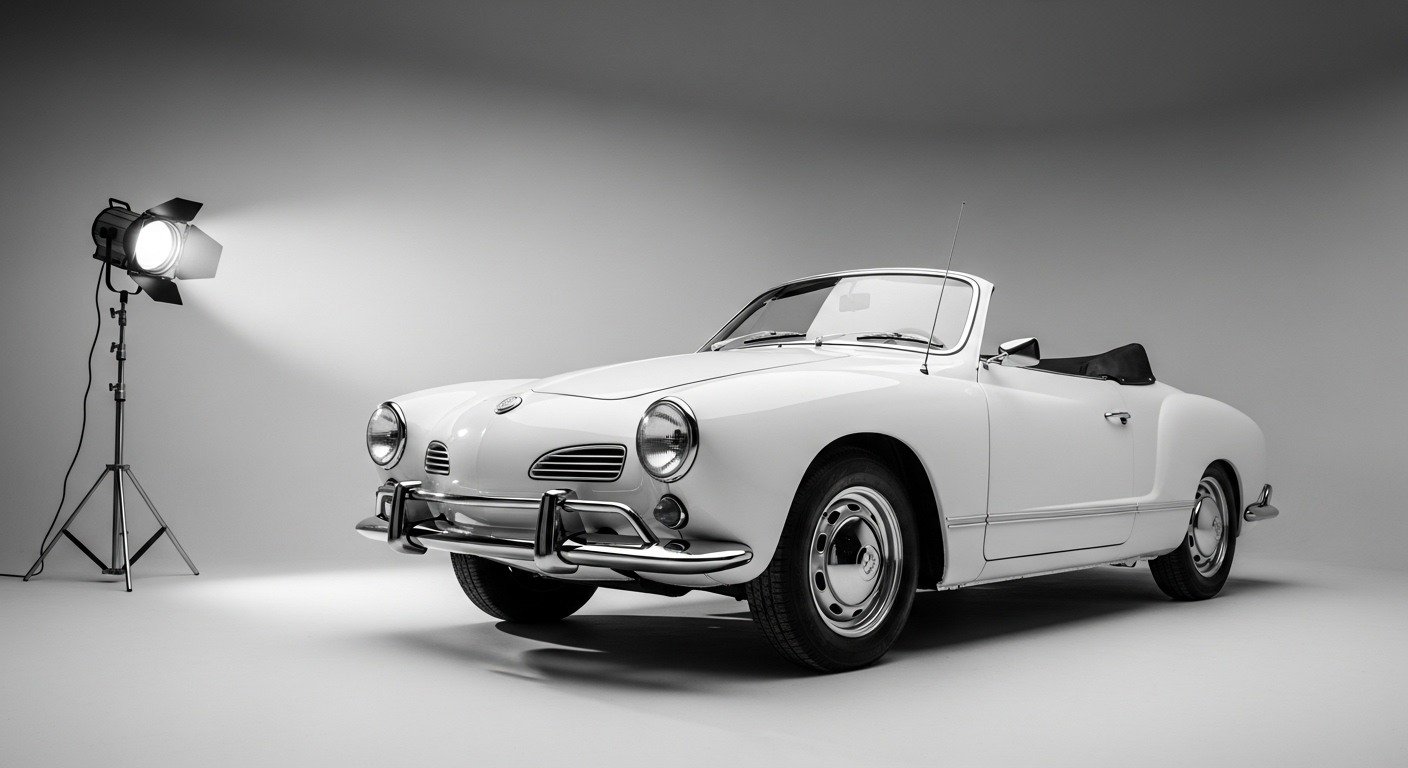
The 1954 Karmann Ghia Convertible was an act of restraint in an era of excess. No tailfins, no chrome aggression — just Ghia's clean lines, Karmann's skilled hands, and the freedom of a properly engineered cabriolet top that actually worked.
The Coupe had been a statement. The Convertible was a confession. With the top down, the Karmann Ghia revealed its true nature: a European sports car that happened to use a Beetle platform.
The air-cooled flat-four that powered the 1954 Type 14 Convertible. Simple, reliable, and endlessly modifiable.
Research current market values for the 1954 Type 14 Convertible
Hagerty Valuation Tools
Industry-standard classic car values
Bring a Trailer Results
Recent auction prices
TheSamba Classifieds
Current listings & asking prices
Buying tip: Condition is everything. A rusty "project" can cost more to restore than buying a finished car. Check heater channels, floor pans, and battery tray first.
Explore the variants available for this model year and find your perfect match.
Want to see a detailed comparison of multiple vehicles?
Compare all variantsNumbers matching verification increases value by 20-40%. Use our tools to verify engine codes, chassis numbers, and M-codes for your 1954 Type 14 Convertible.
The Coupe had been a statement. The Convertible was a confession. With the top down, the Karmann Ghia revealed its true nature: a European sports car that happened to use a Beetle platform.
In 1954, convertibles were either expensive exotica or clumsy conversions. Karmann built a proper cabriolet. The top mechanism was robust, the structure remained tight despite the missing roof, and the proportions actually improved — the flowing lines became even more graceful with the roof folded behind the rear seats.
This was the year West Germany announced it would join NATO. The country was finding its place again. And quietly, in Osnabrück, craftsmen were making something that would outlast every geopolitical arrangement of the era.
The Convertible's design was a masterclass in proportion and balance. Without a roof, the car's horizontal lines became more pronounced. The windshield appeared taller, the body more sculptural. Karmann's hand-formed panels flowed from the wraparound windshield back to the folding soft top.
When the top was down, exposed were elegant side rails, a proper convertible frame, and those beautiful window channels. The interior was fully trimmed — not a compromise conversion, but an intentional design. Everything looked like it belonged.
The exterior was pure Ghia: low, curved, undecorated. No fins. No chrome excess. Just surfaces that moved the eye from nose to tail without interruption.
The cabriolet required structural reinforcement despite sharing the Beetle's 1131cc engine. Karmann engineers added internal bracing and refined the suspension geometry. The result was surprisingly tight — virtually no cowl shake despite the missing roof. That was coachbuilding, not luck.
The roof mechanism was a few simple movements. Canvas top disappeared neatly behind the rear seats. Frame joints were beautifully executed. Unlike American ragtops of the era — which often leaked, rattled, and fought back — this one rewarded patience with elegance.
The 1131cc air-cooled flat-four made around 30 horsepower, which was sufficient if you understood that this car was never about speed. It was about being somewhere beautiful on a warm day with the wind working through your hair.
Top down, through the European countryside, the 1954 Karmann Ghia Convertible offered something precious: the pure sensory experience of open-air motoring without sacrificing elegance. The wind, the engine's air-cooled character, the immediate connection to the road.
The four-speed gearbox was short-throw and deliberate. The torsion bar suspension gave a ride quality that suited long afternoon drives rather than Alpine sprinting. It was not a performance car. It was an experience car, and that distinction matters enormously.
With the top up, it was a fully enclosed coupe — no convertible chop-top awkwardness. Leather appointments, proper gauges, genuine craftsmanship. For weekend drives and romantic evenings, it was the perfect instrument.
1954: Post-war Germany was accelerating. The economy was thriving and optimism was replacing austerity. The convertible — always a symbol of freedom and leisure — took on special significance in a nation newly emergent from totalitarian constraint.
For those who had lived through war and depression, the ability to put down a roof and feel the wind was more than luxury. It was an affirmation of freedom itself. Rationing was ending. Possibility was returning.
West Germany won the FIFA World Cup in Bern that summer — the Miracle of Bern — defeating the heavily favored Hungarians. A nation found its pride again. And into that mood of cautious optimism, the Karmann Ghia Convertible arrived as exactly the right object: graceful, European, earned.
The convertible buyer was a particular type. Not the buyer who needed a car — the buyer who wanted an experience. Artists and designers, obviously. But also young women with money and taste who found American soft-tops ungainly and Italian sports cars impractical.
Doctors and lawyers who had studied in Europe. Intellectuals who had read the right magazines. People who understood that the Karmann Ghia was a cabriolet in the Continental tradition, not a beach toy or a status display.
They bought it knowing it wasn't fast. That was the point. Fast was something else. This was beautiful, which turned out to be better.
The Convertible debuted in 1954 and ran through 1974. Due to their open nature and the ravages of weather, fewer have survived than coupes — making them consistently more valuable at auction. The 1954 model year is particularly sought-after: early enough to feature the hand-crafted details and period authenticity.
Inspect the folding top mechanism carefully — original canvas is irreplaceable, and poorly fitted replacements compromise both the aesthetics and the structural integrity. Check the floor pans and sills where water finds its way through any soft-top car over time.
Consult Hagerty for current valuations. Early convertibles in good condition have appreciated steadily. A complete, honest, unmodified example is worth patient searching.
The 1954 Karmann Ghia Convertible represents the pinnacle of hand-crafted open-air design. Every example is unique — variations in panel gaps, stitching, and assembly are visible evidence of human-made construction.
For enthusiasts, it's among the purest expressions of what a sports car should feel like: lightweight, simple, responsive, and beautiful. The Beetle's modest engine becomes irrelevant when the experience is about connection and aesthetics.
In a modern age of automated convertible tops and electronic everything, the manual simplicity of the 1954 Karmann Ghia Convertible is deeply appealing. Put the top down. Let the engine sing. That's enough.