1953 Standard Convertible
1131cc
View Details
Reference review: source-recorded details; historical accuracy has not been comprehensively verified.
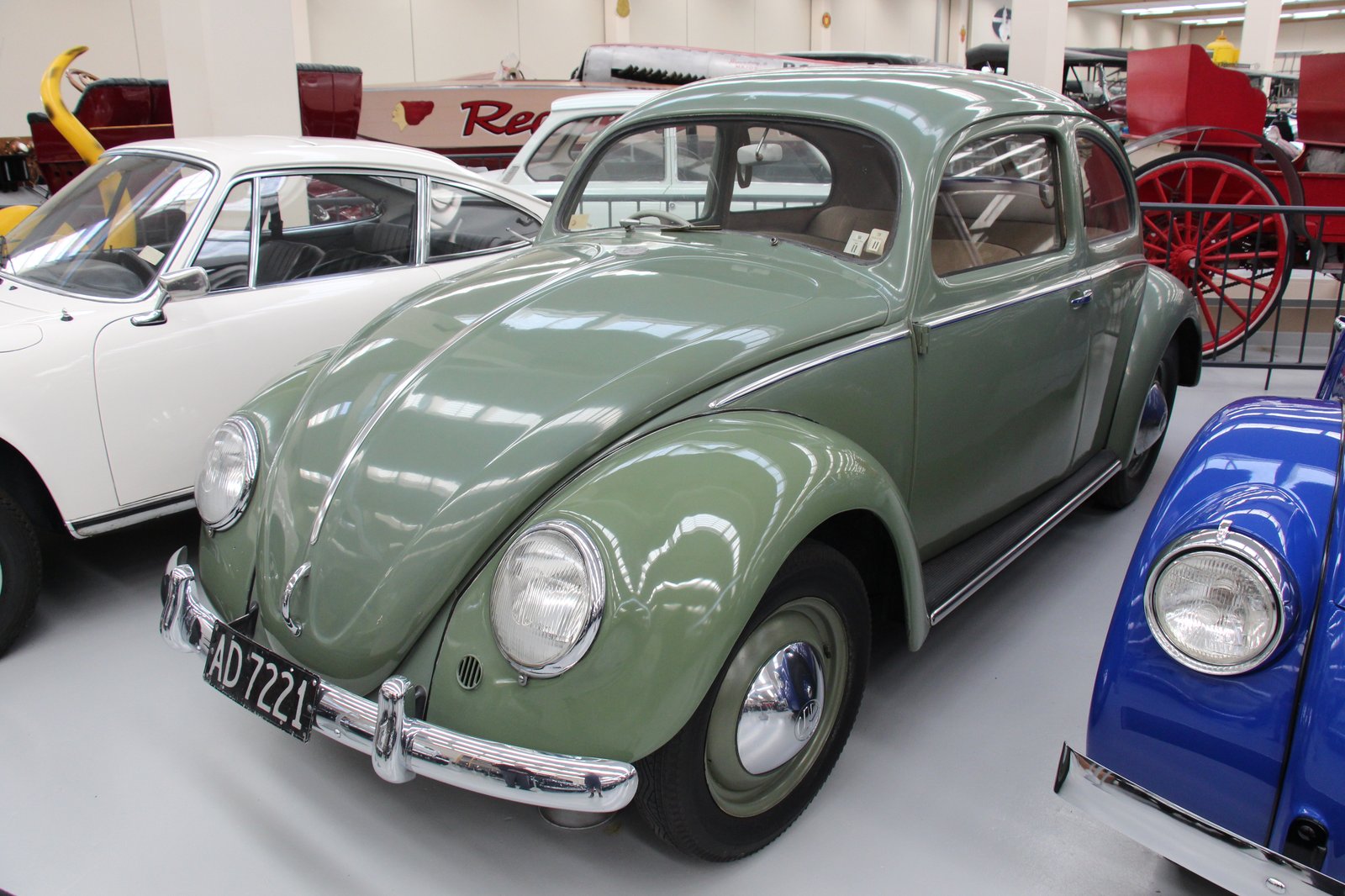
1192cc • 30 HP • 2-door sedan
Explore the 1953 Beetle's pivotal transition from split to oval window. 30hp of revolution, two distinct identities, and the moment VW chose engineering over marketing.

Featured story
The 1953 Standard Sedan is the only 1953 record with a story on file. Source candidate · under review.
Open the Standard Sedan record953: Eisenhower in office, Korea in armistice, America in love with chrome. And there's VW, casually revolutionizing automotive history by changing a window. March 1953: without fanfare, marketing campaigns, or even a press release, VW replaced the iconic split rear window with a single oval pane. Early '53 buyers got the last split windows. Late '53 buyers got the first ovals. Nobody got a warning. Detroit would have made this a three-year marketing campaign. VW treated it like a Tuesday.
They didn't know they were creating collector categories, defining restoration taxonomies, or launching decades of 'split vs. oval' debates. They were just making the back window work better. That's the most VW thing ever: accidentally making history while trying to improve visibility.
Displacement
Power
From the 1953 Standard Sedan record.
The 1953 Beetle was two cars in one year, which is very un-VW until you understand why. Specs first:
The power increase wasn't because VW suddenly discovered speed. They just made the engine better because that's what engineers do when left unsupervised. The synchromesh wasn't for comfort—it was because synchronizers last longer than grinding gears. Every improvement served function. Style was accidental.
The 1953 Beetle did something remarkable: it made engineering decisions without consulting marketing. The split-to-oval window transition wasn't about style—it was about solving problems. The split window needed two glass panes, complex rubber seals, and a visibility-blocking divider. The oval window needed one pane, one seal, and no divider. Engineering said 'better.' Marketing wasn't consulted. History said 'iconic.'
The 1192cc engine brought 5 more horsepower—a 20% increase that VW barely mentioned. Modern cars would call this THE ALL-NEW SUPER-POWERED BEETLE EXPERIENCE. VW just let owners discover they could finally climb hills without downshifting.
Hydraulic shocks on Export models improved ride quality so subtly that most buyers never noticed. That was the point. Good engineering shouldn't announce itself. It should just work.
But what made 1953 truly special was VW's willingness to improve mid-year. Detroit waited for annual model changes. VW improved things when improvements were ready. That philosophy—engineering over marketing—would define the brand for decades.
From the 1953 Standard Sedan record.
1953 America was peak chrome. Eisenhower's presidency brought conservative optimism. The Korean War ended with a shrug. Television was teaching Americans to want things they didn't need. Detroit was selling dreams made of steel and swagger.
Into this chrome-plated optimism rolled the Beetle, selling... adequacy. While Chevrolet launched the Corvette with promises of European sophistication, VW offered European pragmatism. While Detroit advertised horsepower, VW advertised reliability. While American cars grew fins, the Beetle grew slightly better at being a Beetle.
The split-to-oval window transition perfectly captured this cultural disconnect. Detroit would have marketed this change for years: REVOLUTIONARY NEW VISIBILITY! AERODYNAMIC BREAKTHROUGH! THE WINDOW OF TOMORROW, TODAY! VW just... did it. In March. Because it worked better.
Buyers choosing Beetles in 1953 weren't making statements—yet. They were making practical decisions. But those practical decisions would become philosophical statements by the 1960s. Every 1953 Beetle buyer was accidentally buying into a revolution that hadn't happened yet: the radical idea that cars should work well rather than just look good.
The 1953 Beetle drove exactly like what it was: a triumph of engineering over marketing. The 30hp engine made acceleration a philosophical exercise—you had time to contemplate the nature of motion while reaching highway speeds. But it would maintain those speeds indefinitely, because German engineers understood momentum better than they understood marketing.
The new synchromesh on 2nd-4th gears meant smoother shifts, unless you were in 1st gear, which remained defiantly mechanical. VW kept one unsynchronized gear just to remind you that you were operating a machine, not an appliance.
The steering was direct, unassisted, and honest. The suspension (especially with Export model hydraulic shocks) managed bumps with German stoicism. The brakes worked eventually. The heater worked theoretically.
By modern standards, it's slow. By 1953 standards, it was... also slow. But it was consistently, reliably, honestly slow. You always knew exactly what the car would do because it always did exactly what it was designed to do. No surprises, no drama, no pretense.
1953 Beetle buyers fell into three accidentally revolutionary categories:
None of them knew they were buying future classics. None of them cared about split windows versus oval windows. They just wanted honest transportation. They got automotive history instead.
The 1953 Beetle's evolution story reads like an engineering textbook that accidentally became a cultural manifesto:
Every change was engineering-driven. Every improvement was functional. The design evolved because evolution worked better, not because marketing needed something new to sell.
This wasn't planned obsolescence—it was planned improvement. Detroit made cars that got old. VW made cars that got better.
Current market values prove that accidental history is still history:
Split-window (January-March 1953):
Oval-window (March-December 1953):
Split-windows command higher prices because rarity beats practicality in collector math. Oval-windows offer better visibility and easier restoration. Both offer the same improved mechanicals. Choose based on whether you prefer showing or driving.
Investment advice: Buy the best example you can afford. These aren't getting cheaper. But buy it to drive it—static display kills Beetles faster than rust.
Restoring a 1953 Beetle is an exercise in archaeological engineering:
Common Issues:
Parts Availability:
Advice:
The 1953 Beetle is automotive history hiding in plain sight. It's the year VW proved that engineering beats marketing, that mid-year improvements beat annual model changes, that honest transportation beats chrome dreams.
Who should buy one?
Who shouldn't?
The 1953 Beetle wasn't trying to make history. It was just trying to work better. That's why it succeeded at both.
1,335 words • ~7 min read
Research current market values for the 1953 Beetle
Hagerty Valuation Tools
Industry-standard classic car values
Bring a Trailer Results
Recent auction prices
TheSamba Classifieds
Current listings & asking prices
Buying tip: Condition is everything. A rusty "project" can cost more to restore than buying a finished car. Check heater channels, floor pans, and battery tray first.
Reference only
This story
Some of this works today. Some of it is still an idea. The chips say which.