1192cc
Air-cooled flat-4
Source-recorded engine code: Type 122 (1200 30hp).
- Power
- N/A
- Fuel
- Unknown
Reference review: source-recorded details; historical accuracy has not been comprehensively verified.
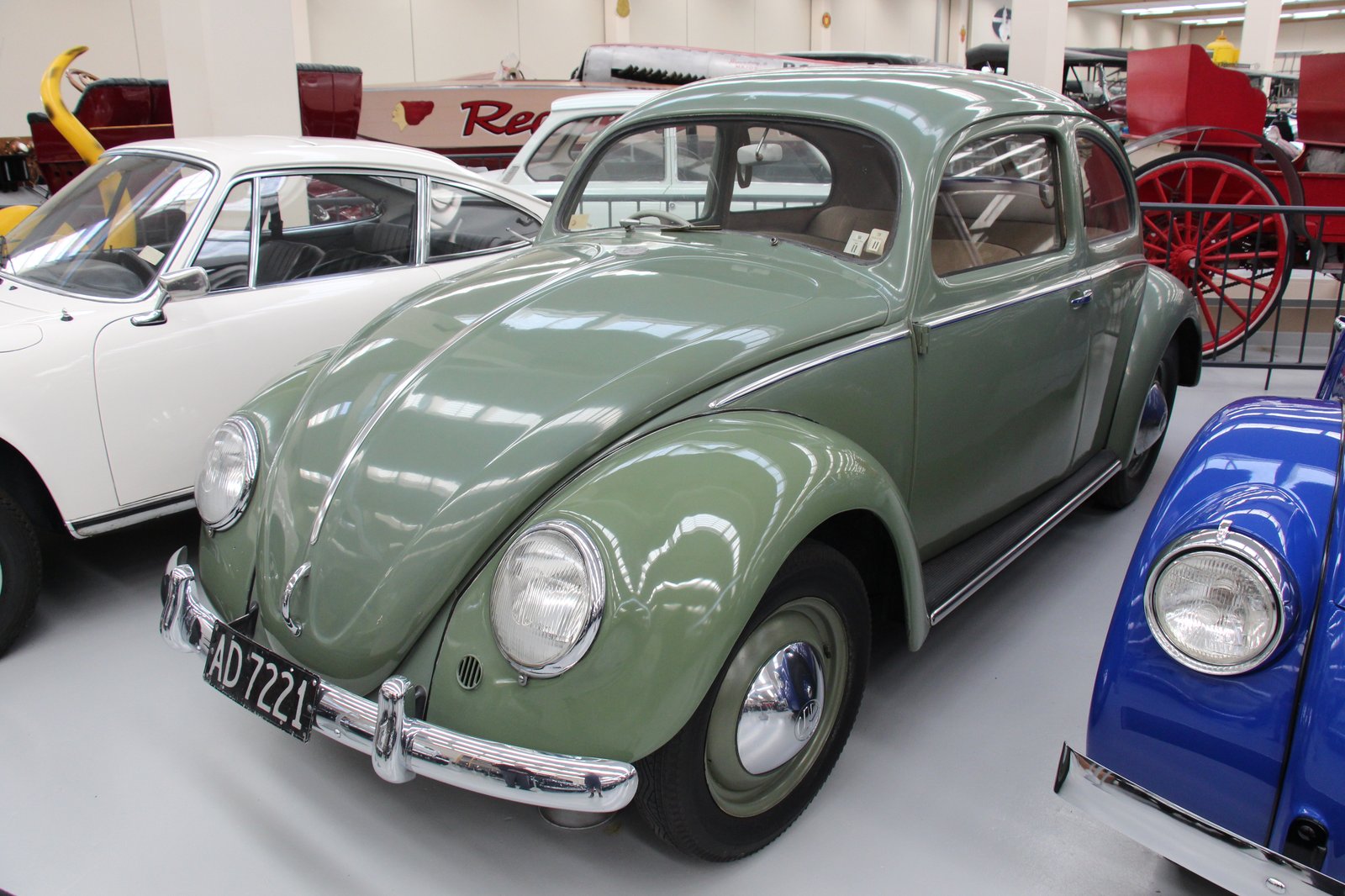
Representative imagery; exact configuration unverified
Explore the 1954 Beetle: 1192cc of newfound power, oval window charm, and America's first taste of 'small is enough.' When 30 horsepower felt like a revolution.
The air-cooled flat-four that powered the 1954 Beetle. Simple, reliable, and endlessly modifiable.
Research current market values for the 1954 Beetle
Hagerty Valuation Tools
Industry-standard classic car values
Bring a Trailer Results
Recent auction prices
TheSamba Classifieds
Current listings & asking prices
Buying tip: Condition is everything. A rusty "project" can cost more to restore than buying a finished car. Check heater channels, floor pans, and battery tray first.
Original paint options available for the 1954 Beetle.
Looking for a 1954 Beetle in Olive Green?
Find for SaleContinue from this 1954 reference to other recorded model years and variants.
Want to see a detailed comparison of multiple vehicles?
Compare all variantsUse retained catalog and code references as a starting point for researching your 1954 Beetle. Applicability remains under review; VWX does not authenticate vehicles.
1954: Eisenhower in office, Elvis recording at Sun Studio, America drunk on V8 power and chrome dreams. Detroit was building rocket ships for the suburbs. VW was building something else entirely: confidence. At 61cc at a time.
The 1954 Beetle arrived with a shocking development: it was almost exactly the same as 1953. Except for one number: 1192. The displacement that changed everything. Well, some things. Slowly.
Thirty horsepower. That was the headline. Detroit would have called it inadequate, if they'd bothered to notice. VW called it progress. Both were right. Neither understood what was really happening: the birth of 'enough' as a virtue.
The 1954 Beetle was automotive zen: the art of changing everything while changing almost nothing.
Specs that would make Detroit laugh:
What changed: Engine displacement, cooling ducting, gear ratios, spring rates. What didn't: Everything else. VW had discovered their superpower: the ability to improve things without ruining them.
Detroit wouldn't get the joke for another 20 years. The Japanese were taking notes.
The 1954 Beetle wasn't special because it changed everything—it was special because it changed just enough. The 1192cc engine wasn't just 61 more cubic centimeters; it was VW's first admission that maybe, just maybe, their original design wasn't perfect.
The extra displacement meant sustained 65mph cruising. In 1954, that was like discovering your hamster could run marathons. The revised cooling system kept the bigger engine happy. New gear ratios made highway driving less of an adventure and more of a journey.
But the real magic was invisible: manufacturing precision improved. Panel gaps shrank. Paint got deeper. Quality control got religion. The 1954 Beetle was built better than any before it—not because VW wanted to impress anyone, but because that's what engineers do when you leave them alone long enough.
It was the first Beetle that could honestly say, 'I belong here' on American highways. It just said it with a German accent and a straight face.
1954 America was peak post-war optimism. Eisenhower was planning interstate highways. Suburbs were sprouting like mushrooms after rain. Drive-in restaurants were becoming drive-in everything. The future was automatic, chrome-plated, and V8-powered.
Detroit was selling dreams: The Bel Air had enough chrome to blind satellites. The Skylark was longer than some European countries. Power steering, power brakes, power everything—because pushing things yourself was so Great Depression.
Television was colonizing living rooms. Rock and roll was about to explode. American cars were becoming rolling metaphors for success: bigger, faster, flashier, finnier.
Into this chrome-plated paradise rolls the Beetle, selling... adequacy. Thirty horsepower when Chevrolet offered 125. Manual everything when automation was the future. It was like bringing a slide rule to a computer convention.
But something weird happened: people bought it. Not everyone. Not even many. But enough. The right ones. The ones who thought maybe, just maybe, 'enough' was better than 'more.' The ones who'd later be called 'early adopters' but in 1954 were just called 'odd.'
In 1954, driving a Beetle was an exercise in philosophical zen: the joy of slow things done well.
The 1192cc engine transformed the experience from 'marginal' to 'adequate.' Zero to 60 happened... eventually. But cruising at 65 was now possible without prayer. Hills became challenges rather than obstacles. The revised gearing meant fourth gear was actually useful, not decorative.
Today, driving a '54 Beetle is time travel. Every input is mechanical poetry: the click-clack gearshift, the unassisted steering, the swing axle's occasional attempts to kill you. Modern cars are faster, safer, better. But they're not more honest.
The heater still barely works. The wipers still seem optional. The engine still makes noises that would send modern cars to the dealer. But that's not the point. The point is: it works. It always worked. It just worked at its own pace.
The 1954 Beetle attracted three distinct tribes:
Price: $1,495. In 1954, that bought you a lot of Detroit chrome. Or one very German lesson in 'enough.'
The 1954 model year marked the Beetle's first real evolution since birth. The family tree:
1938-1953: 1131cc, various tweaks, mostly the same 1954: THE BIG CHANGE (61 whole cubic centimeters!) 1955-1957: Refinement of the refinement
The 1192cc engine became VW's standard bearer. It wasn't replaced until 1961's 1200cc (yes, they rounded up before). The oval window continued. The basic shape remained sacrosanct.
Production numbers tell the story:
The pattern: slow, steady growth. Like the car itself. No revolutions, just evolution. Detroit thought it was stagnation. History proved it was strategy.
In 2025, the 1954 Beetle occupies a sweet spot in collector values:
Show Quality: $35,000-45,000 Excellent: $25,000-35,000 Good: $15,000-25,000 Project: $5,000-15,000 Parts Car: Worth more in pieces than whole
Why these numbers? It's the Goldilocks year: early enough to be 'real,' evolved enough to be driveable. The oval window adds value. The 1192cc engine adds usability. The improved build quality means more survivors.
Investment outlook: Steady appreciation. Not the explosive growth of split-windows, but consistent 5-10% annual increases. Like the car itself: slow, steady, reliable.
Pro tip: Buy the best one you can afford. Restoration costs exceed market value. This isn't speculation—it's adoption.
Restoring a '54 Beetle is like dating someone with strong principles: rewarding but challenging.
Common Issues:
Parts Availability:
Restore or Drive? Honest answer: Buy the best one you can find. A full restoration costs $50,000+. The market values honesty more than perfection.
The 1954 Beetle was VW's first admission that maybe the original design needed... something. Not much. Just 61cc and some better assembly. It was evolution at its most German: careful, deliberate, just enough.
Who should buy one?
Who shouldn't?
The 1954 Beetle wasn't the best Beetle. It wasn't the most collectible Beetle. It was just the Beetle that proved VW's point: improvement doesn't require revolution. Sometimes 61cc is enough.