1192cc
Air-cooled flat-4
Source-recorded engine code: G.
- Power
- N/A
- Fuel
- Unknown
Reference review: source-recorded details; historical accuracy has not been comprehensively verified.

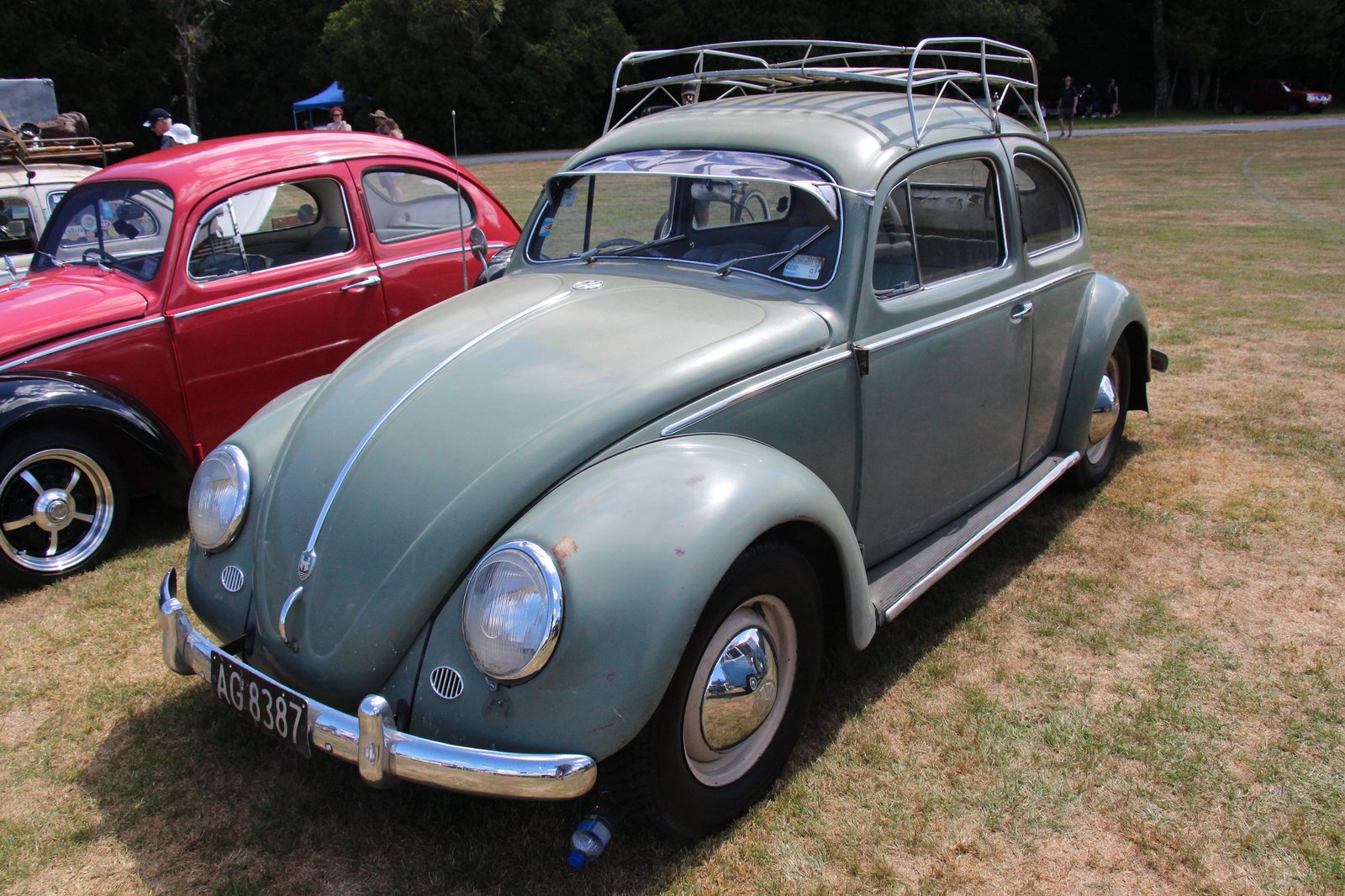
Representative imagery; exact configuration unverified
Discover the 1958 Beetle's revolutionary rectangular window, 15-inch wheels, and understated evolution. When Detroit went bigger, VW went better. History proved them right.
The air-cooled flat-four that powered the 1958 Beetle. Simple, reliable, and endlessly modifiable.
Research current market values for the 1958 Beetle
Hagerty Valuation Tools
Industry-standard classic car values
Bring a Trailer Results
Recent auction prices
TheSamba Classifieds
Current listings & asking prices
Buying tip: Condition is everything. A rusty "project" can cost more to restore than buying a finished car. Check heater channels, floor pans, and battery tray first.
Original paint options available for the 1958 Beetle.
Looking for a 1958 Beetle in Black?
Find for SaleContinue from this 1958 reference to other recorded model years and variants.
Want to see a detailed comparison of multiple vehicles?
Compare all variantsUse retained catalog and code references as a starting point for researching your 1958 Beetle. Applicability remains under review; VWX does not authenticate vehicles.
1958: Elvis joins the Army, Sputnik circles overhead, Detroit drowns cars in chrome. Meanwhile, in Wolfsburg, VW commits the unthinkable: they improve something that works. The rectangular rear window replaces the oval, 15-inch wheels replace 16s, and American auto journalists wait for the rest of the redesign. They're still waiting. While Detroit planned obsolescence, VW planned improvements. While America added fins, Germany added function. The 1958 Beetle wasn't new—it was better. That distinction would take Detroit another decade to understand.
This is the story of how VW changed everything necessary and nothing more. The year they proved that progress doesn't need press releases. The moment when 'Think Small' meant thinking ahead.
The 1958 Beetle was VW's master class in meaningful minimalism. Factory specs tell half the story:
VW positioned it as transportation for people who thought about transportation. Base price: $1,545. Optional equipment included a passenger-side sun visor (really) and synchronized first gear (just kidding—that dream was years away).
It was slower than everything American, more expensive than most British imports, and somehow outsold both. Engineering integrity has that effect.
The rectangular rear window wasn't just a window—it was VW's declaration of independence from styling for styling's sake. While Detroit changed sheet metal annually to drive sales, VW changed glass to improve function. The difference? You could actually see through VW's innovation.
The 15-inch wheels weren't a cosmetic update—they transformed handling. Lower center of gravity, better tire profiles, improved turn-in response. VW could have marketed this as 'Sport Handling Package' and charged extra. Instead, they just made the car better and kept quiet.
But what made the '58 truly special was what DIDN'T change. Same reliable air-cooled engine. Same honest body lines. Same functional simplicity. In an era when American cars grew fins like dinosaurs, the Beetle remained steadfastly mammalian. Evolution over revolution. Function over flash.
VW had mastered the art of meaningful improvement—changing what needed change, preserving what worked. It wasn't sexy. It wasn't marketable. It was just right.
1958 America was having an identity crisis. Sputnik challenged technological supremacy. The recession challenged economic confidence. Elvis trading blue suede shoes for Army boots challenged cultural certainty. Detroit responded with chrome therapy—bigger fins, more power, planned obsolescence as business model.
The '58 American cars were peak excess: Chrysler's 'Forward Look,' GM's 'Fashion-First,' Ford's 'Interceptor.' They weren't cars—they were chrome-plated anxiety. Power steering because steering was too hard. Power brakes because braking was too difficult. Power everything because maybe power could solve uncertainty.
Enter the Beetle, refusing to participate in the anxiety arms race. No power steering—the car was light enough not to need it. No power brakes—36 horsepower didn't require power assistance. No annual styling changes—because good design doesn't need annual updates.
The timing was perfect. Recession-wary buyers questioned three-ton status symbols. College professors appreciated functional design. Early adopters enjoyed explaining rear engines to confused neighbors. The Beetle became automotive counterculture before counterculture was cool.
VW didn't plan this positioning. They just built honest cars while Detroit built dreams. By 1958, enough Americans preferred honesty.
Period road tests noted the '58 Beetle hit 60 mph in 'eventually' and reached a top speed of 'why are you asking?' But raw numbers missed the point. The Beetle drove like nothing else in America—because it wasn't designed for America.
The steering was direct and communicative. No power assistance meant you felt everything. The 15-inch wheels improved turn-in response and reduced body roll. The four-speed transmission required deliberate shifts but rewarded precision. The brakes stopped the car reliably, probably because they had so little car to stop.
Driving a '58 today is time travel with synchronized gears (except first). The 36 horsepower feels like... about 36 horsepower. Modern Priuses are quicker. Modern toasters are probably quicker. But nothing modern delivers the same mechanical honesty. You don't just drive a '58 Beetle—you operate it. Every shift, every turn, every brake application is a conversation with German engineers from 1958. They had things figured out.
The 1958 Beetle attracted three distinct tribes:
The Pragmatists: Engineers, professors, accountants—people who appreciated the logic of air-cooling and the honesty of functional design. They bought Beetles because Detroit's planned obsolescence offended their professional sensibilities.
The Early Adopters: Cultural contrarians who enjoyed explaining rear engines to confused neighbors. The same people who would later buy imported stereos and argue about foreign films. The Beetle was their automotive argument against American excess.
The Value Calculators: People who did the math. The Beetle cost more upfront than domestic compacts but demanded less fuel, less maintenance, less depreciation. Over five years, the equation favored German engineering over American marketing.
What united them? They all thought about their cars instead of merely buying them. VW didn't need to advertise to these buyers—they were already skeptical of advertising.
The '58's rectangular window marked the biggest visual change since the Beetle's birth. But understanding 1958 means understanding what came before:
1949-1953: Split-window era. Visibility was a theoretical concept. 1953-1957: Oval window period. Better, but still challenging. 1958: Rectangular window revolution. Suddenly, reversing wasn't an act of faith.
The 15-inch wheels replaced 16-inch units, improving handling without requiring a press release. The engine remained 1192cc because it worked. The body kept its shape because it worked. VW was practicing sustainable engineering before sustainability was cool.
This wasn't evolution for market share—it was evolution for function. Each change improved the car measurably. No chrome packages, no sport editions, no artificial market segmentation. Just continuous refinement of a proven design.
The '58 became the template for Beetle development: improve what needs improvement, preserve what works. This philosophy would guide VW through 1967's major updates and beyond.
Today's Market Values (2025):
1958s command a premium over '59-'64 models. Why? They're the first 'modern' Beetles with vintage charm. The rectangular window makes them practical. The early features keep them collectible. They're the perfect balance of usability and authenticity.
Investment outlook? Rising. As early split-windows pass $100k, smart money is moving to '58s. They're appreciating faster than inflation but slower than Bitcoin. Buy one to drive, keep it original, watch it appreciate. Just like VW intended.
Restoring a '58 requires patience, parts, and a philosophical appreciation of German engineering logic. Here's your survival guide:
Common Issues:
Parts Availability:
Restoration Tips:
The 1958 Beetle was VW's proof that progress doesn't require revolution. While Detroit reinvented cars annually, VW refined them continuously. The rectangular window improved function. The 15-inch wheels enhanced handling. Nothing else changed because nothing else needed changing.
Who should buy one?
Who shouldn't?
The '58 Beetle proves that intelligent evolution beats planned obsolescence. Detroit took another decade to learn this lesson. Some would argue they're still learning.