1192cc
Air-cooled flat-4
Source-recorded engine code: G.
- Power
- N/A
- Fuel
- Unknown
Reference review: source-recorded details; historical accuracy has not been comprehensively verified.

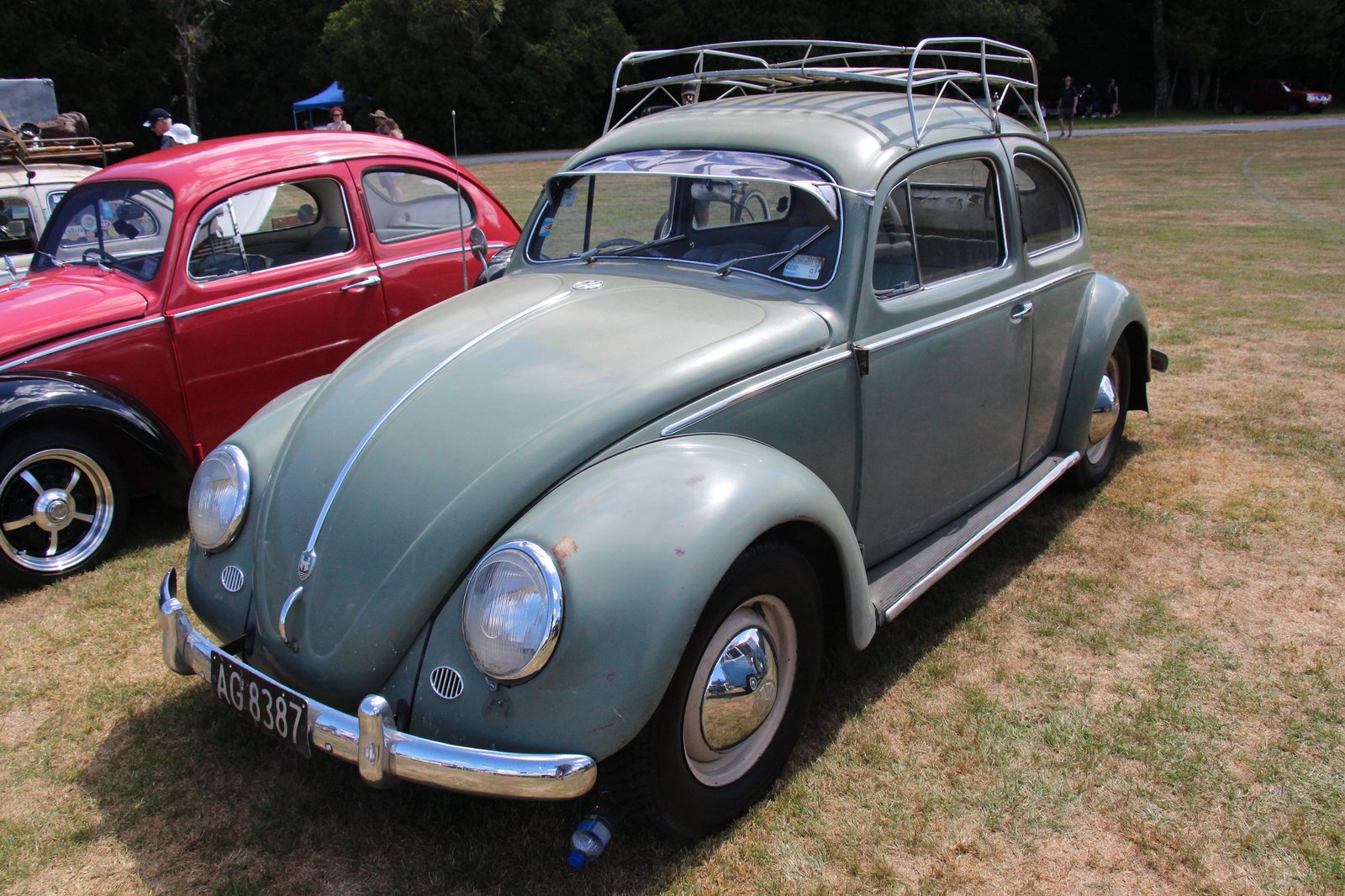
Representative imagery; exact configuration unverified
Explore the 1959 VW Beetle: 30hp of honesty, DDB's 'Think Small' revolution, and the year Detroit's chrome dreams met their match. The car that made different right.
The air-cooled flat-four that powered the 1959 Beetle. Simple, reliable, and endlessly modifiable.
Research current market values for the 1959 Beetle
Hagerty Valuation Tools
Industry-standard classic car values
Bring a Trailer Results
Recent auction prices
TheSamba Classifieds
Current listings & asking prices
Buying tip: Condition is everything. A rusty "project" can cost more to restore than buying a finished car. Check heater channels, floor pans, and battery tray first.
Original paint options available for the 1959 Beetle.
Looking for a 1959 Beetle in Mignonette Green?
Find for SaleContinue from this 1959 reference to other recorded model years and variants.
Want to see a detailed comparison of multiple vehicles?
Compare all variantsUse retained catalog and code references as a starting point for researching your 1959 Beetle. Applicability remains under review; VWX does not authenticate vehicles.
1959: Eisenhower's America peaked. Detroit built chrome dreams. Suburbs sprawled. And in August, an advertising agency called Doyle Dane Bernbach launched two words that would outlive the decade: 'Think Small.'
The 1959 Beetle wasn't new—VW had been building them since 1949. It wasn't powerful—30 honest German horses. It wasn't stylish—the same shape that had endured ridicule for a decade. What it was, finally, was understood. DDB didn't create Beetle philosophy. They just gave it a vocabulary.
This is the story of a threshold year: when being different became being right, when Detroit's excess met its match, when advertising discovered honesty could sell better than hype. The 1959 Beetle didn't change. America did.
The 1959 Beetle was beautifully, defiantly basic:
Every specification told the same story: engineering over marketing, function over fashion, honesty over hype. The car was a rejection of everything Detroit held sacred. That was exactly the point.
The 1959 Beetle wasn't special because it was different—it had been different for a decade. It was special because DDB finally explained why different mattered.
That large rear window wasn't just glass—it was a metaphor. Better visibility without changing the car's character. The fresh-air heater wasn't just warm air—it was VW admitting a flaw and fixing it without fanfare. The vacuum advance distributor wasn't just smoother power—it was engineering evolution without annual model changes.
Every detail rejected Detroit orthodoxy. No annual styling updates (because good design doesn't expire). No power accessories (because simplicity doesn't break). No chrome trim (because honest cars don't need jewelry). No planned obsolescence (because German engineers found that concept morally offensive).
But the real magic was cultural timing. America was ready to question assumptions. About cars. About consumption. About conformity. The 1959 Beetle wasn't just transportation—it was permission to think differently. DDB just gave that permission a tagline.
1959 was peak American consensus: Eisenhower in the White House, tailfins in driveways, Elvis in the Army making him safe for mainstream consumption. The suburbs were new, TV was black and white, and Detroit built dreams in chrome and steel.
But beneath that consensus, cracks formed. The Beat Generation questioned materialism. Jazz went modal with Miles Davis's 'Kind of Blue.' The Cold War made prosperity feel precarious. Castro took Cuba. The Space Race accelerated. Kennedy prepared his presidential run. Change wasn't visible yet, but you could feel it coming.
Detroit didn't notice. They were busy building bigger cars with more chrome and higher fins. Planned obsolescence wasn't just a strategy—it was religion. Buy new every three years. Chase the latest style. Keep up with the Joneses.
Into this moment, DDB launched 'Think Small.' The campaign wasn't just selling a car—it was naming a revolution. Every line rejected Detroit's language. 'It's ugly but it gets you there.' 'No chrome dreams, just German engineering.' The message wasn't just different—it was prophetic. The 1960s counterculture would adopt every value the Beetle already embodied: authenticity over image, function over fashion, durability over disposability.
The millionth US export Beetle arrived in 1959. Perfect timing. America was ready to think small. They just didn't know it yet.
In 1959, driving a Beetle meant joining a secret society of people who understood that slow could be fun, that steering feel mattered more than power steering, that mechanical sympathy was its own reward.
Thirty horsepower moved you eventually. Zero-to-60 happened sometime before lunch. Top speed was theoretical—you could hit 72mph, but only if you had a tailwind and physics took pity. The gearshift demanded attention. The steering required muscle. The heater worked (finally!).
But here's the magic: it was fun. Light, tossable, direct. No power steering meant you felt every pebble. No automatic meant you danced with three pedals. The air-cooled engine's sound was mechanical jazz—not powerful, but rhythmic, honest, alive.
Driving one today is time travel. Modern cars coddle you with assistance. The '59 Beetle makes you work. Every shift. Every turn. Every mile. That's not a flaw—it's the whole point. You're not just traveling, you're participating.
1959 Beetle buyers were rebels before rebellion was cool:
First Wave: Early Adopters (1954-1958)
Second Wave: Think Small Converts (1959-1960)
Third Wave: Cultural Prophets (Late 1959)
They all shared one trait: the courage to be different before different was cool. DDB didn't create these buyers—they just gave them a manifesto.
The 1959 Beetle represented peak 1950s evolution—a decade of refinement without revolution:
1949-1953: Early Export Years
1954-1957: Growing Confidence
1958-1959: Peak Classic
What's fascinating isn't what changed—it's what didn't. While Detroit redesigned annually, the Beetle evolved slowly, intentionally, German-ly. Each change solved a problem. No change for change's sake.
1959 was the last year before the 1960 facelift (higher headlights, different bumpers). It was the final, perfect expression of the original Beetle philosophy before the 1960s changed everything.
Current Market (2025):
Why These Values:
Investment Outlook: 1959 values rise steadily. It's not just a Beetle—it's the Beetle that changed advertising, challenged Detroit, and predicted the 1960s. That story gets more valuable every year.
Buy now if you understand why 'Think Small' was revolutionary. Hold if you already own one. There will never be another 1959.
Restoring a '59 Beetle requires equal parts mechanical skill and historical respect:
Common Issues:
Parts Availability:
Restoration Tips:
Budget Reality:
Advice: Restore it because you love it, not for profit. Like the original buyers, you're investing in philosophy, not just transportation.
The 1959 Beetle is more than a car—it's the year when different became right, when advertising discovered honesty, when German engineering met American culture and both won.
Buy one if:
Don't buy one if:
Final Thought: In 1959, VW built a car. DDB built a philosophy. History proved both right. Sometimes thinking small means seeing the big picture.