1192cc
Air-cooled flat-4
Source-recorded engine code: G.
- Power
- N/A
- Fuel
- Unknown
Reference review: source-recorded details; historical accuracy has not been comprehensively verified.
Representative imagery. Depicted year, configuration and image rights remain unverified.

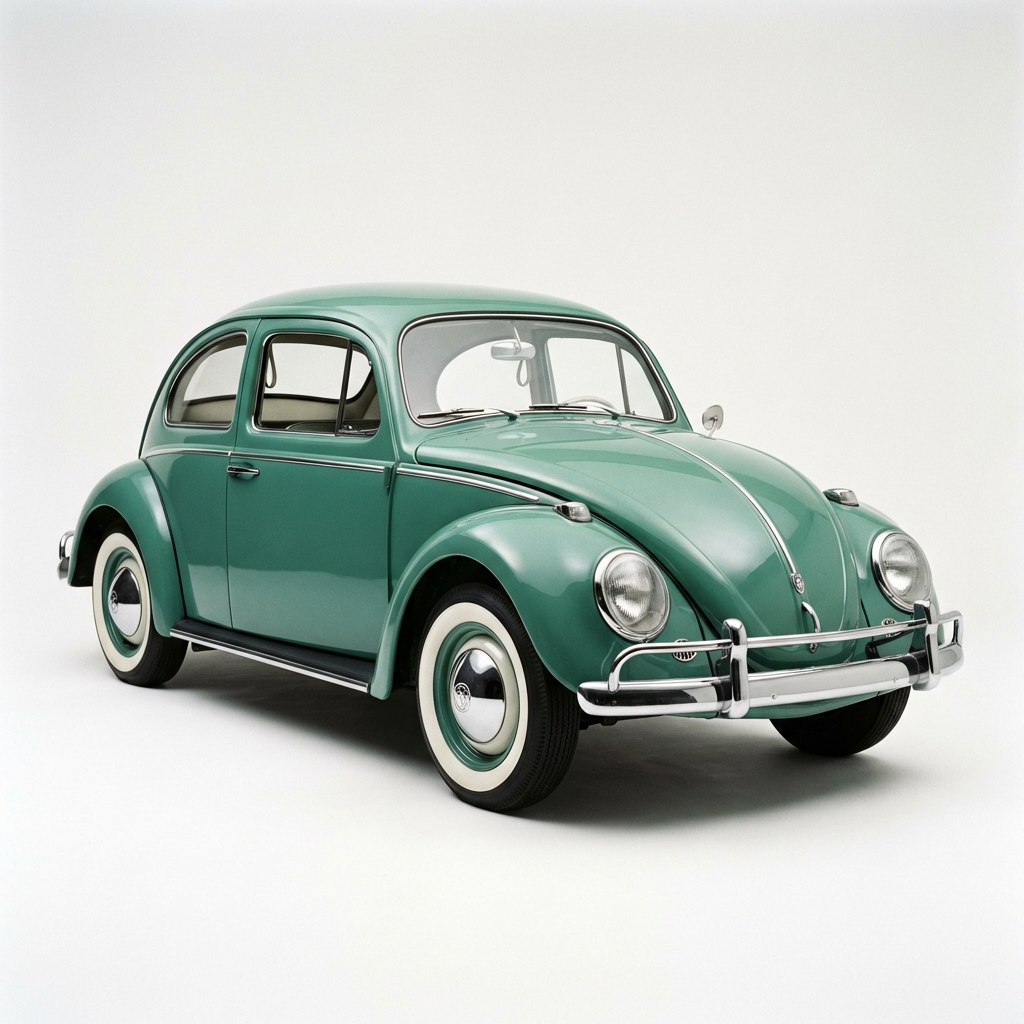
Representative imagery; exact configuration unverified
Explore the 1960 Beetle: full synchromesh, refined engineering, DDB's 'Think Small' momentum. When VW perfected simplicity while Detroit chased excess. Your guide to the sweet spot year.
The air-cooled flat-four that powered the 1960 Beetle. Simple, reliable, and endlessly modifiable.
Research current market values for the 1960 Beetle
Hagerty Valuation Tools
Industry-standard classic car values
Bring a Trailer Results
Recent auction prices
TheSamba Classifieds
Current listings & asking prices
Buying tip: Condition is everything. A rusty "project" can cost more to restore than buying a finished car. Check heater channels, floor pans, and battery tray first.
Original paint options available for the 1960 Beetle.
Looking for a 1960 Beetle in Yukon Yellow?
Find for SaleContinue from this 1960 reference to other recorded model years and variants.
Want to see a detailed comparison of multiple vehicles?
Compare all variantsUse retained catalog and code references as a starting point for researching your 1960 Beetle. Applicability remains under review; VWX does not authenticate vehicles.
1960: Kennedy campaigning, U2 spy plane drama, America questioning assumptions. Detroit was building rocket ships with wheels—chrome missiles aimed at the American Dream. VW was building... the same Beetle they'd been perfecting for 11 years. But something changed: first gear got synchronized.
That's it. That's the revolution. One gear. No more double-clutching. No more grinding. Just smooth shifts through all four speeds. American car magazines yawned. They were busy measuring horsepower in hundreds. They missed what VW understood: revolution isn't always loud. Sometimes it's just the quiet click of everything finally working exactly as it should.
The 1960 Beetle wasn't new. It was just perfect. And perfection, it turns out, has excellent timing.
The 1960 Beetle was technically a car. Automotive journalists confirmed this after extensive research. What made it fascinating was how little it cared about being a car in 1960:
VW positioned it exactly where they had for 11 years: the car for people who thought about cars differently. Now with less grinding in first gear. Detroit was selling dreams. VW was selling transportation that worked. The difference was becoming a philosophy.
The 1960 Beetle's magic wasn't in what changed—it was in what had been refined to perfection. That full synchromesh transmission wasn't just about smooth shifts. It was VW admitting that maybe, just maybe, cars should be easy to drive. Revolutionary thinking in 1960.
The front turn signals moved up to the fenders. Higher. More visible. More modern. Detroit would have added chrome rockets. VW just made them work better.
Eleven years of production had taught VW everything about building Beetles. Panel fits were tight. Paint was deep. That 1200cc engine might have made only 36 horsepower, but it made them reliably. Forever. The heater even worked. Sometimes. On Tuesdays. If you believed.
But here's what made 1960 special: it was the last year before the Beetle became a symbol. Before counter-culture adopted it. Before it stood for something beyond itself. The 1960 Beetle was pure engineering, perfected. No statement. No revolution. Just a really, really good car that happened to look like a beetle.
1960 America was having an identity crisis. Kennedy vs. Nixon meant youth vs. experience, change vs. stability, future vs. past. The U2 spy plane incident proved America wasn't invincible. The Space Race proved the Soviets could innovate. The civil rights movement proved the system wasn't perfect.
Detroit's response? More chrome. Bigger fins. Engines so powerful they could probably achieve orbit. American cars weren't transportation anymore—they were rolling statements about American superiority. Each one screamed 'WE'RE WINNING!' so loudly you couldn't hear the doubt creeping in.
Into this existential crisis rolled the Beetle, unchanged since 1949 except for being better at everything. DDB's 'Think Small' campaign wasn't selling a car—it was offering permission to think differently. About cars. About consumption. About what winning really meant.
The Beetle was becoming more than transportation. It was becoming a choice. A statement that maybe, just maybe, bigger wasn't always better. That engineering mattered more than styling. That honesty was a feature, not a bug.
This wasn't counter-culture yet. That would come later. This was pre-revolution. The moment when the first cracks appeared in the chrome-plated certainties of the 1950s. The Beetle didn't create those cracks. It just proved there was another way.
In 1960, the Beetle drove like a car that had spent 11 years getting really good at being itself. That new synchromesh transmission transformed city driving from an exercise in timing to... just driving. Revolutionary.
The 36 horsepower still took its time reaching highway speeds. Physics remained unconvinced by German engineering. But once there? The Beetle cruised happily at 65 mph while Detroit's land yachts guzzled gas at twice the rate.
Handling? The swing axle rear suspension still had opinions about mid-corner throttle changes. Strong opinions. Sometimes surprising ones. But 11 years of refinement meant those opinions were predictable. You learned to listen.
Driving a 1960 Beetle today is time travel. Everything mechanical. Everything honest. No power anything. No electronic anything. Just you, 36 horsepower, and the satisfaction of knowing that every shift will be smooth. Even first gear. Especially first gear.
1960 Beetle buyers came in three delightfully distinct flavors:
VW priced it at $1,565—about half the cost of a standard American car. But price wasn't the point. The Beetle wasn't selling cheap transportation. It was selling intelligent transportation. The difference would define a decade.
The 1960 Beetle represented the pinnacle of first-generation evolution. Think Darwin, but with better timing and a German accent:
1949: Basic transportation, double-clutch first gear, primitive heating 1954: More power (vast improvement from none to some) 1957: Larger rear window (seeing behind you becomes possible) 1958: Revised dashboard (crashes become slightly more pleasant) 1960: FULL SYNCHROMESH (angels sing, mechanics weep with joy)
But what's fascinating is what didn't change. Same basic shape. Same rear-engine layout. Same commitment to continuous improvement over annual restyling. The Beetle evolved like a shark—when you get the basic form right, you just refine the details.
This would be the last 'pure' evolution. After 1960, external forces—safety regulations, emissions controls, counter-culture adoption—would push the Beetle in new directions. The 1960 model represents peak original concept: everything refined, nothing compromised.
In 2025, a 1960 Beetle is the automotive equivalent of a perfectly aged wine—if that wine could also teach you about engineering, culture, and the value of doing one thing really well for a really long time.
Values (as of 2025):
Why these prices? Because 1960 is the sweet spot. Pre-smog, post-refinement, peak mechanical purity. You get the best of early Beetle engineering without the primitive early-50s quirks. Want to actually drive your classic? This is your year.
Investment outlook: Steady appreciation likely. These aren't speculation machines—they're genuine classics that actually work. Buy one because you get it, not because you want to flip it.
Restoring a 1960 Beetle is like building a German watch with a sense of humor. Here's your survival guide:
Common Issues:
Parts Availability:
Restoration Tips:
The 1960 Beetle is the one you want if you actually get it. Not the earliest (that's 1949). Not the most powerful (wait for 1967). Not the most refined (Super Beetle says hi). But maybe the most honest.
This is the Beetle at peak purity. Everything that made the original concept brilliant, refined through 11 years of continuous improvement. Full synchromesh just made it all work better.
Who should buy it?
The 1960 Beetle proves that perfection isn't about power or chrome or fins. It's about doing one thing really well, then making it better, then making it smooth. Even in first gear. Especially in first gear.