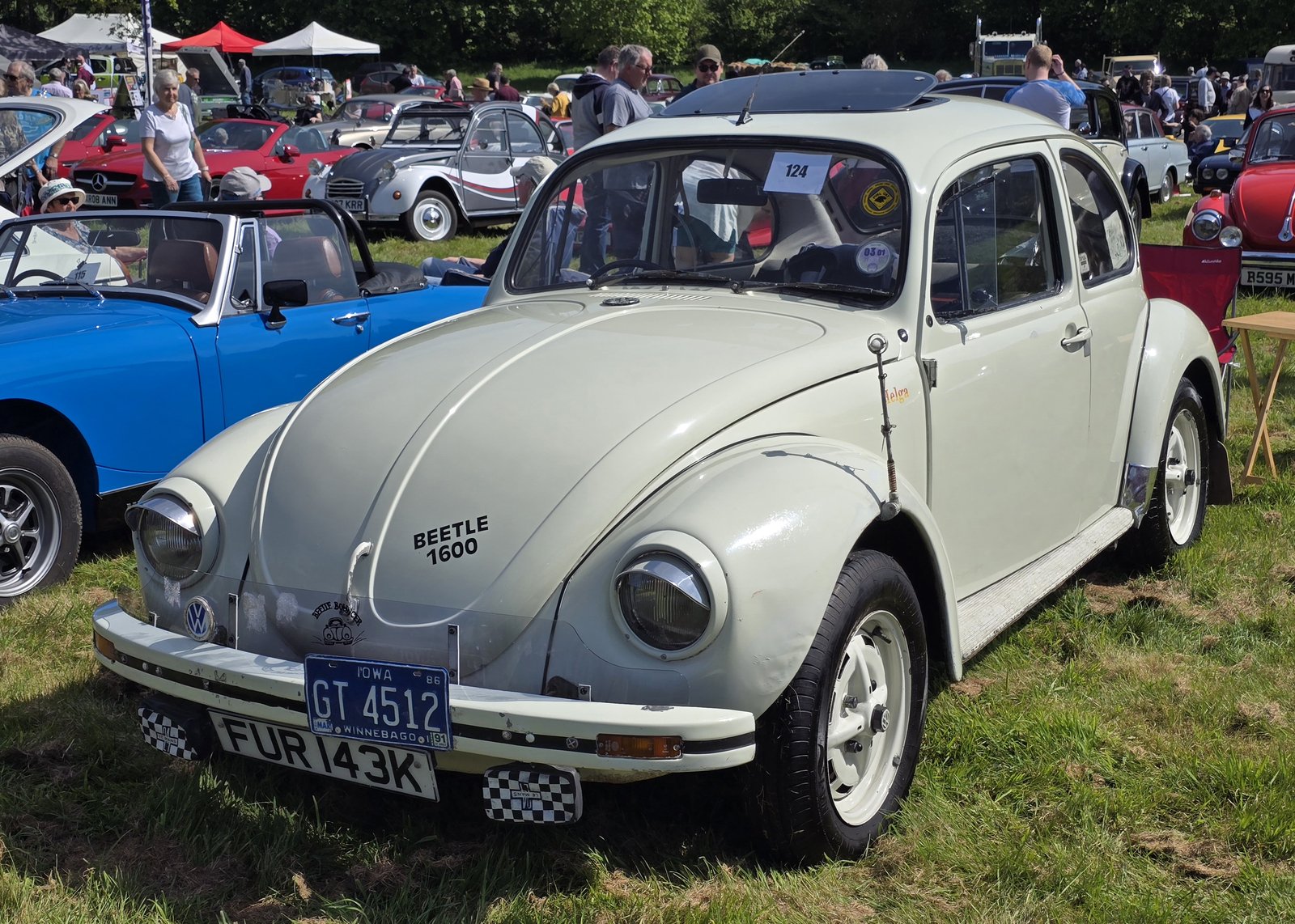
1600cc
Air-cooled flat-4
The air-cooled flat-four engine that powered a generation. Code Dual-port 1600.
- Power
- 60 HP
- Fuel
- Carburetor
1971: The Super Beetle entered its first full production year with MacPherson strut suspension, curved windshield, and significantly larger front trunk. VW marketed it as modern evolution—better handling, more space, refined ride. But the soul remained unchanged: air-cooled engine, mechanical simplicity, owner-serviceability, environmental efficiency. The Super Beetle proved you could innovate substantially while maintaining core identity. That balance—meaningful advancement within consistent philosophy—answered environmental movement's central question: Can we progress without abandoning sustainable values? The Super Beetle demonstrated yes, when engineering is intelligent and honest.
The air-cooled flat-four that powered the 1971 Beetle. Simple, reliable, and endlessly modifiable.
1600cc (1.6L) Air-cooled flat-4
60 HP
Dual-port 1600
2-door sedan
4-speed manual / 3-speed AutoStick
1971: Nixon continued Vietnam War despite promising peace.
All specifications should be verified before publication.
Refer to the specifications section above for the engine code used in the 1971 Beetle. The engine code is typically stamped on the engine case above the generator. For verification assistance, use our M-Code decoder tool.
Confidence: medium — This information should be verified with additional sources.
The value of a 1971 Beetle varies significantly based on condition, originality, and documentation. Driver-quality examples typically range from lower values, while excellent restored or numbers-matching examples command premiums. Condition, originality, and documentation are the primary value drivers. Always get a professional appraisal for insurance or sale purposes.
Confidence: low — This information requires verification before use.
1971 Beetle models were produced at various Volkswagen factories worldwide. Check the production details above for specific factory information. The factory code can often be identified through chassis number analysis.
Confidence: medium — This information should be verified with additional sources.
Key changes for the 1971 Beetle: available components. But the core remained unchanged: same air. cooled flat. four engine (1300cc or 1600cc options), same fundamental simplicity, same owner. Check the specifications section for complete details about year-to-year evolution.
Confidence: medium — This information should be verified with additional sources.
Common rust areas on air-cooled Volkswagens include heater channels (under running boards), floor pans (especially front and battery tray area), front beam (suspension mounting point), rear chassis/apron (where bumper mounts), and door bottoms. The heater channels are structural and expensive to repair. Always inspect these areas carefully before purchase.
The 1972 Beetle received updates from the 1971 model. Check the specifications section above for details about year-to-year evolution. Common changes across model years include safety updates, mechanical refinements, and regulatory compliance features.
Confidence: medium — This information should be verified with additional sources.
A full rotisserie restoration typically costs $25,000-$50,000+ depending on condition and level of finish. Mechanical refresh (engine, brakes, suspension) runs $5,000-$12,000. Bodywork and paint alone can be $8,000-$15,000 for quality work. DIY restorations save labor but require significant time investment (500-1,000 hours). Parts availability is generally good for classic VWs, which helps control costs.
Confidence: low — This information requires verification before use.
A well-maintained 1971 Beetle can serve as a daily driver, but consider the age of the vehicle. Modern traffic, safety features, and reliability expectations differ from the era. Regular maintenance, mechanical knowledge, and realistic expectations are essential. Many owners use classic VWs as weekend drivers or hobby vehicles rather than primary transportation.
Confidence: medium — This information should be verified with additional sources.
Yes, parts availability for classic air-cooled Volkswagens is generally excellent. The large enthusiast community and aftermarket support mean most mechanical and body parts are readily available. Some year-specific trim pieces or rare options may be harder to find, but the core mechanical components are well-supported.
Research current market values for the 1971 Beetle
Hagerty Valuation Tools
Industry-standard classic car values
Bring a Trailer Results
Recent auction prices
TheSamba Classifieds
Current listings & asking prices
Buying tip: Condition is everything. A rusty "project" can cost more to restore than buying a finished car. Check heater channels, floor pans, and battery tray first.
Original paint options available for the 1971 Beetle.
Looking for a 1971 Beetle in Mint Green?
Find for SaleExplore the variants available for this model year and find your perfect match.
Want to see a detailed comparison of multiple vehicles?
Compare all variantsNumbers matching verification increases value by 20-40%. Use our tools to verify engine codes, chassis numbers, and M-codes for your 1971 Beetle.
1971: The Super Beetle entered its first full production year with MacPherson strut suspension, curved windshield, and significantly larger front trunk. VW marketed it as modern evolution—better handling, more space, refined ride. But the soul remained unchanged: air-cooled engine, mechanical simplicity, owner-serviceability, environmental efficiency. The Super Beetle proved you could innovate substantially while maintaining core identity. That balance—meaningful advancement within consistent philosophy—answered environmental movement's central question: Can we progress without abandoning sustainable values? The Super Beetle demonstrated yes, when engineering is intelligent and honest.
The Super Beetle's curved windshield and bulging hood distinguished it from standard Beetles. The design changes were purely functional—MacPherson suspension required more front-end space, and VW didn't hide that with styling gimmicks. The bulge was honest: this is what modern suspension looks like. That transparency aligned with Beetle tradition: form follows function, never disguise engineering with cosmetic tricks. The environmental movement appreciated that honesty—no wasteful styling, just functional design serving improved performance.
The overall proportions remained recognizably Beetle despite the changes. Rounded fenders, upright profile, minimal chrome—twenty-two years of visual DNA showing through modern updates. The Super Beetle looked related to 1949 originals while incorporating genuinely improved engineering. Paint colors offered environmental-era choices: earth tones, subdued greens, practical blues. Colors suggesting ecological consciousness rather than excess. The interior featured upgraded materials and improved ergonomics—refinement serving function.
The Super Beetle represented sophisticated environmental design. The MacPherson suspension improved handling, making highway travel safer and more efficient. The larger front trunk enabled longer trips with more luggage, potentially replacing short flights. The curved windshield improved aerodynamics, reducing drag and improving fuel economy. Every design change served environmental ends: better efficiency, improved functionality, maintained simplicity. That's intelligent ecological engineering—improve performance while maintaining sustainable values.
The Super Beetle's MacPherson strut front suspension was genuine engineering advancement. The system provided better handling through superior geometry, larger front trunk from space efficiency, improved ride quality from reduced unsprung weight, easier serviceability with readily-available components. But the core remained unchanged: same air-cooled flat-four engine (1300cc or 1600cc options), same fundamental simplicity, same owner-serviceability. VW proved you could modernize meaningfully without compromising core values.
The 1600cc engine option (replacing 1500cc) produced 60 HP—50% more than the original 1200cc's 40 HP. But the power increase came with maintained fuel efficiency (still 30+ mpg), continued air-cooled simplicity (no radiator/coolant complexity), and preserved owner-serviceability (same basic maintenance procedures). Environmental critics worried that more power meant more consumption. The Super Beetle demonstrated otherwise: intelligent engineering could improve performance AND maintain efficiency through better design rather than just larger displacement.
The air-cooled design remained environmentally superior. No coolant to dispose of or leak into groundwater. No antifreeze contaminating ecosystems. No radiator to manufacture and eventually scrap. The simplicity reduced environmental impact across the product lifecycle—fewer components to manufacture, simpler maintenance reducing waste, longer lifespan reducing disposal frequency. The Super Beetle proved environmental values could drive sophisticated engineering rather than just constrain it.
The MacPherson suspension used readily-available components that could be sourced and serviced locally—reducing transportation environmental impact. The design was accessible enough that competent home mechanics could rebuild front suspension with basic tools and manuals. That owner-serviceability aligned with environmental movement's emphasis on self-sufficiency, local solutions, reduced dependency on corporate service systems. The Super Beetle was environmental engineering expressed through mechanical accessibility.
1971: Nixon continued Vietnam War despite promising peace. Pentagon Papers revealed government lies—what protesters claimed was proven true. 26th Amendment lowered voting age to 18—acknowledging youth political power. Attica Prison uprising ended in massacre. Indo-Pakistani War created Bangladesh. Voting Rights Act renewed. Environmental consciousness was strengthening—Clean Air Act 1970 regulations taking effect, EPA growing more powerful, ecological awareness becoming policy rather than just protest.
American car culture in 1971 was fragmenting. Muscle cars faced emission regulations reducing power. Luxury cars still prioritized size but faced fuel economy questions. Environmental movement was challenging automotive assumptions: Did progress require horsepower? Did advancement require size? Could ecological responsibility produce better engineering rather than just constraints? The Super Beetle offered answers: environmental values could drive genuine innovation.
The Super Beetle represented environmental engineering sophistication. It improved Beetle capabilities—better suspension, more space, refined ride—while maintaining environmental benefits: fuel efficiency, longevity, owner-serviceability, anti-obsolescence durability. That demonstrated ecological thinking as driver of progress rather than just limitation. You could improve performance AND reduce impact through intelligent design. You could advance engineering AND maintain sustainable values through honest development. That message was powerful in 1971 when environmental regulations were forcing automotive industry to rethink assumptions.
The Super Beetle proved environmental engineering could be sophisticated advancement rather than forced compromise. Better suspension improved safety and efficiency. Larger trunk enabled sustainable travel alternatives. Improved aerodynamics reduced fuel consumption. Maintained simplicity preserved owner-serviceability. Every change served environmental values while improving function. That's how environmental consciousness should drive engineering: toward better solutions, not just acceptance of less. The Super Beetle demonstrated it was possible.
Climbing into the Super Beetle meant experiencing refined environmental engineering. The curved windshield improved visibility and aerodynamics. The MacPherson suspension delivered smoother ride and better handling. The larger front trunk accommodated camping gear for back-to-nature trips, luggage for long road trips replacing flights, supplies for sustainable living. Every improvement served environmental values: enable alternatives to flying, facilitate nature connection, improve efficiency through design sophistication.
The controls retained Beetle mechanical directness. The steering communicated road feel through improved suspension geometry. The gearshift remained precise and engaging. The clutch was progressive and honest. Everything maintained mechanical transparency while improving performance. That balance—innovation within principles—exemplified sophisticated environmental thinking. You could improve significantly without abandoning core values. You could modernize without compromising identity.
The interior space gained from MacPherson suspension. The larger front trunk transformed the Super Beetle's practical utility—week-long camping trips became feasible with better gear capacity, cross-country road trips replaced short flights, moving to rural communes carried more supplies. The improved handling made long-distance travel less fatiguing. The refined ride made sustainable transportation choices more comfortable. Every improvement enabled environmental lifestyle choices: reduce flying, connect with nature, live more sustainably. That's environmental engineering serving values.
Living with a Super Beetle in 1971 meant experiencing environmental sophistication. The environmental movement was maturing from protest to policy—Clean Air Act strengthening, EPA establishing regulations, ecological consciousness becoming mainstream. The Super Beetle demonstrated how environmental values could drive engineering progress: better suspension serving safety and efficiency, larger trunk enabling sustainable travel, improved aerodynamics reducing fuel consumption. Environmental engineering as advancement rather than restriction.
By 1971, the Beetle's American buyer had developed a profile clear enough to describe with some precision. Younger than the average American car buyer. Better educated. More likely to be female. More likely to live in a city or close suburb. The 60-horsepower 1600cc Super Sedan attracted the deliberate purchaser — someone who had looked at the Chevrolet Nova and the Ford Maverick and concluded that neither quite understood what a car was supposed to be. VW was approaching 400,000 US sales annually. The counterculture had moved on; the Beetle had not. It was still the same car, which was, increasingly, the thing most other manufacturers couldn't say. Buyers in '71 appreciated the consistency. Reliability, in a complicated year, was its own kind of virtue.
The Super Beetle's first full production year established it as mainstream Beetle variant rather than specialty model. Production volumes were significant. Quality was superb. The MacPherson suspension proved reliable. The larger trunk proved popular. The improved handling won converts among buyers who'd considered Beetles too basic. The Super Beetle expanded VW's market without abandoning core customers—standard Beetles continued production for buyers preferring traditional simplicity. That choice respected customer diversity while demonstrating engineering could advance within consistent philosophy.
The 1971 Super Beetle represented VW's commitment to continuous improvement meeting environmental era. The MacPherson suspension was substantial innovation. The functional improvements were meaningful. But the environmental values remained central: fuel efficiency, longevity, owner-serviceability, anti-obsolescence durability. The Super Beetle proved those values could drive advancement rather than just constrain it. That's environmental engineering sophistication: use ecological consciousness as motivation for better design, not just acceptance of less.
Original 1971 Super Beetle buyers chose sophisticated environmental engineering. They valued ecological consciousness but rejected the idea that environmentalism meant accepting inferior performance. The Super Beetle provided proof: better handling AND maintained fuel economy, more space AND same simplicity, improved ride AND preserved environmental values. These buyers understood that ecology and engineering could advance together through intelligent design rather than just restriction and limitation.
Enthusiasts recognize the Super Beetle's first full production year as establishing template for environmental innovation. The MacPherson suspension was genuine advancement. The improved functionality was meaningful. But the core environmental values remained: air-cooled simplicity, fuel efficiency, longevity, anti-obsolescence. The Super Beetle proved innovation compatible with identity—you could evolve dramatically while maintaining principles. That balance resonates with collectors who value both advancement and authenticity.
Today's restorers value 1971 Super Beetles because they represent environmental sophistication. The car proves ecological values can drive innovation rather than just constraint. Modern environmental discourse often presents sustainability as requiring sacrifice. The Super Beetle demonstrated otherwise: intelligent design improves function while reducing impact. Honest engineering advances capability while maintaining principles. Restoring a 1971 Super Beetle preserves that lesson: environmental responsibility and engineering progress aren't contradictory when thinking is sophisticated and design is honest.